The GEOly blog covers GEO (Generative Engine Optimization), AI search and agentic commerce — data-driven insights, benchmarks and playbooks on how brands get mentioned, cited and recommended across ChatGPT, Gemini, Perplexity and Google AI. Browse every topic by tag or author below.
All Posts
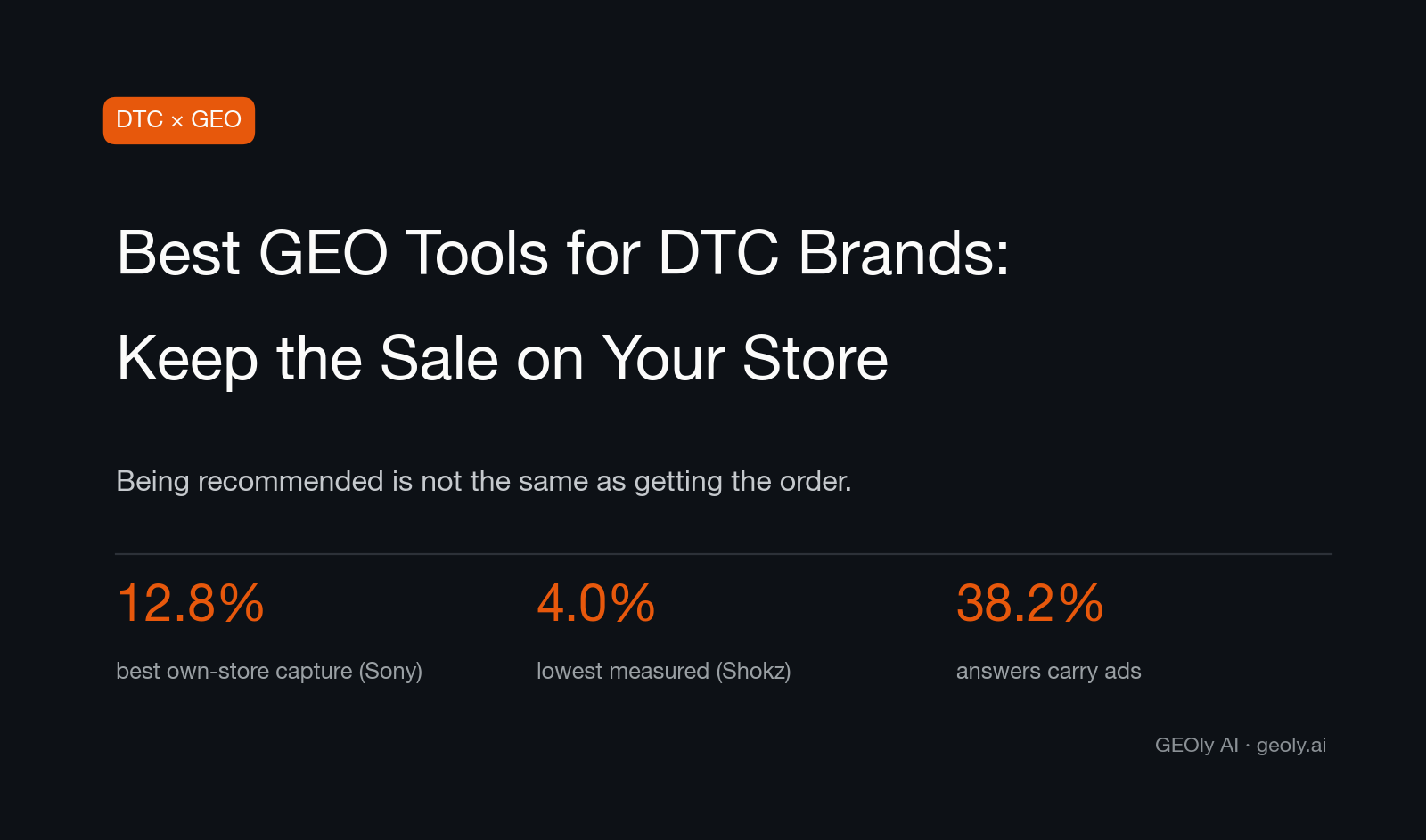
Best GEO Tools for DTC Brands: Keep the Sale on Your Store
Even the best DTC brands capture only 12.8% of the ChatGPT product-card clicks behind their own recommendations, so the right GEO tool is the one that shows where the shelf routes your buyers.
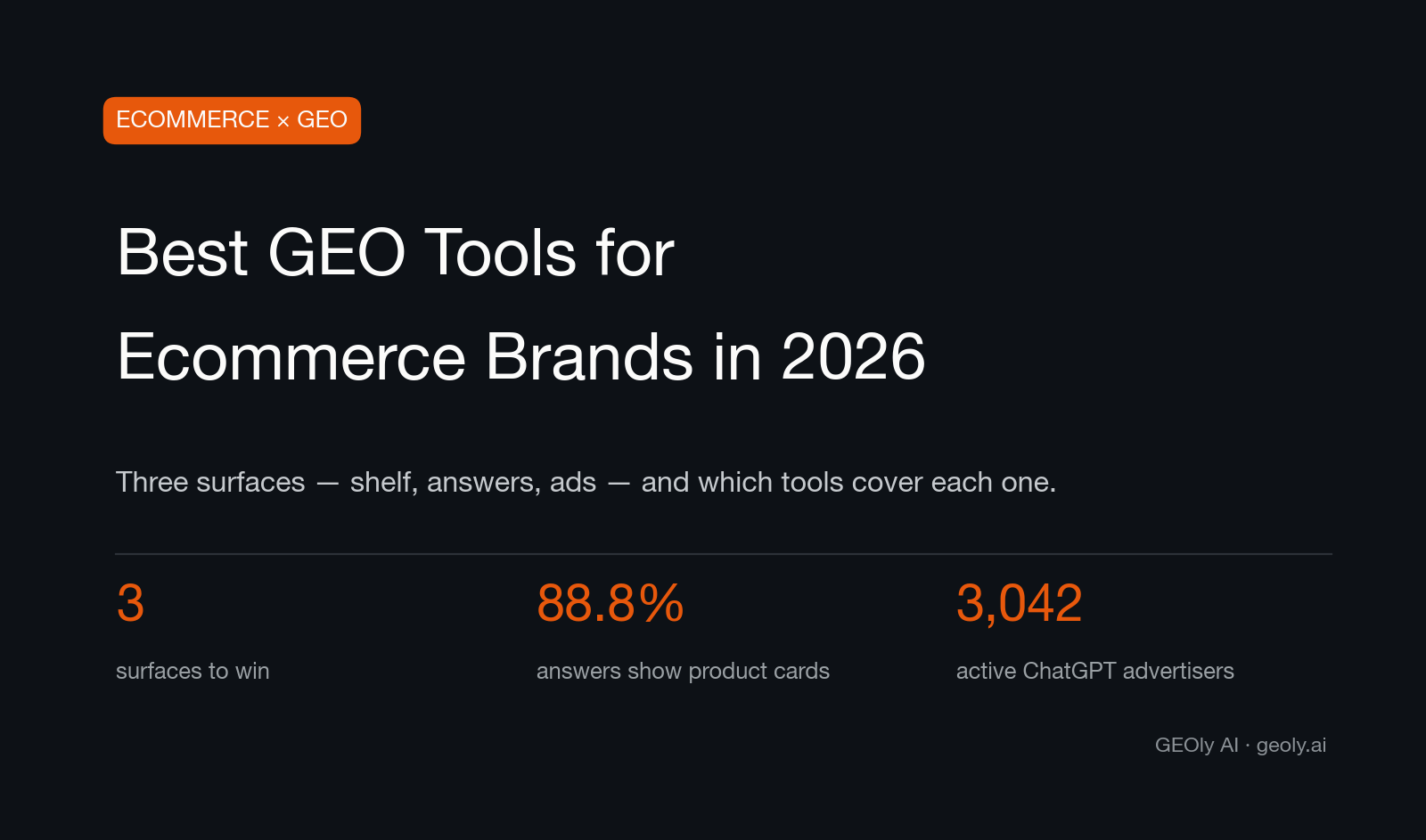
Best GEO Tools for Ecommerce Brands in 2026
88.8% of ChatGPT shopping answers carry product cards and 38.2% carry ads, so the best GEO tool for an ecommerce brand must cover three surfaces — and of six compared, only one does.
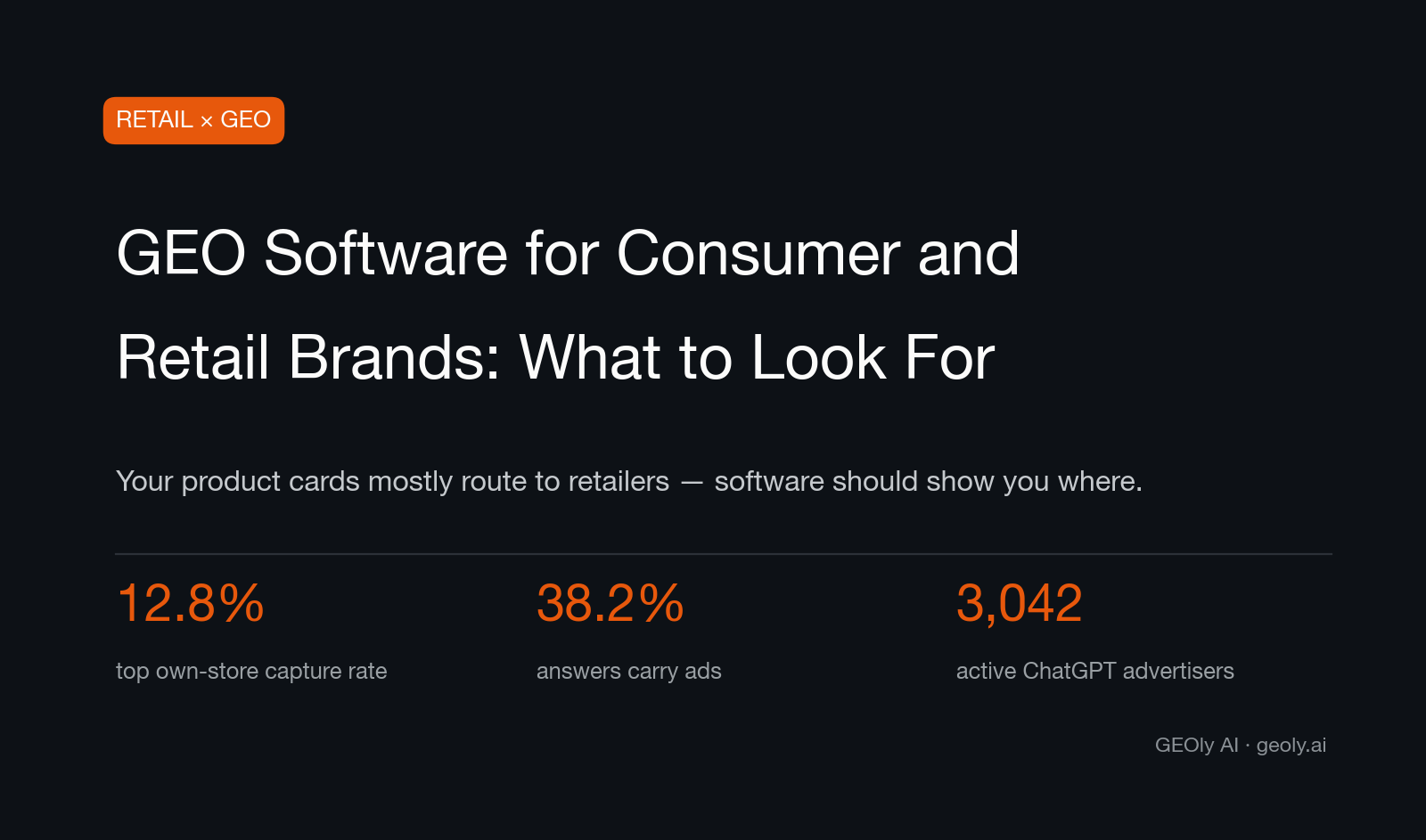
GEO Software for Consumer & Retail Brands: What to Look For
For retail brands, GEO software must show where the AI product card routes — even Sony keeps only 12.8% of ChatGPT card destinations on its own store, and the rest go to Best Buy, Target and Walmart.
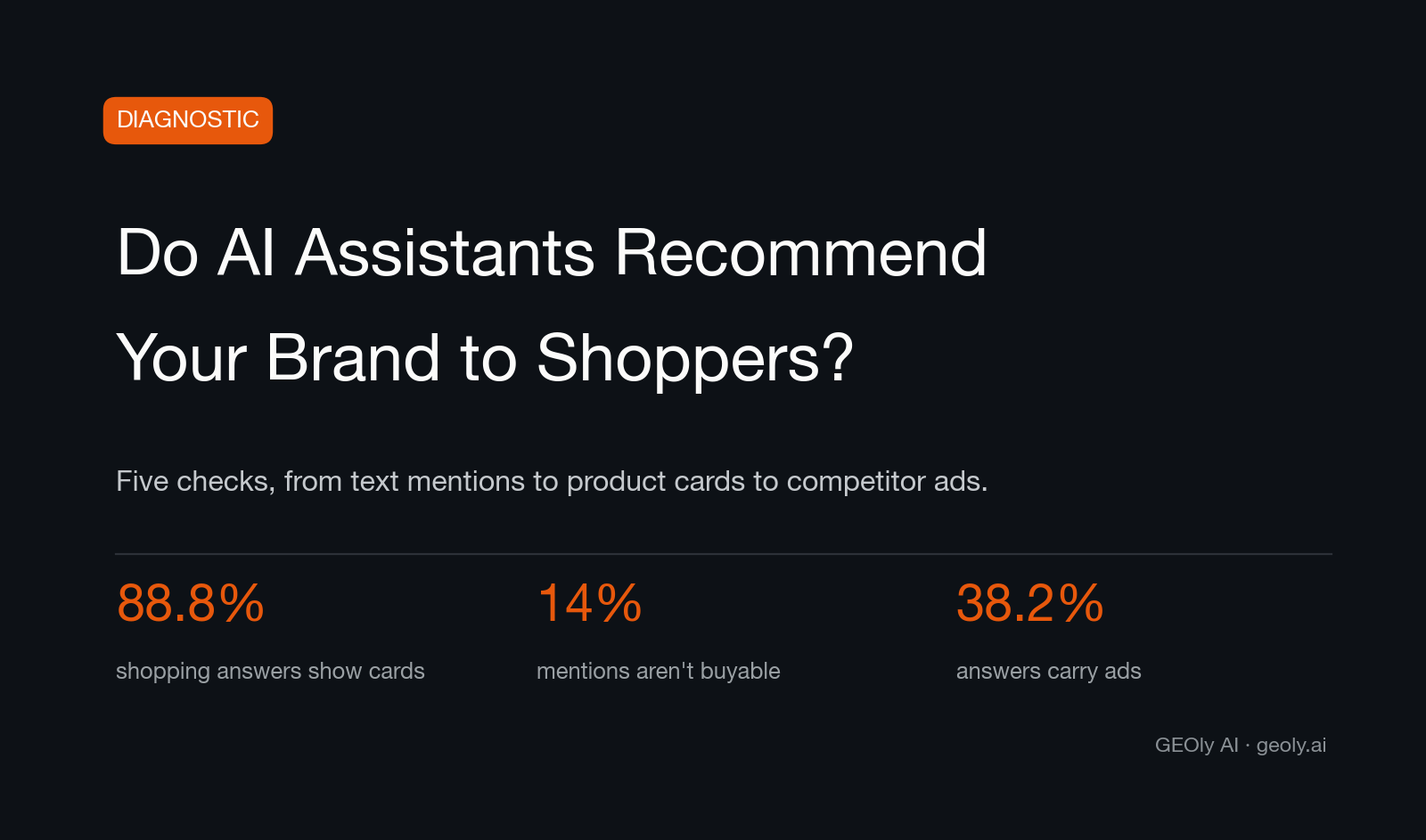
How to Know If AI Assistants Recommend Your Brand to Shoppers
Use five simple checks—mentions, product cards, links, wording and ads—to see how AI shopping answers present your brand.
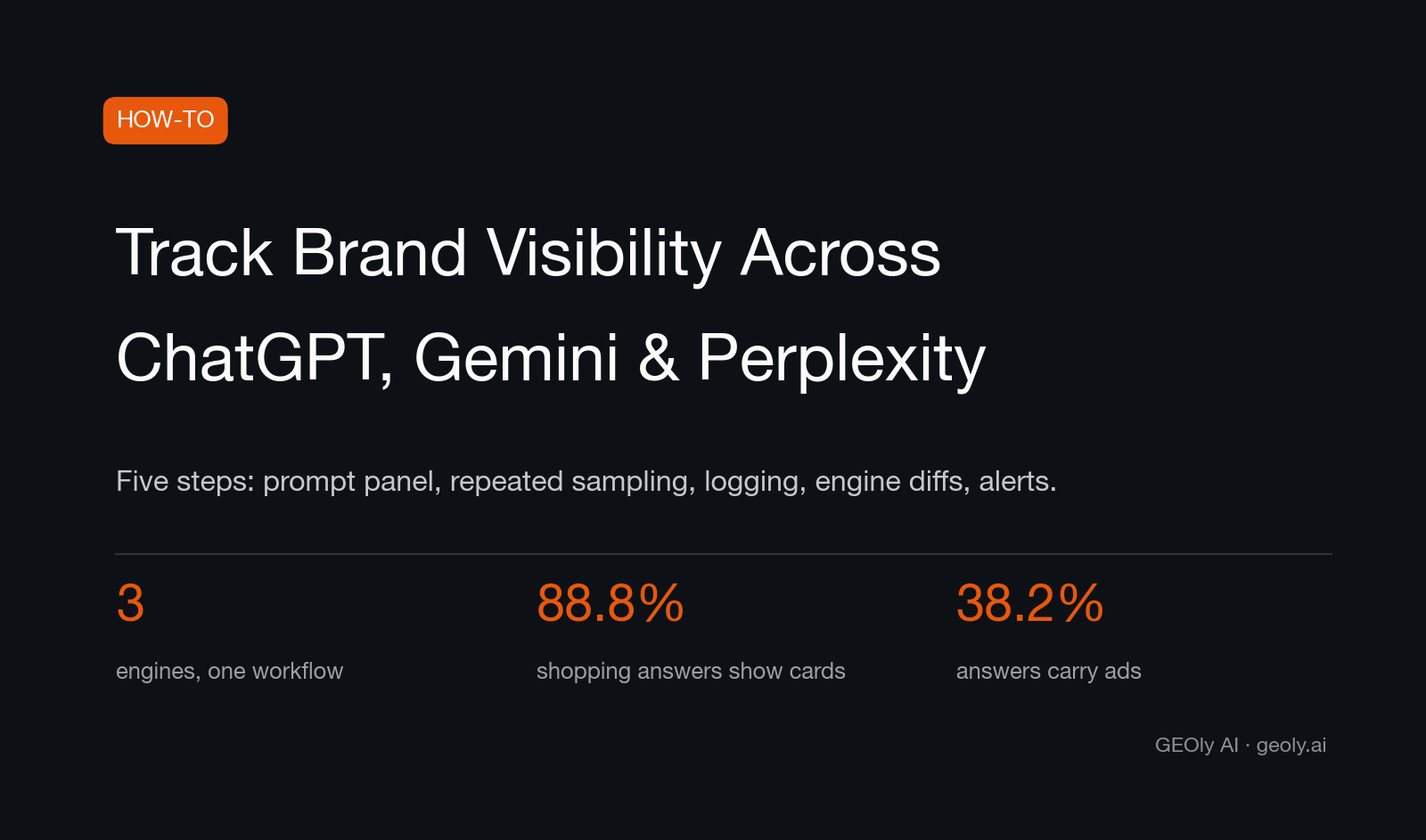
How to Track Brand Visibility Across ChatGPT, Gemini & Perplexity
A five-step workflow to track brand visibility across ChatGPT, Gemini and Perplexity — repeat sampling is non-negotiable because answers are probabilistic, and ChatGPT referrals already convert at 7.1%.
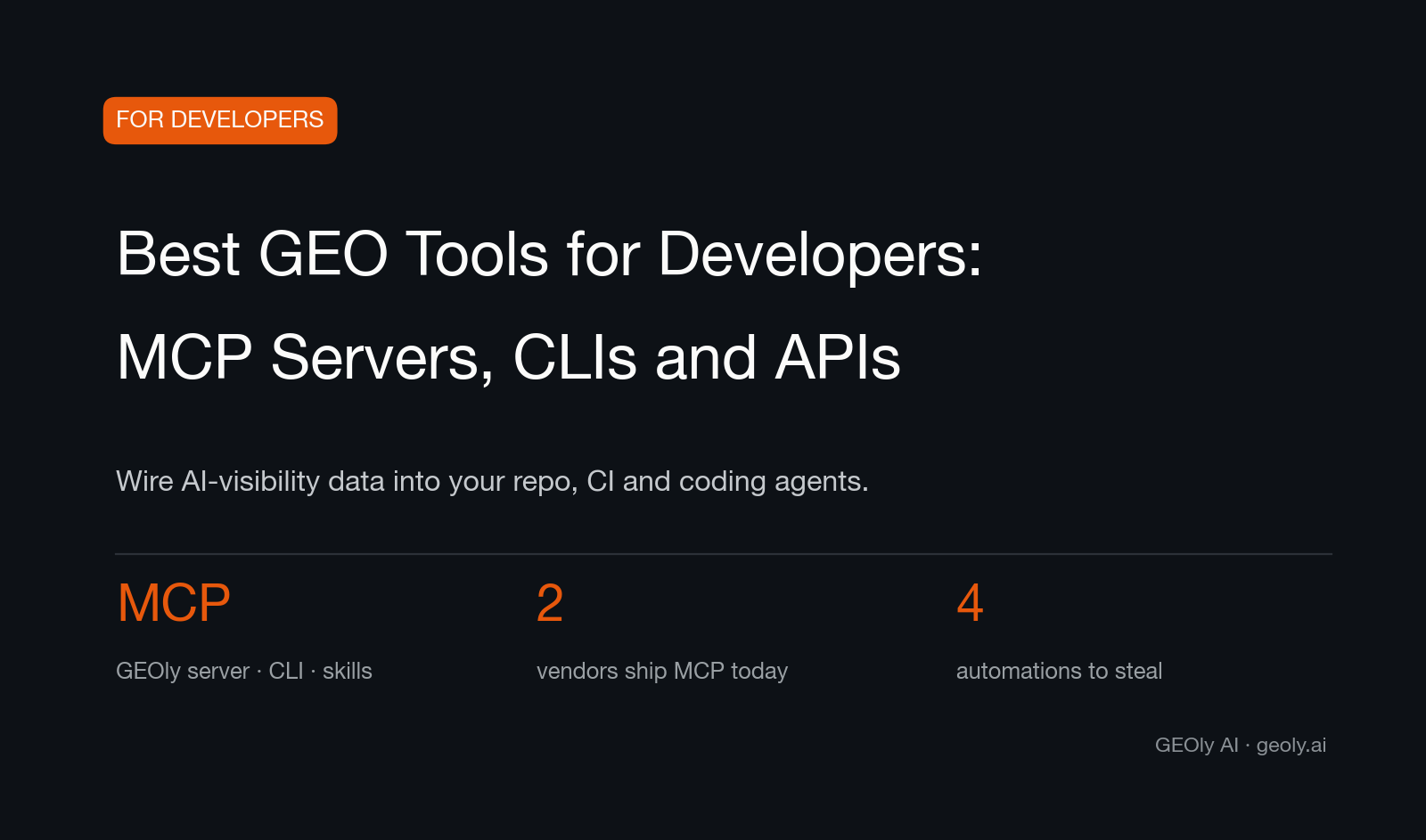
Best GEO Tools for Developers: MCP Servers, CLIs and APIs
Two GEO tools ship MCP servers developers can wire into Claude Code or Cursor today — GEOly (with CLI and skills, free to start) and Otterly.AI (from $29/month) — and four automations turn their data into CI checks.