Query Fan-out Monitoring & Analysis for AI Search
Analyze observed ChatGPT search queries, group buyer intent and investigate content gaps with GEOly. Connect query evidence to your GEO and AEO decisions.
Connect a search query to its prompt and sources, then decide which page or evidence to improve.
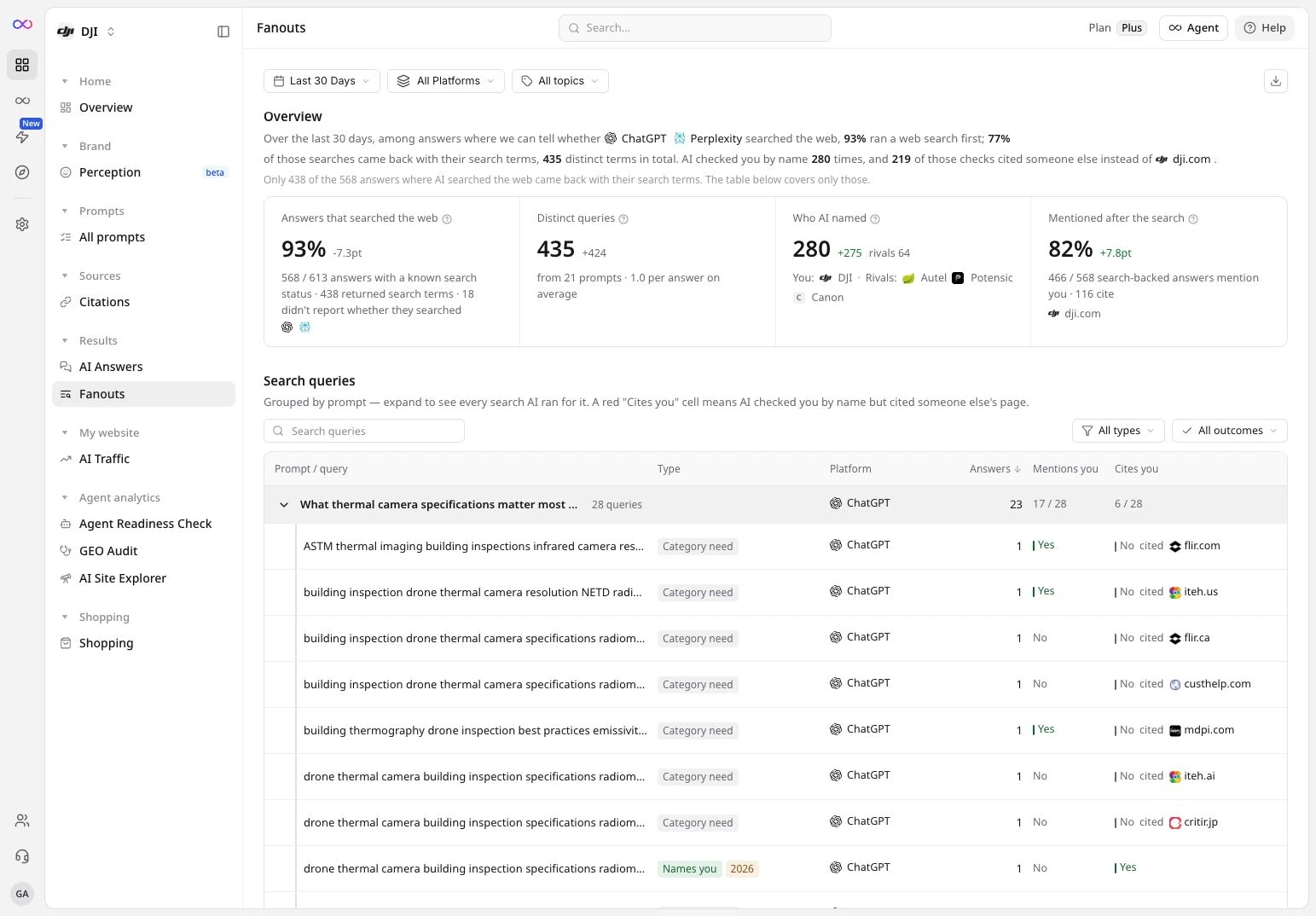
Captured product interface
Product screenshots captured November 14, 2026. They illustrate the interface, not a live benchmark or a promised result.
A full evidence chain, not another visibility score
AI Search breaks the “why did AI answer this way?” problem into operational layers: search entries, triggering prompts, demand themes, brand overlap, and citation strength.
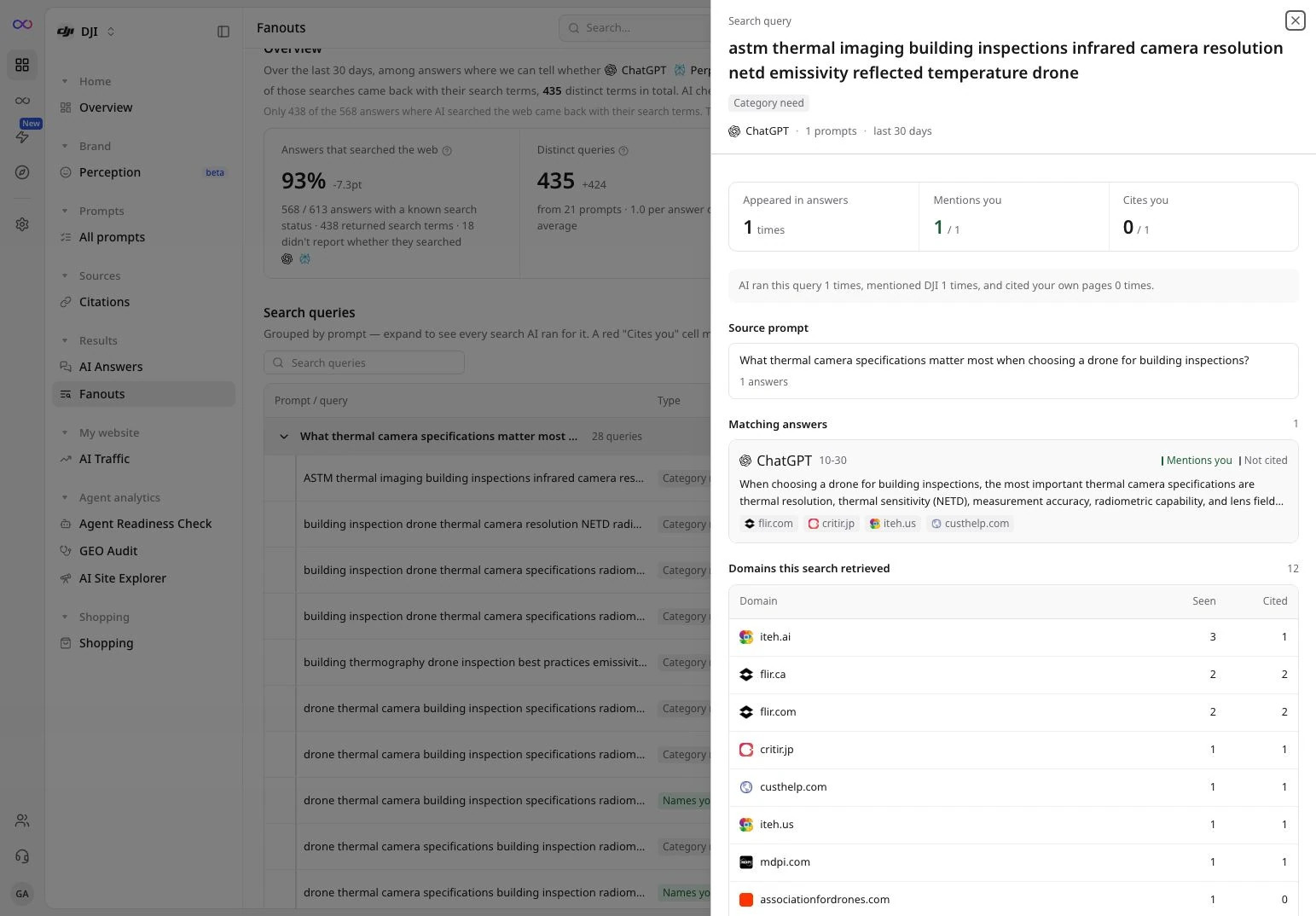
Start with the queries AI actually searched
Search Entry Details expands each query by frequency, prompt coverage, and co-appearing brands. Teams can filter high-frequency entries and see whether they represent tool recommendations, comparisons, pricing research, or solution demand.
Turn scattered queries into buyer demand, not a 400-row table
Demand Theme Detail puts Search Entries, Triggering Prompts, and Brands into one drill-down surface. It does not just count keywords; it explains which needs AI is trying to satisfy.
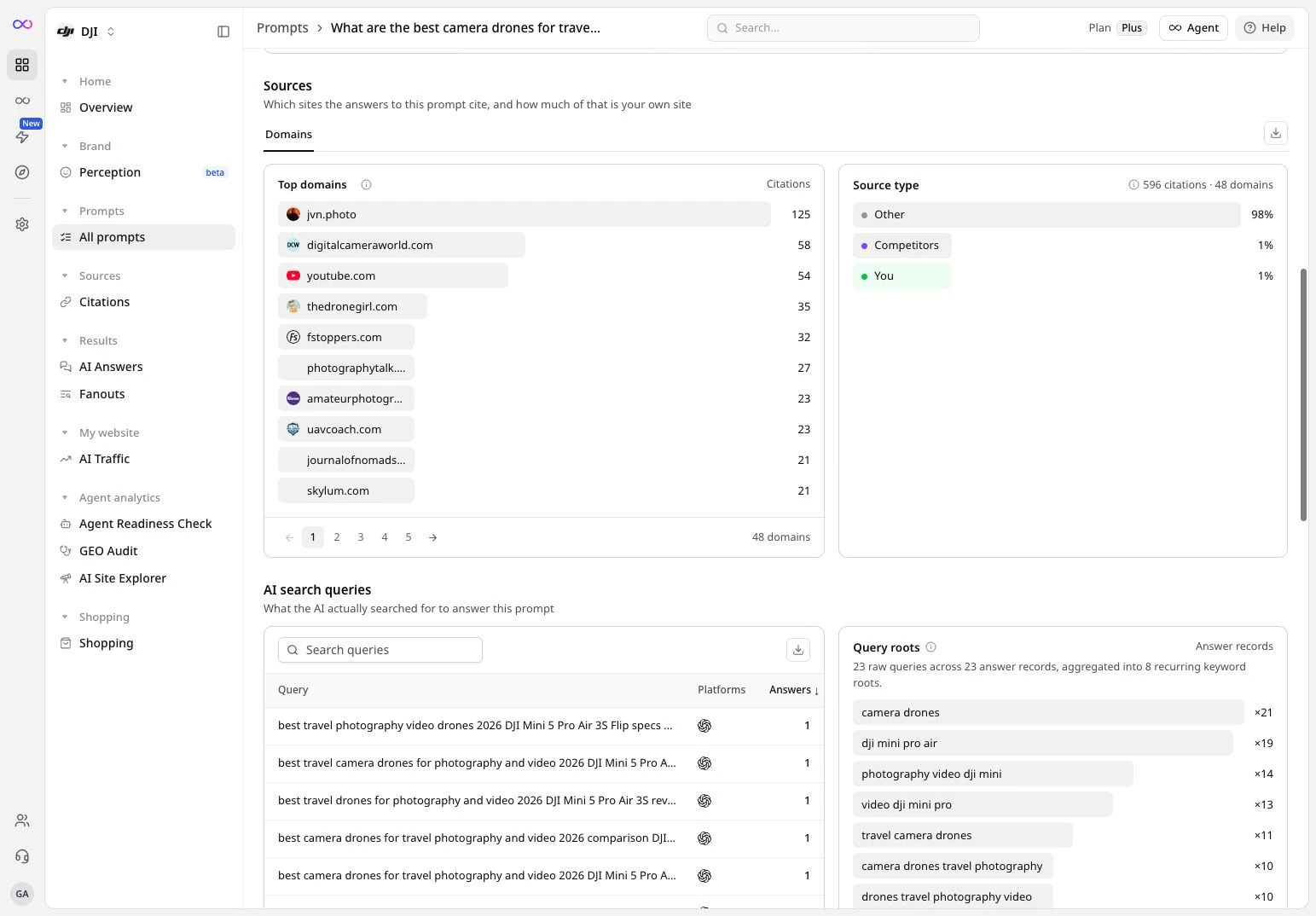
Capture real ChatGPT web search entries
Group fragmented queries into Demand Themes
Benchmark brand coverage, appearances, and citations
Drill into each Search Entry by frequency, prompts, and competing brands
Then see who owns the broadest AI search surface
Query breadth, appearances, and citations in one view separate occasional mentions from brands that cover most of the search surface. That is closer to competitive reality than a single prompt rank.
For execution, it points to three moves
The page should help SEO, content, PR, and product marketing decide what to fix next, not just admire a dashboard.
Fill missing themes with pages, FAQs, or product explainers for high-frequency Search Entries
Build trusted proof across reviews, lists, communities, and media AI already cites
Close competitor gaps where query breadth is low but demand is high
Plan with suggestions. Prioritize with observations.
The free tool generates intent-based ideas. Product analysis uses collected search records where available. Neither reveals the complete internal process of an AI engine. A recorded query, a retrieved page and a cited source are different pieces of evidence.
Read the 1,404-query case studyTurn a search entry into a content decision
- 01Choose buyer prompts and the platform available in your plan.
- 02Inspect a collected query alongside its prompt, observation window and sources.
- 03Group similar needs, then match them to existing pages before creating new ones.
- 04Repeat the monitoring and compare query coverage, citations and brand mentions separately.