Platforms › PrestaShop
PrestaShop GEO — the GEO/AEO tool for PrestaShop brands
GEO for PrestaShop brands: bring AI visibility to open-source stores across Europe.
PrestaShop is an open-source, self-hosted commerce platform popular in Europe with high commerce strength and med-high AI-readiness. Its modular, self-hosted nature gives control but leaves AI visibility down to each store's own configuration.
PrestaShop AI readiness
LLM friendliness
Med-High
Open-source/self-hosted systems can typically control schema, feeds, sitemap, structured data, llms.txt, and product detail output.
Agent-ready
Med-High
Can expose tool interfaces for products, inventory, cart, and orders via REST/GraphQL/plugins/custom development, but requires a technical team to implement permissions and security.
Agentic commerce
Med-High
Can build product feeds and checkout/order endpoints per OpenAI/Stripe ACP requirements; implementation costs are relatively high without official native support.
Sources: prestashop.com · prestashop.com · developers.openai.com
Type
Open-source / self-hosted commerce
Primary market
Global / Europe
E-commerce
High
Ease of use
中-高
Deployment
Open-source / self-hosted
- Open source
- Module extensions
- Themes
- Marketing tools
- SEO and backend management.
Why PrestaShop brands need GEO
Self-hosted PrestaShop stores vary widely in how their product data and modules are set up, so AI engines read them inconsistently. GEOly measures how AI engines actually cite your PrestaShop products and where a competitor is recommended instead. For European multilingual catalogs, that also means seeing performance across languages.
- AI visibility tracking for self-hosted PrestaShop catalogs, including multilingual stores.
- Citation tracking across generative engines by product.
- GEO Audit that flags module and data setups hurting AI readability.
How GEOly helps open-source / self-hosted commerce platforms
Self-hosting gives you full control and, with it, full responsibility: structured data, canonical tags and performance all depend on your plugin stack, which drifts as extensions are added and updated. AI engines reward clean, consistent product schema, and this is exactly where DIY setups quietly break.
- GEO Audit crawls your catalog the way an AI engine would and catches missing or conflicting product schema across plugins before it costs you citations.
- Citation tracking shows which self-hosted pages engines trust enough to quote, helping you invest fixes where they pay off.
- Share-of-Card monitoring tells you if your products make it into AI shopping cards despite the technical variance a self-hosted stack introduces.
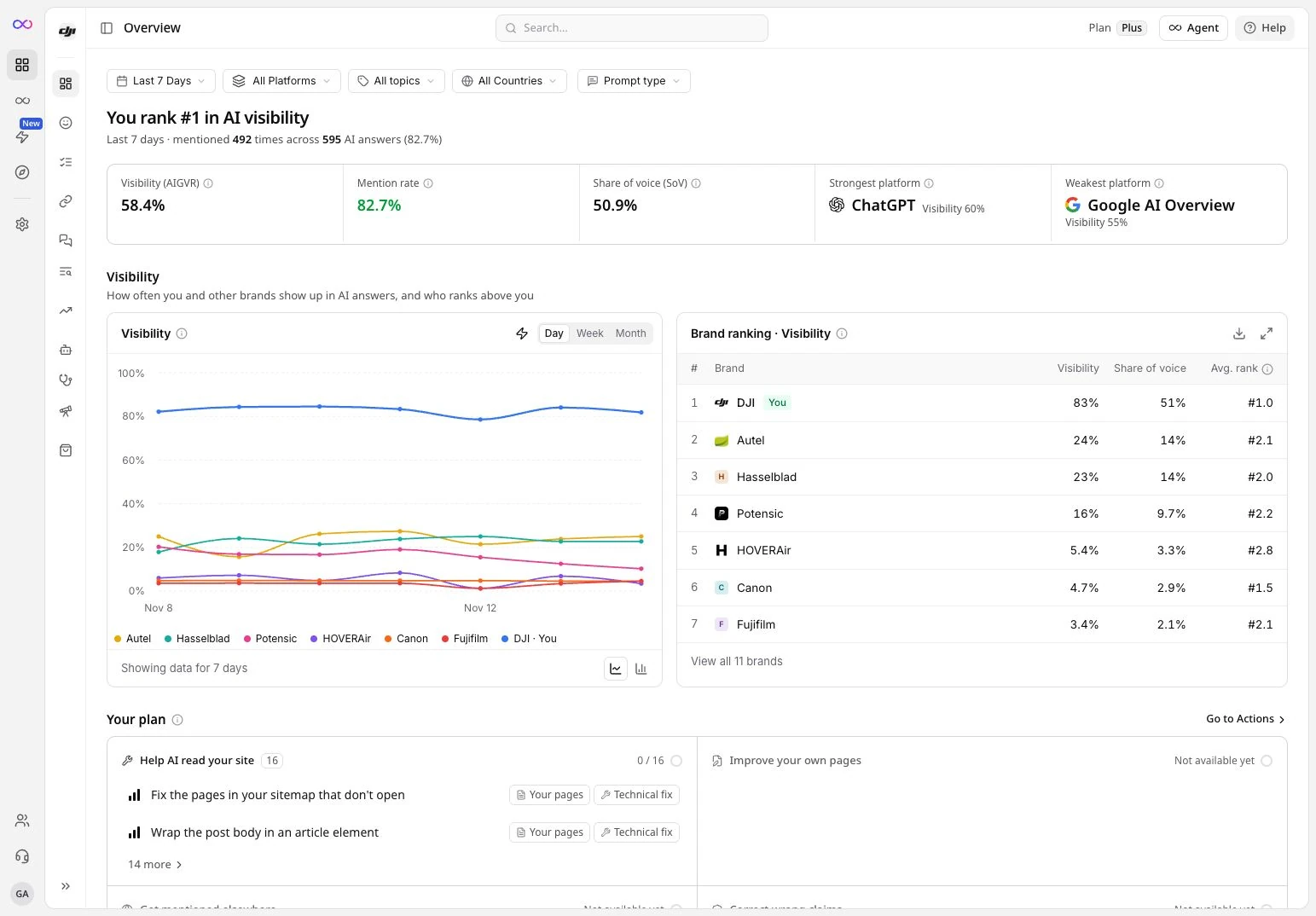
Cross-engine AI visibility
Track AIGVR and Share of Model across ChatGPT, Google AI Mode, Gemini and Google AI Overviews — see exactly where you appear in AI answers and where a competitor takes your spot.
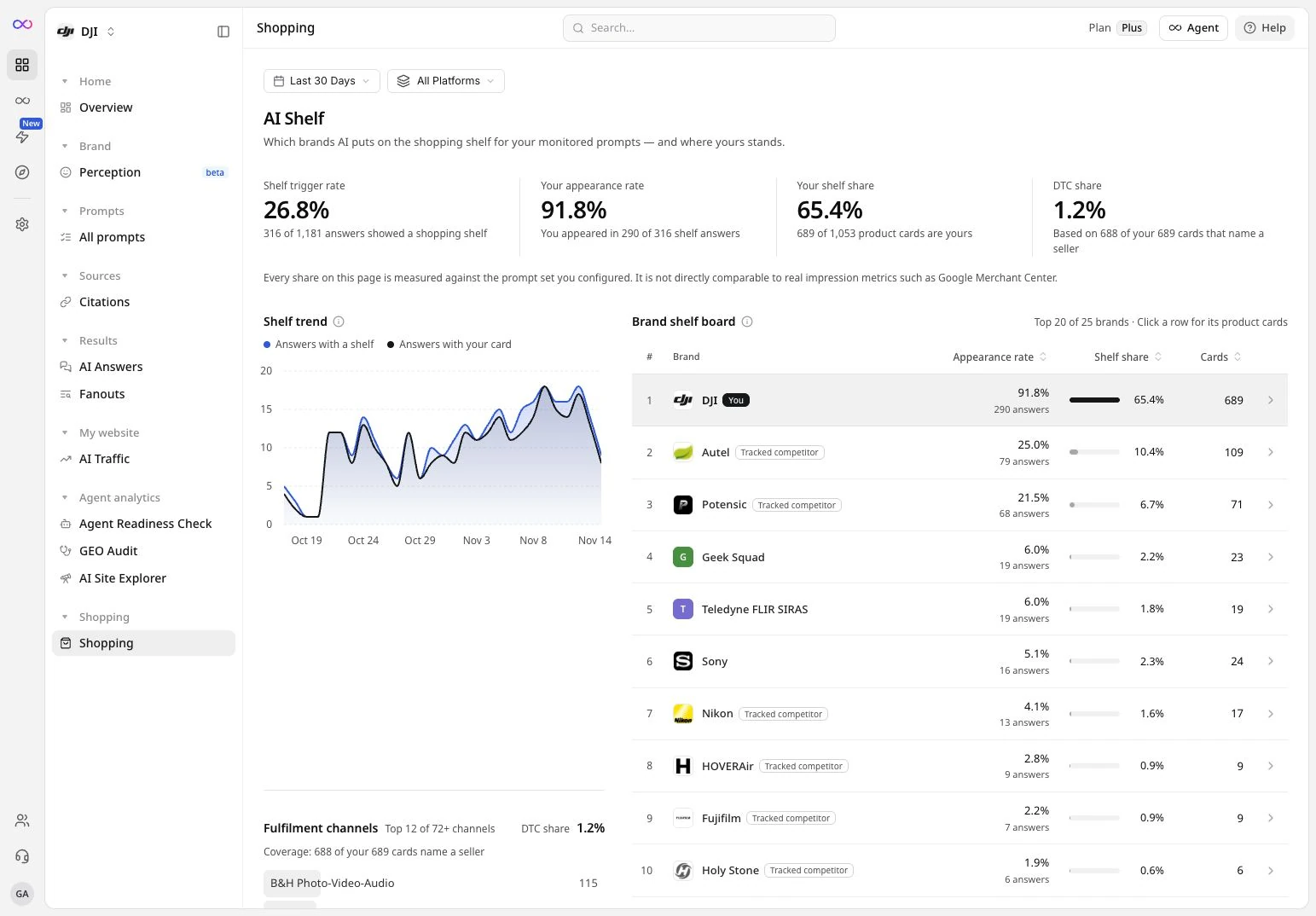
AI shopping and Share-of-Card
For stores, GEOly runs real buyer prompts and scores your Share-of-Card — the share of AI shopping cards your products win against rivals. That is the metric that maps to orders.
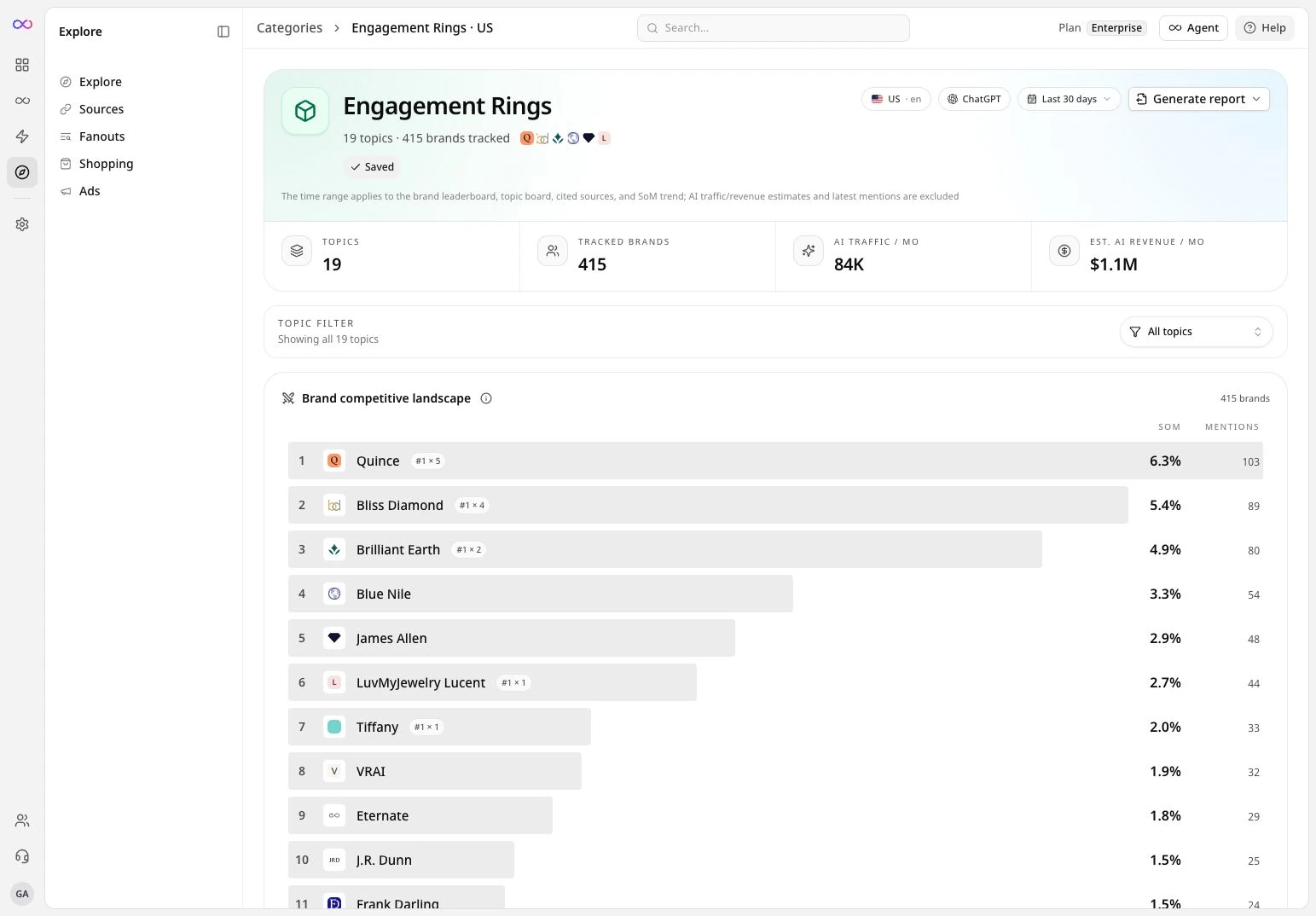
Competitive share by category
See the Share-of-Model leaderboard for your category and which brands own which buyer prompts, so you know exactly where to intercept.
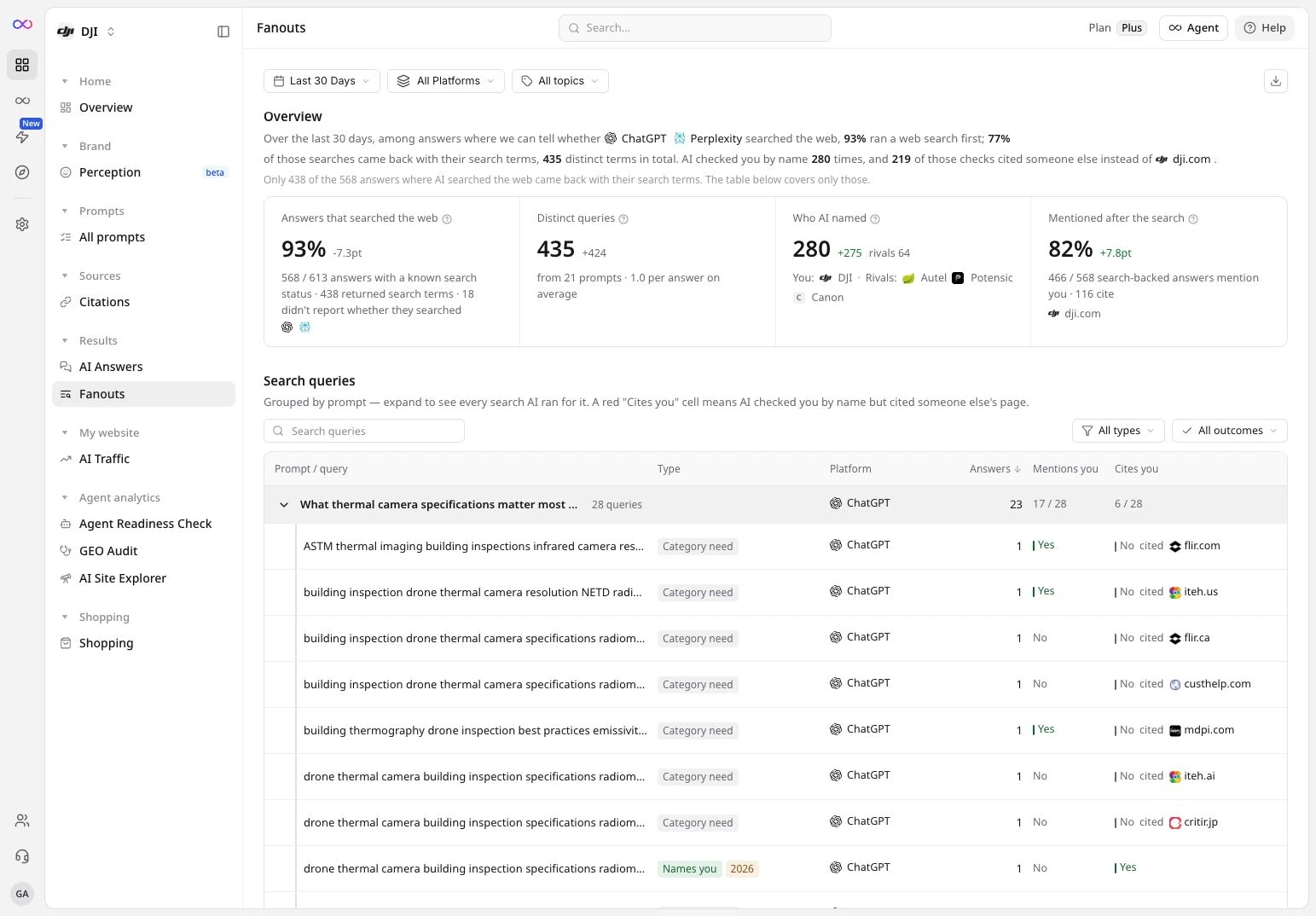
From signal to fix
A GEO Audit surfaces the schema, feed and llms.txt gaps holding you back, and Query Fan-out shows the real questions shoppers ask — so every fix is prioritized by impact.
See where your store stands in AI search
Run a free GEO audit to get your AI-readiness grade and a prioritized fix list, then track Share-of-Card from day one.