Platforms › Medusa
Medusa GEO — the GEO/AEO tool for Medusa brands
GEO for Medusa brands: add an AI visibility layer to your developer-first commerce stack.
Medusa is an open-source, developer-first commerce platform with high commerce strength and strong AI-readiness. Teams build custom storefronts on its APIs, so AI visibility is entirely a function of how each frontend is implemented.
Medusa AI readiness
LLM friendliness
High
Medusa's official documentation includes Build with AI Assistants and LLMs, and states that its architecture and customizability are well suited for AI assistants/LLMs.
Agent-ready
High
A modular open-source commerce stack, suitable for building custom agents and a tool layer.
Agentic commerce
Med-High
Has an open-source/Headless implementation foundation; no official ACP/UCP native support announcement has been seen.
Sources: medusajs.com · docs.medusajs.com · developers.openai.com
Type
Open-source / self-hosted commerce
Primary market
Global / developer ecosystem
E-commerce
High
Ease of use
High
Deployment
Open-source / Cloud / self-hosted
- Modular commerce logic
- Customizable Admin
- Framework and cloud deployment
- Supports DTC
- B2B
- Marketplace and other custom scenarios.
Why Medusa brands need GEO
Medusa gives developers full control, which means AI visibility is never a default; it is something you have to build and verify. GEOly tracks how AI engines read and cite the products behind your Medusa storefront so custom frontends do not silently underperform. It gives engineering teams a measurable outside-in signal to iterate against.
- Outside-in AI visibility tracking for custom Medusa storefronts.
- Citation and Share-of-Card data to validate frontend implementations.
- GEO Audit and Query Fan-out to guide what developers optimize next.
How GEOly helps open-source / self-hosted commerce platforms
Self-hosting gives you full control and, with it, full responsibility: structured data, canonical tags and performance all depend on your plugin stack, which drifts as extensions are added and updated. AI engines reward clean, consistent product schema, and this is exactly where DIY setups quietly break.
- GEO Audit crawls your catalog the way an AI engine would and catches missing or conflicting product schema across plugins before it costs you citations.
- Citation tracking shows which self-hosted pages engines trust enough to quote, helping you invest fixes where they pay off.
- Share-of-Card monitoring tells you if your products make it into AI shopping cards despite the technical variance a self-hosted stack introduces.
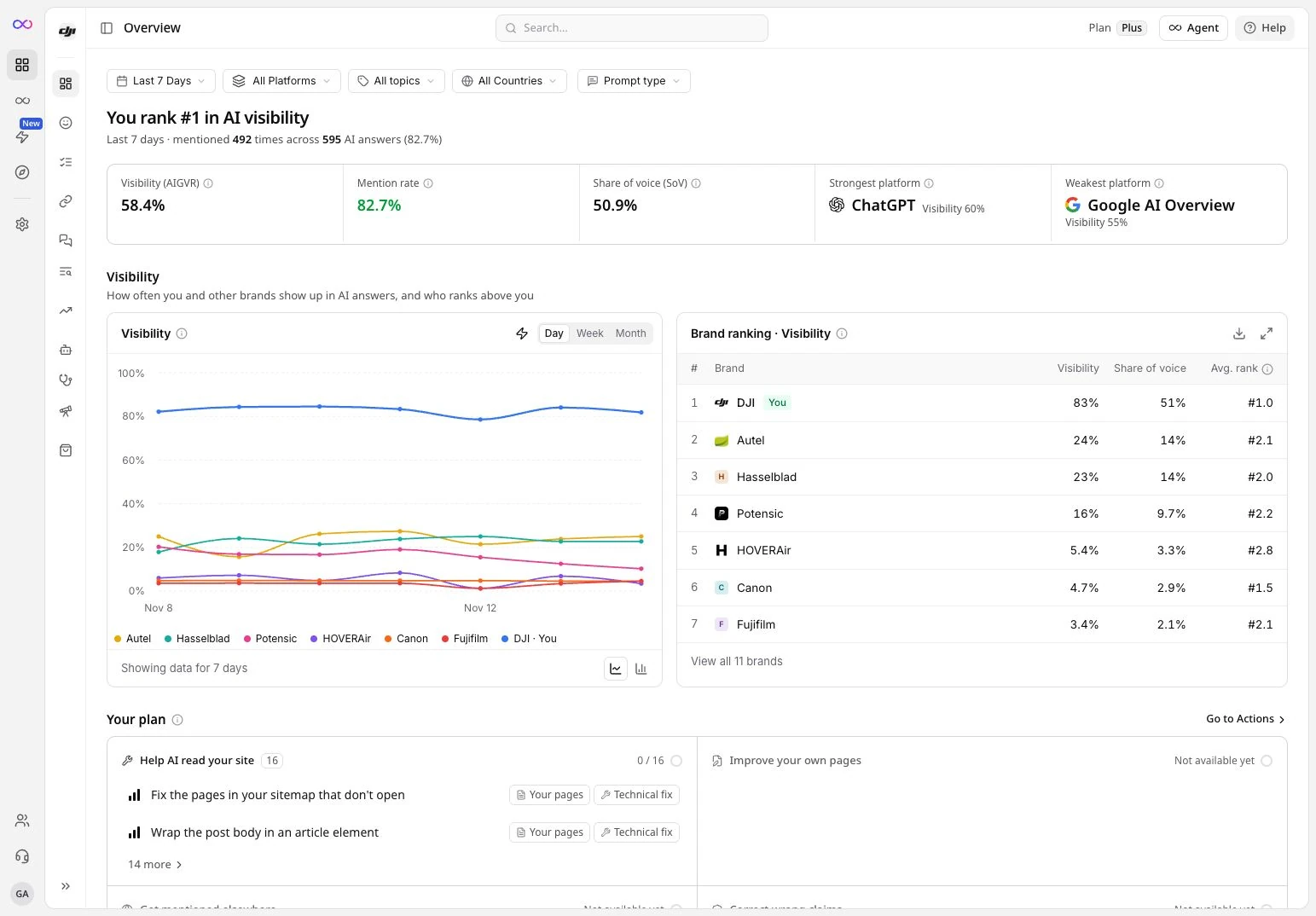
Cross-engine AI visibility
Track AIGVR and Share of Model across ChatGPT, Google AI Mode, Gemini and Google AI Overviews — see exactly where you appear in AI answers and where a competitor takes your spot.
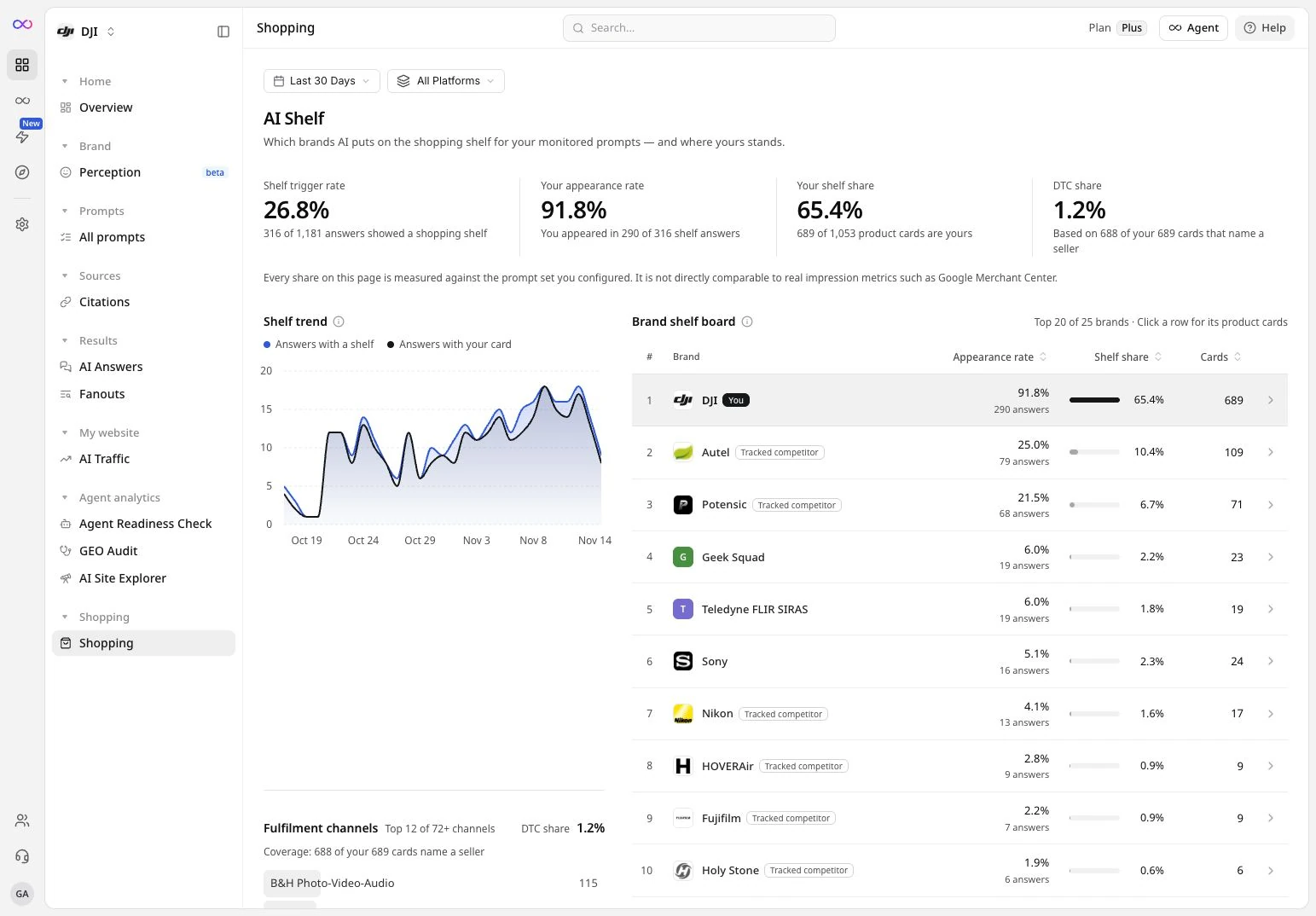
AI shopping and Share-of-Card
For stores, GEOly runs real buyer prompts and scores your Share-of-Card — the share of AI shopping cards your products win against rivals. That is the metric that maps to orders.
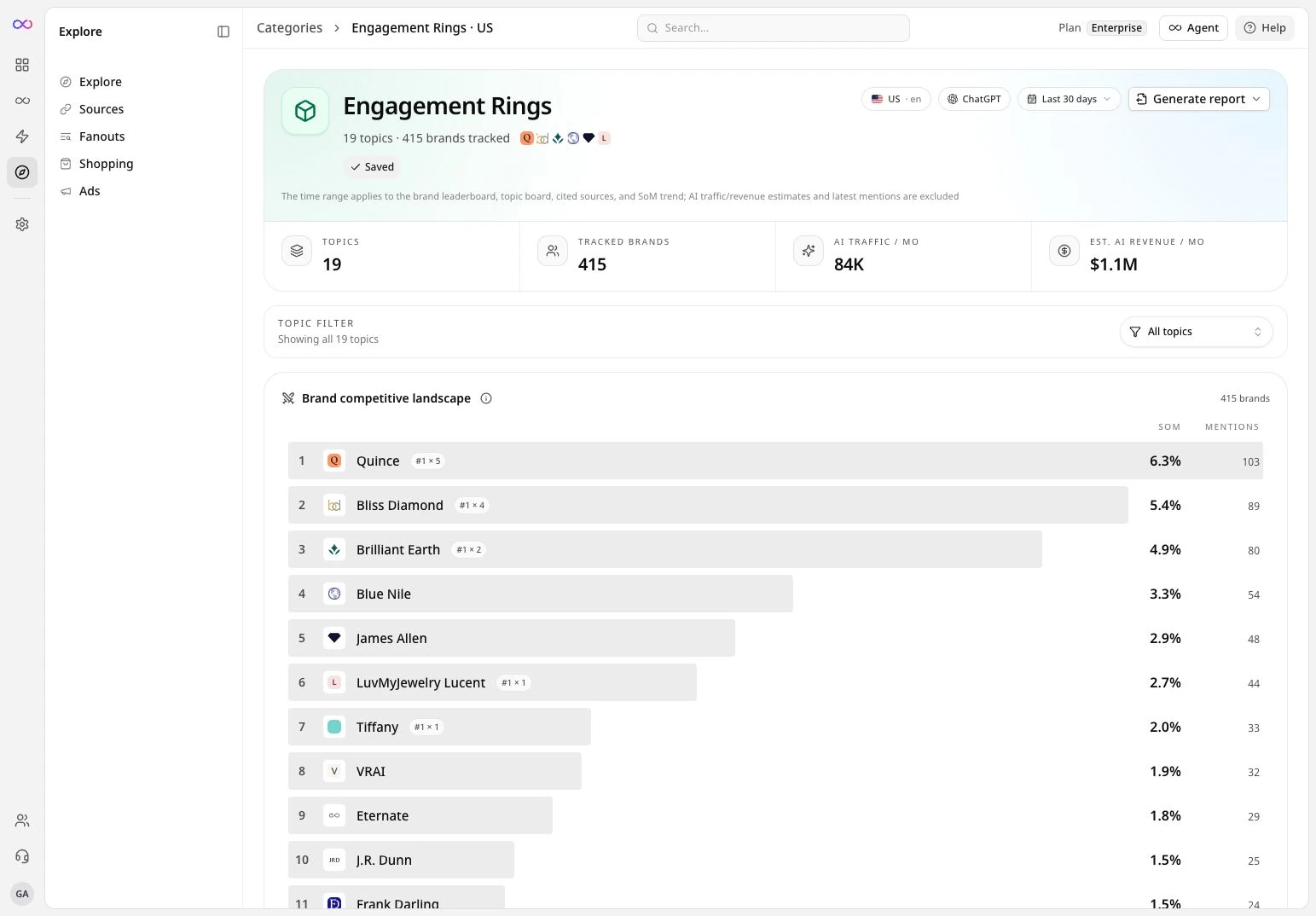
Competitive share by category
See the Share-of-Model leaderboard for your category and which brands own which buyer prompts, so you know exactly where to intercept.
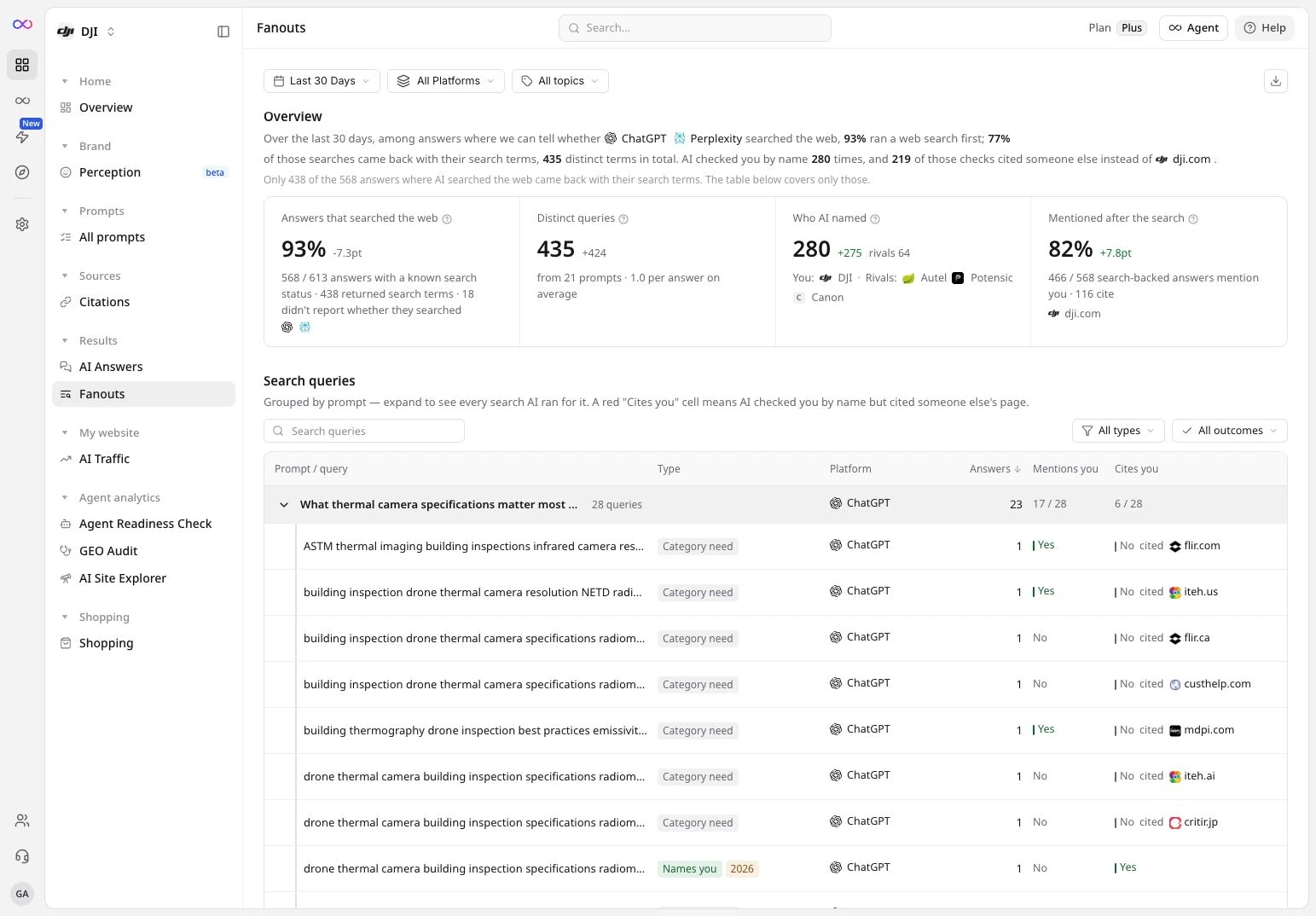
From signal to fix
A GEO Audit surfaces the schema, feed and llms.txt gaps holding you back, and Query Fan-out shows the real questions shoppers ask — so every fix is prioritized by impact.
See where your store stands in AI search
Run a free GEO audit to get your AI-readiness grade and a prioritized fix list, then track Share-of-Card from day one.