Tag: AI Shopping
37 Beiträge37 Artikel mit dem Tag „AI Shopping“ auf dem GEOly-Blog — Einblicke, Daten und Leitfäden zu AI Shopping in der Ära der KI-Suche und wie Marken Sichtbarkeit über ChatGPT, Gemini und Perplexity gewinnen. Entdecken Sie unten weitere Themen und Autoren.
Was ist Agentic Commerce? Das Marken-Playbook für KI-Shopping-Agenten (2026)
Agentic Commerce bedeutet: KI-Agenten — nicht Menschen auf Produktseiten — entdecken, vergleichen und kaufen zunehmend im Auftrag der Shopper; Marken gewinnen, indem sie Agenten strukturierten, autoritativen Kontext liefern statt auf richtiges Scraping zu hoffen.
Von zitiert zu verkauft: KI-Sichtbarkeit in KI-Kanal-Umsatz verwandeln
Von KI-Engines erwähnt zu werden ist kein Geschäftsergebnis — der KI-Kanal wird zu Umsatz, wenn Sichtbarkeit, agentenlesbarer Selling-Kontext und der eigene Checkout als ein Funnel geführt werden, mit KI-attribuierten Bestellungen als KPI.
KI-Agenten sind die neuen Käufer: Warum Ihre Marke agentenlesbaren Kontext braucht
KI-Shopping-Agenten lesen keine Landingpages — sie setzen Ihre Marke aus gescrapten Fragmenten zusammen, sofern Sie ihnen nicht einen autoritativen, strukturierten Kontext liefern; was agentenlesbarer Kontext ist und wie man ihn aufbaut.
ACP vs. UCP vs. AP2: Agentic-Commerce-Protokolle für Marken erklärt (2026)
ACP, UCP und AP2 lösen unterschiedliche Ebenen des Agentic Commerce — und nach OpenAIs Checkout-Rückzug entscheidet die Discovery-Ebene (ob AI Sie überhaupt empfiehlt) darüber, wo Marken gewinnen oder verlieren.
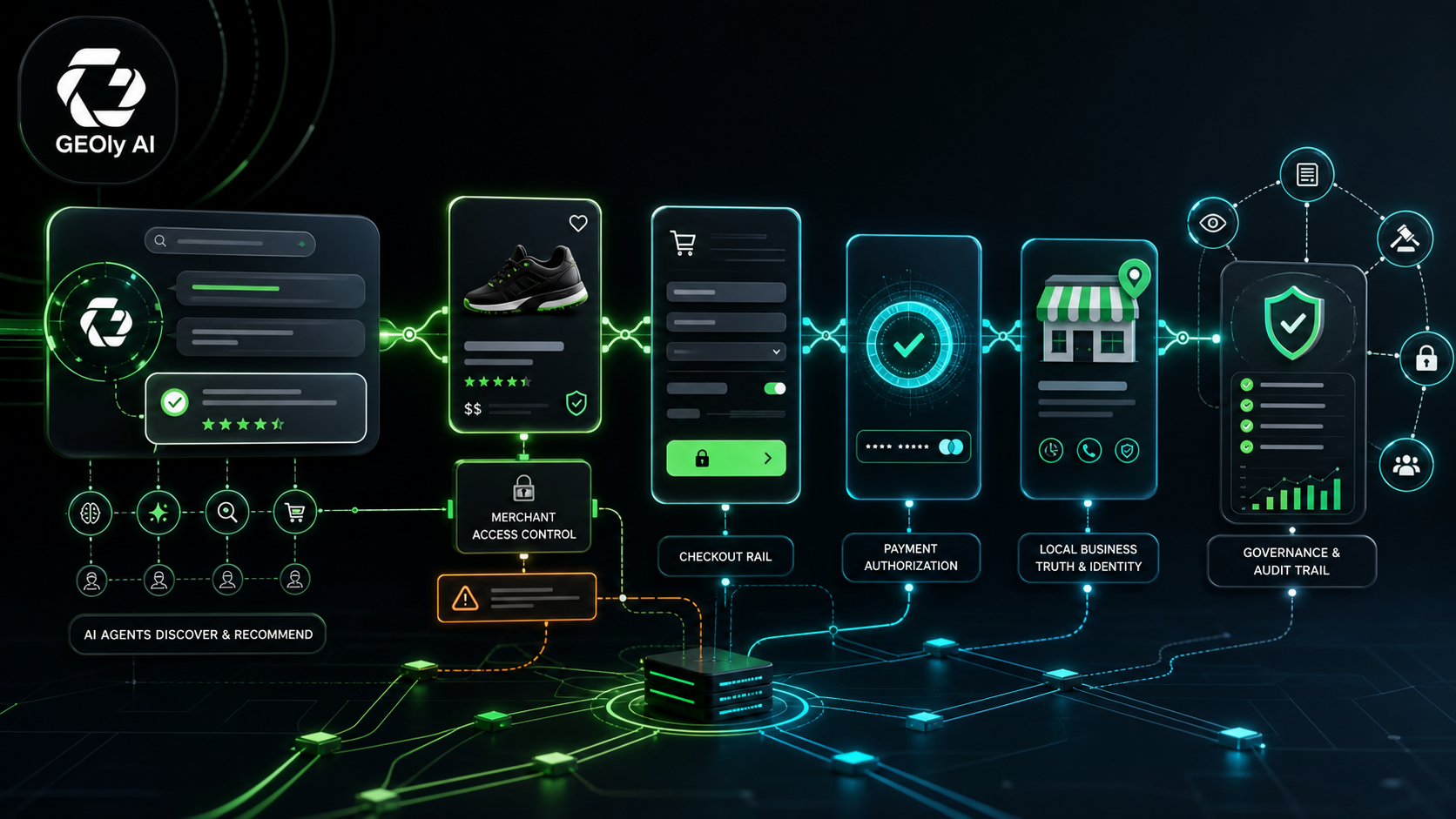
Agentic Commerce hat zuerst ein Checkout-Problem, kein Suchproblem
KI-Shopping-Agenten entwickeln sich weiter, doch die harte Schicht ist nicht die Produktsuche. Marken brauchen korrekte Entitätsdaten, Checkout-Rechte, Zahlungsregeln und nachvollziehbare Empfehlungssysteme.
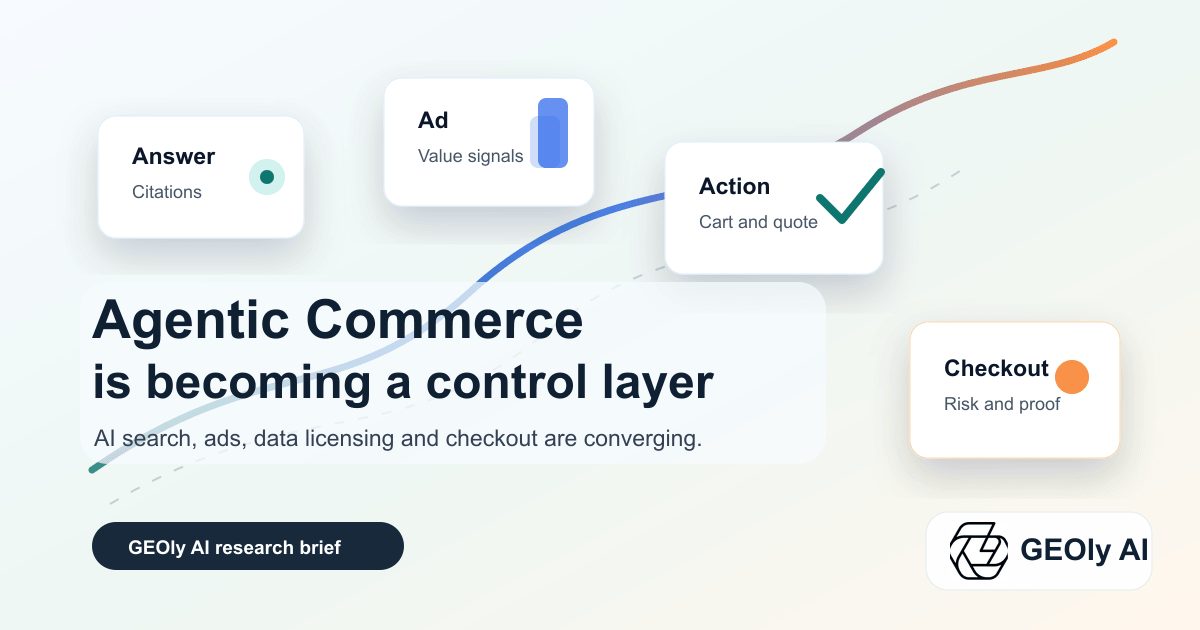
Agentic Commerce wird zur Kontrollschicht – nicht nur zum Suchkanal
KI-Suche, ChatGPT Ads, lokale Datenlizenzen und KI-Checkout verschmelzen zu einer neuen kommerziellen Kontrollschicht. Marken brauchen maschinenlesbare Fakten, saubere Attribution und Transaktions-Governance – nicht nur mehr Content.
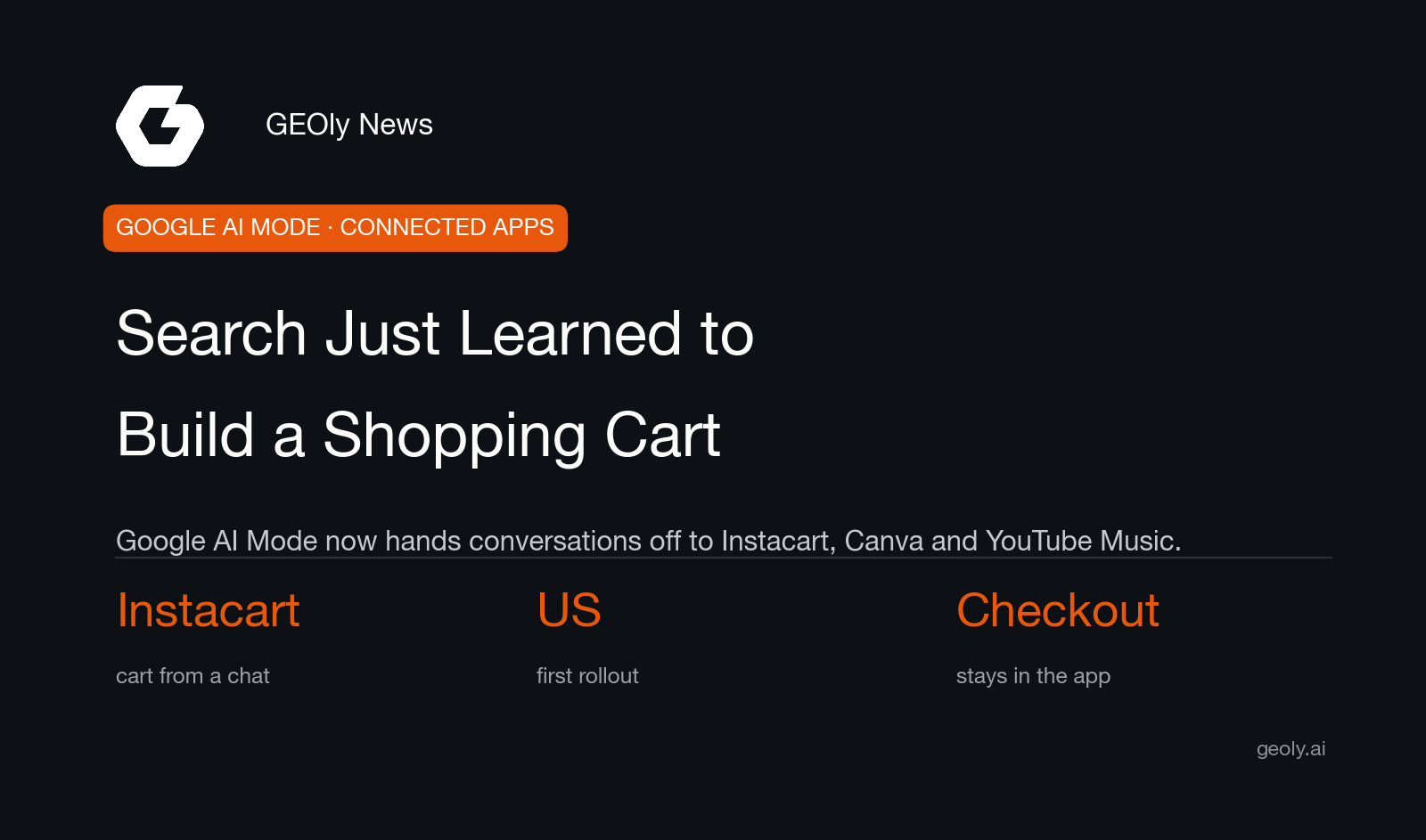
Google AI Mode füllt jetzt Ihren Warenkorb: Die Instacart-Übergabe erklärt
Google AI Mode begann am 16.07.2026, Instacart, Canva und YouTube Music zu verbinden und die Ergebnisseite in einen Aufgabenrouter zu verwandeln, der Händlern einen fertig zur Kasse gehenden Warenkorb übergibt.
GPT-5.6 und ChatGPT Work treiben Agenten tiefer in den Handel
OpenAIs GPT-5.6 und ChatGPT Work integrieren Agenten in reale Arbeitsabläufe, während Google beginnt, KI-erstellte Anzeigen zu kennzeichnen, was global agierende Marken dazu zwingt, Daten zu bereinigen und KI-Kreationen zu protokollieren.
GPT-Live lässt KI-Suche sprechen: Was sich ändert
OpenAI hat GPT-Live veröffentlicht, einen Full-Duplex-ChatGPT-Sprachmodus, der Websuche, Speicher und visuelle Widgets integriert und gesprochene Einkaufs- und Vergleichsfragen zu einem hochfrequenten Einstiegspunkt macht.
GEO wechselt von Marken- zu Produkt-Sichtbarkeit
Ohne große Markteinführung in dieser Woche ist das beständige Signal, dass GEO von der Markenebene auf die SKU-Ebene wechselt, da Tools wie Lantern darauf abzielen, vorherzusagen, wie Produkte in KI-Antworten erscheinen.
GEO für E-Commerce: Wie Online-Shops in der KI-Suche gewinnen (2026)
Online-Shops gewinnen die KI-Suche, indem sie zu den Produkten werden, die von den Empfehlungsmaschinen vorgeschlagen werden — strukturierte Daten, semantische Beschreibungen, klare Bewertungssentiments und ACP-fähige Checkouts entscheiden darüber, ob ChatGPT und Perplexity Ihren Katalog oder den eines Konkurrenten nennen.
Wie man tatsächlich ChatGPT-Anzeigen schaltet: Das Zwei-Regal-SOP (2026)
ChatGPT hat zwei Regale — ein kostenloses organisches, das die Giganten dominieren, und ein kostenpflichtiges, bei dem die Anzeigenrate 8–22 % erreicht. Zu wissen, auf welchem Regal eine Anfrage liegt, entscheidet, ob Sie GEO ausführen oder Anzeigenkarten kaufen sollten.

KI verlagert den Kauf-Button leise in Agenten.
Ein ruhiger Nachrichtentag bestätigt dennoch den Wandel: Der Einstiegspunkt für Käufe verlagert sich von Suchfeldern zu Agenten wie ChatGPT, Gemini und Copilot, und Produktdaten stehen nun im Mittelpunkt.
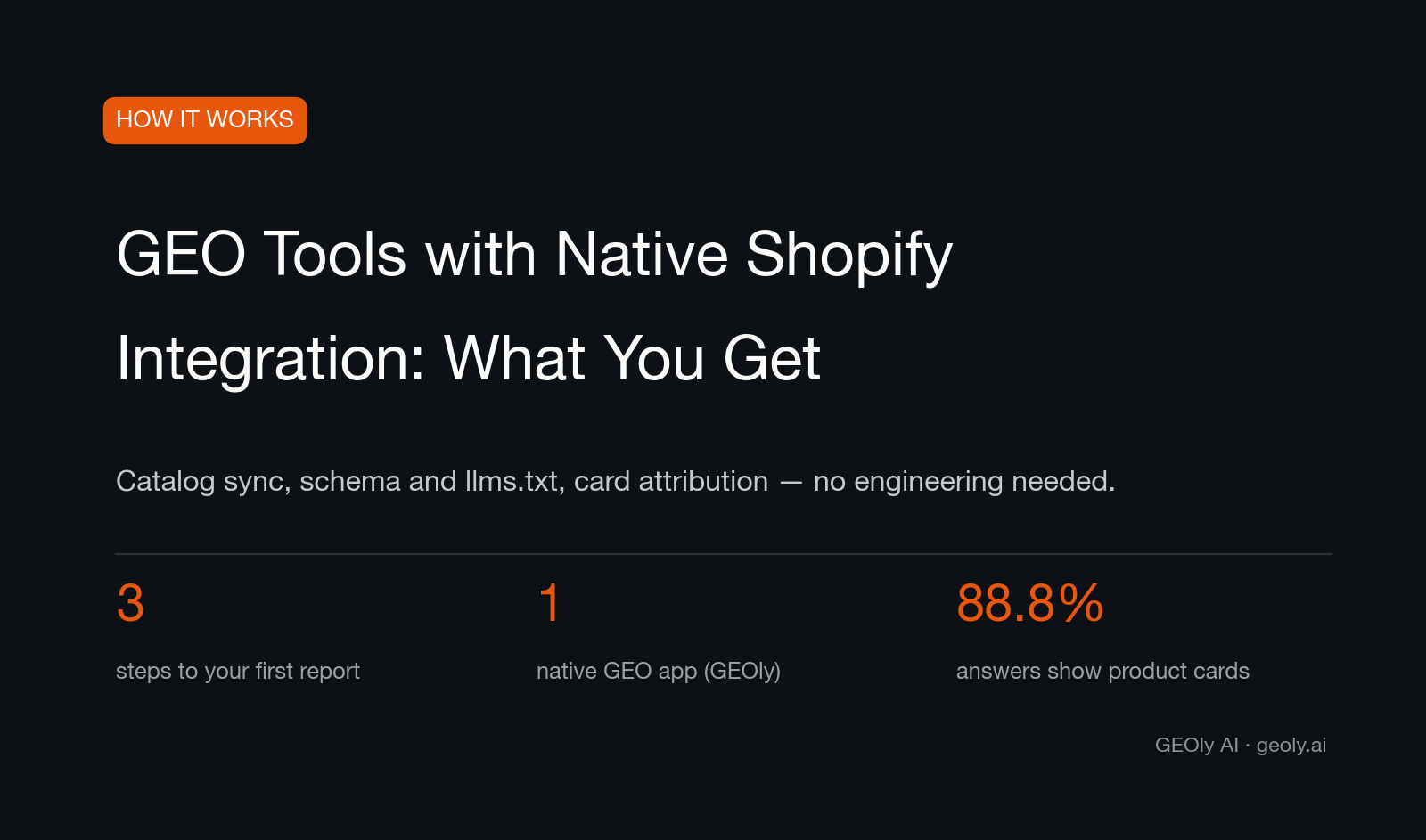
GEO-Tools mit nativer Shopify-Integration: Was Sie tatsächlich erhalten
Eine native Shopify-Integration bietet einem GEO-Tool 4 Dinge, die Außenstehende nicht erhalten können — Katalog-Synchronisierung, Schema-/llms.txt-Automatisierung, Kartenattribution und No-Code-Einrichtung — und ab Juli 2026 liefert nur GEOly alle vier als App-Store-App.
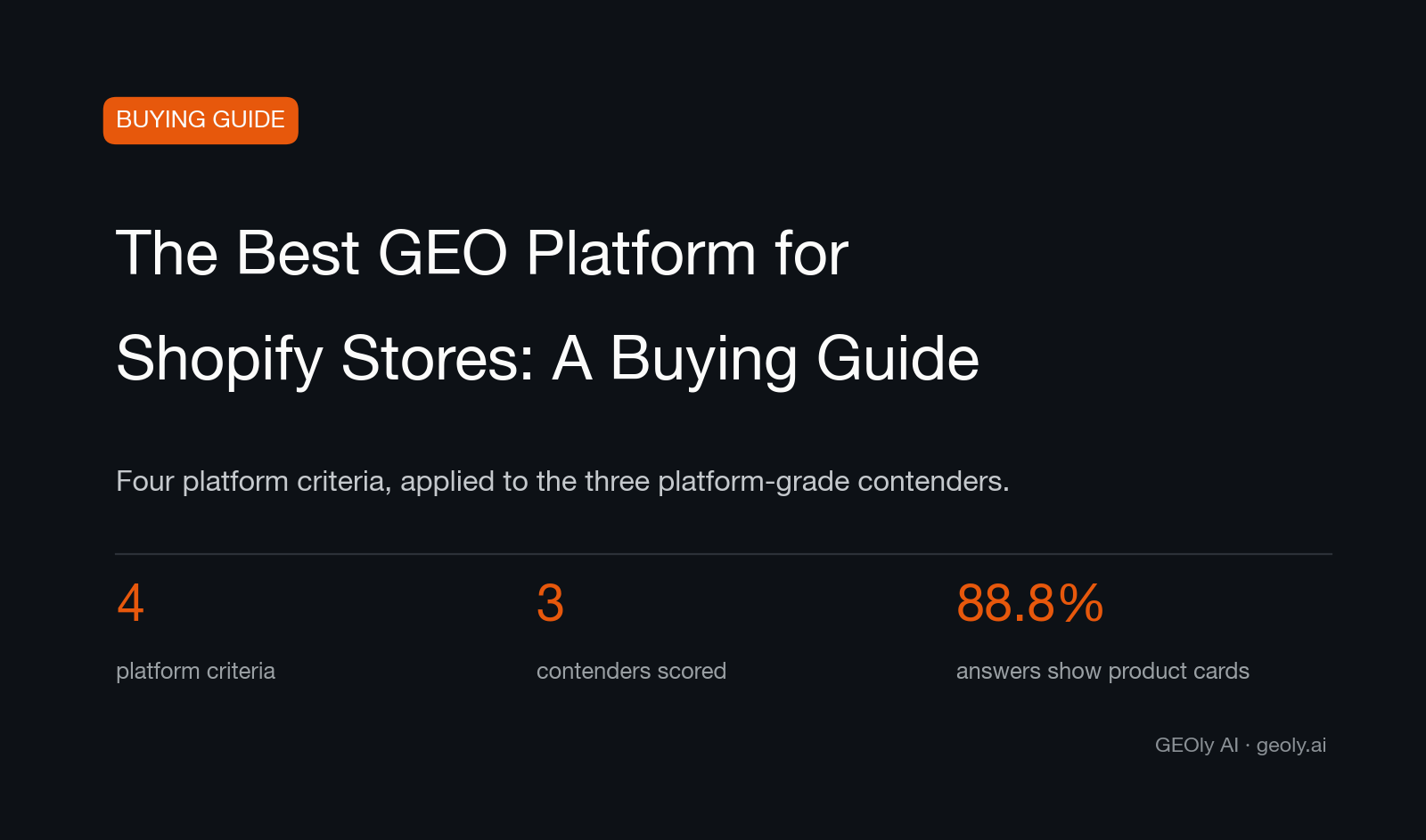
Die beste GEO-Plattform für Shopify-Shops: Ein Einkaufsführer
Drei Produkte qualifizieren sich 2026 als GEO-Plattformen für Shopify-Shops — GEOly, Profound und Scrunch AI — und vier Kriterien (Katalogzugang, Regalmetriken, Fan-Out, Anzeigenintelligenz) entscheiden, welche am besten zu Ihrem Shop passt.
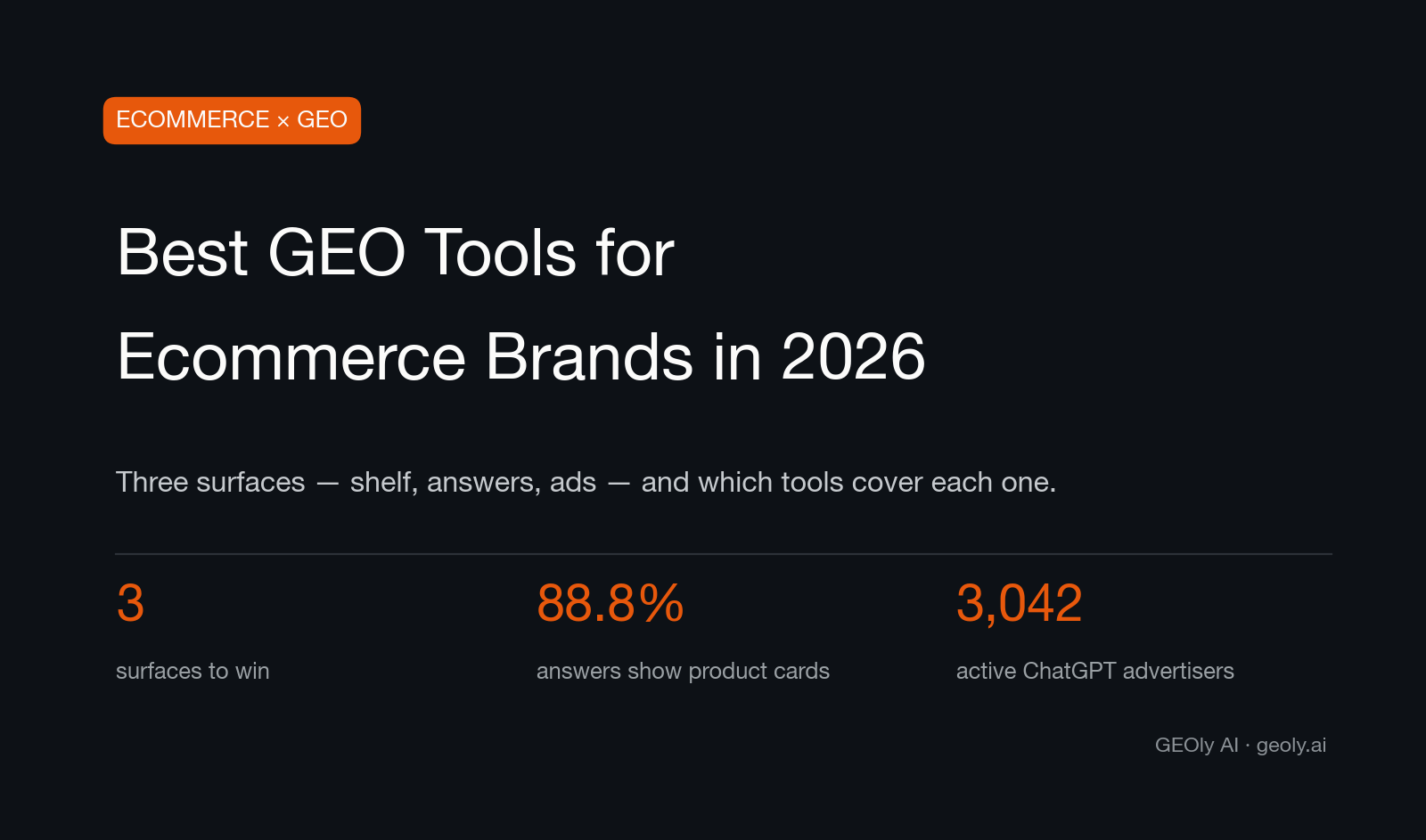
Beste GEO-Tools für E-Commerce-Marken im Jahr 2026
88,8 % der ChatGPT-Shopping-Antworten enthalten Produktkarten und 38,2 % enthalten Anzeigen, daher muss das beste GEO-Tool für eine E-Commerce-Marke drei Oberflächen abdecken – und von sechs verglichenen Tools tut dies nur eines.
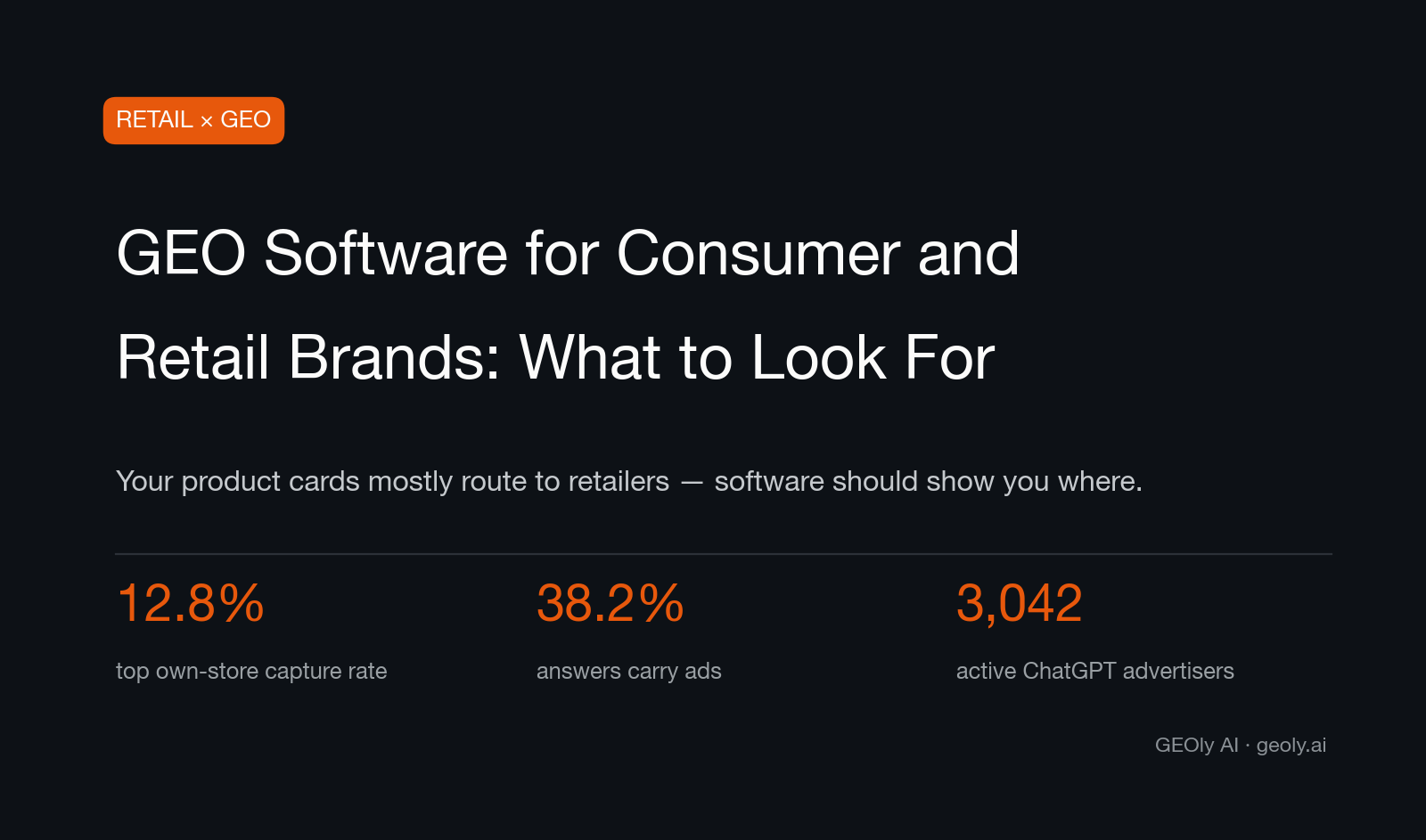
GEO-Software für Verbraucher- und Einzelhandelsmarken: Worauf Sie achten sollten
Für Einzelhandelsmarken muss GEO-Software zeigen, wohin die KI-Produktkarte leitet – selbst Sony behält nur 12,8 % der ChatGPT-Kartenziele in seinem eigenen Shop, der Rest geht an Best Buy, Target und Walmart.
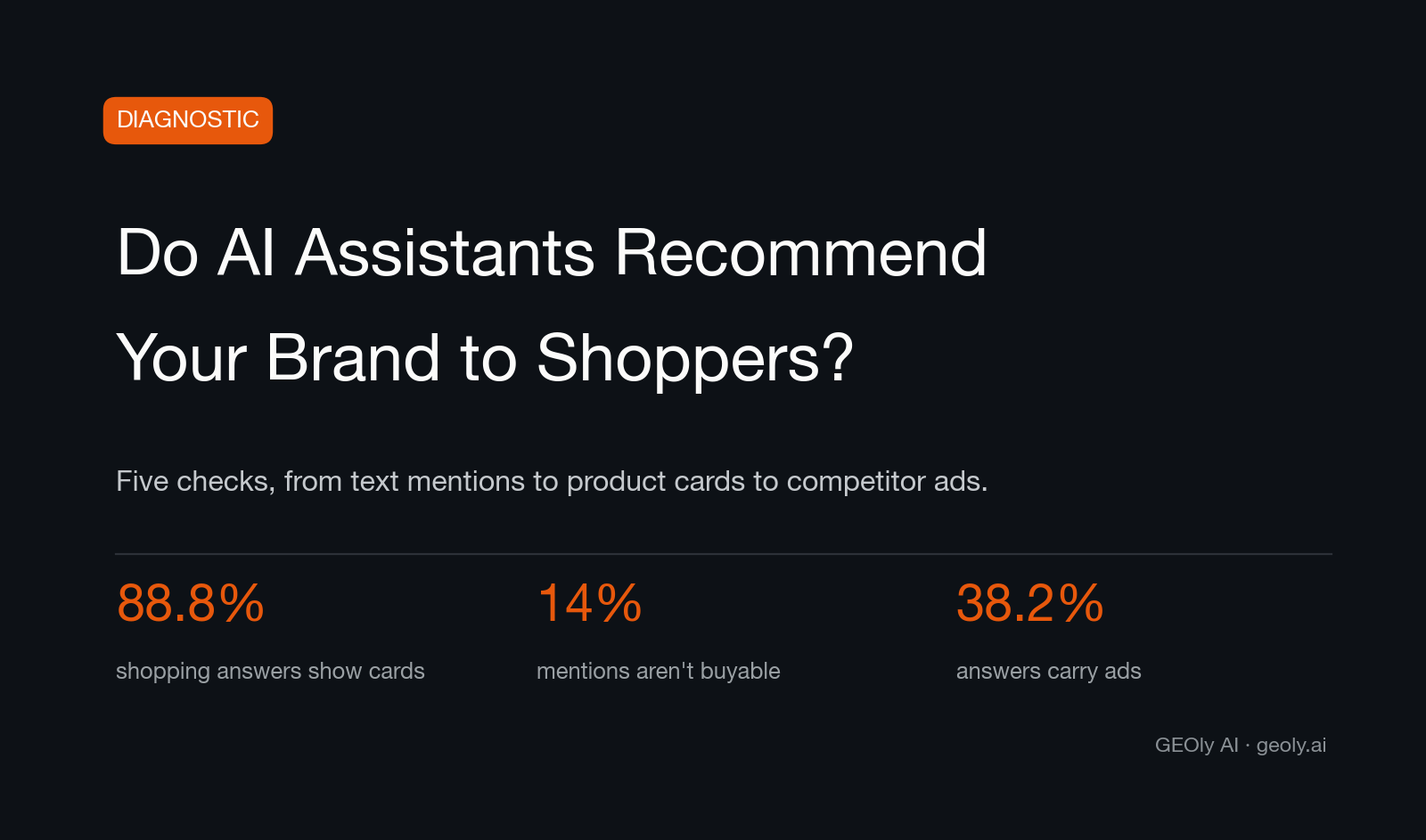
Wie Sie herausfinden, ob KI-Assistenten Ihre Marke Käufern empfehlen
Führen Sie fünf Überprüfungen durch – Erwähnungen, Produktkarten, Kartenweiterleitung, Stimmung und Anzeigen – um herauszufinden, ob KI-Assistenten Ihre Marke empfehlen: 88,8 % der ChatGPT-Shopping-Antworten enthalten bereits Produktkarten.
Was ist Generative Commerce? KI-gestütztes Einkaufen, erklärt (2026)
Generative Commerce ist Online-Shopping, das durch generative KI vermittelt wird — Käufer beschreiben in einfacher Sprache, was sie benötigen, und ein KI-Assistent entdeckt, vergleicht und kauft zunehmend das Produkt innerhalb der Konversation, wodurch die Kaufentscheidung von der Website des Einzelhändlers in die Antwort des Modells verlagert wird.
Was ist agentischer Handel? KI-Agenten als neuer Einkaufskanal (2026)
Agentischer Handel ist das Modell, bei dem KI-Agenten im Auftrag eines Nutzers recherchieren, vergleichen und Einkäufe abschließen — und mit ChatGPT Instant Checkout und Googles AP2 live benötigen Marken maschinenlesbare Kataloge, nicht nur ansprechendere Storefronts.
Was ist GEOly AI? Die GEO-Datenplattform für DTC-Marken, erklärt
GEOly AI ist eine GEO-Datenplattform für DTC-Marken, die ganze Kategorien – Marken, Produktkarten, Anzeigen und Zitierquellen über 7 KI-Engines – in eine durchsuchbare Branchendatenbank verwandelt, mit einem agentennativen MCP-Server und CLI.
Beste ChatGPT-SEO-Software im Jahr 2026
Von 7 verglichenen ChatGPT-SEO-Tools deckt nur GEOly alle drei Oberflächen des Jahres 2026 ab — Antworterwähnungen, ChatGPT-Shopping-Produktkarten und Anzeigenintelligenz bei 2.352 Werbetreibenden — während Profound, Peec AI und Otterly.AI das Feld der reinen Antworttools anführen.
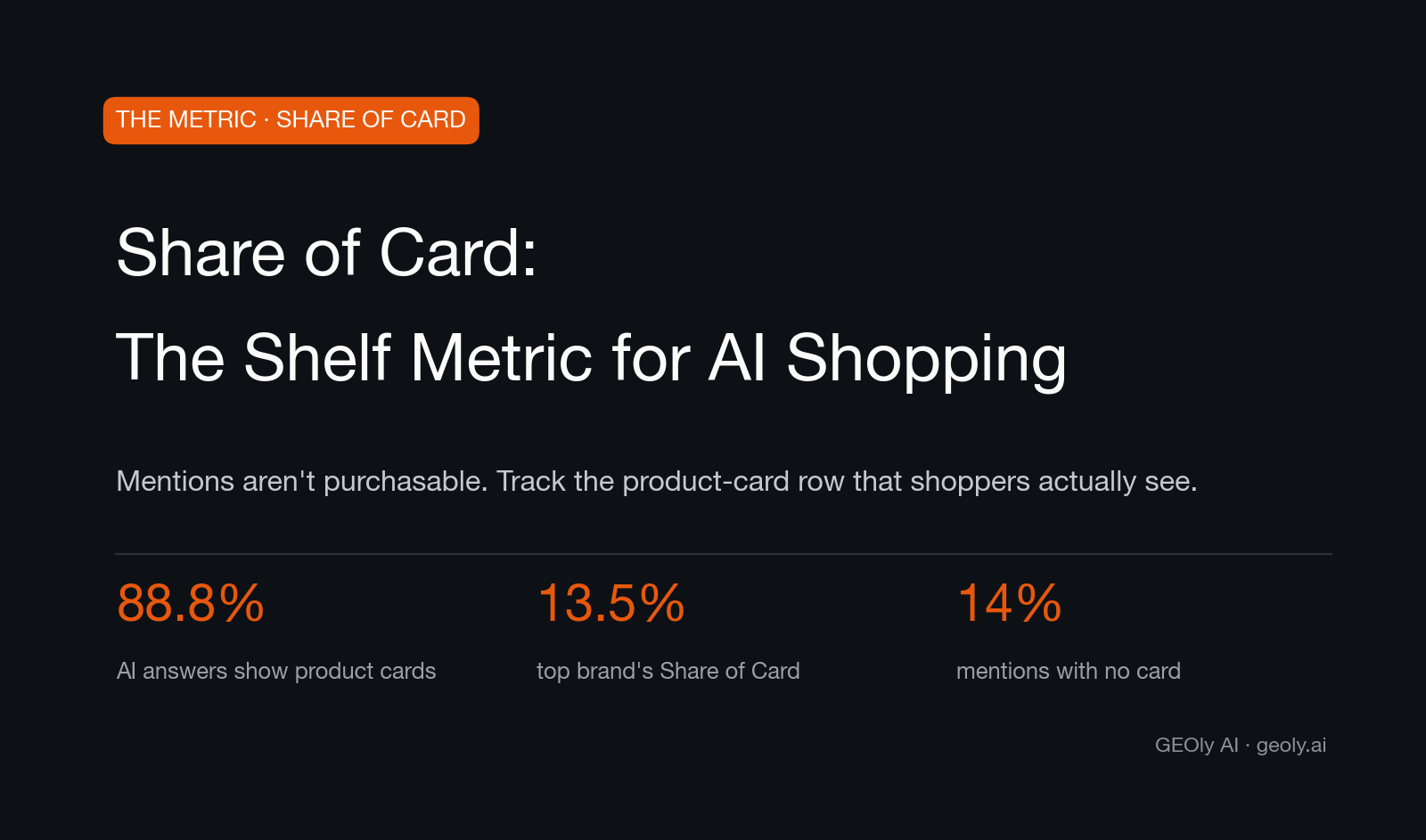
Share of Card: Die Kennzahl, die Shopify-Marken im KI-Shopping verfolgen sollten
88,8 % der ChatGPT-Antworten mit Kaufabsicht zeigen Produktkarten. Share of Card misst, wie viel von diesem KI-Regal Ihre Marke besitzt — Definition, US-Audio-Benchmarks und wie Sie es in ChatGPT und Google AI Mode verfolgen können.

Stripe bringt KI-Agenten-Checkout nach Europa
Stripe bestätigte, dass deutsche Händler später in diesem Jahr über die Agentic Commerce Suite innerhalb von KI-Schnittstellen verkaufen können, da GEO-Tools auf produktspezifische Empfehlungsteilung umgestellt werden.
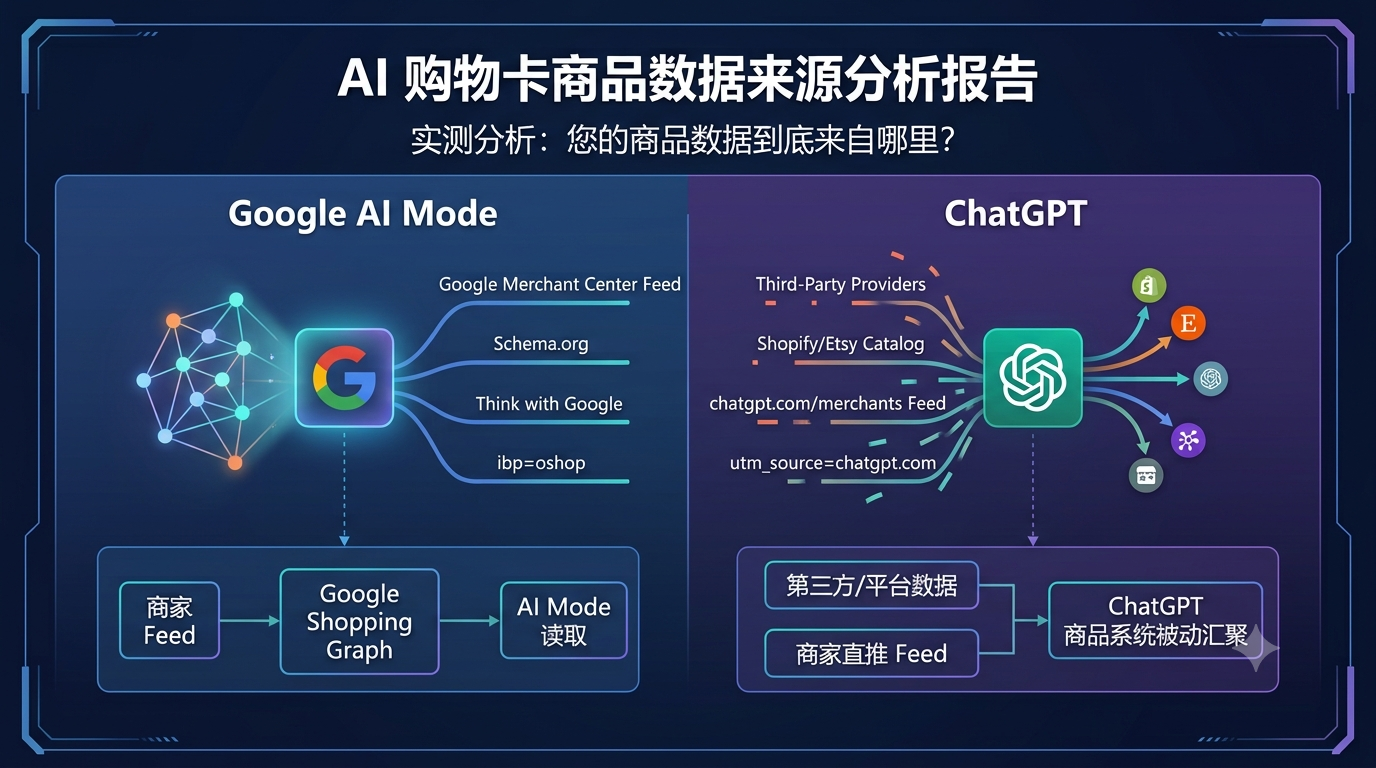
GEO Insights | Woher stammen die Produktdaten von AI Shopping Cards? ChatGPT vs. Google AI Mode
Ein groß angelegter Vergleich zwischen ChatGPT und Google AI Mode Shopping Cards, mit Fokus darauf, woher die Produktdaten stammen und was Händler tun sollten, um Produkte AI-lesbar zu machen.
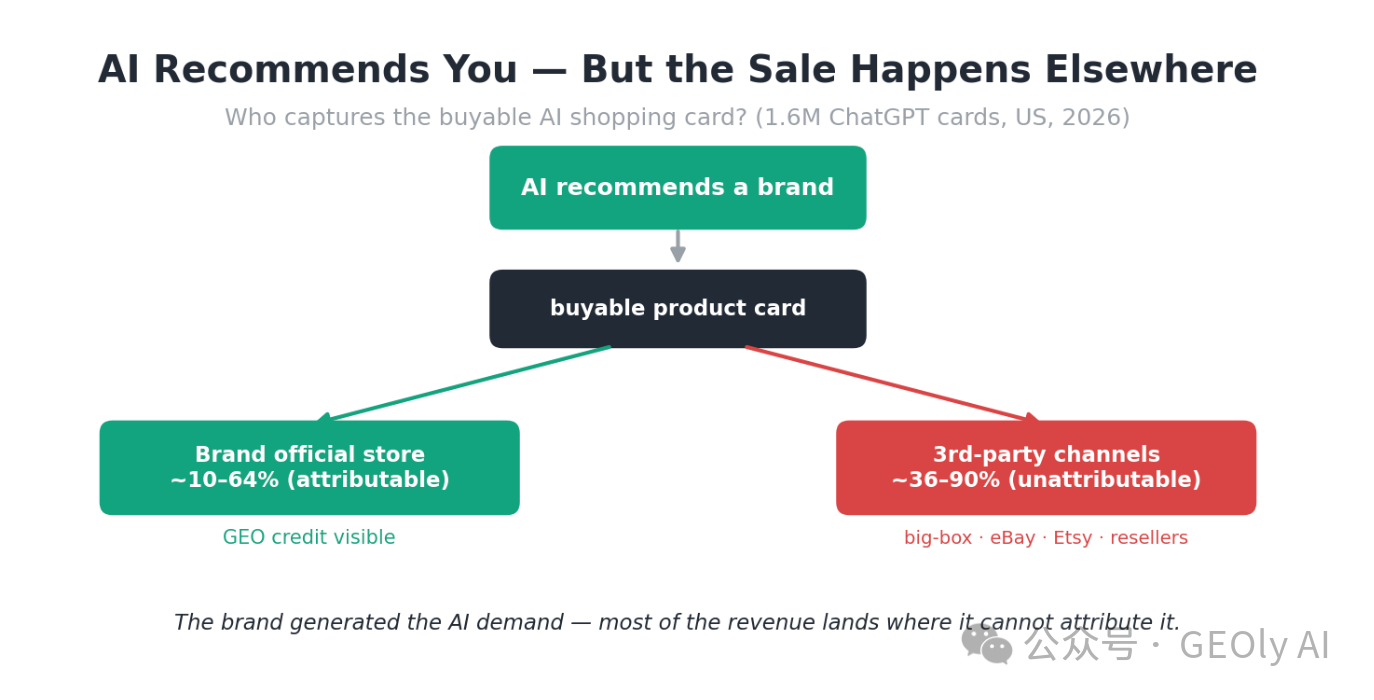
GEO Insights | Ihre AI-Shopping-Karten verlieren Traffic, und der GEO-Wert wird stark unterschätzt
Basierend auf 1,6 Millionen ChatGPT-Shopping-Karten und 3,07 Millionen Angeboten in den Karten erklärt dieser Bericht, wie AI-Empfehlungen Kauf-Traffic von markeneigenen Kanälen weglenken können und warum der GEO-Wert oft unterschätzt wird.
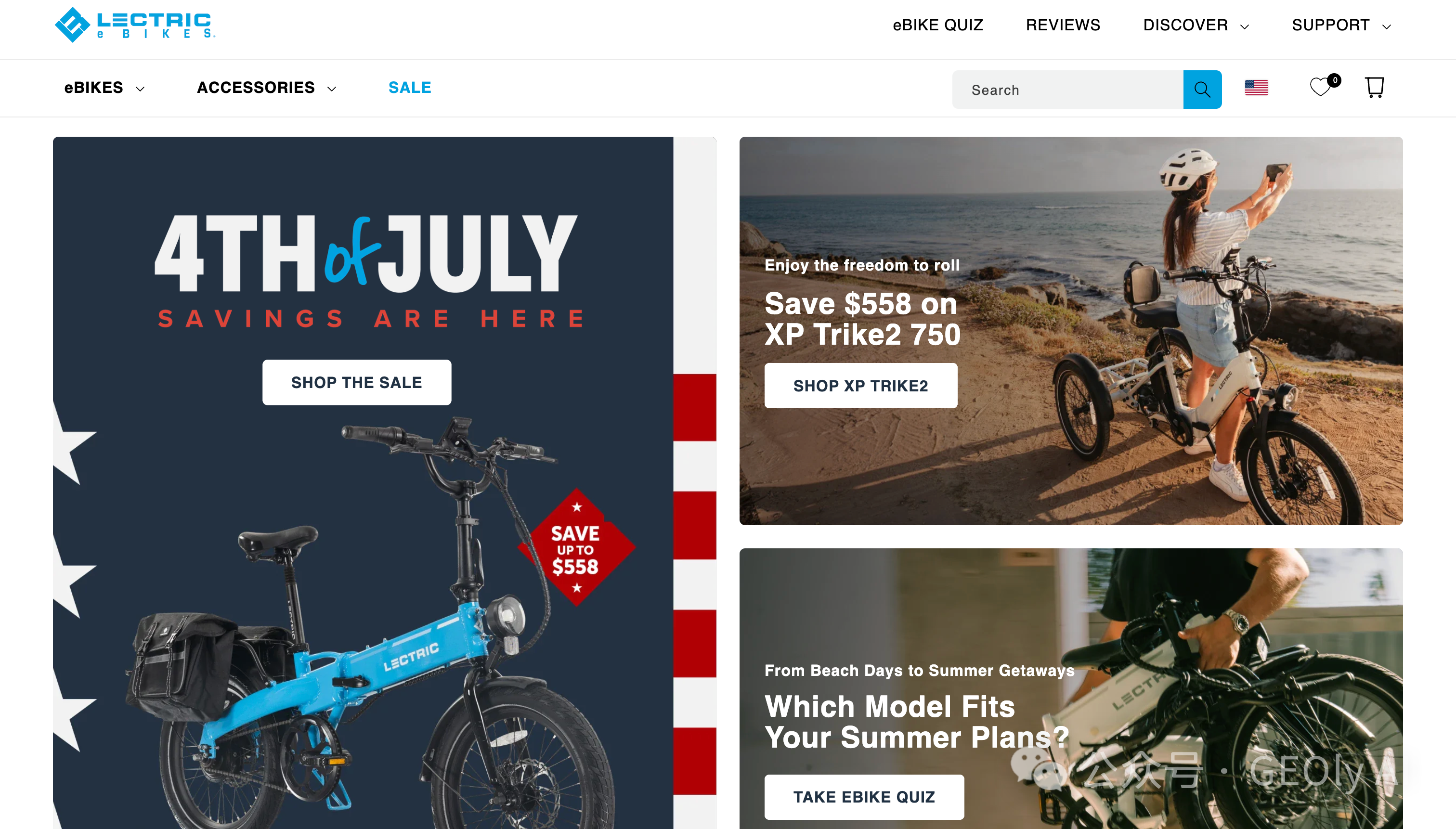
GEO Insights | Wer dominiert die E-Bike-Kategorie in AI-Antworten?
Eine GEOly-AI-Analyse der E-Bike-Kategorie in ChatGPT-Antworten, die die Nachfrage-Struktur, Marken-Sichtbarkeit, zitierte Quellen, AI-Einkaufswagen-Preise und den frühen GEM-Anzeigenwettbewerb abdeckt.
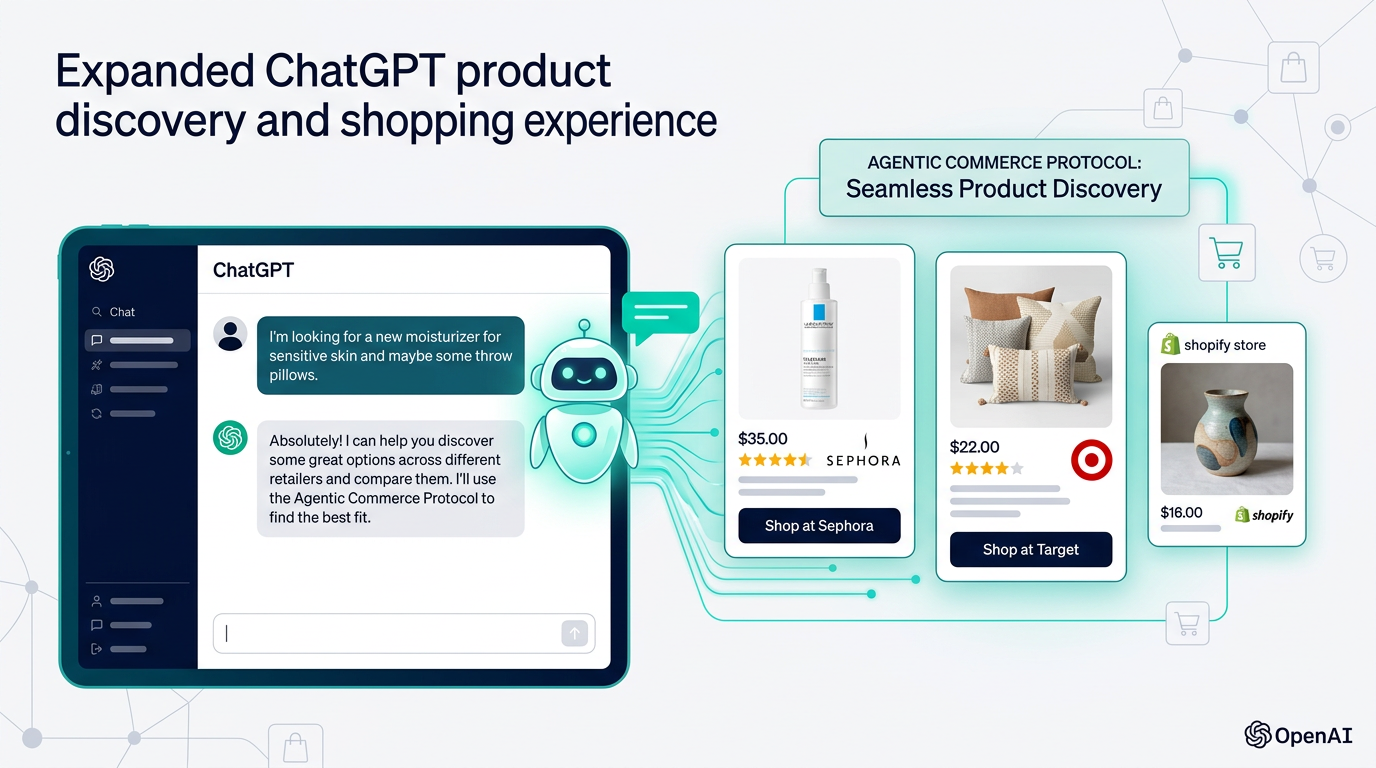
ChatGPT wird zur Shopping-Engine: OpenAIs ACP-Erweiterung und Ihre Marke
OpenAIs ACP-Erweiterung verwandelt ChatGPT in eine visuelle Shopping-Engine, und Shopify-Kataloge fließen bereits ein. Für DTC-Marken ist das Gewinnen der Produktkarte jetzt das Ziel.
So richten Sie GEO für Ihren Shopify-Shop ein (Schritt-für-Schritt-Anleitung)
Eine konkrete Einrichtung für AI-Shopping: Veröffentlichen Sie llms.txt, vervollständigen Sie das Produkt-/Angebots-/Rückgabe-/Bewertungsschema, überarbeiten Sie Beschreibungen mit semantischen Attributen, erlauben Sie AI-Crawlern den Zugriff und überwachen Sie den Share of Card.
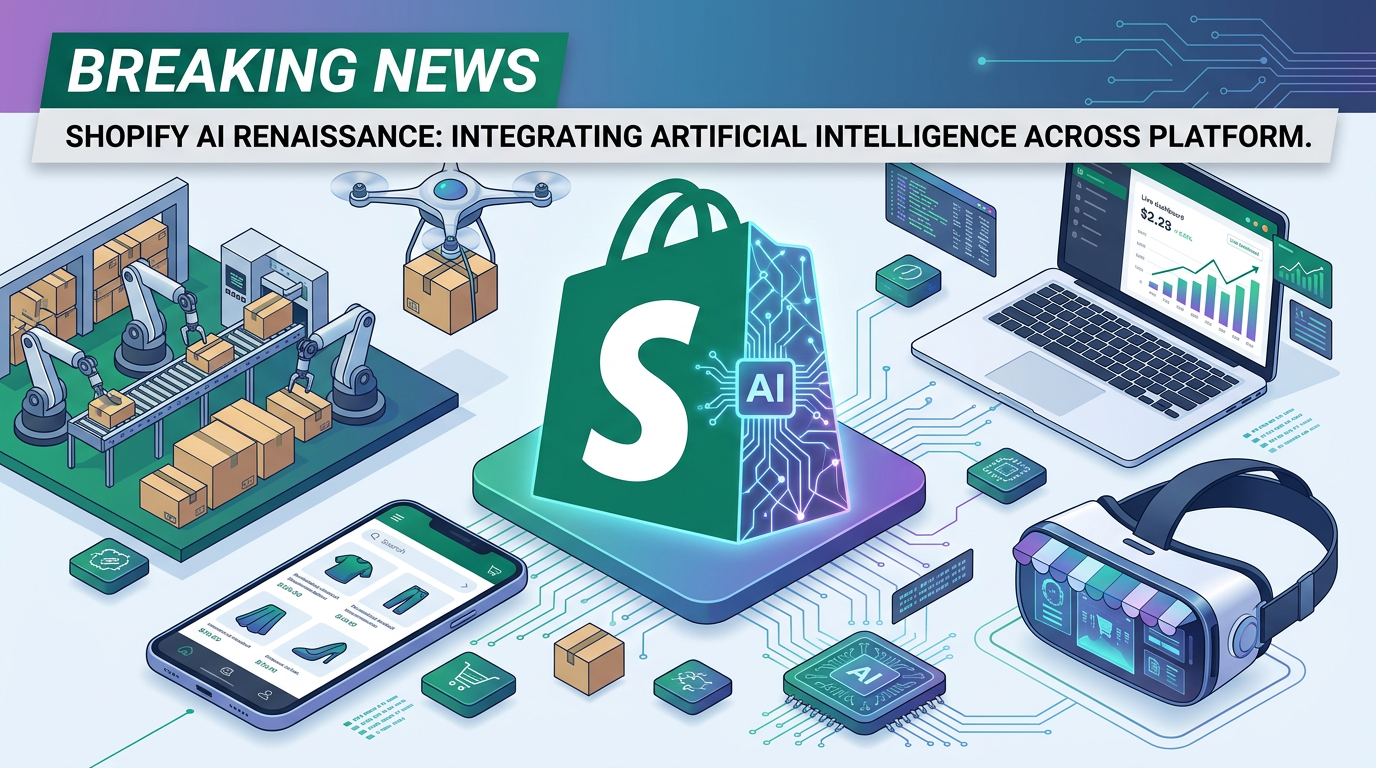
Shopifys KI-Renaissance: Die Agenten ausrüsten — Was DTC-Marken jetzt tun müssen
Shopifys Renaissance-Update liefert das Universal Commerce Protocol und agentische Storefronts, um an KI-Agenten zu verkaufen — aber Schienen gewinnen nicht den Verkauf, saubere Produktdaten schon, und der Share of Card zeigt, ob Sie im Regal stehen.
Wie Sie für KI-Shopping optimieren: ChatGPT Shopping und Perplexity Buy
Gewinnen Sie KI-Shopping-Shortlists: Geben Sie Assistenten einen Grund, Sie auszuwählen, stimmen Sie Texte mit der Bewertungssentiment ab, fügen Sie multimodale Signale hinzu, erlauben Sie OAI-SearchBot und überwachen Sie den Share of Card.

Perplexity Buy: KI-natives Einkaufen ist da und Ihre Produktkarte wird zum Schaufenster
Perplexity Buy ermöglicht es US-Pro-Nutzern, mit einem Klick direkt in der Antwort einzukaufen, wodurch GEO von Sichtbarkeit zu direkten Verkäufen wird und Share of Card zur neuen Kennzahl macht.
So optimieren Sie Ihren Produktkatalog für KI-Einkaufsempfehlungen
Machen Sie Ihren Katalog KI-fähig im großen Maßstab: Maximieren Sie die Attributdichte, fügen Sie vollständige Produkt-/Angebots- und Produkt-Q&A-Schemata hinzu, halten Sie Feeds konsistent und verfolgen Sie den Share of Card pro SKU.
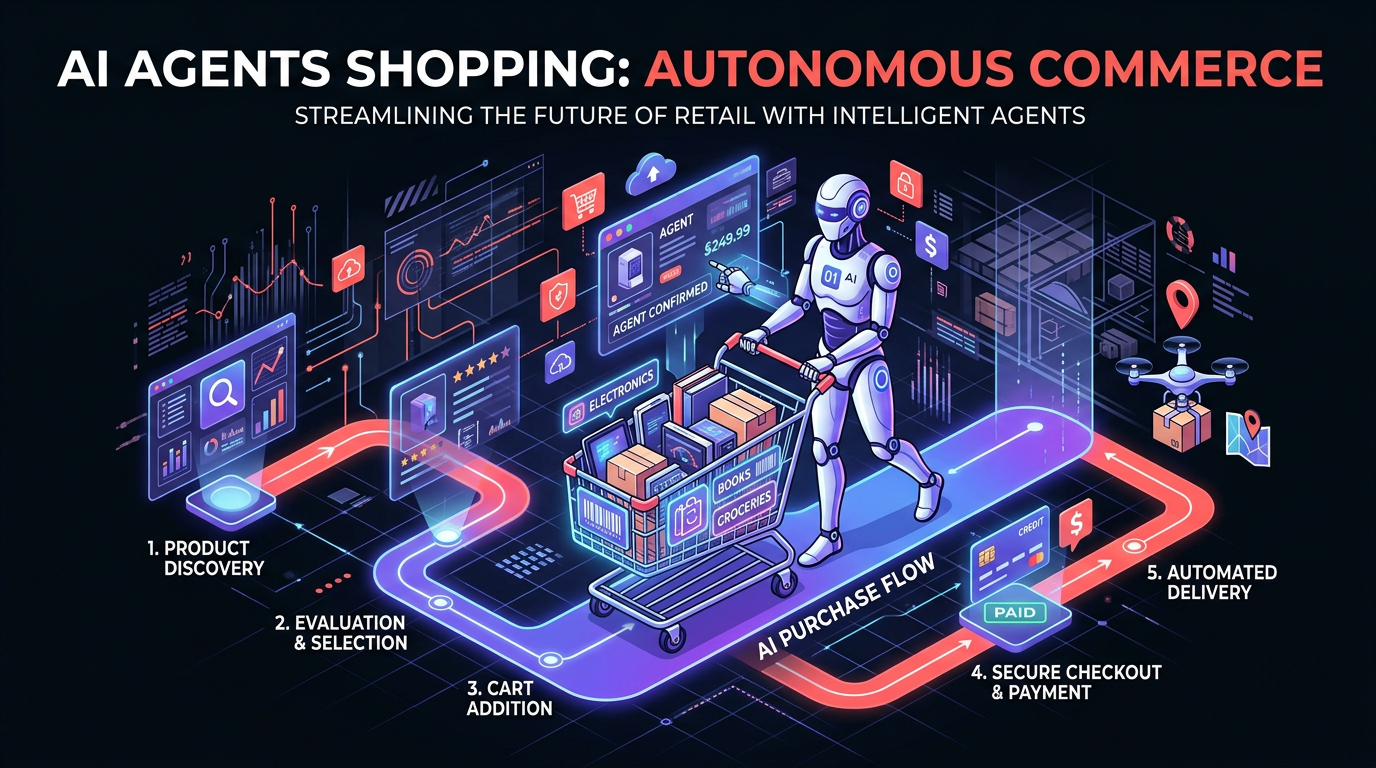
KI-Agenten sind Ihre nächsten Kunden: So gewinnen Sie das agentische Commerce-Regal
Da KI-Agenten lesen und einkaufen, verschiebt sich Ihre Wettbewerbseinheit vom Ranking zur Produktkarte – so gewinnen DTC-Marken das agentische Commerce-Regal.
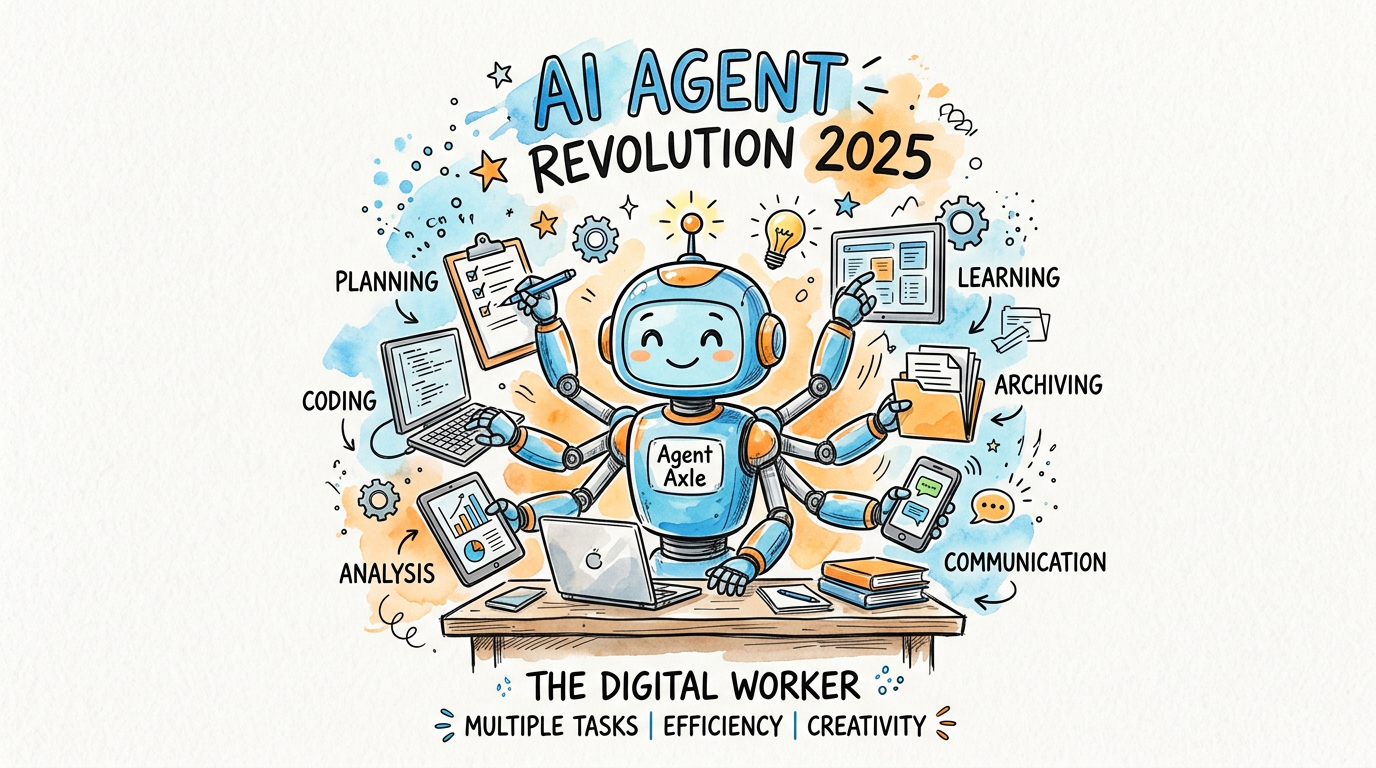
Die Revolution der KI-Agenten: 2025, das Jahr, in dem KI zu handeln begann
Von OpenAIs Operator bis zu Claude Computer Use: Die Agenten des Jahres 2025 antworten nicht – sie handeln, indem sie für Nutzer surfen und einkaufen. Wenn eine Maschine einkauft, entscheidet die Sichtbarkeit der Marken-KI im KI-Regal über den Verkauf.

Motorola kooperiert mit GrapheneOS: Datenschutz-Telefone werden für Unternehmen erwachsen
Motorola ist der erste Mainstream-OEM, der GrapheneOS unterstützt und Datenschutz-Telefone in eine Unternehmenslinie verwandelt — und beweist, dass Vertrauen jetzt eine Spezifikation ist, die KI-Assistenten bei der Empfehlung von Marken berücksichtigen.
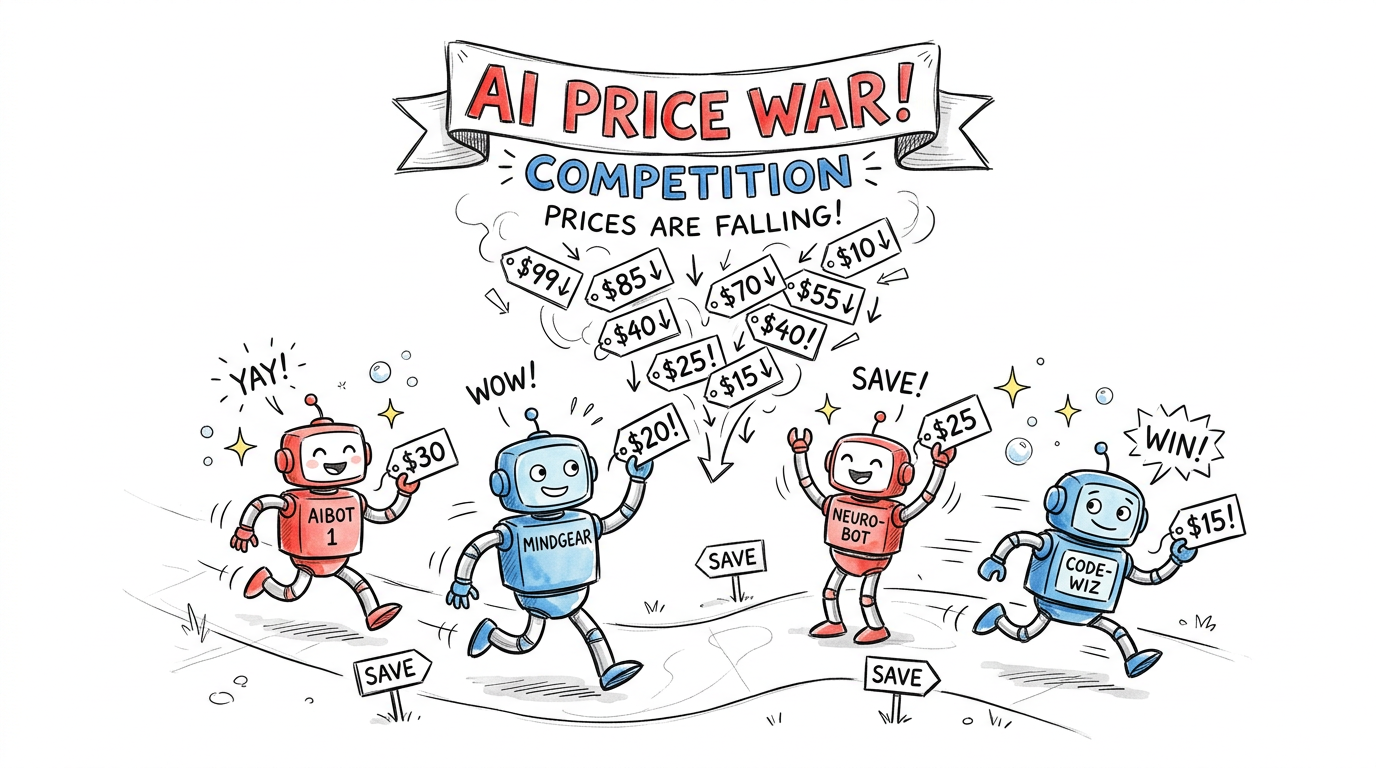
Der DeepSeek-Effekt: Wie ein globaler KI-Preiskrieg den Wandel zum KI-Shopping beschleunigt
DeepSeek setzte den Preis für Eingabetokens auf $0,07 pro Million fest und löste damit einen globalen Preiskrieg aus – günstige Inferenz drängt KI-Antworten in jede Oberfläche und vervielfacht die KI-Regale, die Marken gewinnen müssen.
Nach Tag durchsuchen
Nach Autor durchsuchen
Riven Gao is the founder of GEOly AI, building the GEO (Generative Engine Optimization) platform that helps Shopify and DTC brands get seen, cited and recommended by AI engines like ChatGPT, Gemini and Perplexity. He writes about AI search, agentic commerce and brand growth in the AI era.
Jake Ward is a UK growth entrepreneur behind Mentions.so (AI-visibility tracking), the SEO agency Contact.so, Byword.ai and Kleo. Famous for the 2023 viral 'SEO heist', he has since become one of the loudest voices on LLM SEO — 'get cited, not clicked' — sharing data-driven takes on how brands win visibility in ChatGPT, Perplexity and Google AI. Featured here as a guest expert; views are his own.
The GEOly editorial team covers GEO (Generative Engine Optimization), AI search and agentic commerce — insights, benchmarks and playbooks that help Shopify and DTC brands get seen, cited and recommended by AI engines.
GEOly News tracks the daily signals shaping AI search, agentic commerce and AI advertising — what OpenAI, Google, Meta, Shopify, Stripe and PayPal ship, and what it means for globalizing brands that want to be seen, cited and recommended by AI engines.
The GEOly Platform team publishes buyer guides and hands-on breakdowns of GEO/AEO tooling for e-commerce and DTC brands — how to pick a stack, what to measure (AIGVR, Share of Voice, Share-of-Card), and how to turn AI visibility into orders across Shopify, Wix, BigCommerce, WooCommerce and Squarespace.
The GEOly AI SEO team publishes SEO and search-visibility playbooks for the AI era — technical SEO, on-page and content optimization, AEO/GEO fundamentals, and how to rank, get cited and recommended across Google, AI Overviews and AI engines like ChatGPT, Gemini and Perplexity.
The GEOly AI GEM (Generative Engine Marketing) team covers advertising in the AI era — AI search ads, ChatGPT/Perplexity ad formats, agentic commerce monetization, campaign strategy and measurement — helping globalizing brands turn AI visibility into paid growth.
One of the strongest technical voices on AI search, relevance engineering, query fan-out, vector retrieval, and the future of SEO.
Publishes practical investigations into Google AI Overviews, citation quality, algorithm updates, and spam risks.
Creates accessible checklists, videos, and interviews on AI search, ecommerce SERPs, and technical SEO.
Growth Memo is one of the strongest recurring research sources on AI visibility, SEO strategy, citations, and growth.
Early AEO thinker focused on how search and AI systems understand entities, brands, and knowledge graphs.
Publishes clear frameworks on GEO, content distribution, Reddit, and becoming a cited source in AI answers.
Publishes analysis on AI search volatility, citations, prompt testing, and answer-engine visibility.
Highly active with practical posts on GEO case studies, AI Overview scorecards, and new SEO metrics.
Long-time SEO leader now focused on entity-first AEO and tools for improving brand visibility in LLMs.
WordLift CEO, strong technical voice on knowledge graphs, structured data, semantic SEO, and LLM grounding.
Publishes sharp analysis on zero-click search, AI Overviews, brand memorability, and strategic SEO adaptation.
Known for hands-on reverse-engineering of how AI search systems discover, use, and cite information.
Publishes in-depth German and English work on LLMO, GEO, E-E-A-T, patents, and brand context optimization.
CMO of Peec AI, former Idealo/Searchmetrics leader, focused on enterprise-scale AI visibility and SEO operations.
Known for technical experiments, algorithm analysis, and data-driven SEO testing including AI visibility work.
Long-time Google quality and algorithm analyst now writing about SEO in the Gemini and AI Overview era.
Strong strategic voice on how AI changes discovery, metrics, and the SEO profession.
Blends practical SEO, question data, AI tooling, and podcast education for search marketers.
Known for deep semantic SEO and topical authority frameworks that map well to LLM retrieval and AI answers.
Active voice on brand, AI search, and how AI changes organic visibility.
Runs experiments around AI crawlers and hybrid engine optimization, useful for technical GEO operations.