Tag: Citation Source
13 Beiträge13 Artikel mit dem Tag „Citation Source“ auf dem GEOly-Blog — Einblicke, Daten und Leitfäden zu Citation Source in der Ära der KI-Suche und wie Marken Sichtbarkeit über ChatGPT, Gemini und Perplexity gewinnen. Entdecken Sie unten weitere Themen und Autoren.
Perplexity SEO: Wie Sie von Perplexity AI zitiert und empfohlen werden (2026)
Perplexity zitiert nur drei oder vier Quellen pro Antwort, daher geht es nicht darum, bei Google zu ranken — sondern die faktenreiche, gut strukturierte Seite zu sein, die es zitiert und die durch die Domains, denen es bereits vertraut, untermauert wird.
Die Content- und Zitationsschicht: Warum Abgerufenes in GEO nicht zitiert wird
Im generativen Suchen bringt das Ranking Ihre Seite nur in den Pool, den eine KI privat liest – die Content- und Zitationsschicht ist der Bereich, in dem die Suchmaschine entscheidet, ob sie Sie tatsächlich zitiert, und das ist die Sichtbarkeit, die den Nutzer erreicht.
GEO-Content-Strategie: So schreiben Sie Inhalte, die KI-Modelle zitieren (2026)
Eine GEO-Content-Strategie optimiert für Zitationen, nicht für Rankings: Beginnen Sie mit einer zitierfähigen Antwort, fügen Sie originale Daten und Schema hinzu und verfolgen Sie die Erwähnungs- und Zitationsrate über KI-Engines hinweg – das entscheidet, ob ein Modell Ihre Inhalte mit Ihrer Marke wiederholt.
Schema-Markup für GEO: Ein Implementierungsleitfaden für 2026
Schema-Markup wird Sie nicht ranken, aber das Kennzeichnen von Seiten in JSON-LD beseitigt die Mehrdeutigkeit, die dazu führt, dass AI-Engines Ihre Marke falsch zitieren oder überspringen — hier sind die Typen und Validierungsschritte, die für GEO wirklich zählen.
Was ist Zitationsanalyse? Verfolgen und Gewinnen der Quellen, die KI-Engines zitieren
Die Zitationsanalyse ist die Praxis, die Drittquellen zu verfolgen und zu optimieren, die KI-Engines in Ihrer Kategorie zitieren — die Quellen, die entscheiden, ob Ihre Marke überhaupt in KI-Antworten erscheint.
Was sind KI-Zitationen? Wie KI-Engines Quellen auswählen und angeben
Eine KI-Zitation ist ein expliziter Quellenverweis – eine Fußnote, eine Linkkarte oder eine namentliche Nennung –, die Engines wie ChatGPT, Perplexity und Google AI Overviews an Antworten anhängen; sie zu verdienen, ist der Weg, wie Marken in der KI-Suche sichtbar und anklickbar bleiben.
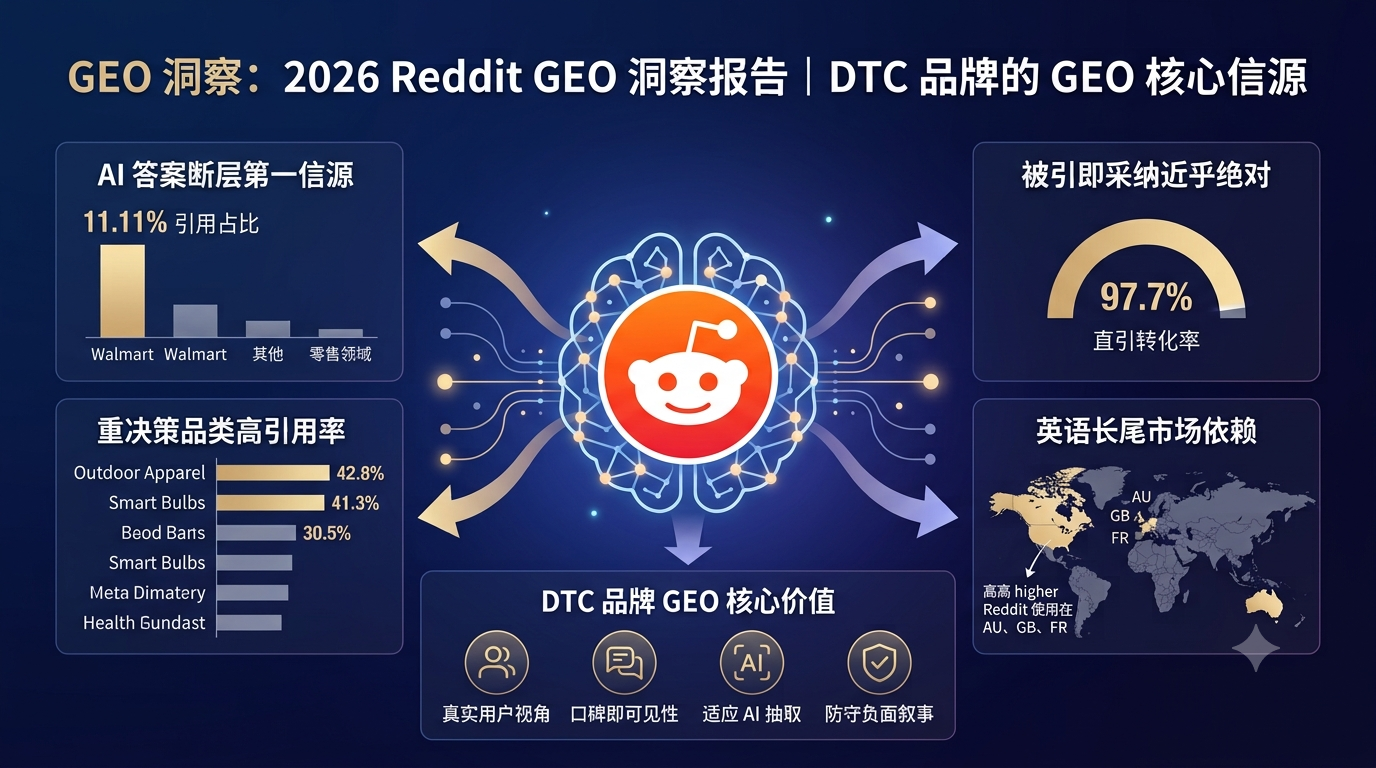
Reddit's Branchenwert in der KI-Suche (GEO): Bericht 202606
Basierend auf öffentlich zugänglichen Brancheninformationen von GEOly analysiert dieser Bericht den Abruf-, Zitations- und Direktzitationswert von Reddit in KI-Suchen im ChatGPT-Stil und erklärt, was dies für GEO- und DTC-Marken bedeutet.
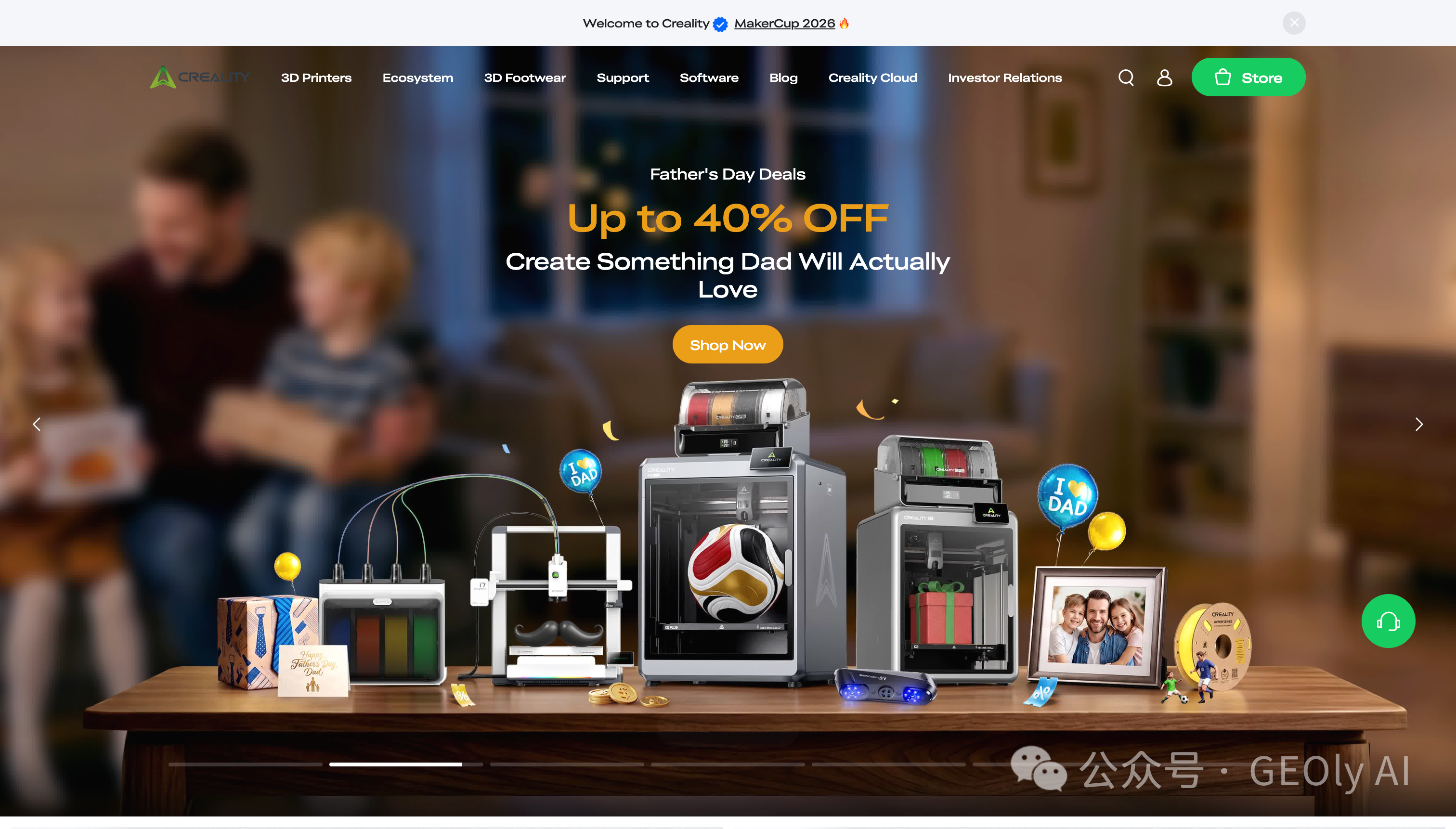
GEO Insights | Creality U.S. Market GEO Diagnostic Report - 202606
Ein GEO-Diagnosebericht über Creality im US-amerikanischen 3D-Druck-Markt, der die Sichtbarkeit durch AI, die Wettbewerbspositionierung, den Einfluss von Quellen, Reddit-Signale, Preisgestaltung und Handlungsempfehlungen abdeckt.
So schreiben Sie KI-freundliche FAQ-Seiten, die zitiert werden
Strukturieren Sie FAQ-Seiten als direkte Frage-Antwort-Paare, basierend auf echten KI-Eingaben und versehen mit dem FAQPage-Schema, damit KI-Engines Ihre Antworten extrahieren und zitieren.
So optimieren Sie Blog-Inhalte für KI-Suchmaschinen
Strukturieren Sie Ihre Blogbeiträge so, dass ChatGPT, Perplexity und Gemini sie abrufen, verstehen und zitieren können – mit Chunking, BLUF-Einstiegen, klaren Entitäten und zitierbaren Fakten.
Wie Sie von ChatGPT und anderen KI-Modellen zitiert werden
Das Playbook auf Seitenebene: Antwortkapseln, Erstanbieterdaten und eine extraktionsbereite Struktur, die dafür sorgen, dass ChatGPT Ihre Inhalte zitiert und verlinkt, statt die eines Konkurrenten.
Wie Sie Ihre Perplexity-Zitate verfolgen und verbessern können
Prüfen Sie, ob Perplexity Sie mit einer Goldstandard-Abfrage zitiert, berechnen Sie Ihren Zitationsanteil im Vergleich zu Wettbewerbern und optimieren Sie Seiten für thematische Tiefe und Aktualität.
Wie Sie einen semantischen Schutzgraben für Ihre Marke im Bereich KI aufbauen
Ein fünfstufiger Plan für eine verteidigungsfähige KI-Identität: Überprüfen Sie, wie Modelle Sie wahrnehmen, legen Sie eine einzige Quelle der Wahrheit fest, fügen Sie ein Organisationsschema hinzu, veröffentlichen Sie llms.txt und stärken Sie dies mit Zitierungen.
Nach Tag durchsuchen
Nach Autor durchsuchen
Riven Gao is the founder of GEOly AI, building the GEO (Generative Engine Optimization) platform that helps Shopify and DTC brands get seen, cited and recommended by AI engines like ChatGPT, Gemini and Perplexity. He writes about AI search, agentic commerce and brand growth in the AI era.
Jake Ward is a UK growth entrepreneur behind Mentions.so (AI-visibility tracking), the SEO agency Contact.so, Byword.ai and Kleo. Famous for the 2023 viral 'SEO heist', he has since become one of the loudest voices on LLM SEO — 'get cited, not clicked' — sharing data-driven takes on how brands win visibility in ChatGPT, Perplexity and Google AI. Featured here as a guest expert; views are his own.
The GEOly editorial team covers GEO (Generative Engine Optimization), AI search and agentic commerce — insights, benchmarks and playbooks that help Shopify and DTC brands get seen, cited and recommended by AI engines.
GEOly News tracks the daily signals shaping AI search, agentic commerce and AI advertising — what OpenAI, Google, Meta, Shopify, Stripe and PayPal ship, and what it means for globalizing brands that want to be seen, cited and recommended by AI engines.
The GEOly Platform team publishes buyer guides and hands-on breakdowns of GEO/AEO tooling for e-commerce and DTC brands — how to pick a stack, what to measure (AIGVR, Share of Voice, Share-of-Card), and how to turn AI visibility into orders across Shopify, Wix, BigCommerce, WooCommerce and Squarespace.
The GEOly AI SEO team publishes SEO and search-visibility playbooks for the AI era — technical SEO, on-page and content optimization, AEO/GEO fundamentals, and how to rank, get cited and recommended across Google, AI Overviews and AI engines like ChatGPT, Gemini and Perplexity.
The GEOly AI GEM (Generative Engine Marketing) team covers advertising in the AI era — AI search ads, ChatGPT/Perplexity ad formats, agentic commerce monetization, campaign strategy and measurement — helping globalizing brands turn AI visibility into paid growth.
One of the strongest technical voices on AI search, relevance engineering, query fan-out, vector retrieval, and the future of SEO.
Publishes practical investigations into Google AI Overviews, citation quality, algorithm updates, and spam risks.
Creates accessible checklists, videos, and interviews on AI search, ecommerce SERPs, and technical SEO.
Growth Memo is one of the strongest recurring research sources on AI visibility, SEO strategy, citations, and growth.
Early AEO thinker focused on how search and AI systems understand entities, brands, and knowledge graphs.
Publishes clear frameworks on GEO, content distribution, Reddit, and becoming a cited source in AI answers.
Publishes analysis on AI search volatility, citations, prompt testing, and answer-engine visibility.
Highly active with practical posts on GEO case studies, AI Overview scorecards, and new SEO metrics.
Long-time SEO leader now focused on entity-first AEO and tools for improving brand visibility in LLMs.
WordLift CEO, strong technical voice on knowledge graphs, structured data, semantic SEO, and LLM grounding.
Publishes sharp analysis on zero-click search, AI Overviews, brand memorability, and strategic SEO adaptation.
Known for hands-on reverse-engineering of how AI search systems discover, use, and cite information.
Publishes in-depth German and English work on LLMO, GEO, E-E-A-T, patents, and brand context optimization.
CMO of Peec AI, former Idealo/Searchmetrics leader, focused on enterprise-scale AI visibility and SEO operations.
Known for technical experiments, algorithm analysis, and data-driven SEO testing including AI visibility work.
Long-time Google quality and algorithm analyst now writing about SEO in the Gemini and AI Overview era.
Strong strategic voice on how AI changes discovery, metrics, and the SEO profession.
Blends practical SEO, question data, AI tooling, and podcast education for search marketers.
Known for deep semantic SEO and topical authority frameworks that map well to LLM retrieval and AI answers.
Active voice on brand, AI search, and how AI changes organic visibility.
Runs experiments around AI crawlers and hybrid engine optimization, useful for technical GEO operations.
Profound co-founder focused on Agent Experience and what happens after traditional SEO.
Active curator and commentator on generative AI, SEO news, LLM outputs, and relevance engineering.
Practical enterprise voice on unifying SEO, AEO, GEO, and search-everywhere strategies.
Technical SEO and IR-focused thinker whose work maps well to AI retrieval and entity understanding.
Strong technical voice on crawlability, rendering, web infrastructure, and LLM-accessible sites.
Advanced technical marketer with Shopify/Uber experience and strong conference presence on SEO engineering.
Publishes strong technical and enterprise SEO guides; important for fundamentals that still drive AI visibility.
Key voice on zero-click search, audience research, Google behavior, and the broader discovery shift.
Strategic SEO leader known for using data, AI, and search intelligence to connect organic work to business impact.
Known for evidence-led SEO experiments and practical updates on how brand, UX, and content affect visibility.
Publishes detailed posts and X threads on Google updates, AI Overviews, and site-level impacts.
Strong visual documentation of SERP and AI Overview feature changes, especially useful for ecommerce visibility.
Essential daily source for search updates, Google communications, and SEO community reactions.
Salsify co-founder and strong voice on product data, PXM, digital shelf, and agentic commerce readiness.
One of the best retail/ecommerce strategists covering AI-native consumers and agentic commerce disruption.
Forrester retail analyst frequently quoted on GenAI, retail media, and agentic shopping.
MIT IDE Digital Fellow quoted on trust, payments rules, liability, and governance in agentic commerce.
Chief AI Officer at enterprise AI firm SYRV.AI and author of The Chief AI Officer's Handbook, Jarrod writes about generative engine optimization from a strategic AI-leadership angle. He frames GEO as a boardroom-level shift rather than a channel tactic, showing how AI-first organizations rethink discovery.