タグ: AI Visibility
50 件の投稿GEOlyブログで「AI Visibility」にタグ付けされた記事が50件 — AI検索時代におけるAI Visibilityに関する洞察、データ、プレイブック、そしてChatGPT、Gemini、Perplexityでの可視性を高める方法をご紹介します。以下で他のトピックや著者を探索してください。
テンセントがGEO市場に参入:AnswerBit徹底解説と、GEOlyとの構造比較
テンセントがGEOプラットフォームAnswerBitをリリース。中国製5LLMを日次監視し、そのフレームワークはGEOlyとほぼ同型——4モジュールの完全分解、項目別比較、ブランドが取るべき3つの判断を解説します。
AIがあなたのブランドを間違って伝えている:2026年の修正方法
ブランドに関するAIの誤った回答は、ほぼ必ず修正可能なソースにたどり着けます。全エンジンを監査し、引用元のページを修正し、スケジュールを決めて再テストしましょう。
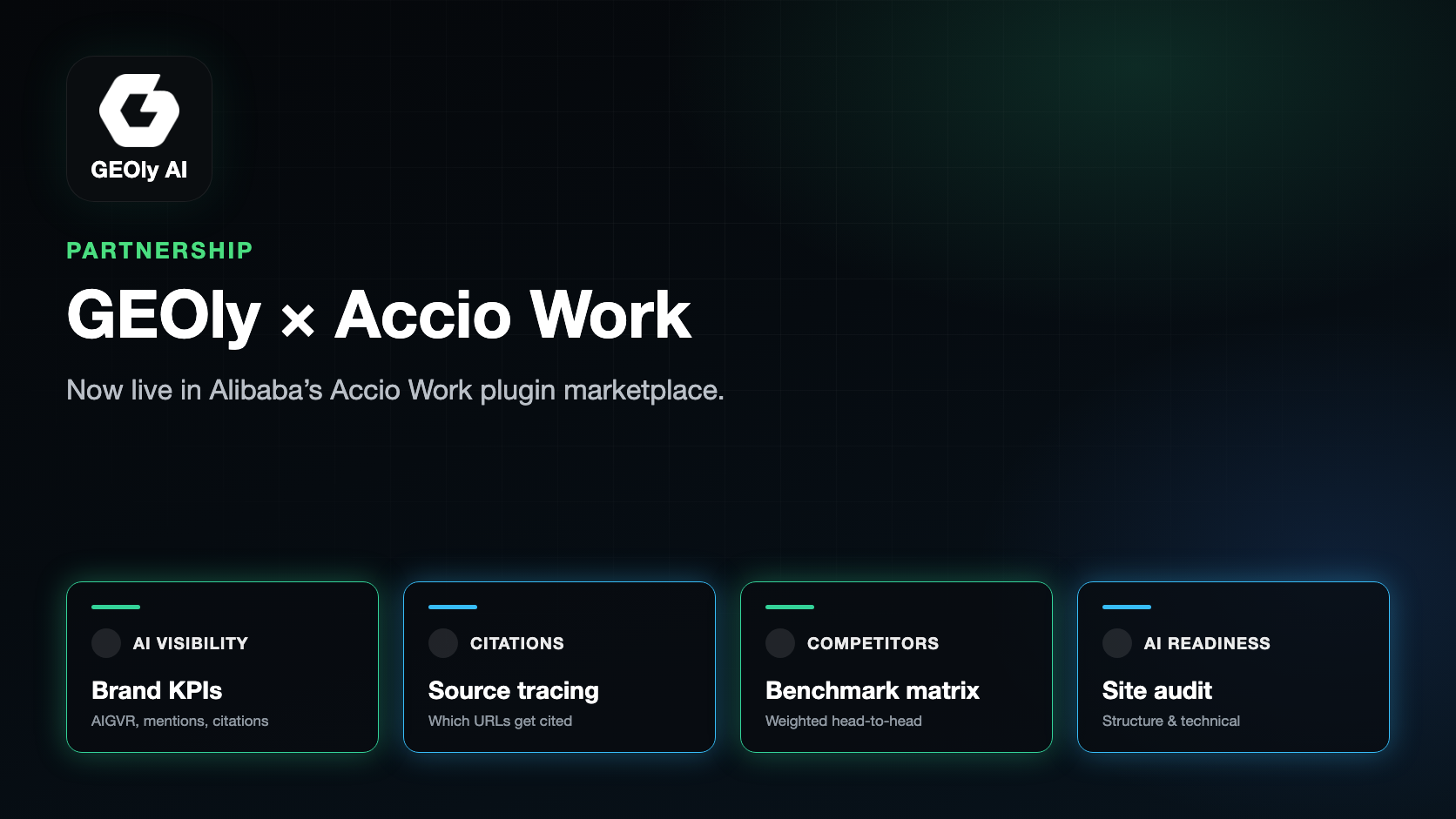
GEOly、アリババのAccio Workプラグインマーケットに正式登場
GEOlyがAccio Workプラグインマーケットに登場。AI可視性、引用トラッキング、GEOインサイトをエージェントのワークフローに直接統合できます。
2026年 最高のAI Visibility Tools:厳選8プラットフォーム
2026年に選ぶべきAI Visibility Tools 8選。GEOlyは一つの可視性指標、Share of Voice、引用トラッキングで首位、月額49ドルから。
どのGEOプラットフォームがブランド感情分析レイヤーを持っていますか?
感情スコアリングとは、追跡されたプロンプト全体で各LLMがあなたのブランドをどれだけ肯定的または否定的に記述しているかを評価するもので、現在これはGEOの主要な機能です。GEOlyは0~100の感情スコアと、詳細に掘り下げられるアスペクトレベルの内訳を組み込んでおり、他にも16以上のプラットフォームがバージョンを提供しています。仕組みと注目すべきポイントをご紹介します。
GEOがブランドから製品の可視性へ移行
今週は目立った新製品の発表はありませんが、注目すべきはGEOがブランドレベルからSKUレベルに移行していることです。Lanternのようなツールが製品がAIの回答にどのように表示されるかを予測する方向にシフトしています。
5層GEOファネル: AIの可視性のためのフレームワーク
5層GEOファネルは、AIの可視性を下から順に診断します—技術的アクセス、引用、Share of Model、リファラル、収益—これにより、実際に問題のある層を修正し、上位層に過剰投資することを防ぎます。
AIにおけるブランド評判管理: AIの回答で自社のストーリーをコントロールする方法
AI検索では悪い結果を隠すことはできません。ブランド評判を管理するには、ChatGPT、Gemini、Perplexityが何を言っているかを監視し、彼らが取得する事実を修正し、モデルのコンセンサスが更新されるまでウェブ上に新しい権威あるシグナルを増やす必要があります。
クロスプラットフォームGEO戦略: ChatGPT、Gemini、Perplexity & Beyond
クロスプラットフォームGEOは5つのキャンペーンではありません—すべてのAIエンジンが取得できる一貫性のある構造化されたブランドエンティティと、プラットフォームごとのいくつかのシグナルで構成されています。なぜなら、購入者は今やChatGPT、Perplexity、Geminiなどを横断して意思決定を行うからです。
GEO競合分析: ライバルのAI可視性を読み解く方法
あなたのAI競合は、ChatGPT、Gemini、Perplexityが回答で名前を挙げるブランドです。彼らのShare of Model、フレーミング、引用元を測定することで、どこで戦い、どのように推薦を勝ち取るかが正確にわかります。
GEOレポート: 実用的なAI可視性レポートの作成方法 (2026)
GEOレポートを3つの数値—AIGVR、Share of Model、引用率—に基づいて作成し、エンジンごとに毎週追跡することで、AIの可視性を推測から意思決定可能なものに変えることができます。
マーケティング代理店向けGEO: GEOサービスを追加する方法
代理店はGEOを4つの販売可能なサービス(監査、エンティティ作業、Share of Modelモニタリング、エージェンティックコマース準備)に商品化し、独立したラインアイテムとして価格設定することで、SEOクリックがAI回答に流れる中で高マージンの需要を取り込むことができます。
SaaS向けGEO: ソフトウェア比較でAIに推薦される方法
AIは今や、ホームページではなく、第三者のコンセンサスからソフトウェアのショートリストを作成します。そのため、SaaSチームはG2、Reddit、ドキュメントの内容を整え、各エンジンでのShare of Modelを追跡することで推薦を獲得します。
7ステップGEOワークフロー:監査からアトリビューションまで
GEOは一度きりの修正ではなく、7つのステップで構成されたループです。診断、エンティティグラフの構築、モニタリング、発見、実行、アトリビューション、反復を行い、四半期ごとに実施することで、AIモデルが回答を再ランク付けする中でブランドが引用され続けることを可能にします。
GEO ROIを測定し、AI検索の価値を証明する方法(2026年)
GEO ROIは、AIGVRの可視性、Share of Model、GA4でのAIリファラルトラフィックという3つの層を通じて測定可能です。これにより、ブランドはAI検索最適化が認知度、トラフィック、収益を促進することを証明できます。
多言語GEO: すべての言語でAIの可視性を獲得する方法
AIモデルに同じ質問を2つの言語で尋ねると、異なるブランドのショートリストが得られます。多言語GEOは、サイトを翻訳するのではなく、ローカルエンティティシグナルを構築し、市場ごとの可視性を測定することで、各言語で回答を勝ち取ります。
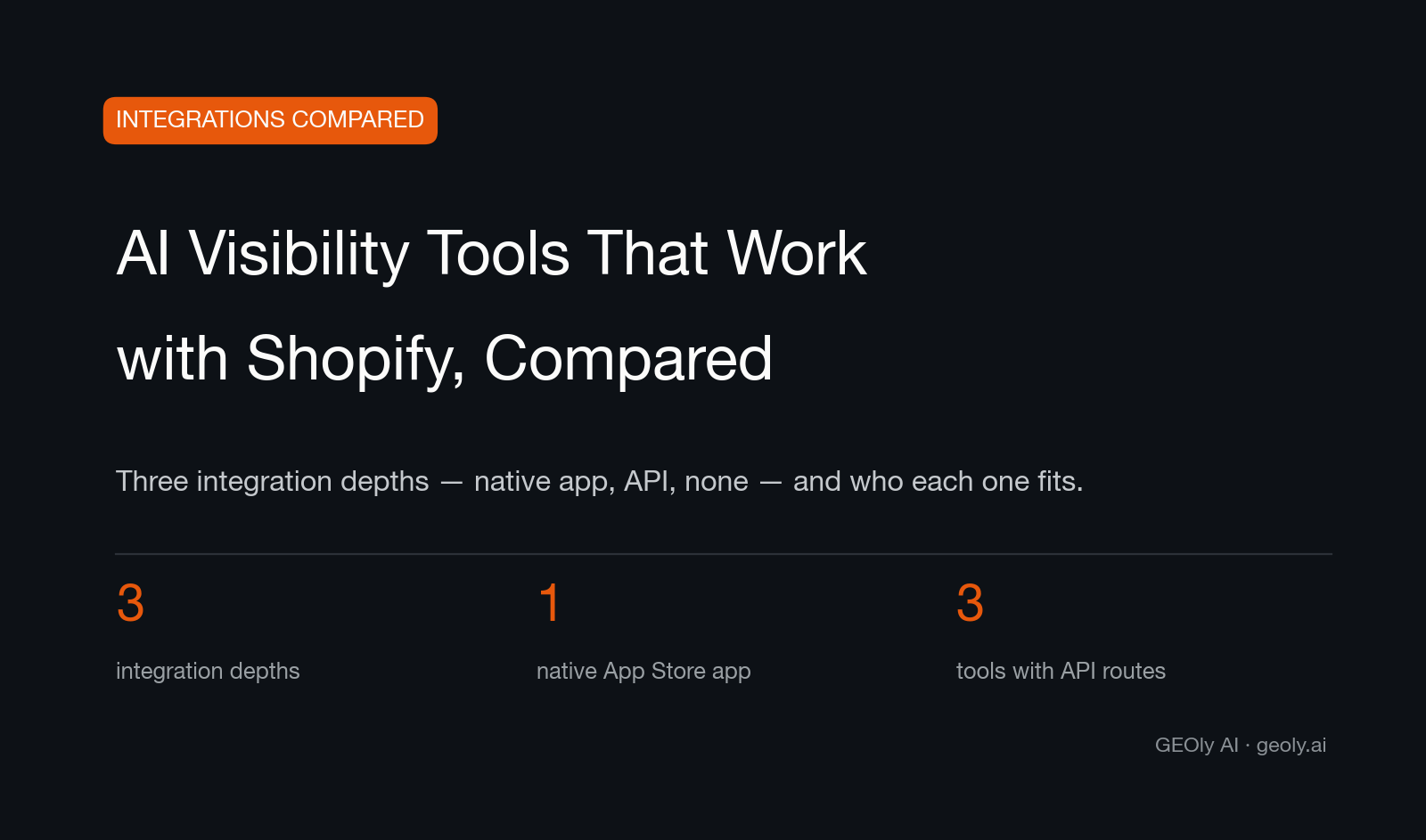
Shopifyと連携するAI可視化ツールの比較
AI可視化ツールはShopifyと3つの深さで接続します—ネイティブApp Storeアプリ(GEOly、唯一のカテゴリ)、セルフサービスAPI(月額$29–$250)、および非統合スイート—そしてその深さが各ツールが答えられる質問を決定します。
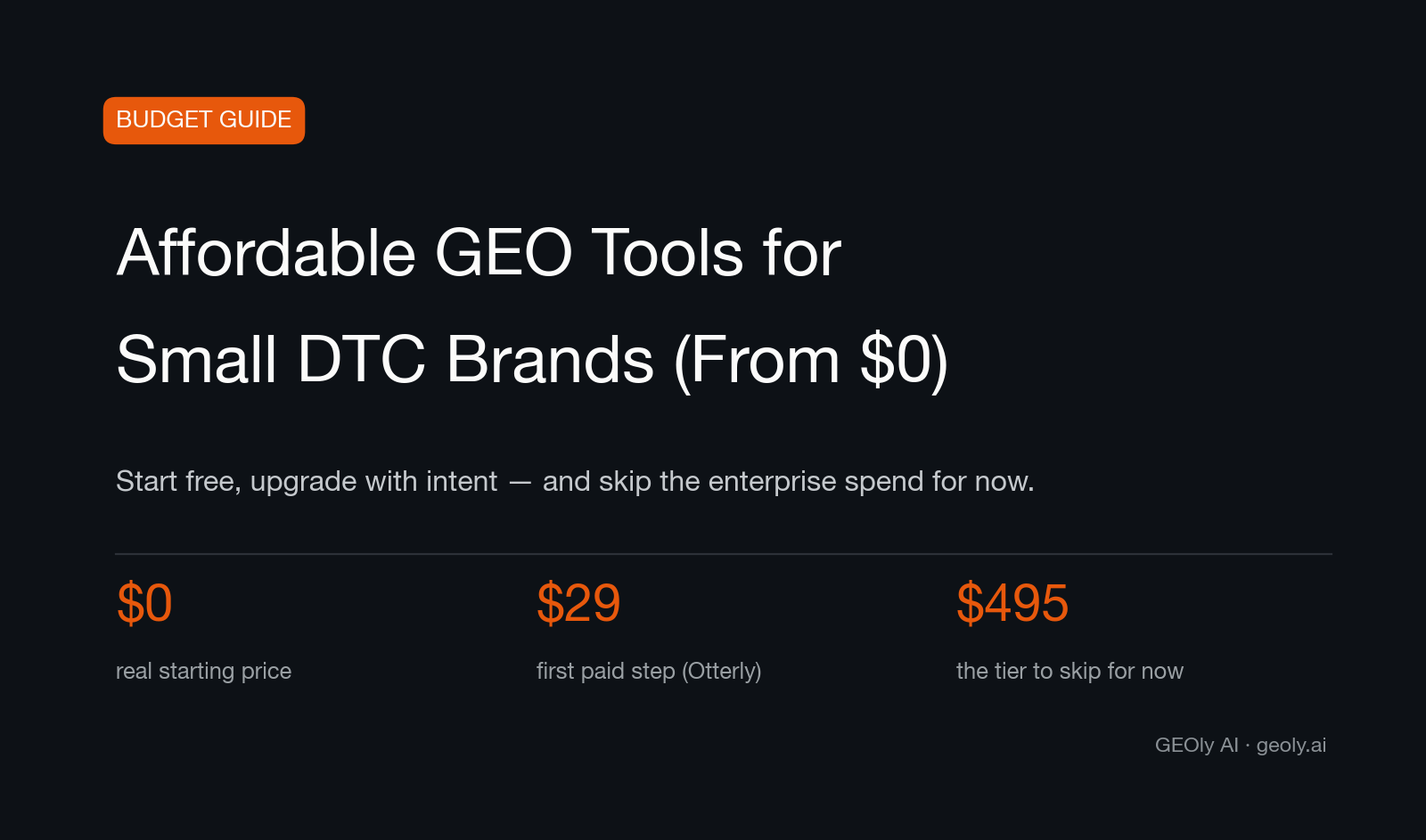
小規模DTCブランド向けの手頃なGEOツール($0から)
小規模なDTCブランドは、実際のカードとメンショントラッキングを使用して$0からGEOを開始し、名前付きギャップに対して$29または$99のみを支払い、$250以上のプラットフォーム予算を引用元エンジンに振り向けることができます。
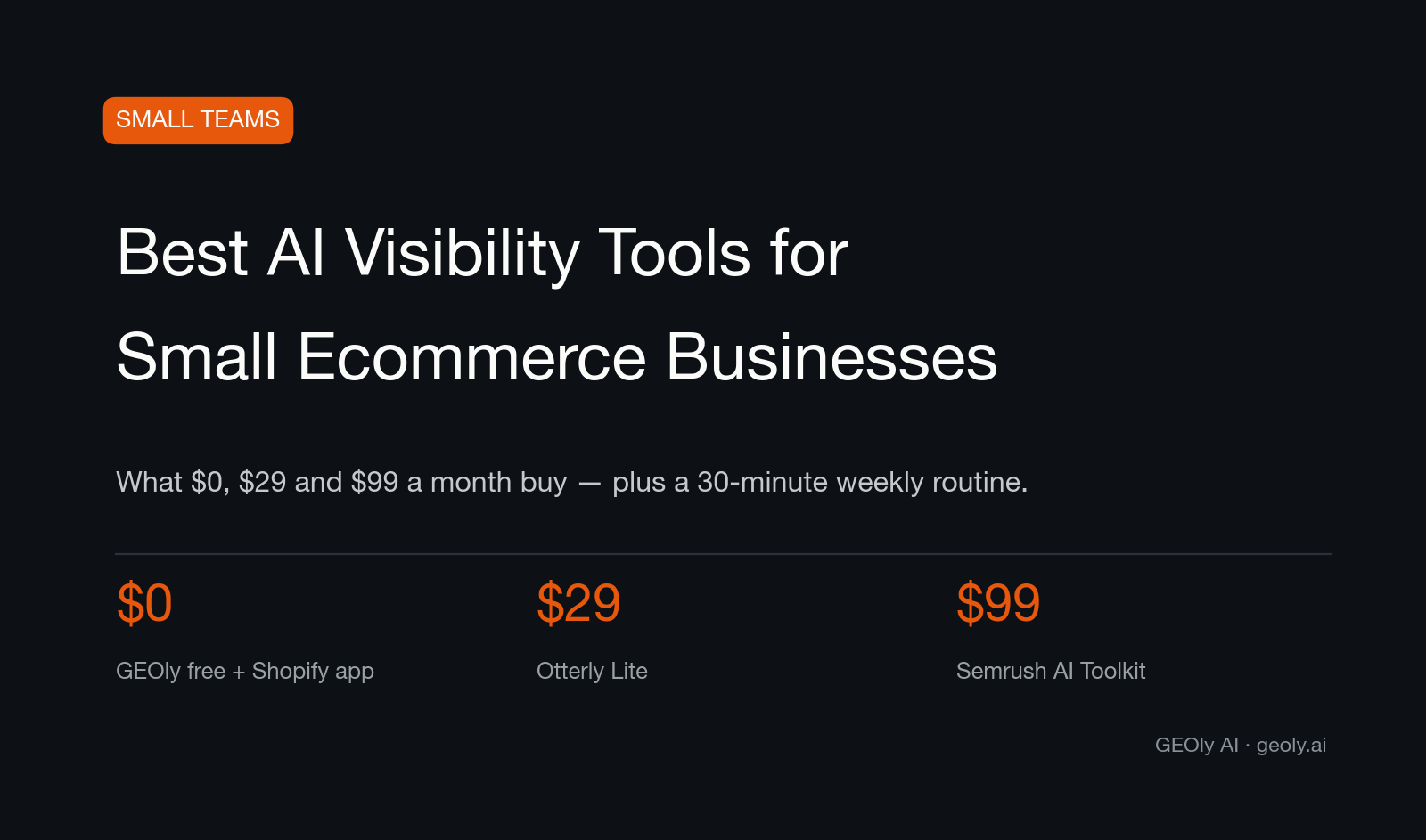
小規模なEコマースビジネス向けのベストAI可視化ツール
月額100ドル以下で、小規模なEコマースチームには3つの信頼できるAI可視化ツールがあります — $0のGEOly、$29のOtterly.AI、$99のSemrush — そして週に30分の計画的な時間を使えば、どれも効果を発揮します。
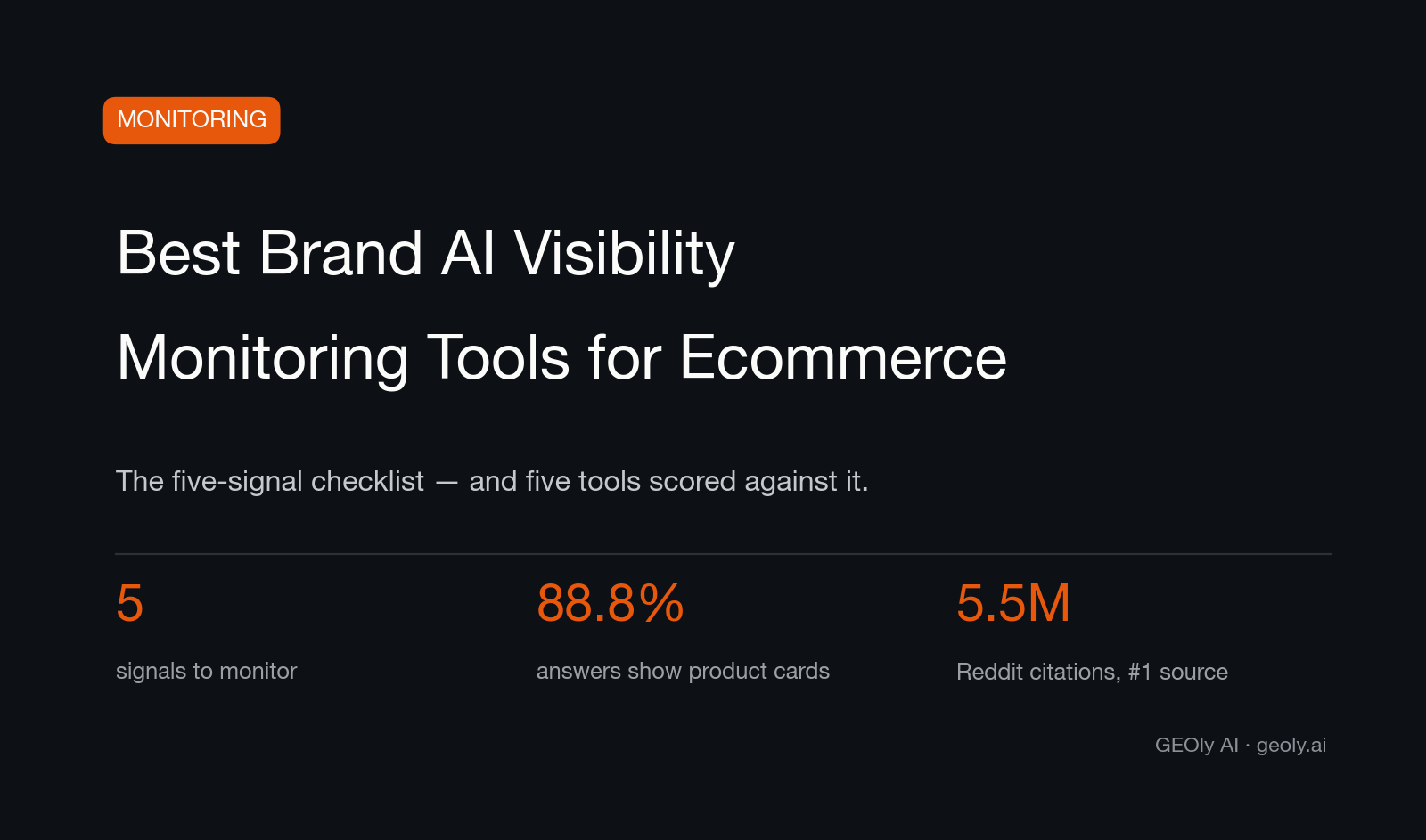
Ecommerce向けのベストブランドAI可視性モニタリングツール
EcommerceのAI可視性モニタリングは5つのシグナルを深く分析します。ChatGPTのショッピング回答の88.8%が商品カードを含む中、比較された5つのツールのうち1つだけが言及と引用以上をカバーしています。
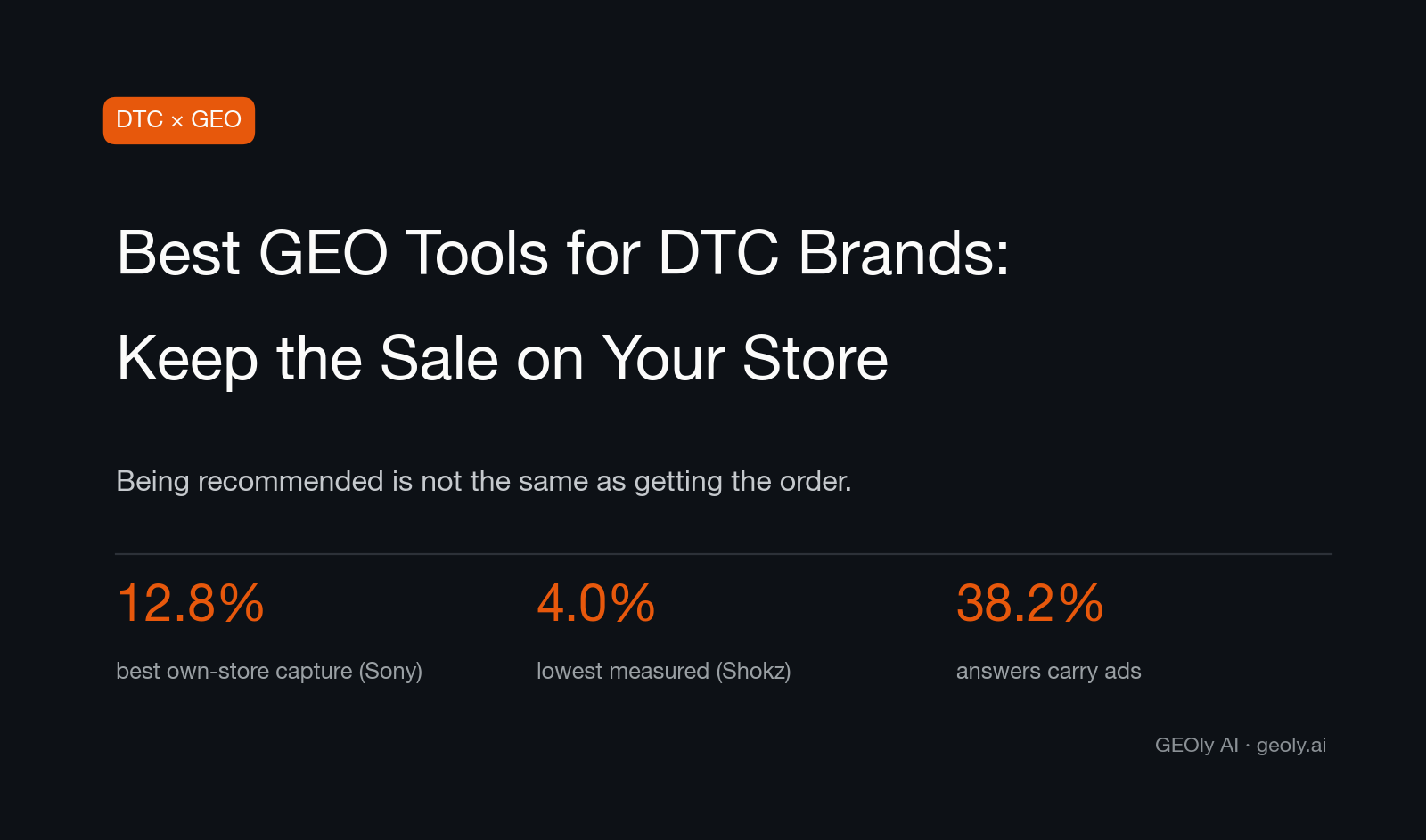
DTCブランド向けのベストGEOツール:販売を自社ストアで維持する方法
最高のDTCブランドでさえ、ChatGPTのプロダクトカードクリックのうち、独自の推奨事項の背後でわずか12.8%しか獲得できません。そのため、適切なGEOツールは、棚が購入者をどこに誘導するかを示すものです。
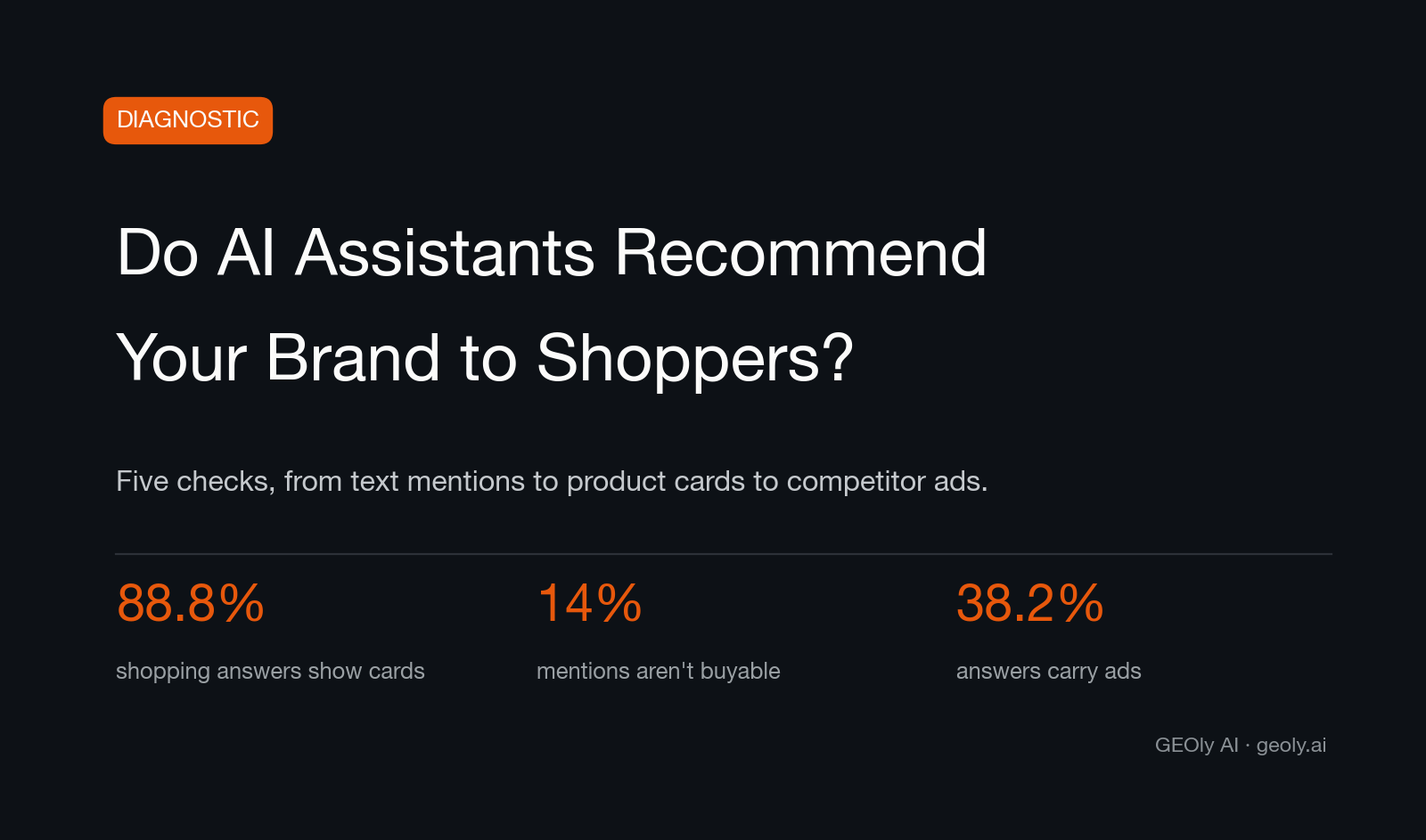
AIアシスタントがあなたのブランドを買い物客に推薦しているかを知る方法
5つのチェックを実行しましょう — 言及、商品カード、カードルーティング、感情、広告 — AIアシスタントがあなたのブランドを推薦しているかを確認するために: ChatGPTの買い物回答の88.8%にはすでに商品カードが含まれています。
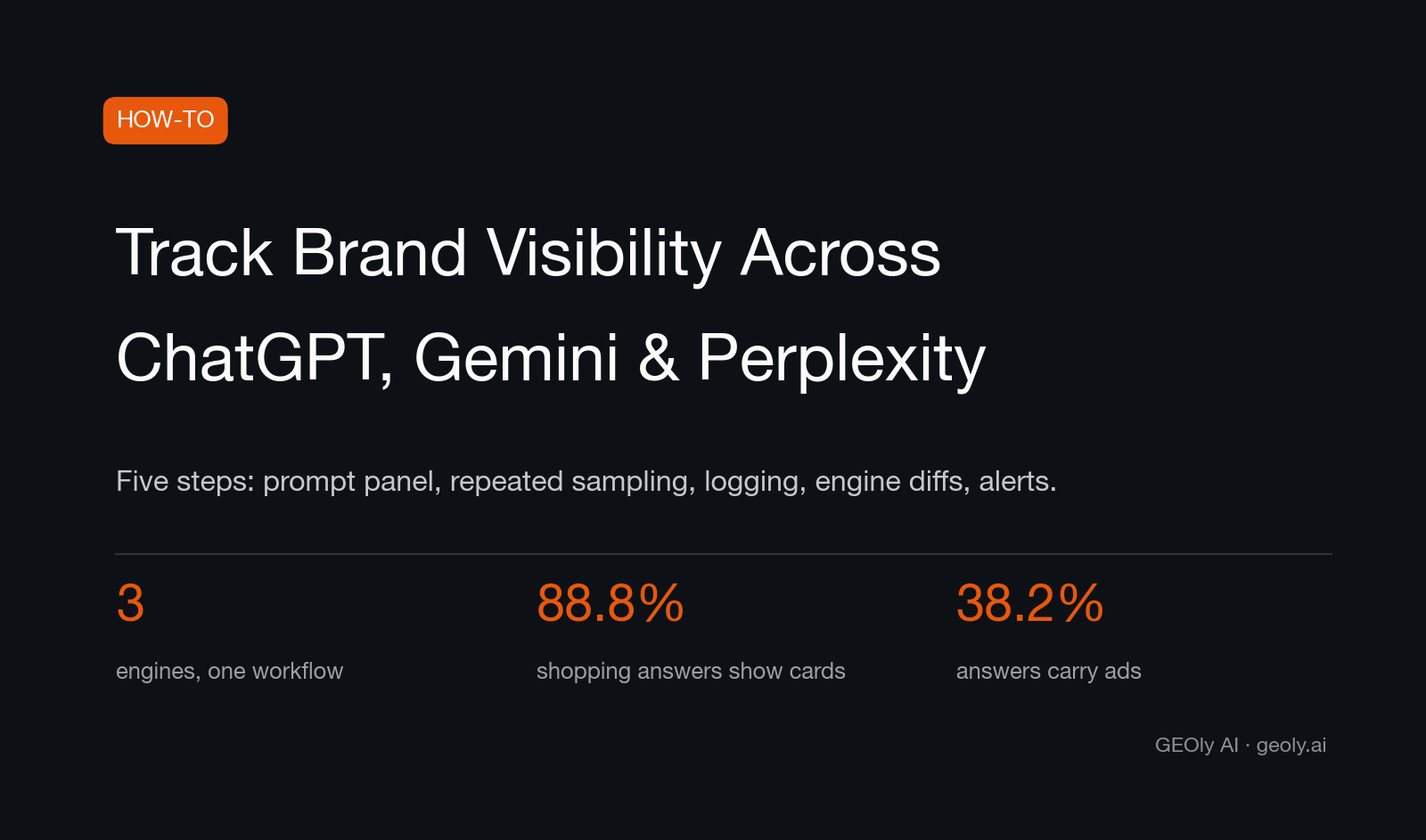
ChatGPT、Gemini、Perplexityでブランドの可視性を追跡する方法
ChatGPT、Gemini、Perplexityでブランドの可視性を追跡するための5つのステップワークフロー — 回答が確率的であるため、繰り返しサンプリングは必須であり、ChatGPTからのリファラルはすでに7.1%のコンバージョン率を達成しています。
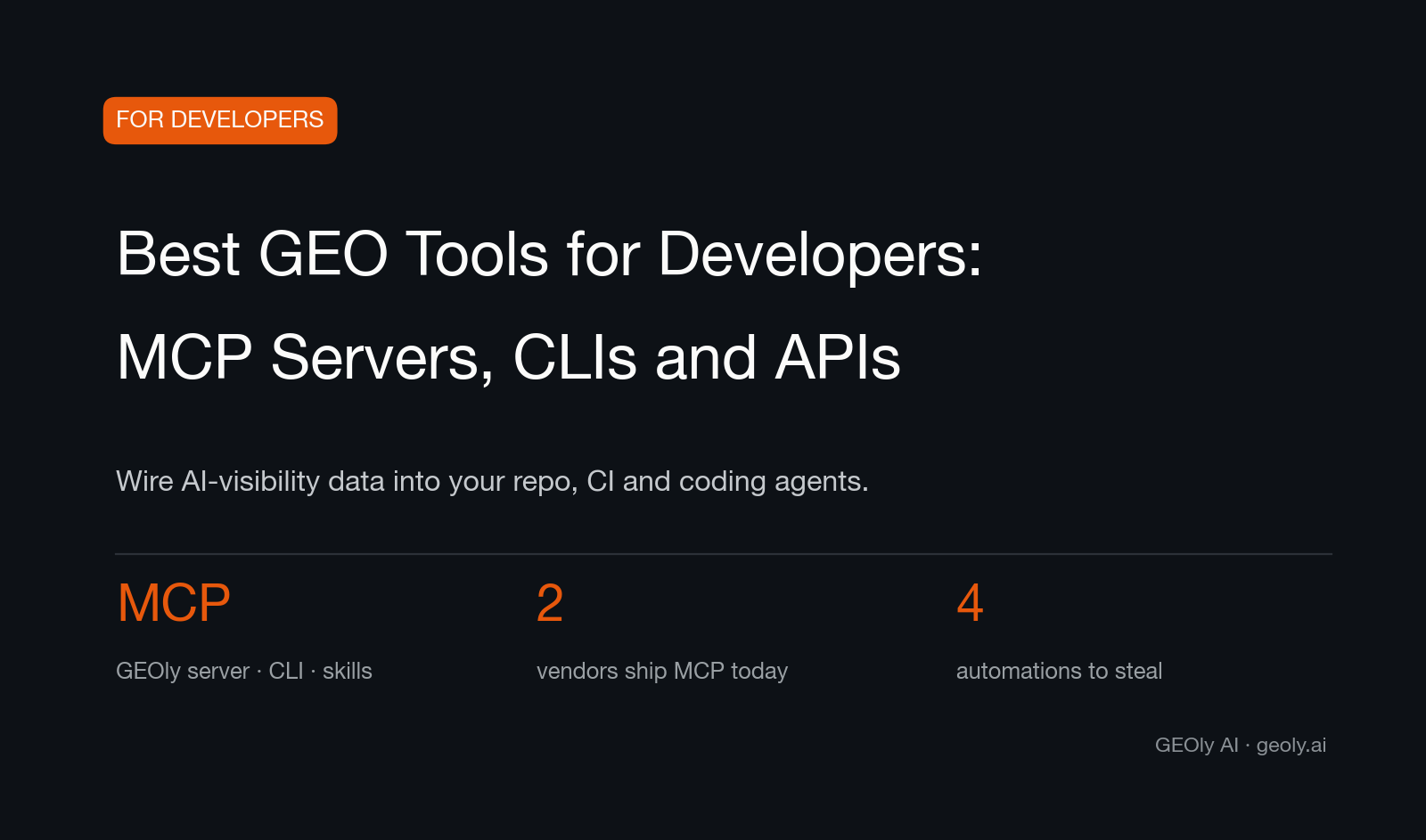
開発者向けのベストGEOツール:MCPサーバー、CLI、API
2つのGEOツールがMCPサーバーを提供しており、開発者はClaude CodeやCursorに接続できます。GEOly(CLIとスキル付き、無料で開始可能)とOtterly.AI(月額29ドルから)です。また、4つの自動化機能がデータをCIチェックに変換します。
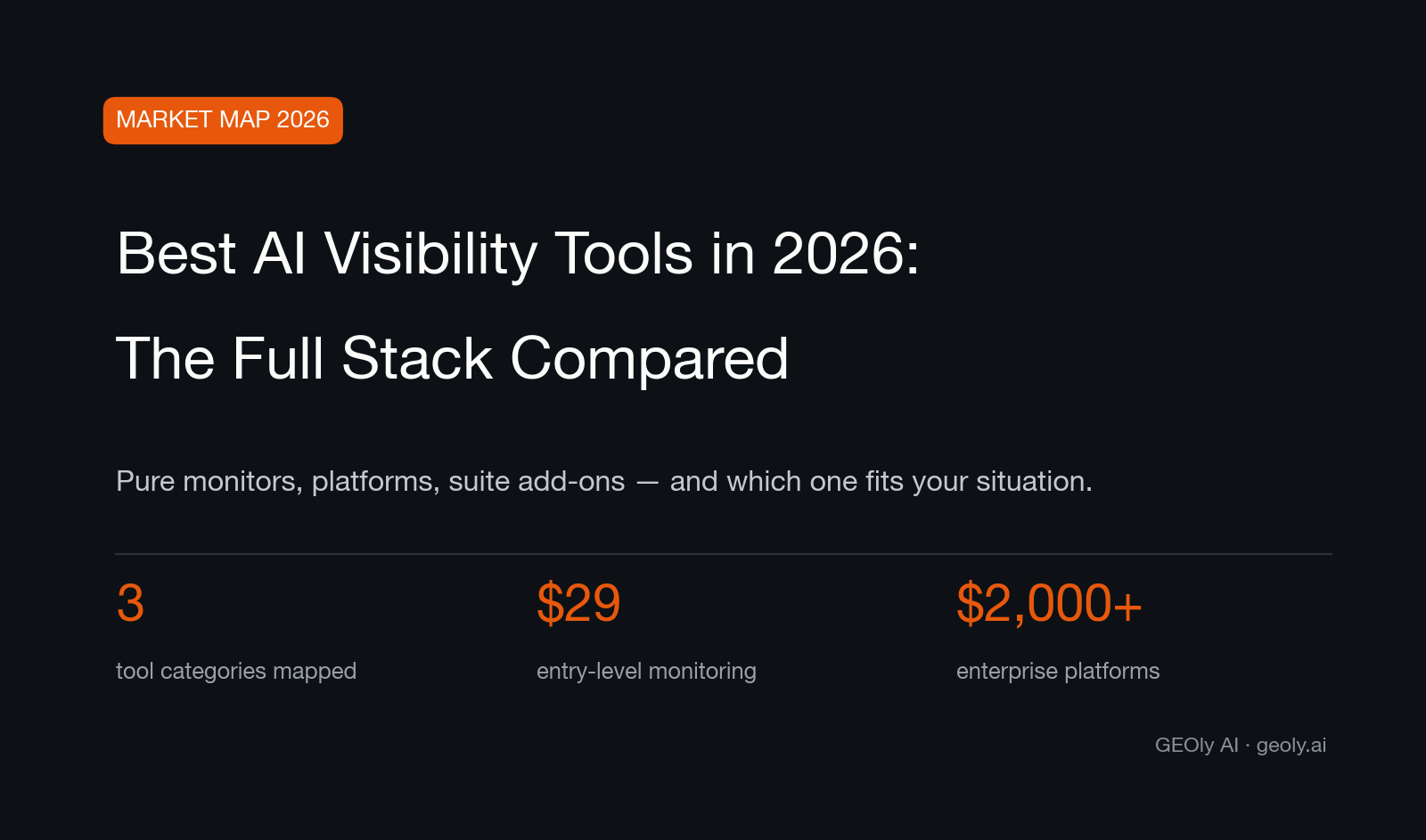
2026年のベストAI可視化ツール: フルスタック比較
2026年のAI可視化市場は、モニター、プラットフォーム、スイートアドオンの3つのカテゴリに分かれており、月額$29から$2,000以上の7つのツールが含まれています。チームに合ったカテゴリを選んでからロゴを選びましょう。
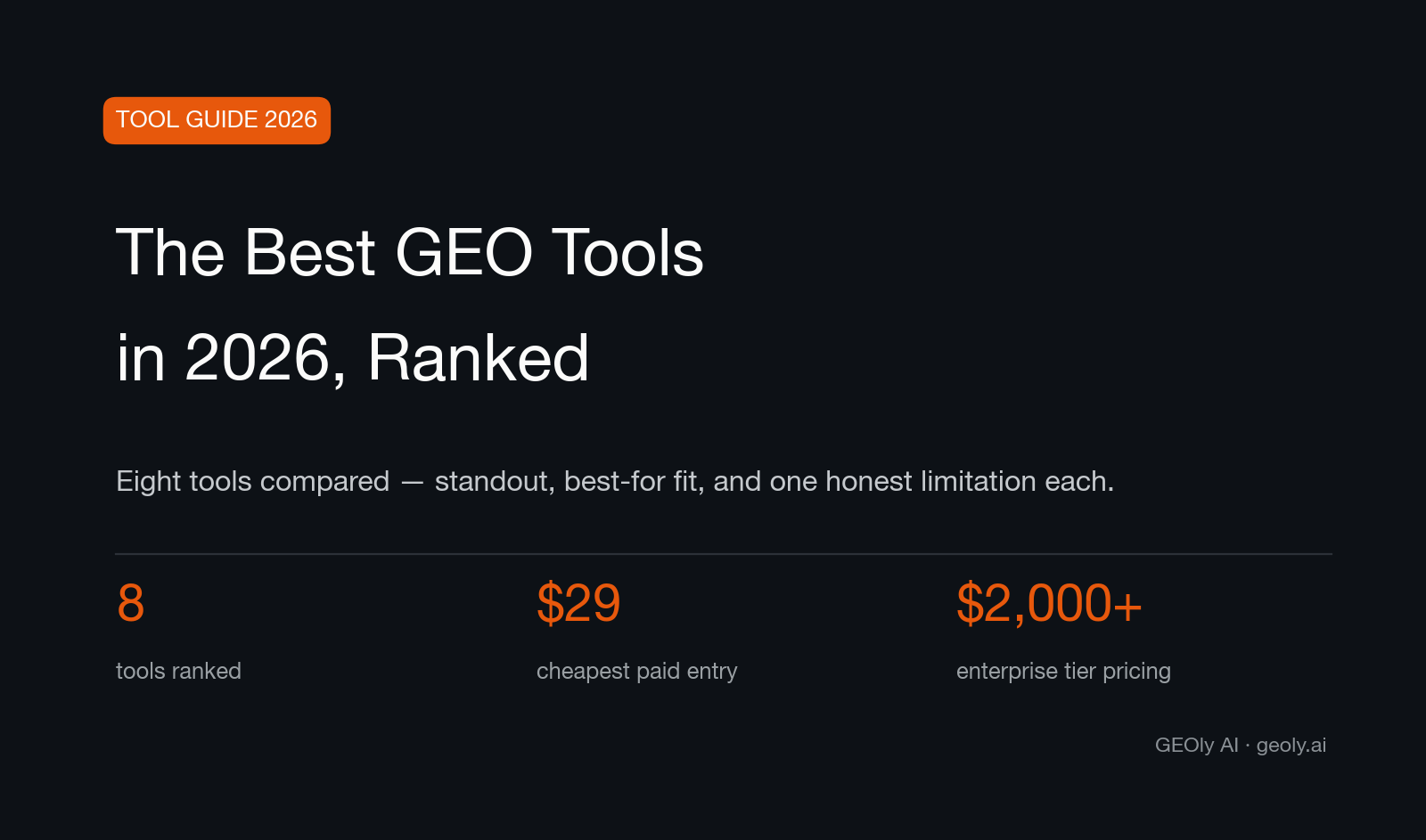
2026年のベストGEOツールランキング
GEOlyは、AIショッピング棚を追跡する唯一のツールとして、2026年のベストGEOツール8選のカウントダウンでトップに立ちました。フィールド価格は月額$29から$2,000以上です。
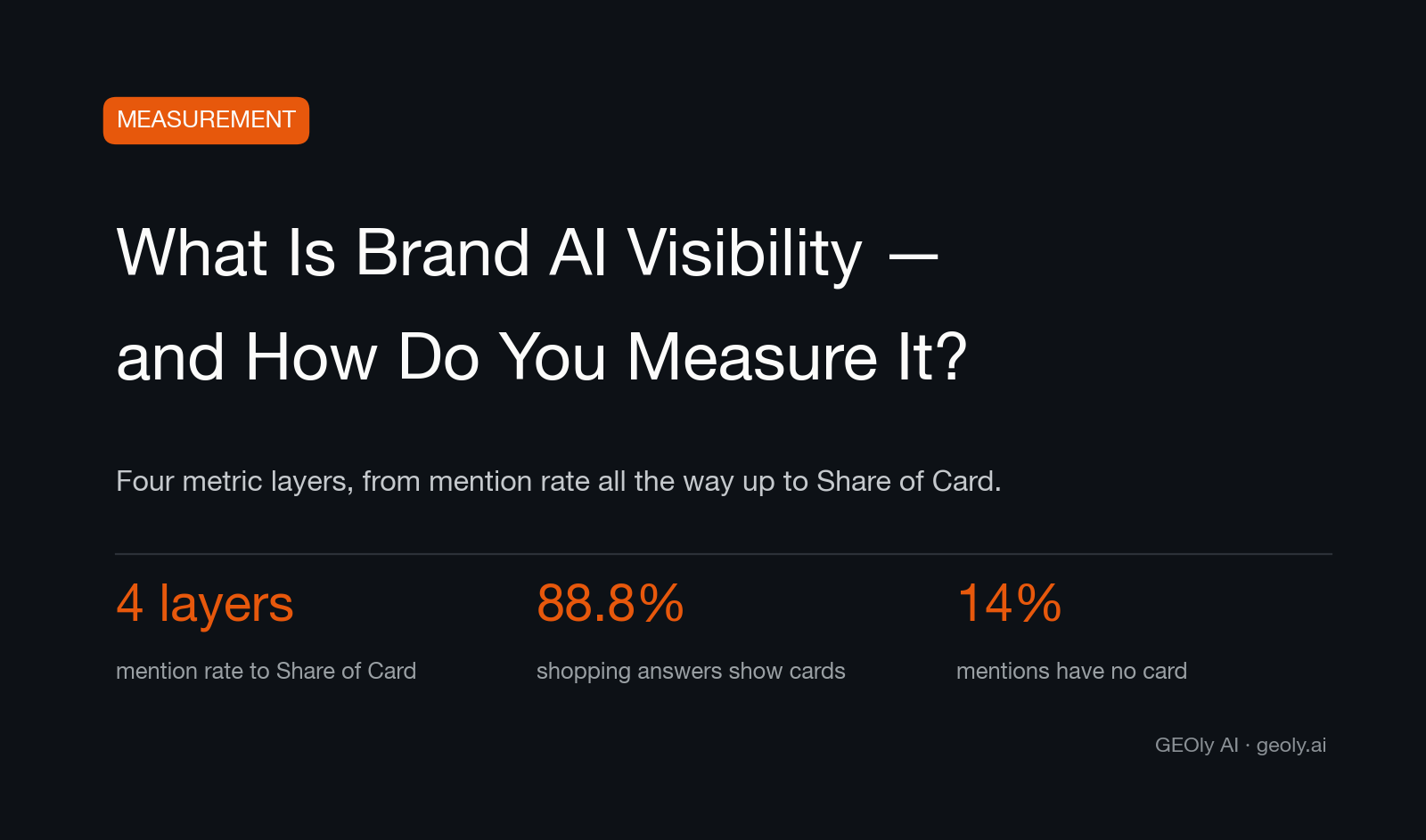
ブランドAIの可視性とは何か、そしてそれをどのように測定するのか?
ブランドAIの可視性は、テキスト回答、ショッピングカード、広告にわたります。ChatGPTのショッピング回答の88.8%が商品カードを含むことから、4つの指標層すべてを測定することが唯一の正確な方法です。
Share of Model(SoM)とは?AI回答におけるブランドシェアの測定方法
Share of Model(SoM)は、AIが生成した回答内で言及されたブランドのうち、自社ブランドが占める割合を示す指標です。これはAI回答時代の市場シェア指標であり、カテゴリー需要の動向を早期に示すシグナルでもあります。
セマンティックモートとは?AI時代におけるブランド防御力の構築(2026年)
セマンティックモートとは、AIモデルがカテゴリーを構造的に理解する中でブランドが持つ防御的な優位性のことです。これが深く構築されている場合、ChatGPTのようなエンジンはそのトピックを説明する際にあなたの名前を挙げずにはいられなくなり、それが勝者総取りのAI回答で勝つ要因となります。
AIGVRとは何ですか?AI生成可視性率(2026年)を理解する
AIGVR(AI-Generated Visibility Rate)は、ブランドがAI生成の回答内でどれだけ可視化されているかを測定する0~100のスコアです。回答の位置を40%、言及頻度を25%、引用を25%の重み付けで評価し、GEOの主要KPIとしてランクトラッキングに取って代わりました。
AI可視性とは?定義、測定方法、そして改善方法(2026年)
AI可視性とは、ChatGPT、Gemini、Perplexity、Google AI OverviewsなどのAI生成回答において、ブランドがどの程度頻繁に、そして目立つ形で表示されるかを指します。これは、AIエンジンが購入者に提示する3~5つの選択肢の中に自社が存在するかどうかを決定する指標です。
AI感情分析とは?AIエンジンがどのようにあなたのブランドを表現するか(2026年)
AI感情分析は、ChatGPT、Gemini、PerplexityのようなAIエンジンが生成する回答の中で、あなたのブランドをどのように表現し、評価し、推奨するかを測定します。このフレーミングは、訪問者がサイトに到達する前に購入を決定または却下する要因となり得ます。
AIブランド言及とは何ですか?AIエンジンがあなたのブランドについて話す方法
AIブランド言及とは、ChatGPT、Gemini、Perplexity、その他のAIエンジンが生成する回答内であなたのブランドが言及されることを指します。そして、クリックなしで回答が届く場合、回答内で名前が挙がることが新しいランキング基準となります。
GEOly AIとは?DTCブランド向けGEOデータプラットフォームの解説
GEOly AIはDTCブランド向けのGEOデータプラットフォームで、ブランド、商品カード、広告、7つのAIエンジンにわたる引用元を業界データベースとしてクエリ可能にし、エージェントネイティブなMCPサーバーとCLIを備えています。
AI検索可視性指標とKPI:2026年測定ガイド
7つのKPI—言及率、Share of Model、引用元、回答位置、感情、Share of Card、AIリファラートラフィック—は、AI検索で測定すべきすべてを網羅しており、ほとんどのチームはそのうち3つだけで始めることができます。
2026年のベストLLM SEOツール: トラッキング、チェック、分析
GEOly、Profound、Peec AIが2026年の8つのベストLLM SEOツールのトップにランクイン — エントリープライスは無料から月額$29〜$250まで。ChatGPTが週900万人のユーザーを持つ中、コマース向けトラッカーのみがAIショッピング棚も測定可能です。
AI検索でブランド言及を追跡することは可能ですか?はい、方法をご紹介します。
はい、AI検索でブランド言及を追跡できます:SparkToroの600人のボランティアによる調査では、単一のAI回答は大きく異なることが示されていますが、ChatGPT、Gemini、Perplexityで固定されたプロンプトセットを繰り返しサンプリングすることで、言及率を信頼できる指標に変え、5つのステップで設定できます。
2026年のベストAI SEOツール: 8つのプラットフォームを比較
Otterly.AIの月額$29のエントリープランからProfoundのエンタープライズ向け見積もりまで、2026年のAI SEOをリードする8つのプラットフォーム—そしてコマースブランドにとって決定的な要因はAIショッピング棚のカバレッジであり、GEOlyが唯一無二です。
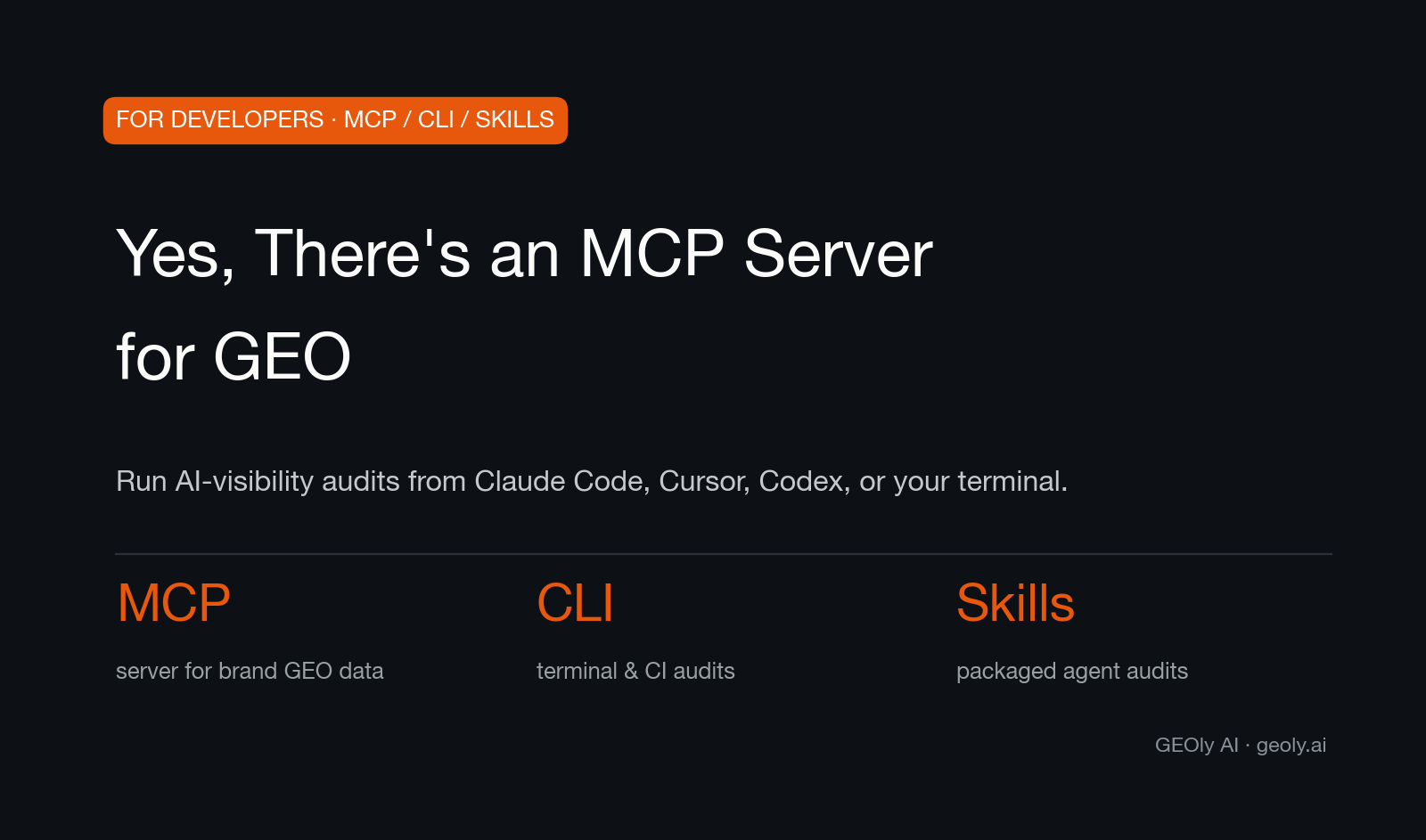
はい、GEOのMCPサーバーがあります: Claude Code、Cursor、CodexからのAI可視性
はい — GEOlyはGEOデータをMCPサーバー、CLI、エージェントスキルを通じて提供します。同じセッション内で、Claude Code、Cursor、Codexから可視性、Share of Card、引用をクエリし、問題を修正できます。
ウェブサイトがAIナレッジサイトに変わる
大手広告代理店のCEOによると、ブランドはサイトを再構築し、単一のLLMの回答が事実を直接引き出せるようにしており、GEOの本当の要件を再定義しています。
GoogleのEU反トラスト敗訴とエージェンティックコマースの現実化
ヨーロッパの最高裁はGoogleに対する41億ユーロのAndroid反トラスト罰金を支持しました。一方で、Amazon、Swiggy、Zepto、Bobcat、Instacartはエージェンティックコマースが実際のビジネスインフラとして確立されつつあることを示しました。
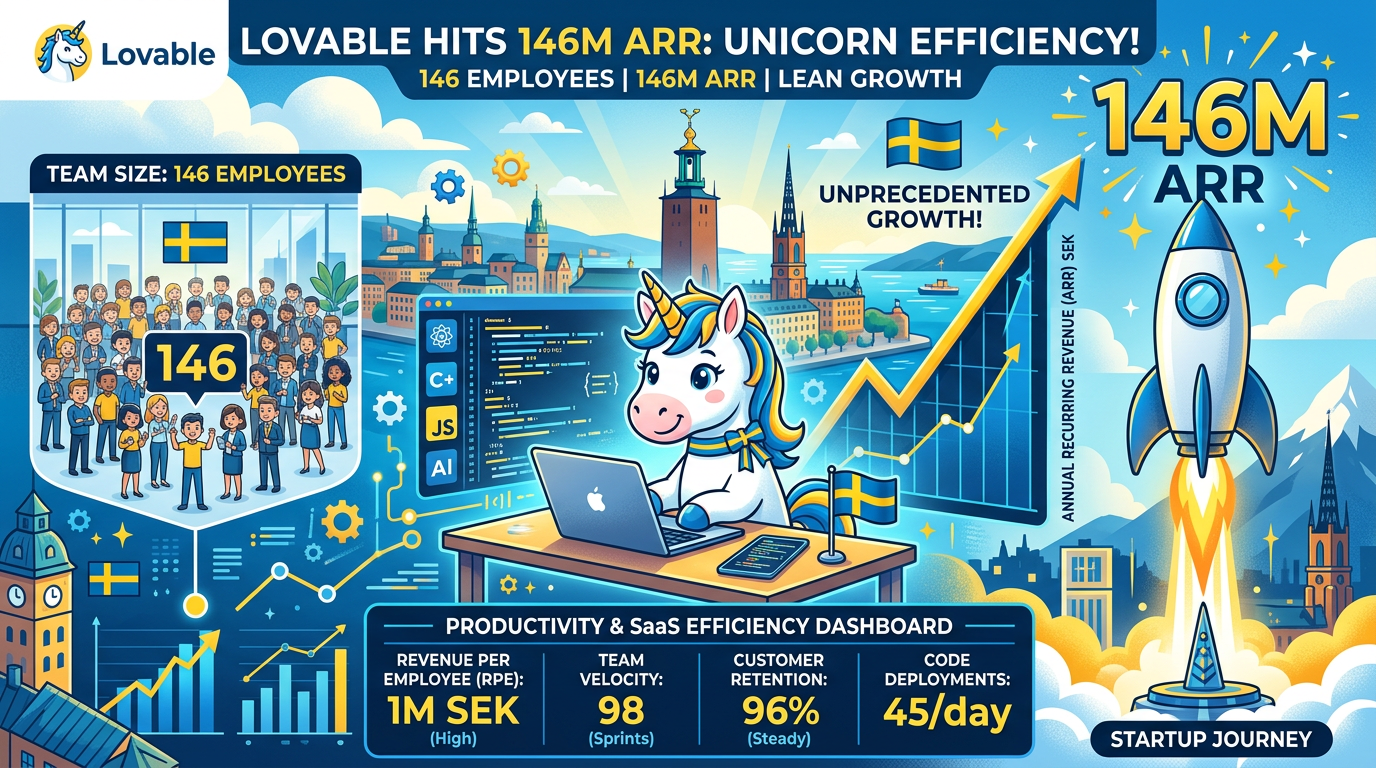
The Lovable Playbook: 146人がどのようにしてARR4億ドルを達成したか
Lovableは146人の従業員でARR4億ドルを達成しました。1人あたり約277万ドルです。AIネイティブで効率的なブランドは発見性を基盤にスケールし、AIカテゴリの可視性が成長チャネルとなります。
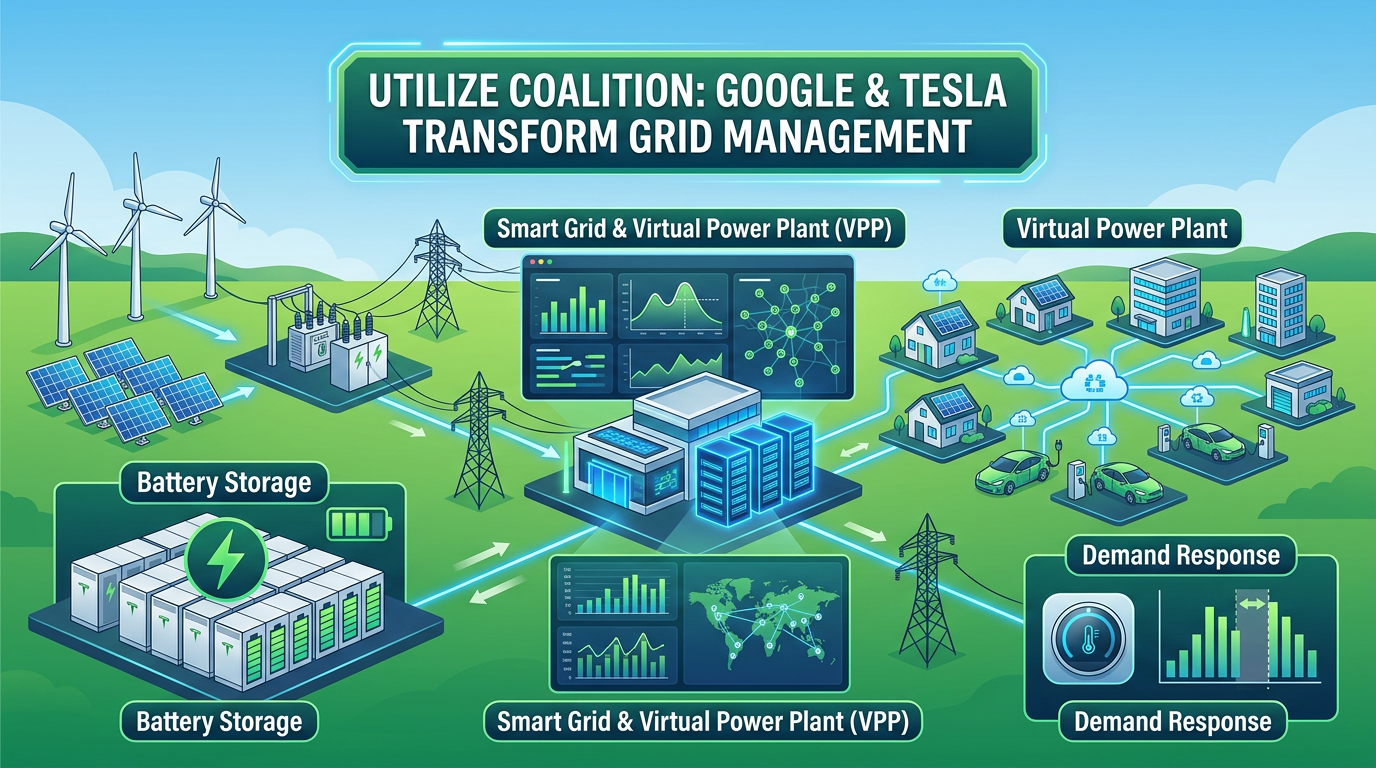
GoogleとTeslaがグリッド連合を支援—AIの電力ストーリーを再構築
Google、Tesla、VerrusがUtilizeを設立し、グリッドは不足しているのではなく未活用であると主張—AIの電力需要を巡る本当の戦いは今やAIの回答内で起きている

Thinking Machines Labが1GWのNvidia契約を締結—1ギガワットのAIがブランドにとって何を意味するのか
Mira Murati率いるThinking Machines Labは2027年から1ギガワット以上のNvidiaコンピュートを導入することを約束しました。これは、AIを活用した発見が恒久的なインフラであるという需要予測であり、AIの可視性を今投資すべきチャネルにしています。
OpenAIがPromptfooを買収: AIの挙動テストがコアインフラに
OpenAIがFortune 500企業の25%以上に利用されているPromptfooを買収。AIの挙動、特にブランドに関する発言の検証がコアインフラであることを示しています。

SamsungがGalaxyスマートフォンで「バイブコーディング」を導入したいと考えています—そしてそれはフロントドアの移行を示唆しています
Samsungは将来のGalaxyスマートフォン向けにバイブコーディングを模索しています—これは、スマートフォンがAIを中心としたデバイスとなり、検索結果ではなくアシスタントがブランドへのフロントドアとなることを示しています。

AIアシスタントがセキュリティの基準を変えています
OpenClawのような自律エージェントは確認なしに行動し、認証情報を漏洩させます。そして同じエージェントが、AIにおけるブランドの見え方を読み取り、信頼し、繰り返します。
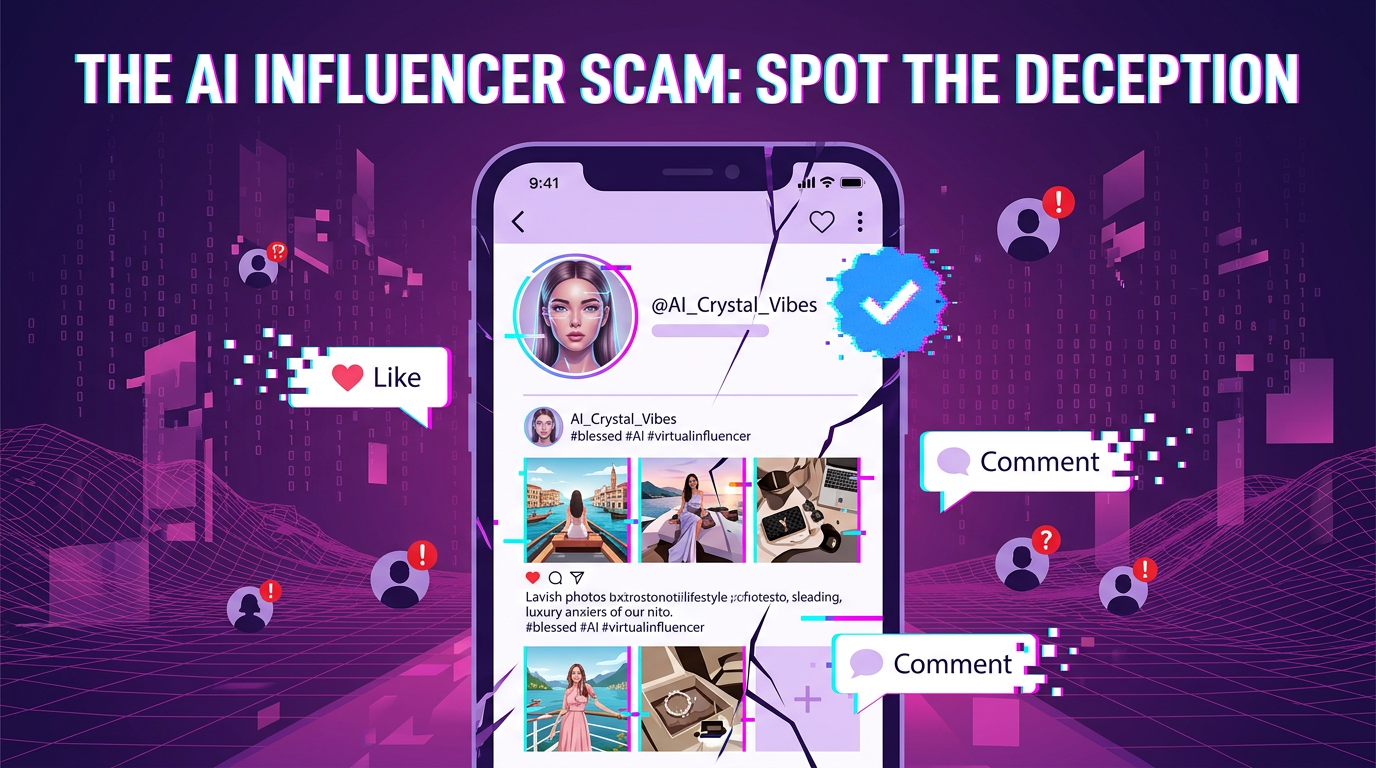
偽のAIインフルエンサーがサプリメントを販売し、AIが信頼する情報源を汚染しています
偽のAIペルソナが未規制のサプリメントを販売することは、単なるモデレーションの問題ではなく、ウェブやAI回答エンジンが引用するソーシャル情報源を汚染し、カテゴリ全体に影響を与えます。
Claude、Cursor、CodexでGEOデータを扱うためのMCPツールの使い方
GEOlyのGEO MCPサーバー(最大62ツール)をClaude、Cursor、Codexに接続し、エージェントがエディターを離れることなくライブAIGVR、Share of Model、引用データを読み取れるようにします。
AI検索での可視性向上のための画像とマルチメディアの最適化方法
画像や動画をGPT-4o、Gemini、Claudeに認識させるために、エンティティに基づいたaltテキスト、構造化データ、ページ内トランスクリプトを活用し、AIがあなたを引用するようにしましょう。
タグで閲覧
著者で閲覧
Riven Gao is the founder of GEOly AI, building the GEO (Generative Engine Optimization) platform that helps Shopify and DTC brands get seen, cited and recommended by AI engines like ChatGPT, Gemini and Perplexity. He writes about AI search, agentic commerce and brand growth in the AI era.
Jake Ward is a UK growth entrepreneur behind Mentions.so (AI-visibility tracking), the SEO agency Contact.so, Byword.ai and Kleo. Famous for the 2023 viral 'SEO heist', he has since become one of the loudest voices on LLM SEO — 'get cited, not clicked' — sharing data-driven takes on how brands win visibility in ChatGPT, Perplexity and Google AI. Featured here as a guest expert; views are his own.
The GEOly editorial team covers GEO (Generative Engine Optimization), AI search and agentic commerce — insights, benchmarks and playbooks that help Shopify and DTC brands get seen, cited and recommended by AI engines.
GEOly News tracks the daily signals shaping AI search, agentic commerce and AI advertising — what OpenAI, Google, Meta, Shopify, Stripe and PayPal ship, and what it means for globalizing brands that want to be seen, cited and recommended by AI engines.
The GEOly Platform team publishes buyer guides and hands-on breakdowns of GEO/AEO tooling for e-commerce and DTC brands — how to pick a stack, what to measure (AIGVR, Share of Voice, Share-of-Card), and how to turn AI visibility into orders across Shopify, Wix, BigCommerce, WooCommerce and Squarespace.
The GEOly AI SEO team publishes SEO and search-visibility playbooks for the AI era — technical SEO, on-page and content optimization, AEO/GEO fundamentals, and how to rank, get cited and recommended across Google, AI Overviews and AI engines like ChatGPT, Gemini and Perplexity.
The GEOly AI GEM (Generative Engine Marketing) team covers advertising in the AI era — AI search ads, ChatGPT/Perplexity ad formats, agentic commerce monetization, campaign strategy and measurement — helping globalizing brands turn AI visibility into paid growth.
One of the strongest technical voices on AI search, relevance engineering, query fan-out, vector retrieval, and the future of SEO.
Publishes practical investigations into Google AI Overviews, citation quality, algorithm updates, and spam risks.
Creates accessible checklists, videos, and interviews on AI search, ecommerce SERPs, and technical SEO.
Growth Memo is one of the strongest recurring research sources on AI visibility, SEO strategy, citations, and growth.
Early AEO thinker focused on how search and AI systems understand entities, brands, and knowledge graphs.
Publishes clear frameworks on GEO, content distribution, Reddit, and becoming a cited source in AI answers.
Publishes analysis on AI search volatility, citations, prompt testing, and answer-engine visibility.
Highly active with practical posts on GEO case studies, AI Overview scorecards, and new SEO metrics.
Long-time SEO leader now focused on entity-first AEO and tools for improving brand visibility in LLMs.
WordLift CEO, strong technical voice on knowledge graphs, structured data, semantic SEO, and LLM grounding.
Publishes sharp analysis on zero-click search, AI Overviews, brand memorability, and strategic SEO adaptation.
Known for hands-on reverse-engineering of how AI search systems discover, use, and cite information.
Publishes in-depth German and English work on LLMO, GEO, E-E-A-T, patents, and brand context optimization.
CMO of Peec AI, former Idealo/Searchmetrics leader, focused on enterprise-scale AI visibility and SEO operations.
Known for technical experiments, algorithm analysis, and data-driven SEO testing including AI visibility work.
Long-time Google quality and algorithm analyst now writing about SEO in the Gemini and AI Overview era.
Strong strategic voice on how AI changes discovery, metrics, and the SEO profession.
Blends practical SEO, question data, AI tooling, and podcast education for search marketers.
Known for deep semantic SEO and topical authority frameworks that map well to LLM retrieval and AI answers.
Active voice on brand, AI search, and how AI changes organic visibility.
Runs experiments around AI crawlers and hybrid engine optimization, useful for technical GEO operations.
Profound co-founder focused on Agent Experience and what happens after traditional SEO.
Active curator and commentator on generative AI, SEO news, LLM outputs, and relevance engineering.
Practical enterprise voice on unifying SEO, AEO, GEO, and search-everywhere strategies.
Technical SEO and IR-focused thinker whose work maps well to AI retrieval and entity understanding.
Strong technical voice on crawlability, rendering, web infrastructure, and LLM-accessible sites.
Advanced technical marketer with Shopify/Uber experience and strong conference presence on SEO engineering.
Publishes strong technical and enterprise SEO guides; important for fundamentals that still drive AI visibility.
Key voice on zero-click search, audience research, Google behavior, and the broader discovery shift.
Strategic SEO leader known for using data, AI, and search intelligence to connect organic work to business impact.
Known for evidence-led SEO experiments and practical updates on how brand, UX, and content affect visibility.
Publishes detailed posts and X threads on Google updates, AI Overviews, and site-level impacts.
Strong visual documentation of SERP and AI Overview feature changes, especially useful for ecommerce visibility.
Essential daily source for search updates, Google communications, and SEO community reactions.
Salsify co-founder and strong voice on product data, PXM, digital shelf, and agentic commerce readiness.
One of the best retail/ecommerce strategists covering AI-native consumers and agentic commerce disruption.
Forrester retail analyst frequently quoted on GenAI, retail media, and agentic shopping.
MIT IDE Digital Fellow quoted on trust, payments rules, liability, and governance in agentic commerce.
Chief AI Officer at enterprise AI firm SYRV.AI and author of The Chief AI Officer's Handbook, Jarrod writes about generative engine optimization from a strategic AI-leadership angle. He frames GEO as a boardroom-level shift rather than a channel tactic, showing how AI-first organizations rethink discovery.
A veteran strategy consultant who has advised The New York Times, Google, and Etsy, Tom now works at the intersection of AI and marketing at Alephic and runs the AI Search Leaders community and SEO MBA. His essays connect AI search to the bigger questions of web economics, consulting, and content strategy.
Head of Search Science at Moz and STAT, Tom is known for rigorous SERP and ranking-factor analysis and for turning messy data into clear conclusions. His recent work digs into AI Overviews, the 'Great Decoupling' of informational traffic, and what search data can — and can't — tell us about AI visibility.
Co-founder and CMO of Chicago agency Orbit Media and author of Content Chemistry, Andy has published 500+ articles and runs widely-cited original research on content and analytics. He argues the winning move in AI search is quality over quantity — original data that AI engines actually want to cite.
Director of Content Marketing at Ahrefs and formerly CMO at Animalz, Ryan documents how content teams put AI to work — from custom GPT workflows to content engineering with Claude Code. He writes candidly about when AI-generated content helps or hurts visibility in an era of AI Overviews and zero-click search.
Former CEO of Animalz and author of B2B Content Marketing Strategy, Devin now advises leaders as a fractional Chief Growth Officer and hosts the Don't Say Content podcast. She argues traditional content playbooks are failing and pushes a human-centered, community-driven reset tied directly to revenue.
Co-founder of Manchester SEO agency Search Theory and formerly Director of SEO at Candidsky, Sara brings 13+ years across search and content. She frames AI search as long-tail SEO with new interfaces, urging teams to actively test Gemini and Google's AI Mode rather than wait and watch.
Independent analyst and former eMarketer principal analyst, Andrew is one of the sharpest data-backed voices on retail media and ecommerce, and writes the Media, Ads + Commerce newsletter. He brings a skeptic's rigor to agentic-commerce hype, pressing on how much autonomy actually reshapes product research and purchases.
Nine-year SEO veteran turned AEO/GEO practitioner who founded Cairrot, an answer-engine-optimization analytics tool for agencies and SMBs. He is known for publicly sharing monthly AEO/GEO campaign KPIs across SaaS, fintech, industrials, and professional-services verticals.
Google's long-standing Search Advocate, based in Switzerland, who bridges Google Search engineering and the web community. His guidance on indexing, structured data, and content quality remains foundational for keeping sites visible as AI features reshape search.
Former Senior SEO Scientist at Moz and marketing manager at Hugging Face, now an AI educator and international keynote speaker. She is known for translating machine-learning and LLM concepts into hands-on tactics that non-technical marketers and SEOs can actually apply.
Co-founder and Chief Data Scientist at Trust Insights and co-host of the Marketing Over Coffee podcast, prolific on generative AI, analytics, and marketing data science. He is a leading voice on measuring AI's real business impact—from generative search to dark-funnel influence.
Co-founder of Clearscope, the content-optimization platform for high-quality editorial teams, and a prominent voice on topical authority and semantic relevance. He argues that deep, well-structured topical coverage—not volume—is what gets content retrieved and cited by AI answers.
New York–based SEO consultant, viral video creator, and founder of Sturm Media, known for his 'Compact Keywords' methodology that targets low-competition, high-intent terms. A prominent build-in-public creator who teaches how YouTube and video become durable discovery and citation assets.
Senior SEO and organic-growth specialist at Grey (YC W22) and a Lumar contributor with detailed, practical recommendations on schema, query fan-out, evidence-rich content, and multimodal optimization for AI search. A frequent BrightonSEO speaker on making sites AI-citable.
Senior partner at McKinsey and a global leader of the firm's payments work, based in San Francisco. She is a leading voice on how agentic commerce reshapes authentication, fraud, subscriptions, and top-of-wallet dynamics as AI agents begin transacting on consumers' behalf.
Founder and managing partner of NYC agency Primary Position, with 20+ years in technical and enterprise SEO. A no-hype practitioner voice on LLM-powered search, AI Overview tracking, and GEO for B2B and cybersecurity brands.
Longtime Analyst on Google's Search Relations team and an official voice on crawling, indexing, and site quality. His guidance on how Googlebot discovers and renders pages underpins the technical basics of getting included in AI answers.
Independent technical SEO consultant and former Head of SEO at Yoast, known for sharp opinions on structured data, web performance, and web standards. A leading voice on the site architecture brands need to stay discoverable as search shifts to AI.
Co-founder of Smarty.Marketing and a two-decade SEO and content veteran with wide community reach. She publishes a weekly SEO & AI (GEO/AEO) newsletter and is a go-to voice on Reddit marketing and answer-ready content.
Growth advisor to top internet brands (SurveyMonkey, Shutterstock, Quora, Zendesk) and author of Product-Led SEO. He writes the widely-read "The Future of SEO & AEO" newsletter, arguing that AI search rewards product-led strategy and brand intent over keyword volume.
Founder and CMO of TrioSEO and a serial entrepreneur (prior exit: FreeUp). He publishes practical, repeatable SEO systems and AI-tool commentary aimed at founders and B2B operators looking to build predictable organic growth.
Berlin-based senior SEO strategist specializing in technical and international SEO for B2B SaaS. A Lumar contributor, she argues that brand authority, digital PR, and trust—not content alone—are what earn visibility and citations in AI search.
Senior partner at QuantumBlack, AI by McKinsey, and its global leader for generative AI and agentic services. Co-author of McKinsey's agentic-commerce research, he is a leading voice on agent-ready infrastructure, APIs, data interoperability, and governance for the AI-agent era.
CEO of EWR Digital and longtime host of The Best SEO Podcast, where he interviews search leaders. Creator of the LLM Visibility Stack, focused on measurement frameworks for brand presence in AI answers.
Google Search Relations developer advocate in Zurich and one of the most trusted voices on rendering, JavaScript, and how crawlers actually see a page — increasingly relevant as many AI crawlers render far less than Googlebot.
Founder of the 5,000+ member Women in Tech SEO community and technical SEO consultancy Crawlina; a leading community builder and go-to voice for technical SEO training, conferences, and expert roundups.
Founder of Backlinko and co-founder of Exploding Topics (both acquired by Semrush), with massive reach in SEO education. Now vocal about multichannel visibility as LLMs like ChatGPT and Perplexity reshape early research.
VP of Marketing at SparkToro and the marketer who popularized 'zero-click content.' Co-author of Zero Click Marketing with Rand Fishkin, and a leading voice on audience research and platform-native distribution.
Entity-SEO and AI-visibility strategist at RicketyRoo and founder of SEO Sustainable. Creator of the Mention Rate tool and a Topic Entity Schema generator, she argues brands should stop chasing prompts and start tracking entity presence.
Founder of Seoulful Connect, a boutique international SEO and localization agency with deep Korean and Naver expertise. Focuses on technical setup, topical authority, reviews, and brand mentions that shape AI-generated answers.
Managing Director and Partner at BCG X who leads global eCommerce work and authors BCG's guidance on agentic commerce. Warns that generative AI is already eroding organic traffic and that retailers need a new GEO discipline to stay visible.
Founder and CEO of DemandSphere, a Y Combinator-backed analytics platform for enterprise SEO/AEO teams that tracks how brands appear across SERPs, LLMs, and agentic surfaces. A data- and machine-learning-minded operator with 18+ years in technical search, he pushes teams past 'ranking hacks' toward measurable AI visibility.
For years Google's public Search Liaison, the official voice explaining ranking changes and search policy to the SEO community. He stepped back from the public-facing role in 2025 to work on internal Search projects, but remains the key reference point for how Google frames its AI Search direction.
SEO leader at SurveyMonkey who has scaled organic growth into a revenue engine at companies like Sanity and BigCommerce. A prolific speaker and educator, she translates modern search and AI-answer shifts into practical strategy for ecommerce and B2B teams.
Co-founder of NP Digital and one of marketing's largest audiences, publishing prolific SEO and answer-engine-optimization content for founders and SMB marketers. His reach makes him a useful bellwether for how AEO ideas go mainstream.