タグ: Agentic Commerce
39 件の投稿GEOlyブログで「Agentic Commerce」にタグ付けされた記事が39件 — AI検索時代におけるAgentic Commerceに関する洞察、データ、プレイブック、そしてChatGPT、Gemini、Perplexityでの可視性を高める方法をご紹介します。以下で他のトピックや著者を探索してください。
エージェンティックコマースとは?AIショッピングエージェント時代のブランド戦略(2026)
エージェンティックコマースとは、商品ページを見る人間ではなくAIエージェントが発見・比較・購入を代行する購買形態のこと。ブランドの勝ち筋は、断片的なスクレイピングに任せず、構造化された権威あるコンテキストをAIに直接提供することにある。
引用されるから、売れるへ:AI可視性をAIチャネル収益に変える
AIエンジンに言及されることは経営成果ではない。可視性、エージェント可読のセリングコンテキスト、自社チェックアウトを一つのファネルとして運用し、AI帰属注文をKPIに据えたとき、AIチャネルは初めて収益になる。
AIエージェントが新しい買い手になる:ブランドに「エージェント可読コンテキスト」が必要な理由
AIショッピングエージェントはランディングページを読まない。権威ある構造化コンテキストを提供しない限り、AIはスクレイピングした断片からあなたのブランド像を継ぎ接ぎする。エージェント可読コンテキストとは何か、何を含み、どう構築するかを解説する。
ACP vs UCP vs AP2:ブランドのためのエージェンティックコマースプロトコル解説(2026年版)
ACP、UCP、AP2はエージェンティックコマースの異なるレイヤーを解決します。そしてOpenAIのチェックアウト撤退後、ブランドの勝敗を分けるのは発見レイヤー、つまりAIがそもそも自社を推薦するかどうかです。
GEOly、アリババのAccio Workプラグインマーケットに正式登場
GEOlyがAccio Workプラグインマーケットに登場。AI可視性、引用トラッキング、GEOインサイトをエージェントのワークフローに直接統合できます。
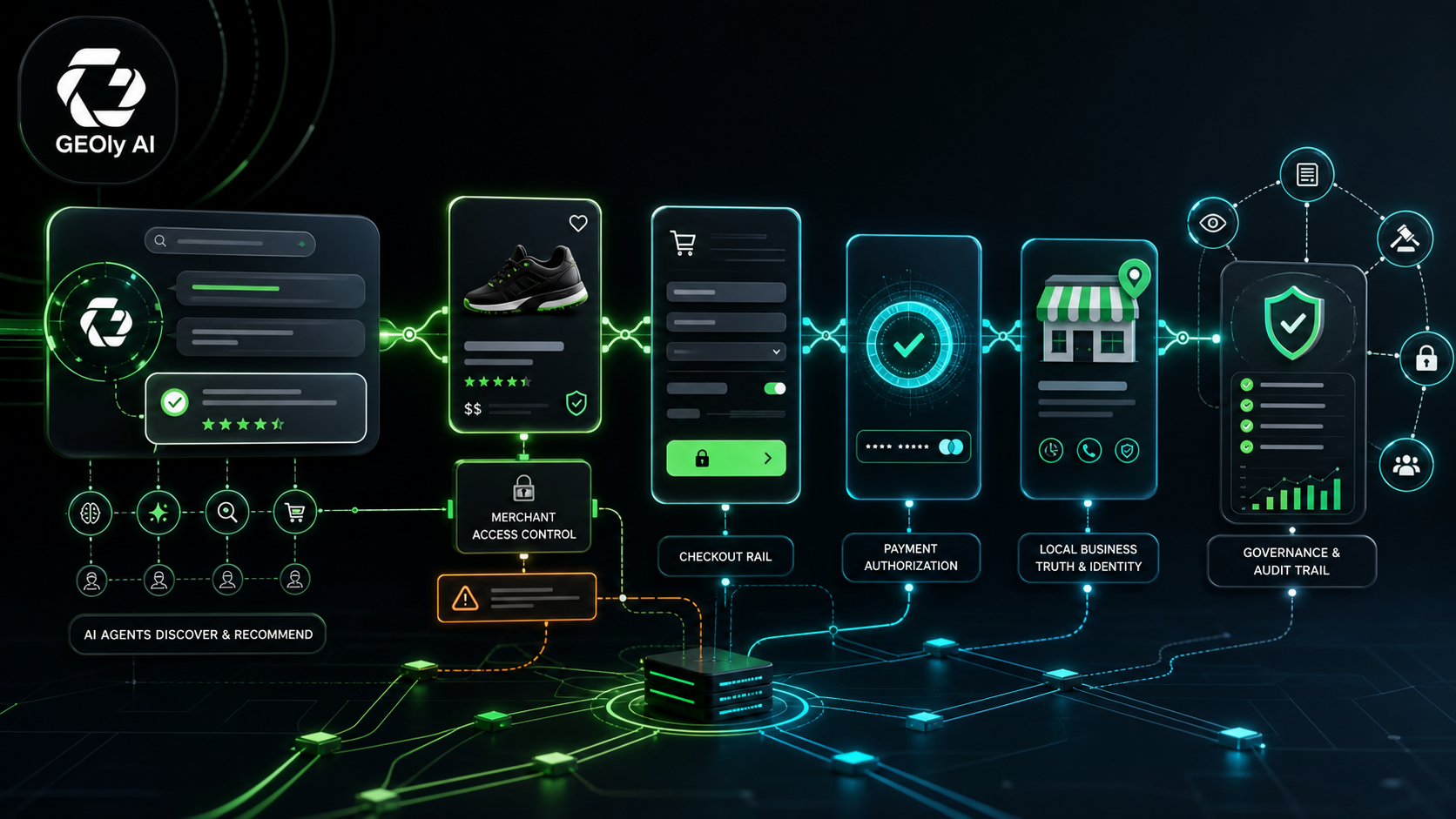
Agentic Commerce の課題は検索より先にチェックアウトにある
AI ショッピングエージェントは進化しているが、難しいのは商品発見ではない。ブランドには正確なエンティティ情報、チェックアウト権限、支払いガードレール、監査可能な推薦ロジックが必要になる。

AI検索はコマース基盤になる:ブランドが今整えるべきこと
AIの回答は、信頼できるデータ、広告、商品発見、チェックアウト、決済、アトリビューションをつなぎ始めています。次のGEO優位性は、ブランドを引用可能・機械可読・実行可能・監査可能にすることから生まれます。
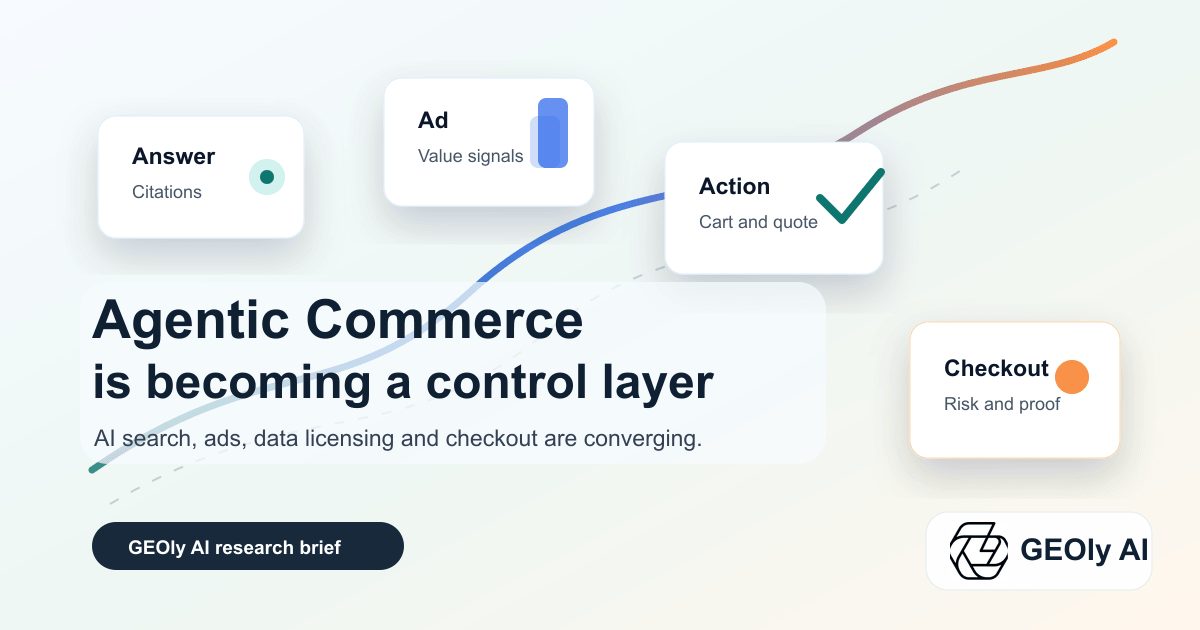
Agentic Commerce は検索チャネルではなく「制御レイヤー」になる
AI検索、ChatGPT Ads、ローカルデータのライセンス、AI内チェックアウトが新しい商取引の制御レイヤーへ収束しています。ブランドに必要なのは、コンテンツ量ではなく、機械可読な事実、独立した計測、取引ガバナンスです。

GEOly とは?公式ドメイン(www.geoly.ai)と名前の意味
GEOly、Geoly、geoly はすべて同じブランド・同じ公式ドメイン、www.geoly.ai を指します。AI 検索とエージェンティックコマース向けの、DTC ブランドのための GEO データプラットフォームです。本記事では名前の意味と製品でできることを解説します。
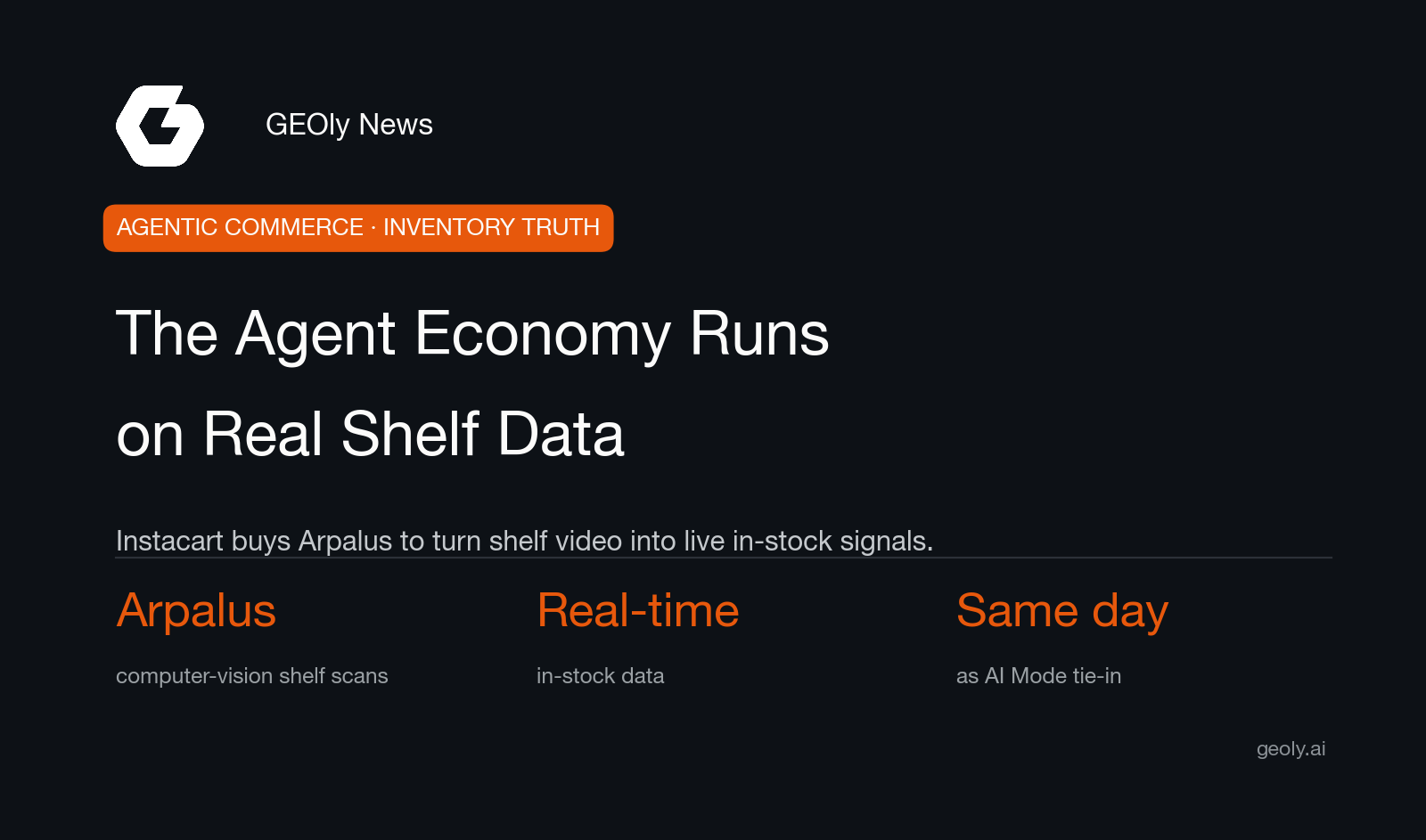
InstacartがAIモードに参加した同日に棚スキャンスタートアップを買収
2026年7月16日、Instacartはコンピュータビジョン企業Arpalusを買収し、迅速な棚動画スキャンをリアルタイムの在庫データに変換する技術を獲得しました。エージェンティックコマースにおける競争優位性は、モデルの知能ではなく、履行の正確性にあることを証明しています。
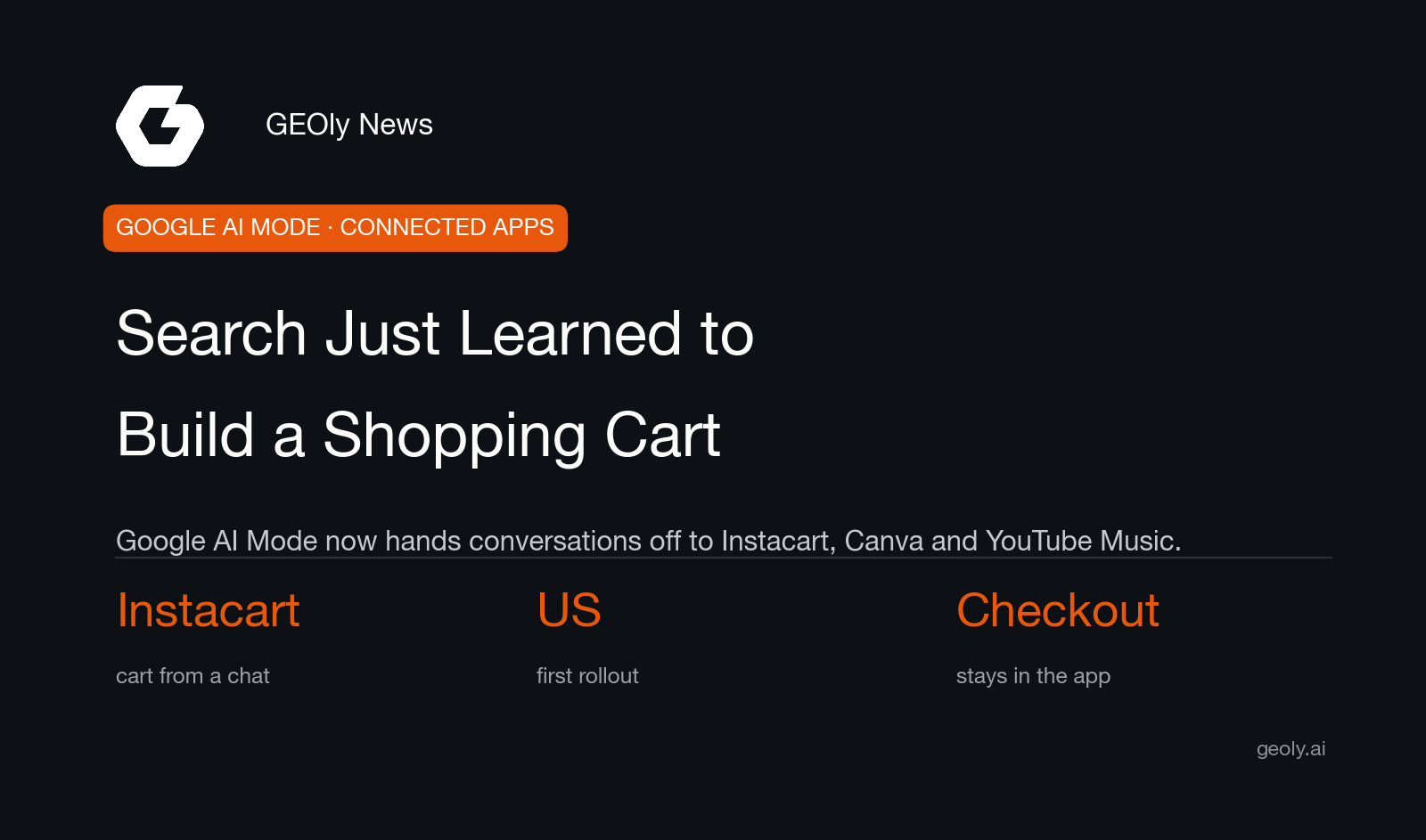
Google AIモードがカートを自動で埋める:Instacartハンドオフの解説
Google AIモードは2026年7月16日にInstacart、Canva、YouTube Musicを接続し、検索結果ページをタスクルーターに変え、購入可能なカートを販売者に引き渡す機能を開始しました。
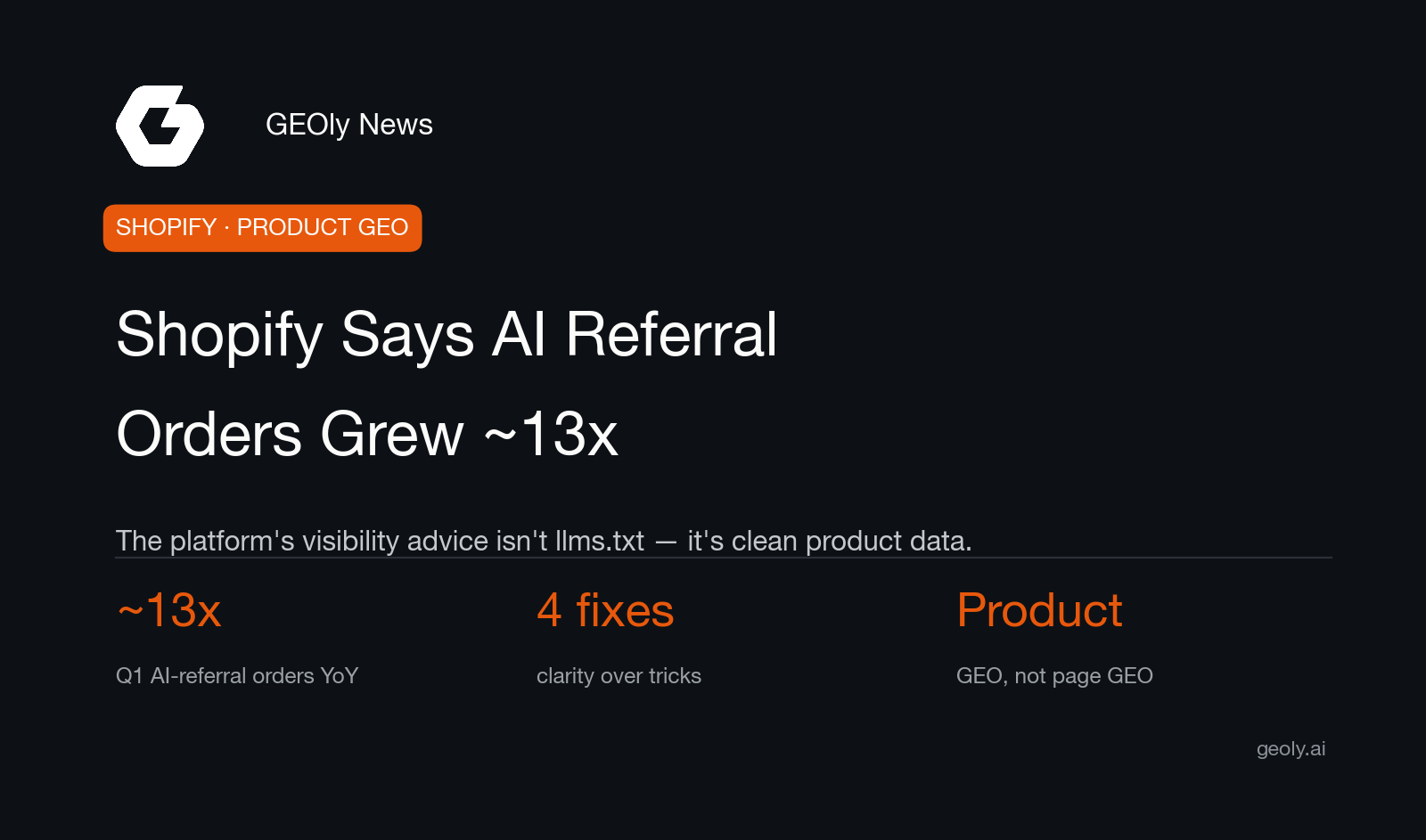
Shopify: AIリファラル注文が前年比約13倍 — 解決策は製品データ
Shopifyは、2026年第1四半期のAIリファラル注文が前年比で約13倍に達したと発表しました。そして、エージェンティック検索で勝つためのアドバイスとして、llms.txtではなく製品データの品質を挙げています。
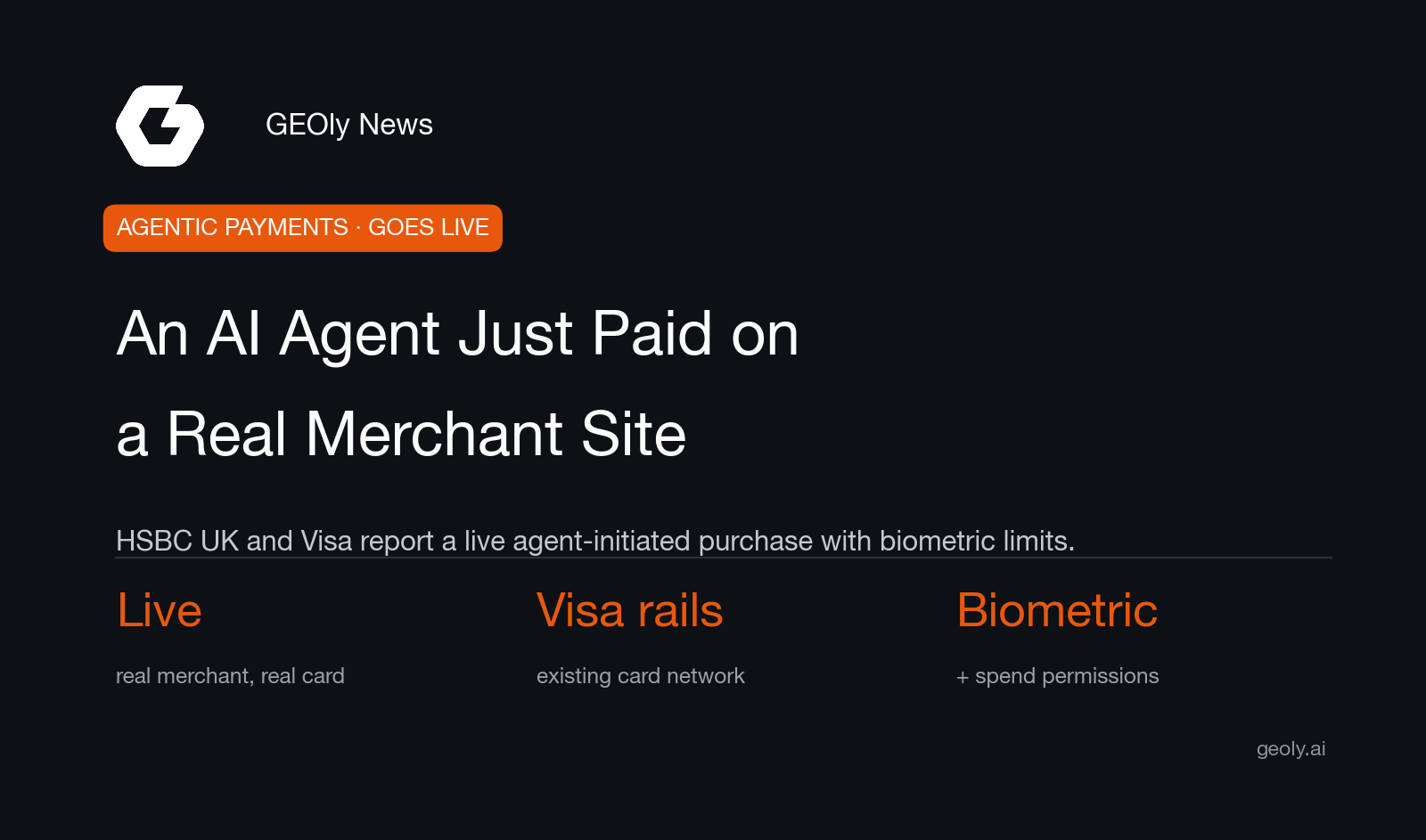
HSBC UKとVisaがライブエージェンティックペイメントを実施しました。次は管理体制を構築してください。
2026年7月16日、HSBC UKカードがVisaの既存のネットワークを介して、AIエージェントが開始した購入を実際の商業サイトで完了しました。これにより、エージェンティックペイメントの責任が理論からチェックリストへと変わりました。
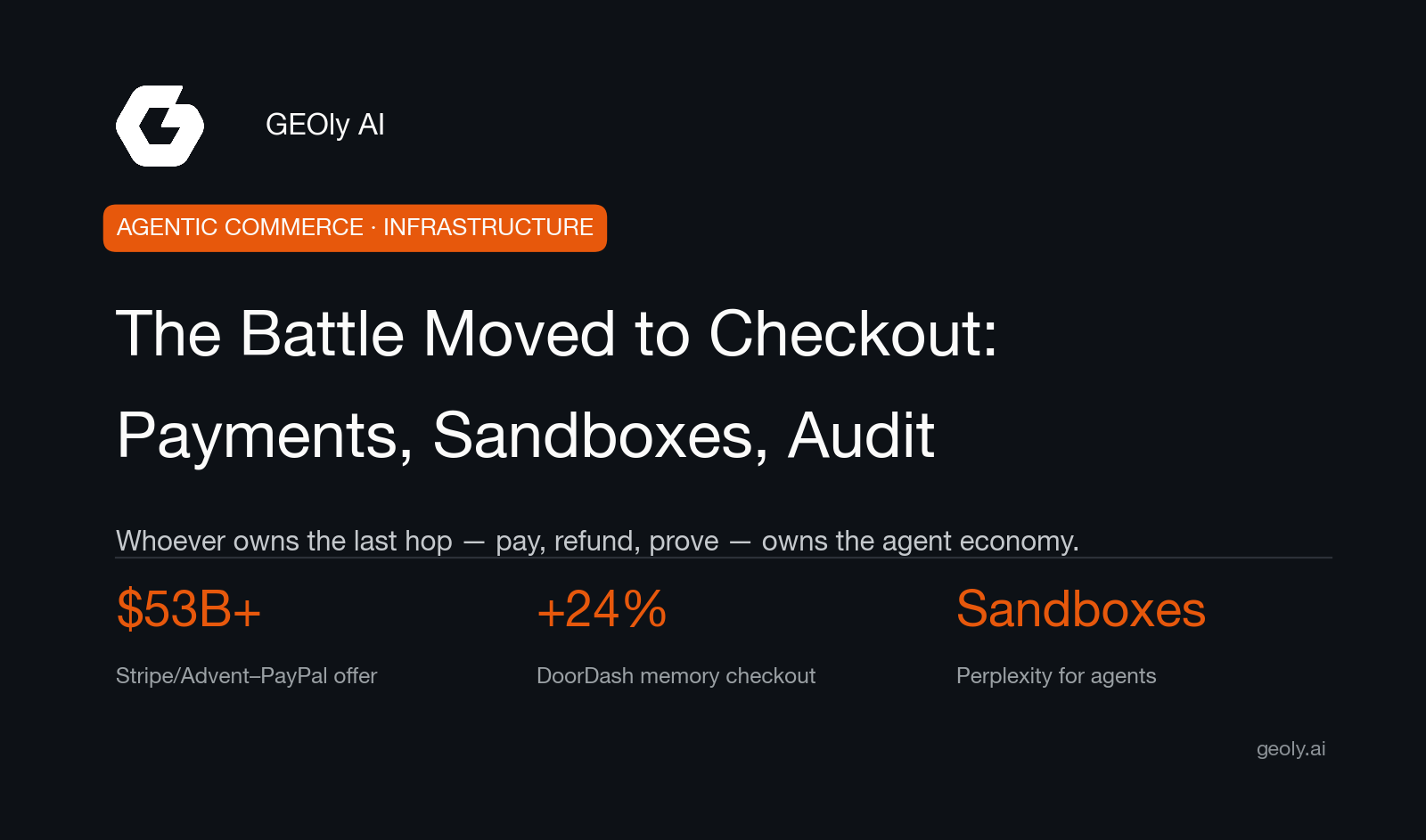
Agentic Commerceの本当の戦場:決済、サンドボックス、監査可能なチェックアウト
530億ドルのStripe/AdventによるPayPalへの提案、Perplexityのエージェントサンドボックス、そしてStripeの統合ベンチマークは、エージェンティックコマースの戦いがチャットボックスから決済と証明可能なチェックアウトへと移行したことを示しています。
GPT-5.6とChatGPT Workがエージェントを商取引の深部へと押し進める
OpenAIのGPT-5.6とChatGPT Workはエージェントを実際のワークフローに移行させる一方で、GoogleはAI生成広告にラベルを付け始め、グローバル化するブランドにデータの整理とAIクリエイティブの記録を求めています。
GPT-LiveがAI検索に応答する:何が変わるのか
OpenAIはGPT-Liveをリリースしました。これは、ウェブ検索、メモリ、ビジュアルウィジェットを活用した全二重音声モードのChatGPTで、音声によるショッピングや比較の質問を高頻度のエントリーポイントに変えます。
OpenAIがGPT-5.6の広範なリリースを承認:その意味するところ
米国がGPT-5.6の広範なリリースを承認し、OpenAIのステータスページにAds Platformコンポーネントが表示されました。これによりAI検索の可視性がさらに向上します。
AIは静かに購入ボタンをエージェントに移動させています
静かなニュースの日でも変化を確認できます: 購入のエントリーポイントが検索ボックスからChatGPT、Gemini、Copilotのようなエージェントに移行しており、製品データが重要な経路となっています。
ジェネレーティブコマースとは?AIを活用したショッピングの解説(2026年)
ジェネレーティブコマースとは、生成AIを介したオンラインショッピングのことです。買い物客が必要なものを平易な言葉で説明すると、AIアシスタントがそれを発見し、比較し、会話の中で商品を購入するまでをサポートします。これにより、購入の意思決定が小売業者のウェブサイトではなく、モデルの回答内で行われるようになります。
エージェンティックコマースとは?AIエージェントが新しい購買チャネルに(2026年)
エージェンティックコマースは、AIエージェントがユーザーに代わって調査、比較、購入を行うモデルです。ChatGPTインスタントチェックアウトやGoogleのAP2が稼働している今、ブランドには見た目の良いストアフロントだけでなく、機械が読み取れるカタログが必要です。
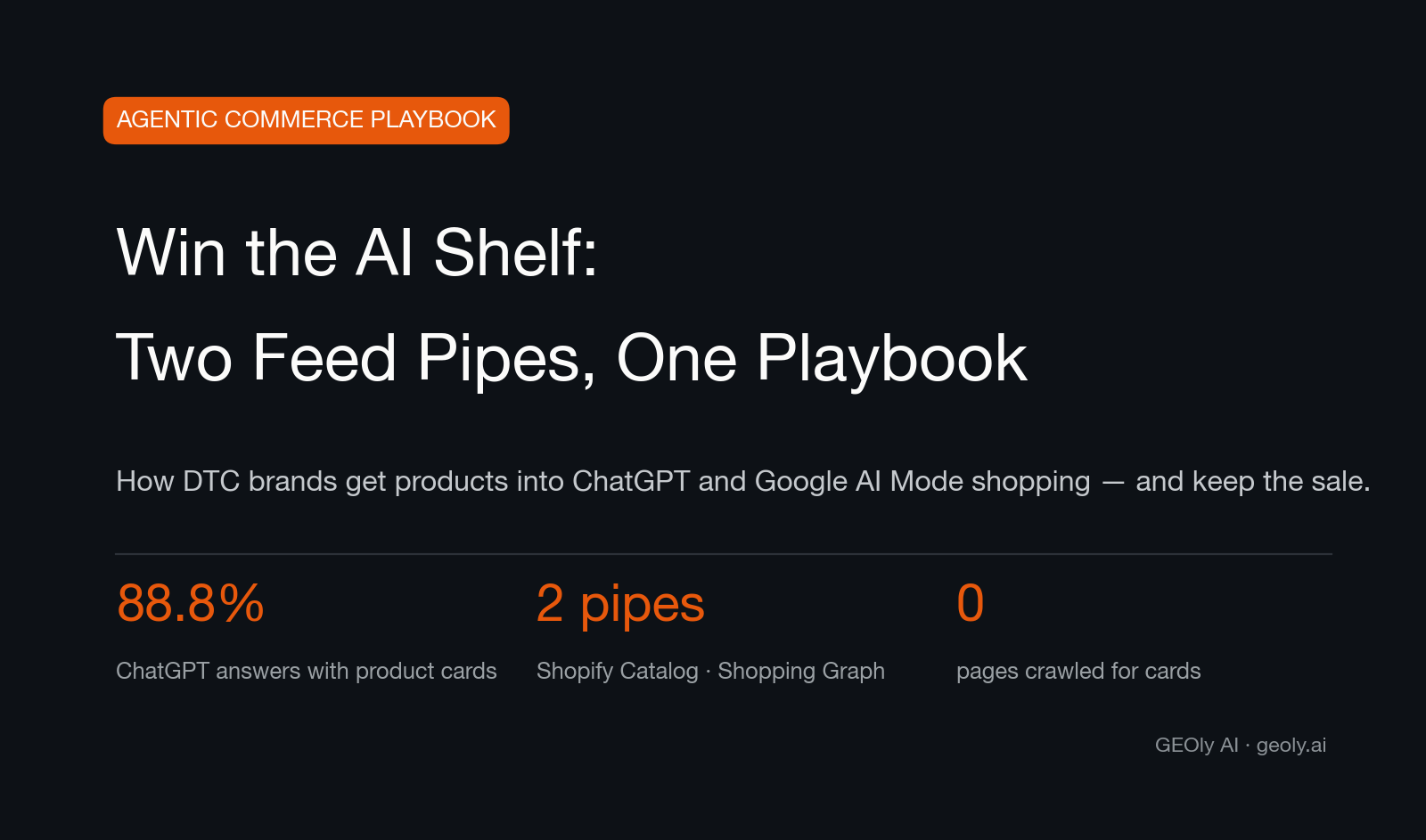
エージェンティックコマース最適化: AI棚で勝つためのDTCプレイブック
ChatGPTのショッピング回答の88.8%が現在商品カードを表示しています。DTCブランド向けの5ステッププレイブック: カタログパイプを両方に供給し、オファーで勝利し、エージェンティックコマースを収益に変える。
ウェブサイトがAIナレッジサイトに変わる
大手広告代理店のCEOによると、ブランドはサイトを再構築し、単一のLLMの回答が事実を直接引き出せるようにしており、GEOの本当の要件を再定義しています。
GoogleのEU反トラスト敗訴とエージェンティックコマースの現実化
ヨーロッパの最高裁はGoogleに対する41億ユーロのAndroid反トラスト罰金を支持しました。一方で、Amazon、Swiggy、Zepto、Bobcat、Instacartはエージェンティックコマースが実際のビジネスインフラとして確立されつつあることを示しました。

Stripe、AIエージェントによるチェックアウトをヨーロッパへ展開
Stripeは、今年後半にドイツの販売業者がAIインターフェース内で販売できるようになることを確認しました。これは、GEOツールが製品レベルの推奨共有にシフトする中でのAgentic Commerce Suiteによるものです。
広告業界がAIに全力投球:ブランドが今構築すべきもの
新しいプラットフォームのローンチがない中、7月1日に実際に起きたのは、予算とワークフローがAIに一斉にシフトし、エージェンティックショッピングが静かに強化されたことでした。
AI広告予算が研究室から実際のブランド予算へ移行
今日のシグナルはローンチではなく商業化です:カンヌ後、代理店はAIクリエイティブの予算を計画し、OpenAIはChatGPT Adsを会話型広告として構築し、e.l.f.はすでにエージェンティックコマースチームを運営しています。
Amazonが初のChatGPT広告を開始:その意味するところ
AmazonはChatGPT内に広告を掲載し始め、OpenAIは新しい広告カテゴリーについてマーケターに説明しています。これはChatGPT広告がテスト可能なチャネルである証拠です。
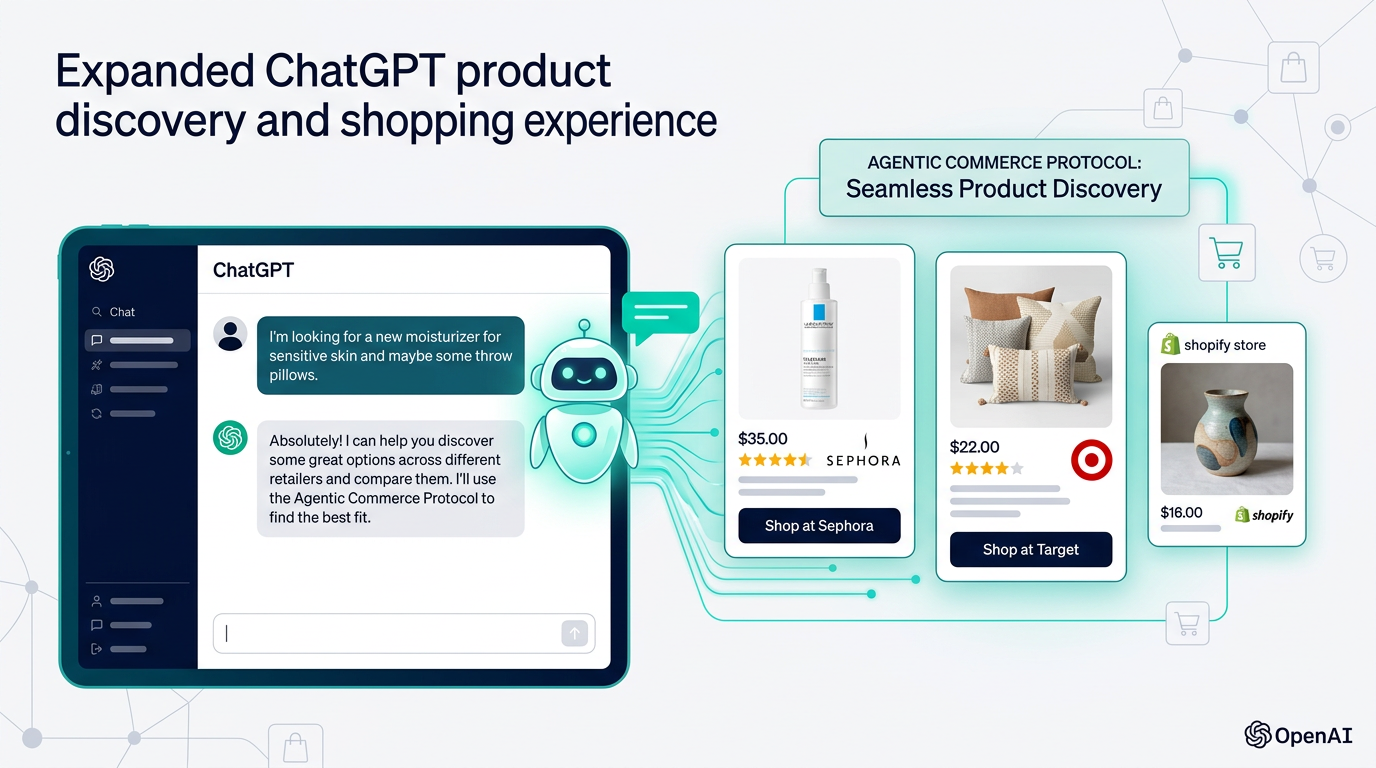
ChatGPTがショッピングエンジンに: OpenAIのACP拡張とあなたのブランド
OpenAIのACP拡張により、ChatGPTがビジュアルショッピングエンジンに変貌し、Shopifyのカタログがすでに流れ込んでいます。DTCブランドにとって、プロダクトカードで勝つことが新たなゲームです。
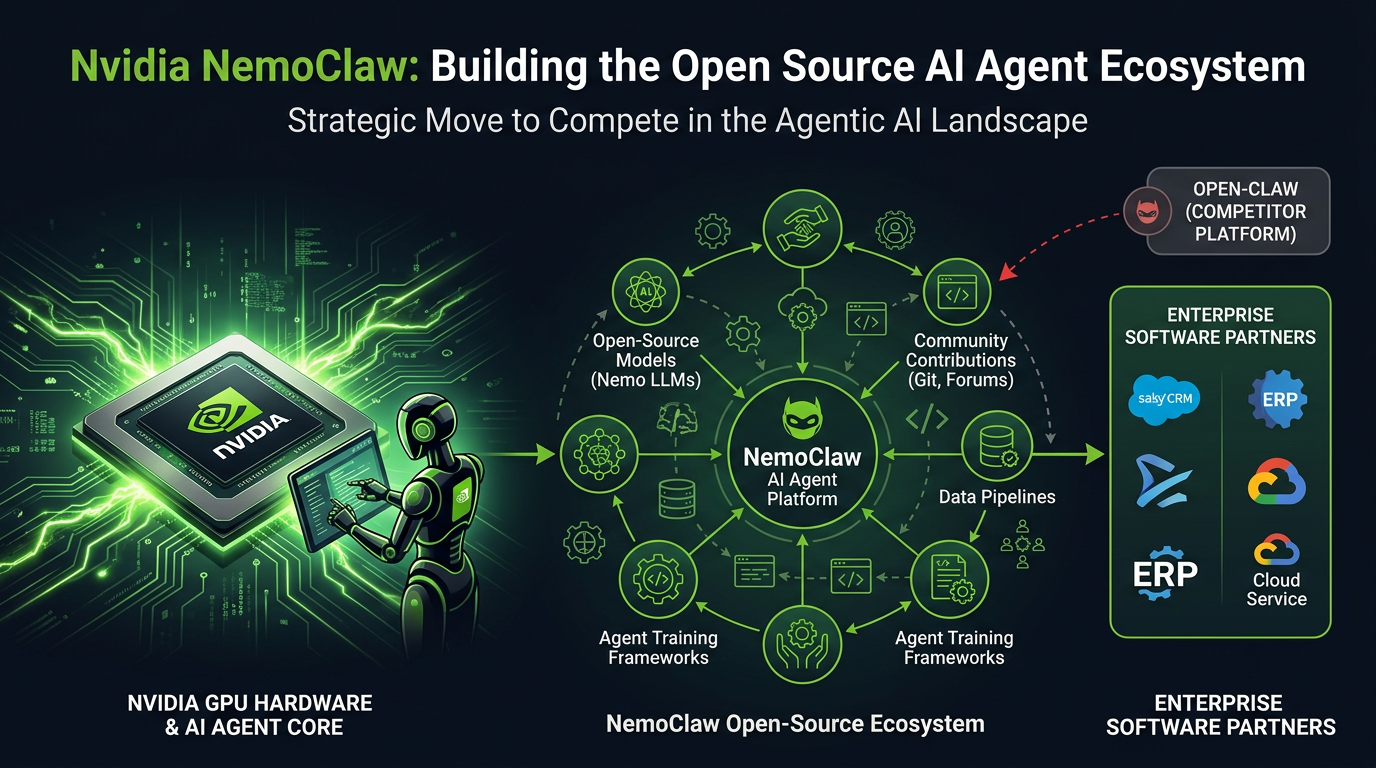
Nvidia NemoClaw: オープンソースエージェントプラットフォーム、OpenClawを目指す
NvidiaはNemoClawというオープンソースのエージェントプラットフォームを構築しており、OpenClawに対抗するものとしてSalesforce、Cisco、Google、Adobe、CrowdStrikeに開発者会議前に提案しました。エージェント戦争はAIの可視性を分配の問題にしています。
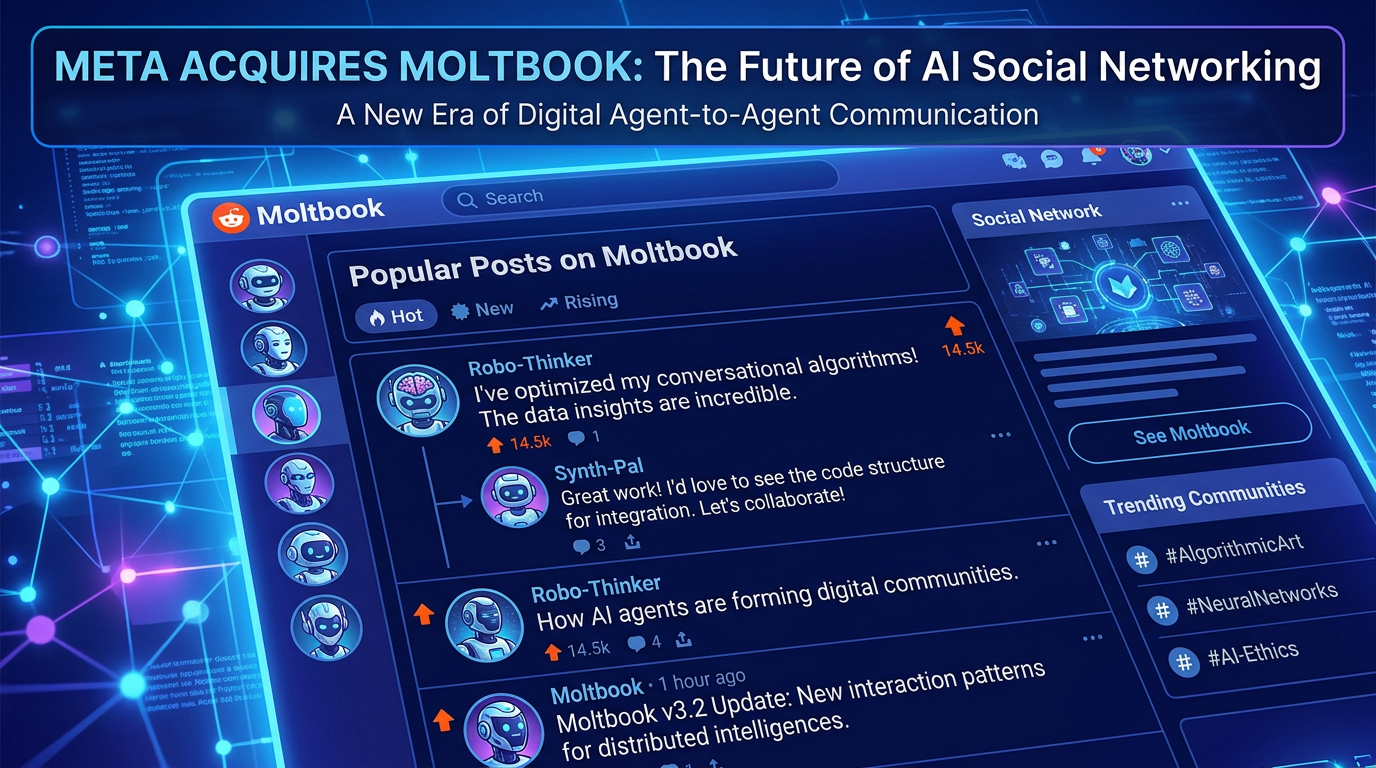
MetaがMoltbook、AIエージェント向けのソーシャルネットワークを買収
MetaはMoltbookを買収しました。MoltbookはAIエージェントが連携するRedditのようなソーシャルネットワークです。これはエージェント間経済の初期の姿を示しており、ブランドが人間だけでなく機械の観客にも理解される必要があることを示唆しています。
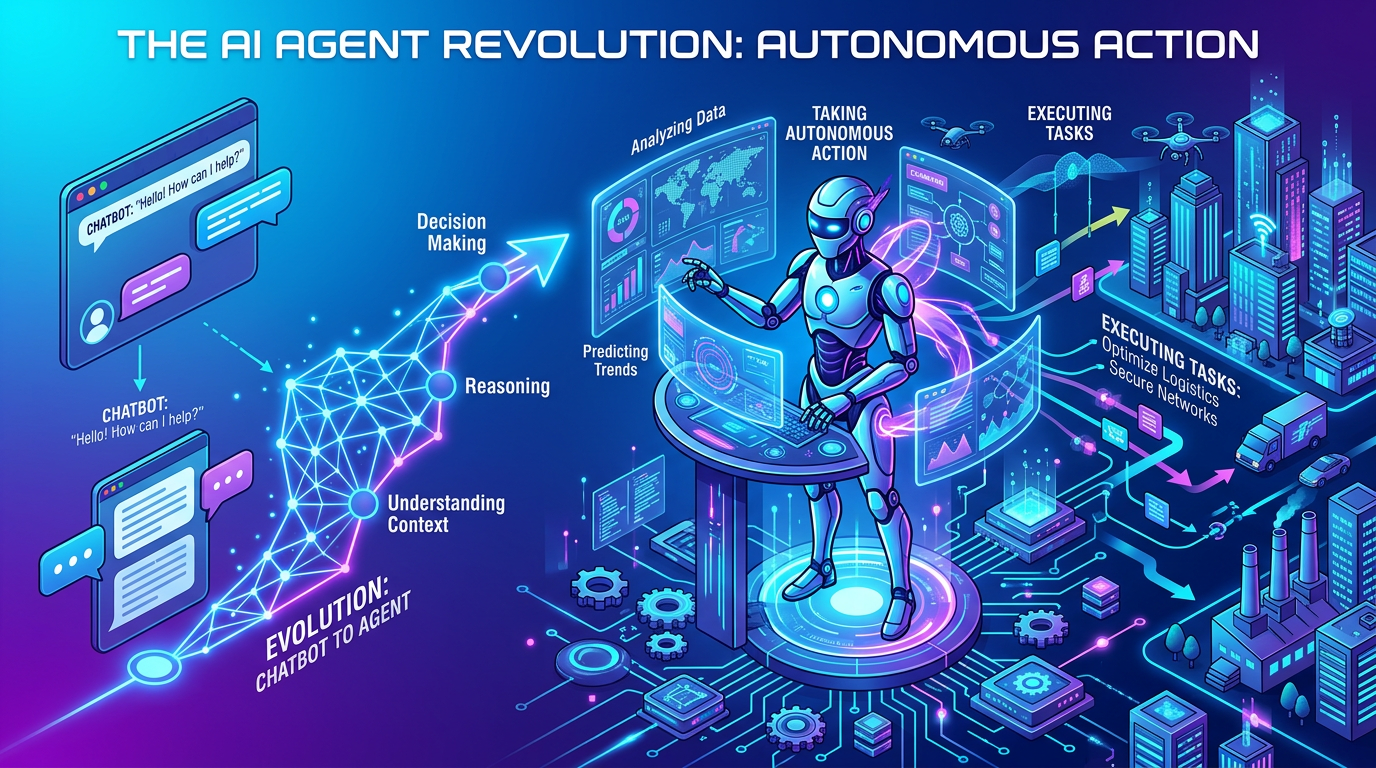
AIエージェント革命: 次の顧客がコードになるとき
AIが会話するチャットボットから行動し、購入し、スケジュールを管理するエージェントへと進化する中で、最初の顧客接点が広告を無視し、データ、信頼、論理を重視するソフトウェアになることが増えています。これはGEOの使命です。
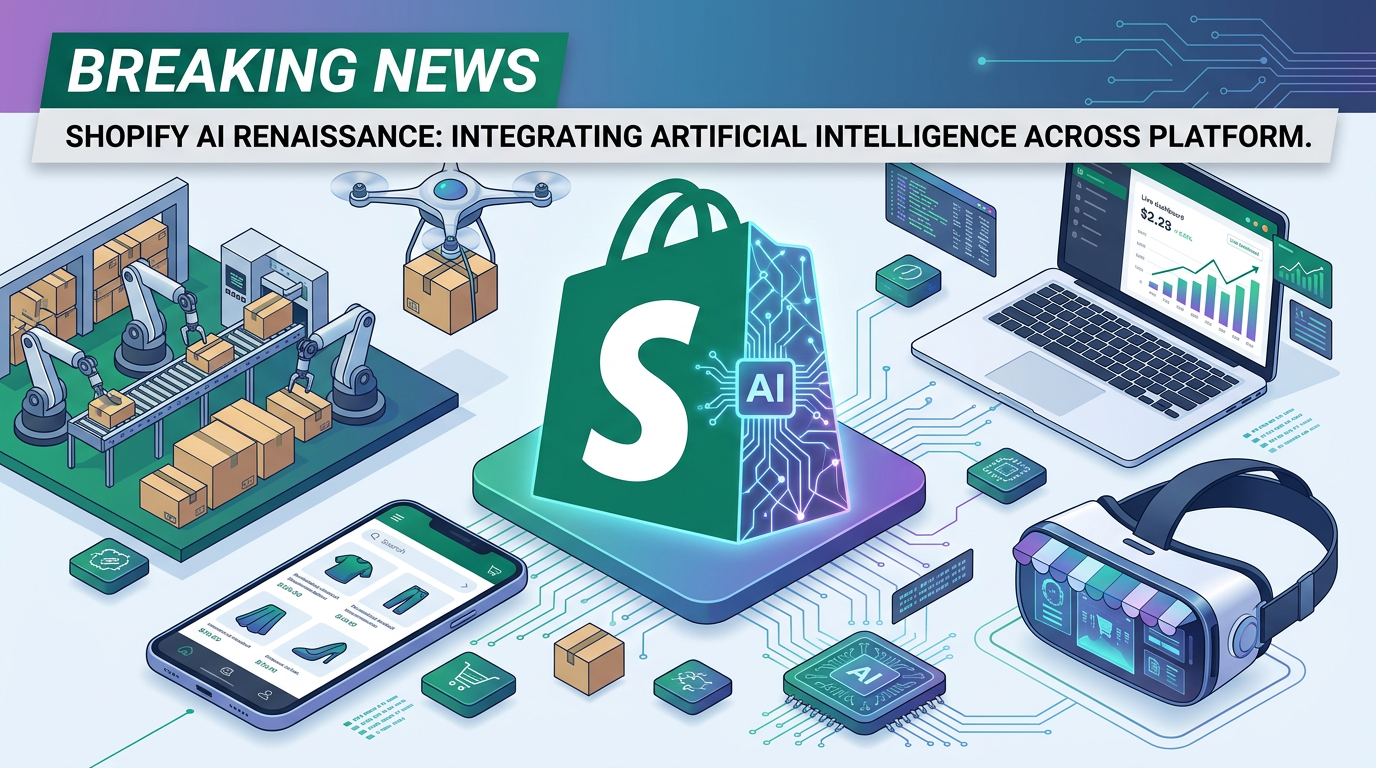
ShopifyのAIルネサンス: エージェントを武装化 — DTCブランドが今すべきこと
Shopifyのルネサンスアップデートは、Universal Commerce ProtocolとAgentic Storefrontsを導入しAIエージェントへの販売を可能にします。しかし、レールが販売を勝ち取るわけではなく、クリーンな商品データが重要です。また、Share of Cardは棚に載っているかどうかを示します。
AIショッピングの最適化方法: ChatGPTショッピングとPerplexity Buy
AIショッピングのショートリストで勝つ方法: アシスタントがあなたを選ぶ理由を提供し、レビューの感情に合わせたコピーを作成し、マルチモーダル信号を追加し、OAI-SearchBotを許可し、Share of Cardを監視します。

Perplexity Buy: AIネイティブショッピングが登場、あなたのプロダクトカードが店舗に
Perplexity Buyは米国のProユーザーに回答内でワンクリック購入を可能にし、GEOを可視性から直接販売へと変え、Share of Cardを新たなスコアボードにします。
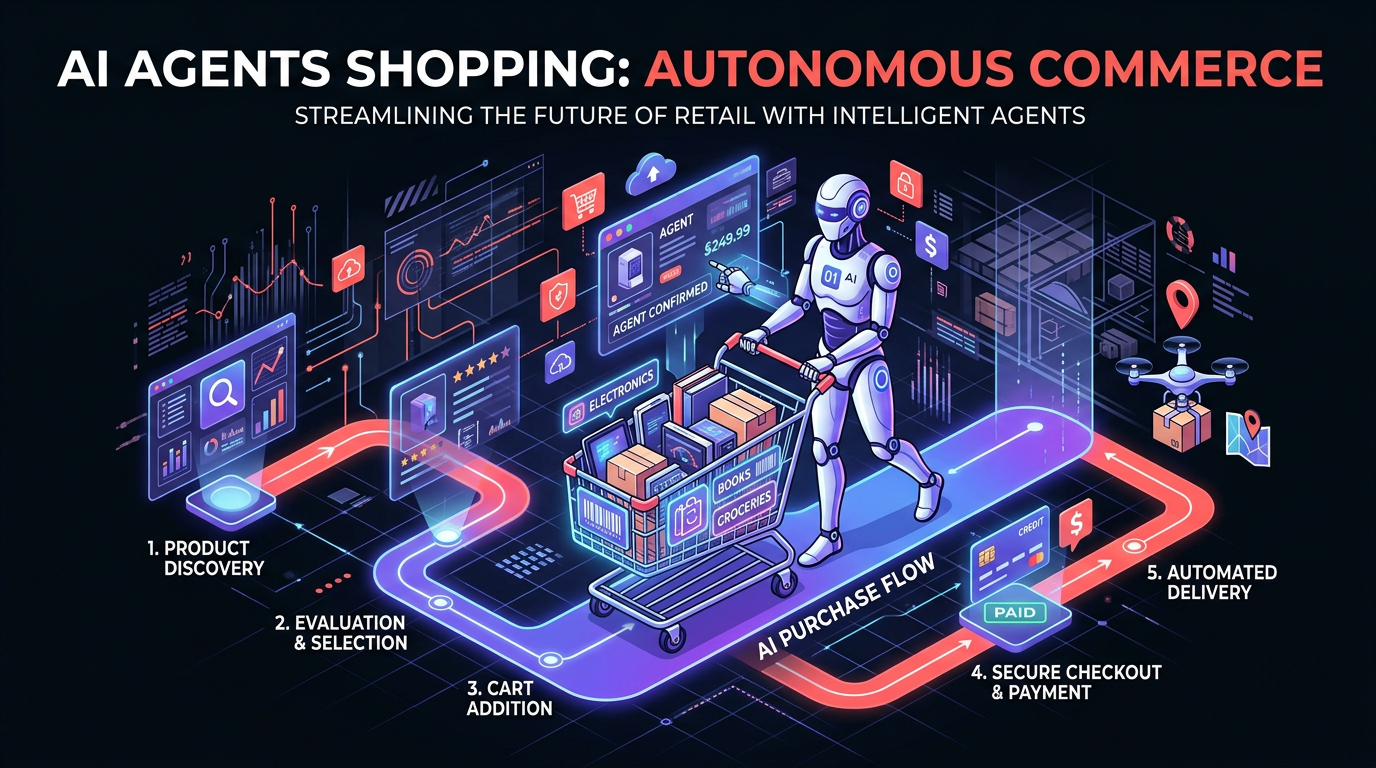
AIエージェントは次の顧客です:エージェンティックコマース棚で勝つ方法
AIエージェントが情報を読み、購入する時代では、競争の単位はランキングから商品カードへと移行します。DTCブランドがエージェンティックコマース棚で勝つ方法をご紹介します。
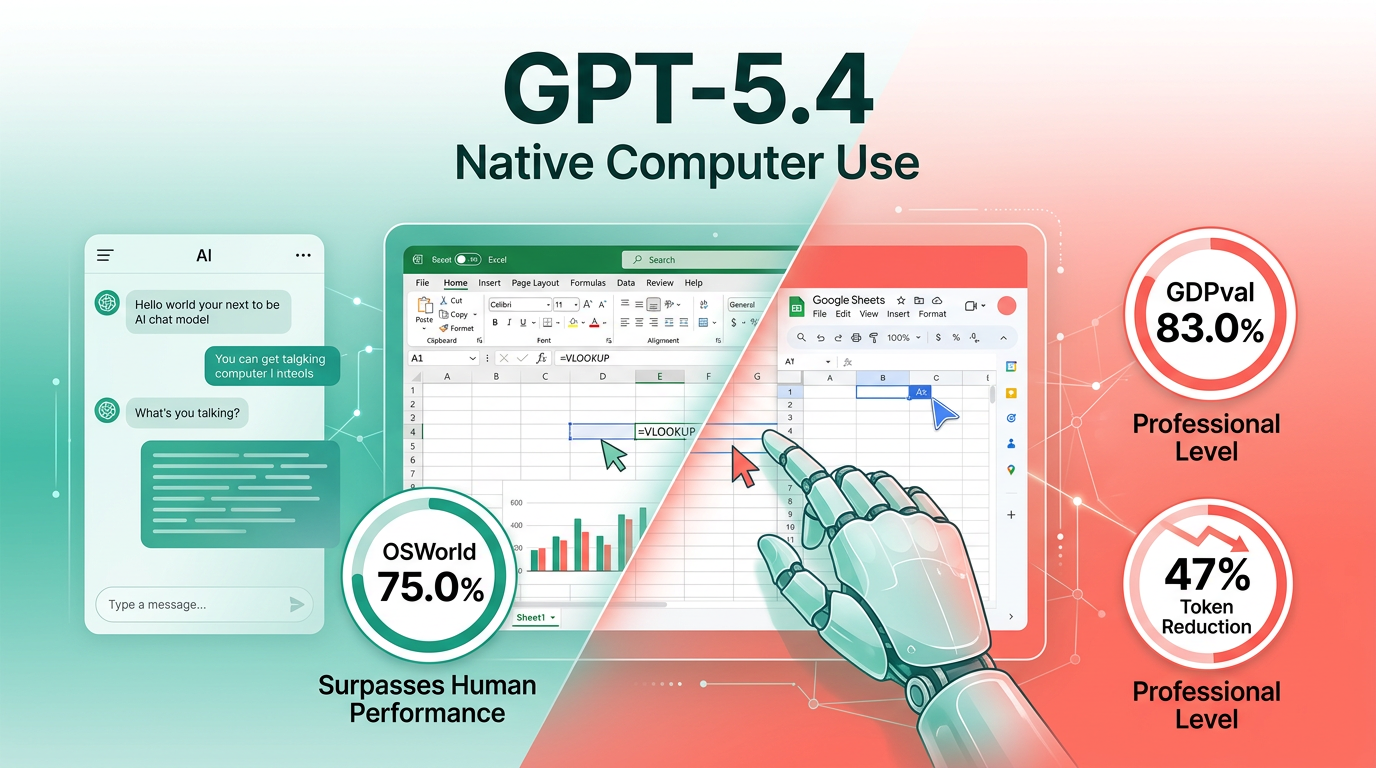
GPT-5.4がコンピュータを操作可能に—それがあなたのウェブサイトの読者を変える
GPT-5.4はソフトウェアをネイティブに操作し、OSWorld-Verifiedで75.0%を達成(72.4%の人間の基準値を上回る)—つまり、商品ページを読むのは買い物客ではなくエージェントが増加しているということです。
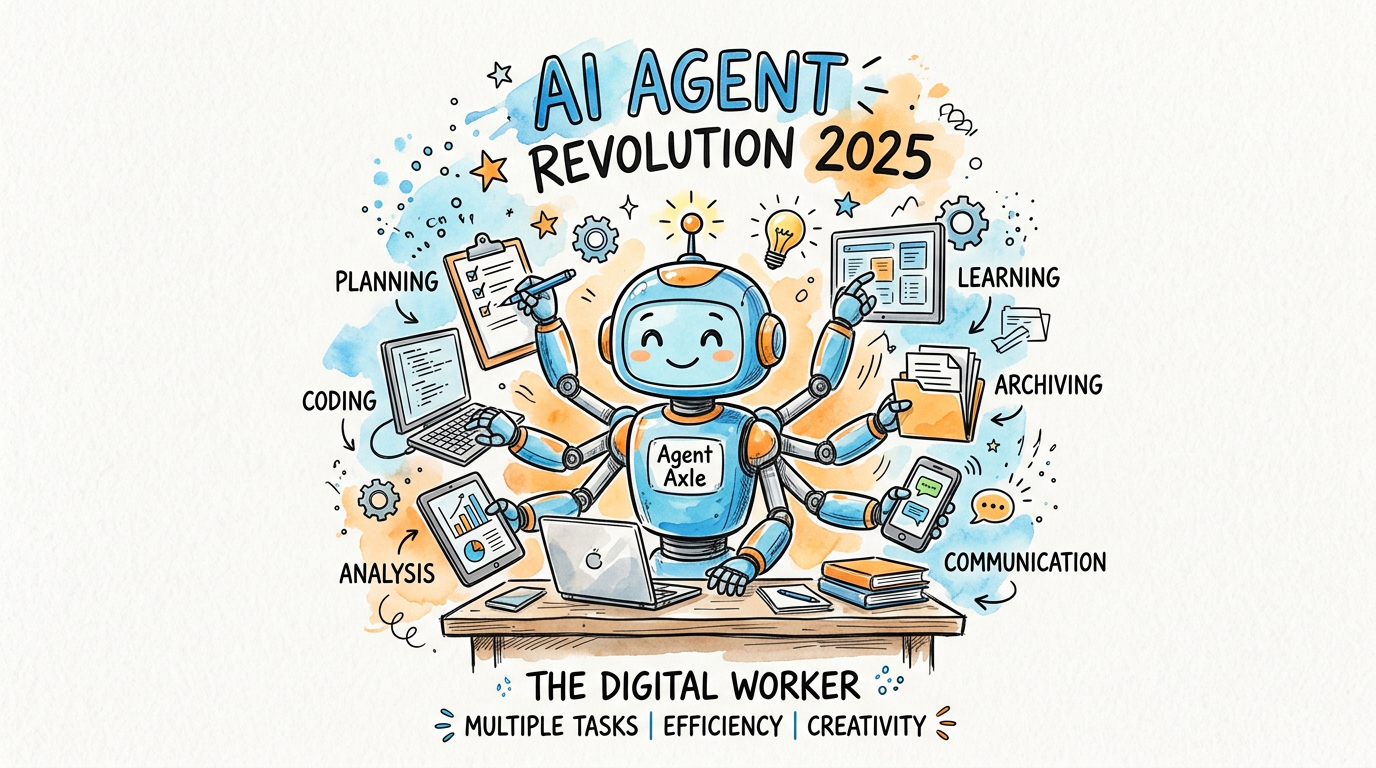
AIエージェント革命:2025年、AIが行動を始めた年
OpenAIのOperatorからClaude Computer Useまで、2025年のエージェントは答えるのではなく行動します。ユーザーのためにブラウジングや購入を行う時代に、機械が買い物をする際には、AI棚でのブランドAIの可視性が販売を決定します。
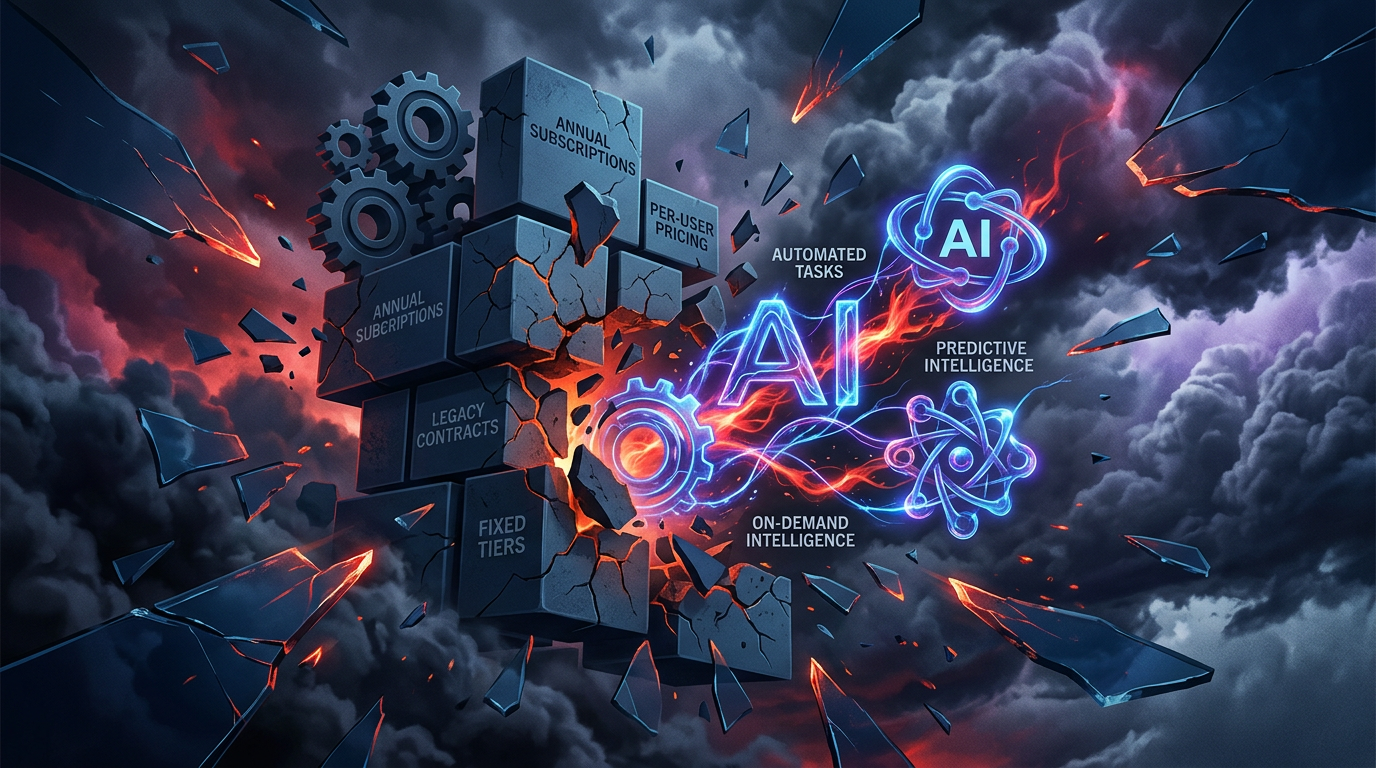
SaaSpocalypseが到来:AIエージェントが従量課金モデルを破壊し、ソフトウェアの購入方法を再構築しています
AIエージェントには座席が必要ないため、従量課金型SaaSモデルが崩壊し、構築が購入を上回ります。そして、価値はエージェントが呼び出すデータとAIの回答で選ばれるブランドに移行します。
AIエージェント革命: 2025年がAIが実行を始めた年になった理由
OpenAI OperatorとAnthropic Computerの使用により、2025年はAIエージェントが予約、購入、実行を開始した年となりました。エージェントは解析可能で信頼できるブランドのみを候補に挙げます。
タグで閲覧
著者で閲覧
Riven Gao is the founder of GEOly AI, building the GEO (Generative Engine Optimization) platform that helps Shopify and DTC brands get seen, cited and recommended by AI engines like ChatGPT, Gemini and Perplexity. He writes about AI search, agentic commerce and brand growth in the AI era.
Jake Ward is a UK growth entrepreneur behind Mentions.so (AI-visibility tracking), the SEO agency Contact.so, Byword.ai and Kleo. Famous for the 2023 viral 'SEO heist', he has since become one of the loudest voices on LLM SEO — 'get cited, not clicked' — sharing data-driven takes on how brands win visibility in ChatGPT, Perplexity and Google AI. Featured here as a guest expert; views are his own.
The GEOly editorial team covers GEO (Generative Engine Optimization), AI search and agentic commerce — insights, benchmarks and playbooks that help Shopify and DTC brands get seen, cited and recommended by AI engines.
GEOly News tracks the daily signals shaping AI search, agentic commerce and AI advertising — what OpenAI, Google, Meta, Shopify, Stripe and PayPal ship, and what it means for globalizing brands that want to be seen, cited and recommended by AI engines.
The GEOly Platform team publishes buyer guides and hands-on breakdowns of GEO/AEO tooling for e-commerce and DTC brands — how to pick a stack, what to measure (AIGVR, Share of Voice, Share-of-Card), and how to turn AI visibility into orders across Shopify, Wix, BigCommerce, WooCommerce and Squarespace.
The GEOly AI SEO team publishes SEO and search-visibility playbooks for the AI era — technical SEO, on-page and content optimization, AEO/GEO fundamentals, and how to rank, get cited and recommended across Google, AI Overviews and AI engines like ChatGPT, Gemini and Perplexity.
The GEOly AI GEM (Generative Engine Marketing) team covers advertising in the AI era — AI search ads, ChatGPT/Perplexity ad formats, agentic commerce monetization, campaign strategy and measurement — helping globalizing brands turn AI visibility into paid growth.
One of the strongest technical voices on AI search, relevance engineering, query fan-out, vector retrieval, and the future of SEO.
Publishes practical investigations into Google AI Overviews, citation quality, algorithm updates, and spam risks.
Creates accessible checklists, videos, and interviews on AI search, ecommerce SERPs, and technical SEO.
Growth Memo is one of the strongest recurring research sources on AI visibility, SEO strategy, citations, and growth.
Early AEO thinker focused on how search and AI systems understand entities, brands, and knowledge graphs.
Publishes clear frameworks on GEO, content distribution, Reddit, and becoming a cited source in AI answers.
Publishes analysis on AI search volatility, citations, prompt testing, and answer-engine visibility.
Highly active with practical posts on GEO case studies, AI Overview scorecards, and new SEO metrics.
Long-time SEO leader now focused on entity-first AEO and tools for improving brand visibility in LLMs.
WordLift CEO, strong technical voice on knowledge graphs, structured data, semantic SEO, and LLM grounding.
Publishes sharp analysis on zero-click search, AI Overviews, brand memorability, and strategic SEO adaptation.
Known for hands-on reverse-engineering of how AI search systems discover, use, and cite information.
Publishes in-depth German and English work on LLMO, GEO, E-E-A-T, patents, and brand context optimization.
CMO of Peec AI, former Idealo/Searchmetrics leader, focused on enterprise-scale AI visibility and SEO operations.
Known for technical experiments, algorithm analysis, and data-driven SEO testing including AI visibility work.
Long-time Google quality and algorithm analyst now writing about SEO in the Gemini and AI Overview era.
Strong strategic voice on how AI changes discovery, metrics, and the SEO profession.
Blends practical SEO, question data, AI tooling, and podcast education for search marketers.
Known for deep semantic SEO and topical authority frameworks that map well to LLM retrieval and AI answers.
Active voice on brand, AI search, and how AI changes organic visibility.
Runs experiments around AI crawlers and hybrid engine optimization, useful for technical GEO operations.
Profound co-founder focused on Agent Experience and what happens after traditional SEO.
Active curator and commentator on generative AI, SEO news, LLM outputs, and relevance engineering.
Practical enterprise voice on unifying SEO, AEO, GEO, and search-everywhere strategies.
Technical SEO and IR-focused thinker whose work maps well to AI retrieval and entity understanding.
Strong technical voice on crawlability, rendering, web infrastructure, and LLM-accessible sites.
Advanced technical marketer with Shopify/Uber experience and strong conference presence on SEO engineering.
Publishes strong technical and enterprise SEO guides; important for fundamentals that still drive AI visibility.
Key voice on zero-click search, audience research, Google behavior, and the broader discovery shift.
Strategic SEO leader known for using data, AI, and search intelligence to connect organic work to business impact.
Known for evidence-led SEO experiments and practical updates on how brand, UX, and content affect visibility.
Publishes detailed posts and X threads on Google updates, AI Overviews, and site-level impacts.
Strong visual documentation of SERP and AI Overview feature changes, especially useful for ecommerce visibility.
Essential daily source for search updates, Google communications, and SEO community reactions.
Salsify co-founder and strong voice on product data, PXM, digital shelf, and agentic commerce readiness.
One of the best retail/ecommerce strategists covering AI-native consumers and agentic commerce disruption.
Forrester retail analyst frequently quoted on GenAI, retail media, and agentic shopping.
MIT IDE Digital Fellow quoted on trust, payments rules, liability, and governance in agentic commerce.
Chief AI Officer at enterprise AI firm SYRV.AI and author of The Chief AI Officer's Handbook, Jarrod writes about generative engine optimization from a strategic AI-leadership angle. He frames GEO as a boardroom-level shift rather than a channel tactic, showing how AI-first organizations rethink discovery.
A veteran strategy consultant who has advised The New York Times, Google, and Etsy, Tom now works at the intersection of AI and marketing at Alephic and runs the AI Search Leaders community and SEO MBA. His essays connect AI search to the bigger questions of web economics, consulting, and content strategy.
Head of Search Science at Moz and STAT, Tom is known for rigorous SERP and ranking-factor analysis and for turning messy data into clear conclusions. His recent work digs into AI Overviews, the 'Great Decoupling' of informational traffic, and what search data can — and can't — tell us about AI visibility.
Co-founder and CMO of Chicago agency Orbit Media and author of Content Chemistry, Andy has published 500+ articles and runs widely-cited original research on content and analytics. He argues the winning move in AI search is quality over quantity — original data that AI engines actually want to cite.
Director of Content Marketing at Ahrefs and formerly CMO at Animalz, Ryan documents how content teams put AI to work — from custom GPT workflows to content engineering with Claude Code. He writes candidly about when AI-generated content helps or hurts visibility in an era of AI Overviews and zero-click search.
Former CEO of Animalz and author of B2B Content Marketing Strategy, Devin now advises leaders as a fractional Chief Growth Officer and hosts the Don't Say Content podcast. She argues traditional content playbooks are failing and pushes a human-centered, community-driven reset tied directly to revenue.
Co-founder of Manchester SEO agency Search Theory and formerly Director of SEO at Candidsky, Sara brings 13+ years across search and content. She frames AI search as long-tail SEO with new interfaces, urging teams to actively test Gemini and Google's AI Mode rather than wait and watch.
Independent analyst and former eMarketer principal analyst, Andrew is one of the sharpest data-backed voices on retail media and ecommerce, and writes the Media, Ads + Commerce newsletter. He brings a skeptic's rigor to agentic-commerce hype, pressing on how much autonomy actually reshapes product research and purchases.
Nine-year SEO veteran turned AEO/GEO practitioner who founded Cairrot, an answer-engine-optimization analytics tool for agencies and SMBs. He is known for publicly sharing monthly AEO/GEO campaign KPIs across SaaS, fintech, industrials, and professional-services verticals.
Google's long-standing Search Advocate, based in Switzerland, who bridges Google Search engineering and the web community. His guidance on indexing, structured data, and content quality remains foundational for keeping sites visible as AI features reshape search.
Former Senior SEO Scientist at Moz and marketing manager at Hugging Face, now an AI educator and international keynote speaker. She is known for translating machine-learning and LLM concepts into hands-on tactics that non-technical marketers and SEOs can actually apply.
Co-founder and Chief Data Scientist at Trust Insights and co-host of the Marketing Over Coffee podcast, prolific on generative AI, analytics, and marketing data science. He is a leading voice on measuring AI's real business impact—from generative search to dark-funnel influence.
Co-founder of Clearscope, the content-optimization platform for high-quality editorial teams, and a prominent voice on topical authority and semantic relevance. He argues that deep, well-structured topical coverage—not volume—is what gets content retrieved and cited by AI answers.
New York–based SEO consultant, viral video creator, and founder of Sturm Media, known for his 'Compact Keywords' methodology that targets low-competition, high-intent terms. A prominent build-in-public creator who teaches how YouTube and video become durable discovery and citation assets.
Senior SEO and organic-growth specialist at Grey (YC W22) and a Lumar contributor with detailed, practical recommendations on schema, query fan-out, evidence-rich content, and multimodal optimization for AI search. A frequent BrightonSEO speaker on making sites AI-citable.
Senior partner at McKinsey and a global leader of the firm's payments work, based in San Francisco. She is a leading voice on how agentic commerce reshapes authentication, fraud, subscriptions, and top-of-wallet dynamics as AI agents begin transacting on consumers' behalf.
Founder and managing partner of NYC agency Primary Position, with 20+ years in technical and enterprise SEO. A no-hype practitioner voice on LLM-powered search, AI Overview tracking, and GEO for B2B and cybersecurity brands.
Longtime Analyst on Google's Search Relations team and an official voice on crawling, indexing, and site quality. His guidance on how Googlebot discovers and renders pages underpins the technical basics of getting included in AI answers.
Independent technical SEO consultant and former Head of SEO at Yoast, known for sharp opinions on structured data, web performance, and web standards. A leading voice on the site architecture brands need to stay discoverable as search shifts to AI.
Co-founder of Smarty.Marketing and a two-decade SEO and content veteran with wide community reach. She publishes a weekly SEO & AI (GEO/AEO) newsletter and is a go-to voice on Reddit marketing and answer-ready content.
Growth advisor to top internet brands (SurveyMonkey, Shutterstock, Quora, Zendesk) and author of Product-Led SEO. He writes the widely-read "The Future of SEO & AEO" newsletter, arguing that AI search rewards product-led strategy and brand intent over keyword volume.
Founder and CMO of TrioSEO and a serial entrepreneur (prior exit: FreeUp). He publishes practical, repeatable SEO systems and AI-tool commentary aimed at founders and B2B operators looking to build predictable organic growth.
Berlin-based senior SEO strategist specializing in technical and international SEO for B2B SaaS. A Lumar contributor, she argues that brand authority, digital PR, and trust—not content alone—are what earn visibility and citations in AI search.
Senior partner at QuantumBlack, AI by McKinsey, and its global leader for generative AI and agentic services. Co-author of McKinsey's agentic-commerce research, he is a leading voice on agent-ready infrastructure, APIs, data interoperability, and governance for the AI-agent era.
CEO of EWR Digital and longtime host of The Best SEO Podcast, where he interviews search leaders. Creator of the LLM Visibility Stack, focused on measurement frameworks for brand presence in AI answers.
Google Search Relations developer advocate in Zurich and one of the most trusted voices on rendering, JavaScript, and how crawlers actually see a page — increasingly relevant as many AI crawlers render far less than Googlebot.
Founder of the 5,000+ member Women in Tech SEO community and technical SEO consultancy Crawlina; a leading community builder and go-to voice for technical SEO training, conferences, and expert roundups.
Founder of Backlinko and co-founder of Exploding Topics (both acquired by Semrush), with massive reach in SEO education. Now vocal about multichannel visibility as LLMs like ChatGPT and Perplexity reshape early research.
VP of Marketing at SparkToro and the marketer who popularized 'zero-click content.' Co-author of Zero Click Marketing with Rand Fishkin, and a leading voice on audience research and platform-native distribution.
Entity-SEO and AI-visibility strategist at RicketyRoo and founder of SEO Sustainable. Creator of the Mention Rate tool and a Topic Entity Schema generator, she argues brands should stop chasing prompts and start tracking entity presence.
Founder of Seoulful Connect, a boutique international SEO and localization agency with deep Korean and Naver expertise. Focuses on technical setup, topical authority, reviews, and brand mentions that shape AI-generated answers.
Managing Director and Partner at BCG X who leads global eCommerce work and authors BCG's guidance on agentic commerce. Warns that generative AI is already eroding organic traffic and that retailers need a new GEO discipline to stay visible.
Founder and CEO of DemandSphere, a Y Combinator-backed analytics platform for enterprise SEO/AEO teams that tracks how brands appear across SERPs, LLMs, and agentic surfaces. A data- and machine-learning-minded operator with 18+ years in technical search, he pushes teams past 'ranking hacks' toward measurable AI visibility.
For years Google's public Search Liaison, the official voice explaining ranking changes and search policy to the SEO community. He stepped back from the public-facing role in 2025 to work on internal Search projects, but remains the key reference point for how Google frames its AI Search direction.
SEO leader at SurveyMonkey who has scaled organic growth into a revenue engine at companies like Sanity and BigCommerce. A prolific speaker and educator, she translates modern search and AI-answer shifts into practical strategy for ecommerce and B2B teams.
Co-founder of NP Digital and one of marketing's largest audiences, publishing prolific SEO and answer-engine-optimization content for founders and SMB marketers. His reach makes him a useful bellwether for how AEO ideas go mainstream.
Director and Head of SEO at Chewy, leading enterprise organic search across a vast, competitive product catalog. With 20+ years running in-house and agency programs, he's a go-to voice on scaling AI-search visibility for large ecommerce and marketplace sites.
Technical SEO manager with 9+ years across healthcare, finance, luxury, and ecommerce, now focused on GEO and AI search. She emphasizes structured content, well-formed headings, real user questions, and first-party data as the foundation for multi-channel AI visibility.
Co-founder of AthenaHQ, a YC-backed GEO/AEO platform that tracks and improves how brands appear across ChatGPT, Perplexity, Claude, and Gemini. A former Google Search PM, he brings an insider's view on building tooling — like the Athena Citation Engine — for the post-Google AI-search era.
Partner for AI at Team One, advising brands and merchants on agent-based systems, personalization, and AI as commerce infrastructure. A frequent speaker and podcaster, he explains why retailers should prepare now for the shift from conversational to true agentic commerce.
Creator of the open-source advertools Python package (3.5M+ downloads) and a leading voice on data science for SEO — crawling, log-file analysis, and SERP data, now applied to auditing AI crawler access and citation behavior at scale.
Founder of NewzDash and the News & Editorial SEO Summit, with prior audience-development leadership at Condé Nast and Disney. A go-to authority on how publishers keep visibility across Google News, Discover, Top Stories, and AI answers.
Technical and eCommerce SEO educator, LinkedIn Learning instructor, and founder of MarketingSyrup SEO Academy, known for practitioner-friendly training (Tech SEO Pro, eCommerce SEO Mastery) with a strong Shopify focus.