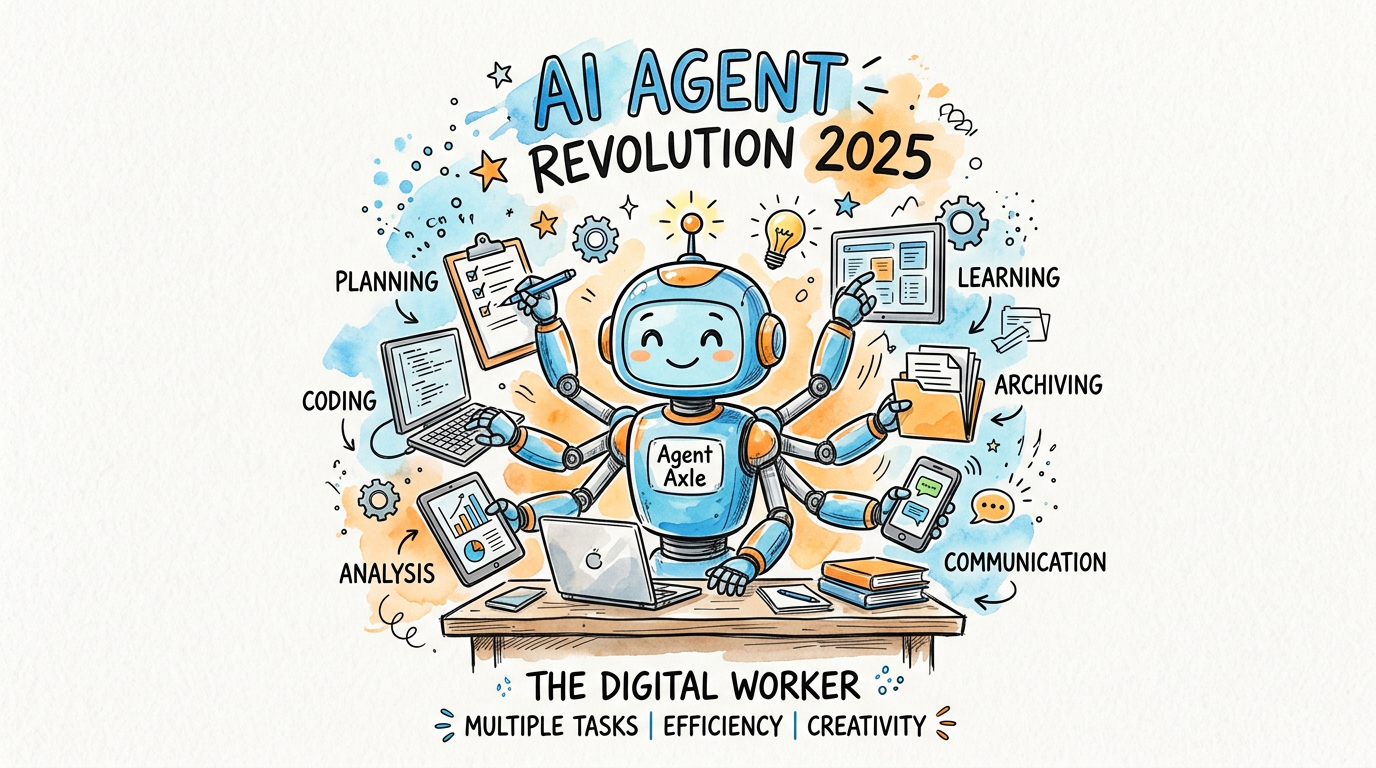
For years, the measure of an AI was how well it talked. It could write your essay, debug your function, explain how to book a flight in perfect step-by-step prose — and then stop cold at the one thing you actually wanted, which was for the flight to get booked. 2025 is the year that boundary broke. OpenAI's Operator, Anthropic's Computer Use, and a wave of similar tools turned the assistant from a conversationalist into an executor: software that clicks the buttons, fills the forms, and finishes the task.
That sounds like a feature update. It isn't. The leap from a model that processes language to a model that processes the world is categorical, not incremental — and it quietly rewires who, or what, is on the other end of a purchase decision.
Key takeaways
- 2025 marked the shift from conversational AI to agentic AI: systems that navigate interfaces, execute multi-step workflows end to end, and act on external systems rather than just describing how. - OpenAI's Operator set the tone — controlling a browser to book travel, order groceries, or research across many sites — and a wave of comparable tools followed, moving "do it for me" from demo to daily use. - When an agent completes the task instead of narrating it, the buyer at the moment of decision is increasingly a program, not a person — and programs don't respond to the marketing humans do. - For GEO and brand teams the consequence is direct: agents shortlist the brands they can parse and trust, so machine-readable data and factual consistency now decide whether you make the cut. - You can't optimize a funnel you can't see; tracking how often AI systems surface and recommend your brand becomes a standing metric in the agentic era.
From conversation to action
For most of AI's recent history the pattern was simple: you asked, it answered. Large language models were superb at generating text, reasoning through a problem, and handing back information — and they stopped exactly at the edge of doing anything with it. They could tell you how to book the flight but couldn't book it. They could explain the code but couldn't run it.
Agents erase that edge. These systems navigate interfaces the way a person does, clicking and typing their way through screens. They run multi-step workflows autonomously, carrying a complex task from start to finish. They reach into external systems — browsers, APIs, desktop apps. And they hold context across a session, remembering what they already did and adapting when a step fails.
The players who set the tone
OpenAI's Operator was the entry that defined the year. It controls a browser interface directly and carries out the kind of errands people had only ever described to an assistant before — booking travel, ordering groceries, researching a knotty topic across a dozen sites and coming back with a synthesis. Anthropic's Computer Use pushed in the same direction from a different angle, and a broader wave of similar tools arrived close behind. The specifics differ, but the common thread is unmistakable: the interface an agent drives was built for a human, and now a machine is driving it on the human's behalf.
