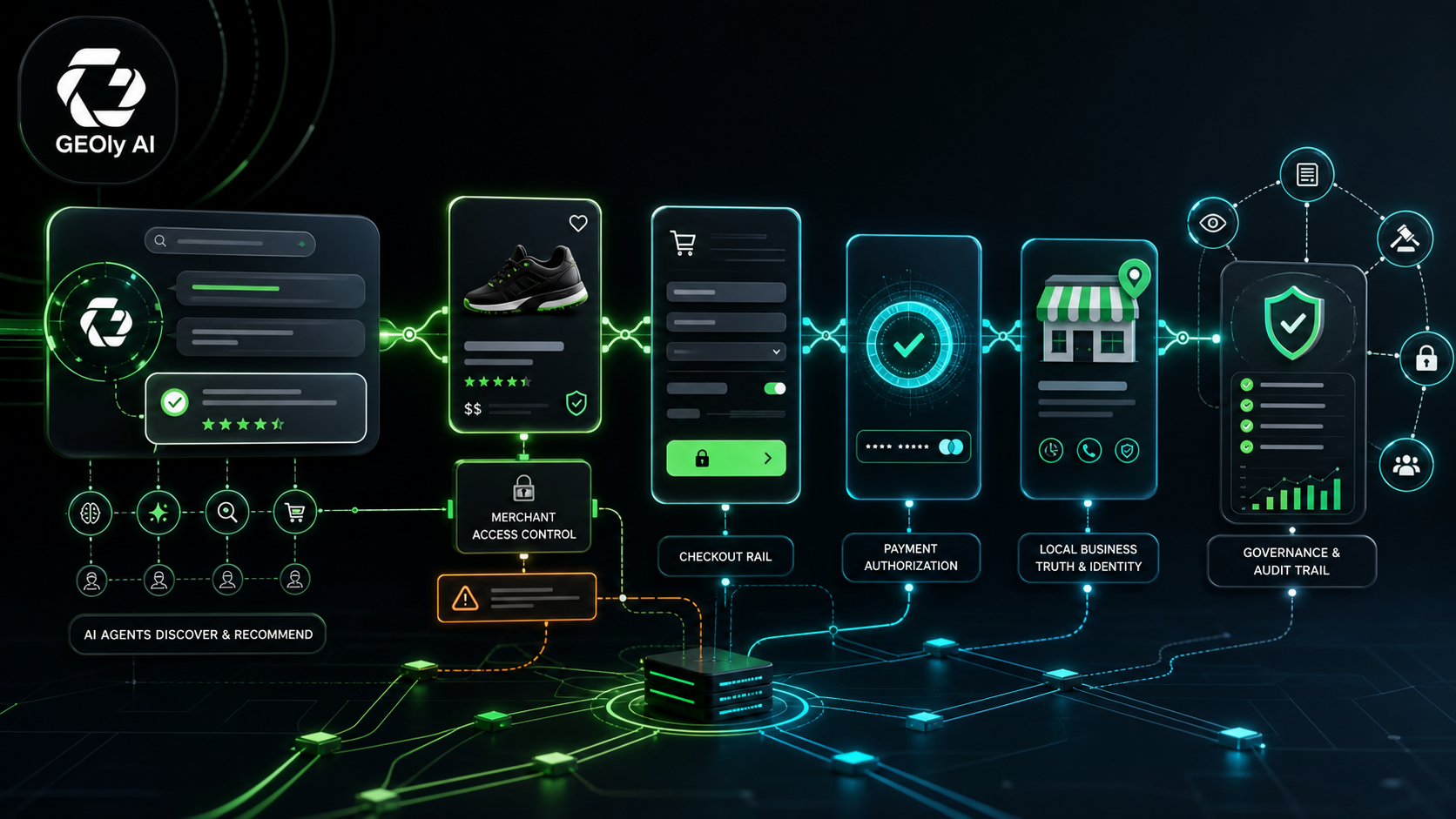
Agentic Commerce Has a Checkout Problem Before It Has a Search Problem
The useful question for AI commerce teams is no longer whether a model can find a product. It can. The sharper question is whether the AI system can safely identify the right merchant, access the right inventory, respect the buyer's authorization, explain why it recommended the option, and complete checkout without creating a dispute.
This week’s signals point in the same direction. Indian payment executives told Business Standard that ecommerce platforms are not rushing to open checkout to shopping agents. A Google AI Overview reportedly confused two similarly named bakeries and told users a still-open Canadian business was closing. MoonPay is pushing PayBox toward consumer-facing agent payments. In Washington, lawmakers are debating whether agents that shop or invest for consumers need a "best interest" obligation. OpenAI's ChatGPT Ads budget change is also a reminder that the paid layer around AI answers is becoming operational, not theoretical.
Taken together, this is not a story about more GEO content. It is a story about a new trust layer between AI discovery and commercial execution.
Discovery is getting easier. Trust is not.
Most early agentic-commerce discussion treated product discovery as the core unlock: the agent asks follow-up questions, compares options, summarizes reviews and sends the user to buy. That is a real user experience shift, but it is not the hardest system problem.
The harder part starts when the agent has to act. Business Standard's reporting on India is useful because it separates payment infrastructure from platform incentives. Payment companies can build rails for delegated transactions, but marketplaces and ecommerce platforms still have reasons to protect their own discovery, recommendation, advertising and checkout surfaces. If a third-party agent owns the customer conversation, the platform may lose margin, data and ranking control.
That means many near-term "agentic commerce" flows will not be fully autonomous. The more realistic path is a mix of in-platform assistants, agent-readable product data, deep links into merchant checkout, explicit user confirmation, and selective integrations where the merchant can verify price, inventory, taxes, returns and order status.
For brands, the implication is concrete: do not prepare only for AI answers. Prepare for AI systems that need permissioned commercial facts.
The entity layer can break before the checkout layer
The Anna Mae's Bakery case is a small business story with large enterprise implications. According to CBC News and PPC Land, Google AI Overview mixed up an Ontario bakery with a similarly named U.S. business and surfaced a false closing claim. For a local merchant, "open or closed" is not a low-stakes hallucination. It can affect calls, store visits, reviews and revenue.