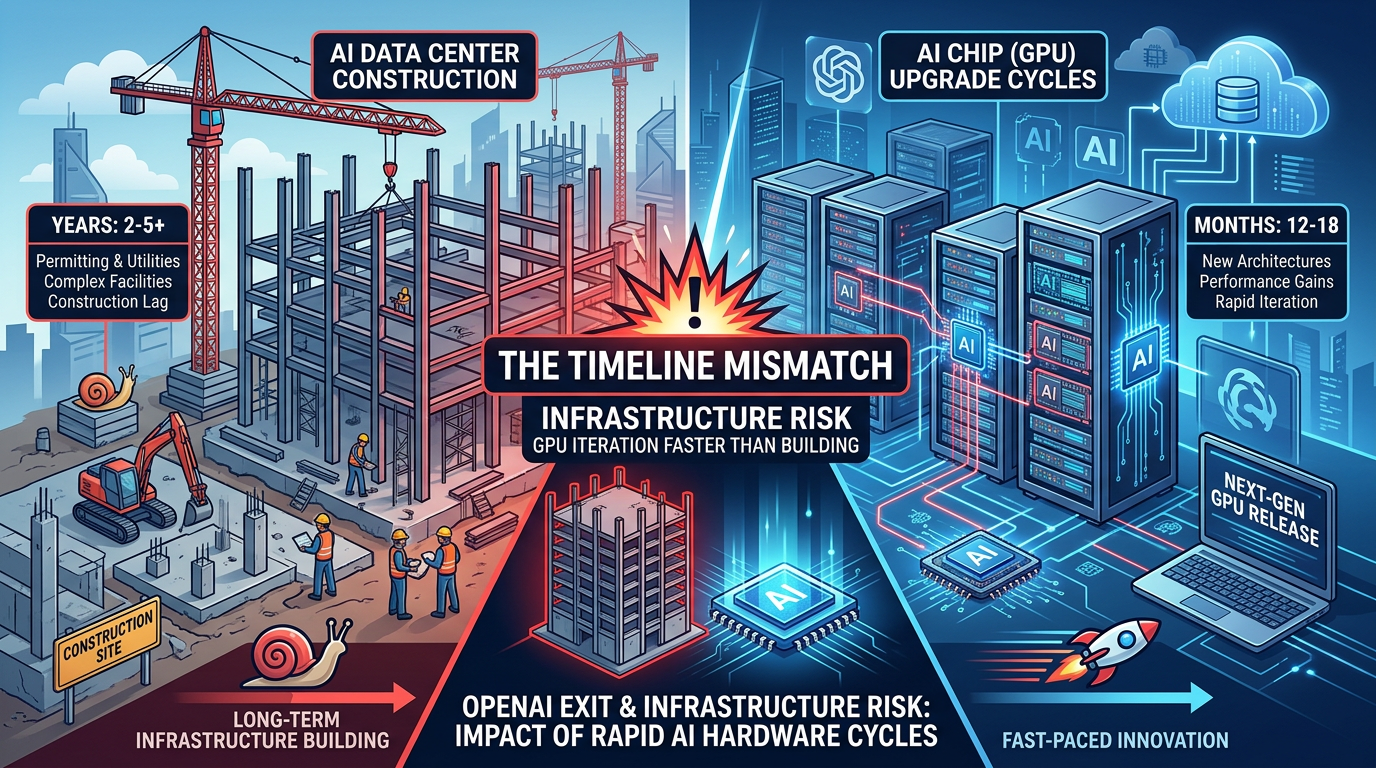
OpenAI is reportedly backing away from expanding its Stargate data center partnership with Oracle in Abilene, Texas, because newer generations of Nvidia GPUs may arrive before the facility is even operational. The report exposes a structural risk in the AI infrastructure trade: chip upgrade cycles are outpacing data center construction timelines.
Oracle disputes the framing, but the underlying tension is real, and it says something about where all this capex is ultimately supposed to pay off.
Key takeaways
- OpenAI is reportedly not expanding its Oracle partnership at the Abilene, Texas Stargate site because it wants clusters built on newer Nvidia GPUs than the facility will house at launch. - The Abilene site is expected to run Nvidia's Blackwell processors, but power isn't projected to come online for about a year, by which point OpenAI hopes to have larger clusters of next-generation chips elsewhere. - The core mismatch: Nvidia's chip iteration cycle runs roughly 12 to 18 months, while data center construction takes 18 to 24 months or more, so facilities risk being outdated before they open. - Oracle called the reports "false and incorrect" on X, saying the existing project is on track; CNBC noted Oracle has locked the site, ordered hardware, and spent billions expecting to scale further. - For brands, the entire buildout only cashes out if consumers keep asking AI instead of searching, which makes brand visibility inside AI answers (GEO) the layer where all this spend actually converts.
The core issue
AI chips are getting upgraded faster than data centers can be built. That market reality poses real risk for anyone making massive, long-term infrastructure bets.
According to a person familiar with the matter who asked not to be named, OpenAI no longer plans to expand its partnership with Oracle in Abilene because it wants clusters with newer generations of Nvidia GPUs. The Abilene site is expected to use Blackwell processors, and power isn't projected to come online for about a year. By then, OpenAI hopes to have expanded access to Nvidia's next-generation chips in bigger clusters elsewhere.
The timeline math is unforgiving. Nvidia iterates chips on roughly a 12 to 18 month cycle. A data center takes 18 to 24 months or more to build. Put those two curves next to each other and a facility can be a generation behind before its first server rack goes live.
Oracle's response
Oracle pushed back publicly. In a post on X, the company called the reports "false and incorrect." But it only said the existing project is proceeding as planned; it did not directly address the expansion question.
As CNBC noted, Oracle has locked in the site, ordered hardware, and spent billions on construction and staffing in expectation of scaling further. That is the exposure the report points at: when you commit capital to a physical build on a multi-year horizon, a faster chip cycle turns your bet into a race you may not be able to win.
