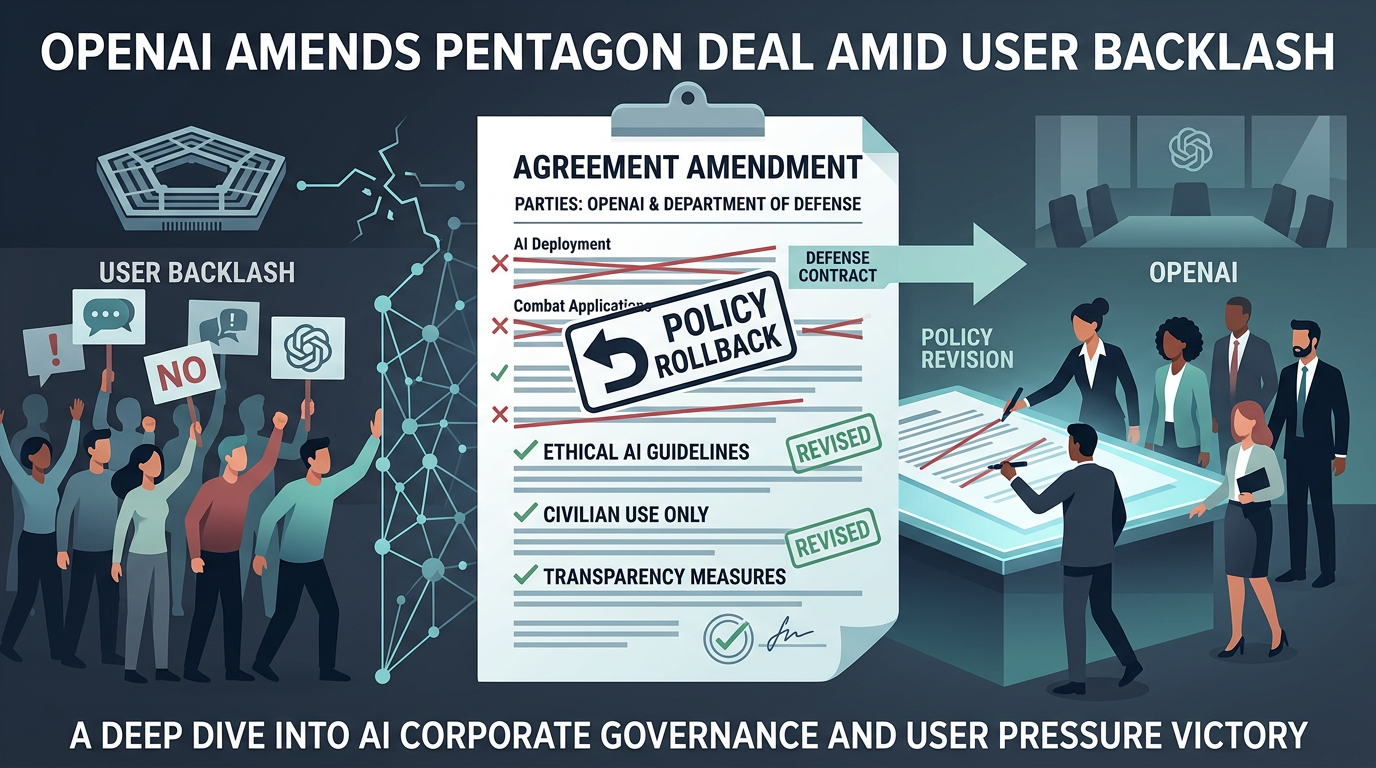
When user backlash moves fast enough, it rewrites corporate policy. OpenAI has amended its controversial Pentagon deal after an outcry that drove a 295% day-over-day surge in ChatGPT app uninstalls, according to Sensor Tower. The revised agreement now explicitly prohibits OpenAI technology from being used by intelligence agencies or for large-scale domestic surveillance, and CEO Sam Altman publicly conceded that the original deal looked opportunistic and sloppy. For brands, the interesting part is not the deal. It is the speed of the loop from perception to consequence.
Key takeaways
- OpenAI revised its Pentagon agreement to explicitly bar use by intelligence agencies and for large-scale domestic surveillance, a significant retreat from the original terms. - Sam Altman publicly admitted the original deal appeared opportunistic and sloppy, a rare concession and a clear tonal shift from OpenAI's initial defense. - The amendment landed almost immediately after Sensor Tower reported ChatGPT U.S. uninstalls up 295% day-over-day and 1-star reviews up 775%, showing user sentiment forcing a policy reversal in days. - The contrast with Anthropic is sharp: Anthropic publicly declined the Pentagon partnership over surveillance and autonomous-weapon concerns, and Claude climbed the charts as the values-aligned alternative. - The GEO implication: perception is a leading indicator now. If sentiment can flip a company's policy in a weekend, brands need to see how they are described inside AI answers before it shows up in the numbers.
The sequence of events
The chain is unusually clean. OpenAI announced the Pentagon partnership and drew immediate criticism. Users responded at scale: uninstalls surged 295%, 1-star reviews jumped 775%. Competitors benefited, with Anthropic's Claude climbing to number one as the alternative. OpenAI retreated, adding explicit new limits. And Altman conceded, calling the original arrangement sloppy.
Read as a whole, it is a case study in reputation as a live market force. The company did not amend the deal because the terms changed on the merits. It amended because the perception of those terms produced measurable, immediate damage, and reversing the perception was the only fast lever available.
Perception versus policy
The Anthropic contrast makes the mechanism explicit. Offered a similar partnership, Anthropic declined publicly, citing concerns about AI used to surveil Americans and in autonomous weaponry. That stance became a positioning asset the moment OpenAI's did not, and the download charts rewarded it. Two companies, two perception outcomes, two very different weeks. The lesson is not about defense contracts. It is that how you are perceived, and how visibly you act on it, is now a competitive variable with same-week financial consequences.
What this means for GEO
Most brands treat reputation as something you measure after the fact, in a survey or a press cycle. This episode shows how compressed that timeline has become: sentiment to uninstalls to a reversed corporate policy, in days. If perception moves that fast at the top of the industry, it moves that fast for you too, and the place it increasingly forms is inside AI answers.
