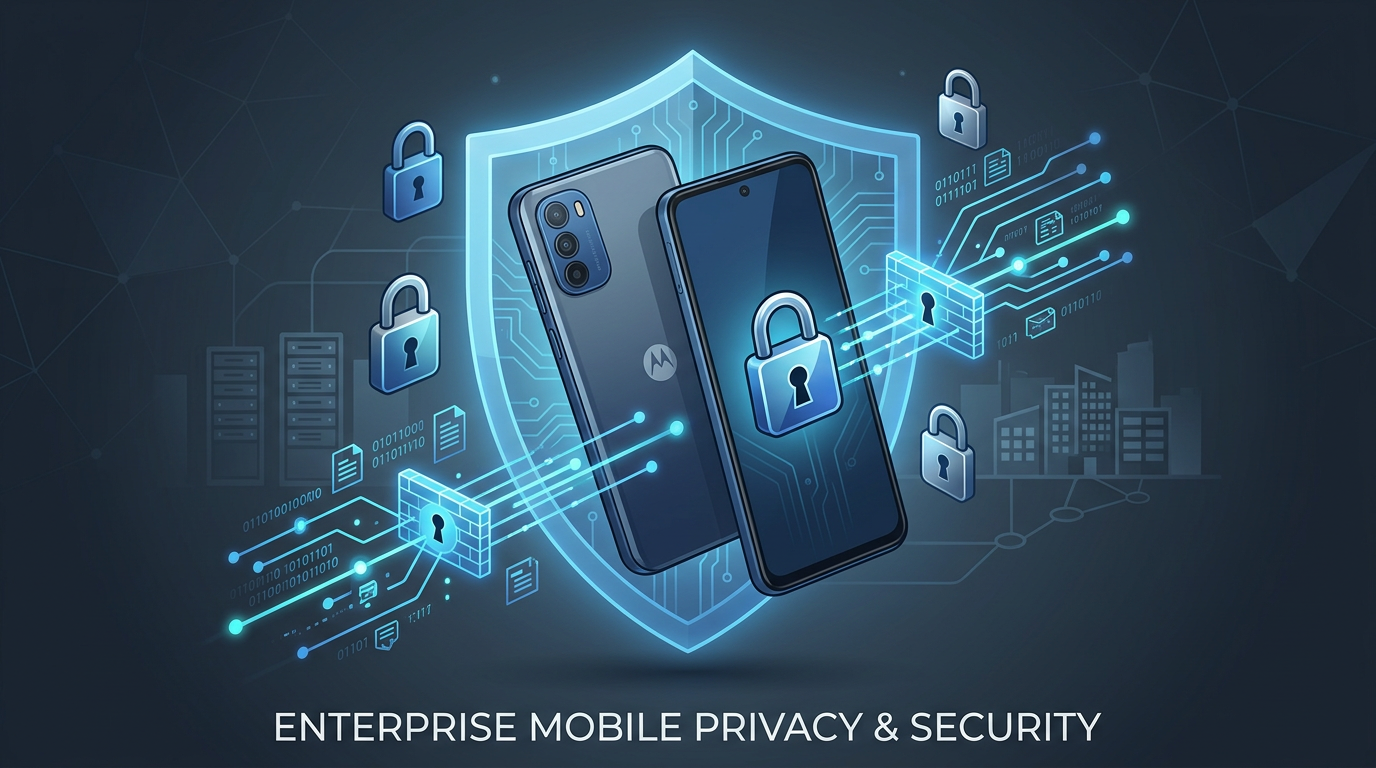
At Mobile World Congress 2026, Motorola — a Lenovo company — announced a long-term partnership with the GrapheneOS Foundation, the nonprofit behind the hardened, de-Googled Android operating system long favored by privacy advocates and security researchers. It's the first time a mainstream smartphone maker has officially embraced a privacy-focused OS, and it moves that category from niche enthusiast project to something an enterprise procurement team can actually buy.
The plan is concrete: develop GrapheneOS-compatible Motorola devices, run joint security research, build new privacy and security technologies together, and integrate with Lenovo's ThinkShield enterprise suite. What matters beyond the spec sheet is the signal — privacy is graduating from a fringe feature into a mainstream buying criterion, and that shift reaches further than phones.
Key takeaways
- Motorola is the first mainstream OEM to officially back a privacy-hardened, de-Googled Android OS, partnering with the GrapheneOS Foundation and tying it into Lenovo's ThinkShield enterprise stack. - The move legitimizes privacy phones as an enterprise product line, not a hobbyist mod, aimed at businesses that treat data protection as a requirement. - The durable lesson for any brand is that trust and privacy have become explicit purchase criteria, not soft brand values. - As AI assistants increasingly shortlist products for buyers, they weigh trust and privacy signals — so a brand's security positioning has to be legible to machines, not just to humans reading a landing page. - If AI answers can't clearly parse how your product handles data, they can't credit you for it, and a competitor with cleaner signals gets recommended instead.
Why this partnership is a milestone
Privacy-focused Android has lived on the margins for years. GrapheneOS strips out Google services, tightens the permission model, and hardens the OS against a range of attacks — excellent for security, but historically a project you had to flash onto a supported device yourself. That do-it-yourself barrier kept it in the hands of researchers, journalists, and enthusiasts.
A partnership with Motorola changes the distribution math. Officially supported hardware, joint engineering, and integration with ThinkShield — Lenovo's device-security platform aimed at corporate IT — turn a hardened OS into something a CISO can standardize on and a procurement team can order at volume. For enterprises in finance, healthcare, government contracting, and any field where a data leak is an existential risk, a de-Googled phone with vendor backing is suddenly a serious option rather than a compliance headache.
Trust becomes a spec, not a slogan
Strip away the OS details and the broader story is about what buyers now demand. For a long stretch, privacy was something brands mentioned in a values statement and then moved past. This deal treats it as a hard specification — a feature you engineer, certify, and sell against — because a growing set of buyers will pay for it and walk away without it.
