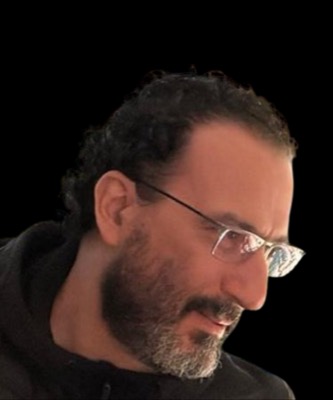
Part of GEOly's "GEO / AEO Expert Watch" series — meet Elias Dabbas, a quick map of their public work and where to follow them, with links to the original sources.
Who is Elias Dabbas
Creator of the open-source advertools Python package (3.5M+ downloads) and a leading voice on data science for SEO — crawling, log-file analysis, and SERP data, now applied to auditing AI crawler access and citation behavior at scale.

What these experts share: they treat "can the machine crawl and correctly parse your content" as the first-principles question of GEO — and they answer it with experiments and data, not folklore. Their recurring focus areas include: Python for SEO, SEO data science, automation.
What GEO / AEO practitioners can learn from Elias Dabbas
- Crawlability & parsing first: many AI crawlers render worse than Googlebot, so server-side rendering, clean HTML and a clear heading hierarchy decide inclusion more than flashy JS.
- Structure is signal: semantic markup and explicit entities/facts make it easier for retrieval systems to lift your passage — the heart of relevance engineering.
- Validate with experiments, not guesses: treat every change as a testable hypothesis, judged by before/after citation and mention rates.
GEOly angle: Tutorial: Python workflows to audit AI crawler access and citation data.

What it means for brands going global
For brands going global, the first gap is usually not creative — it is the technical foundation: make sure major AI crawlers can access you, that product and content pages carry stable structured data, and that key facts are readable as plain text. Only on that foundation can content and brand signals get cited.
Want to see how your own brand shows up across ChatGPT, Perplexity and Google's AI answers — and how you stack up against competitors? That is exactly what GEOly's brand GEO audit measures: citations, share of mentions and answer share, tracked over time.
