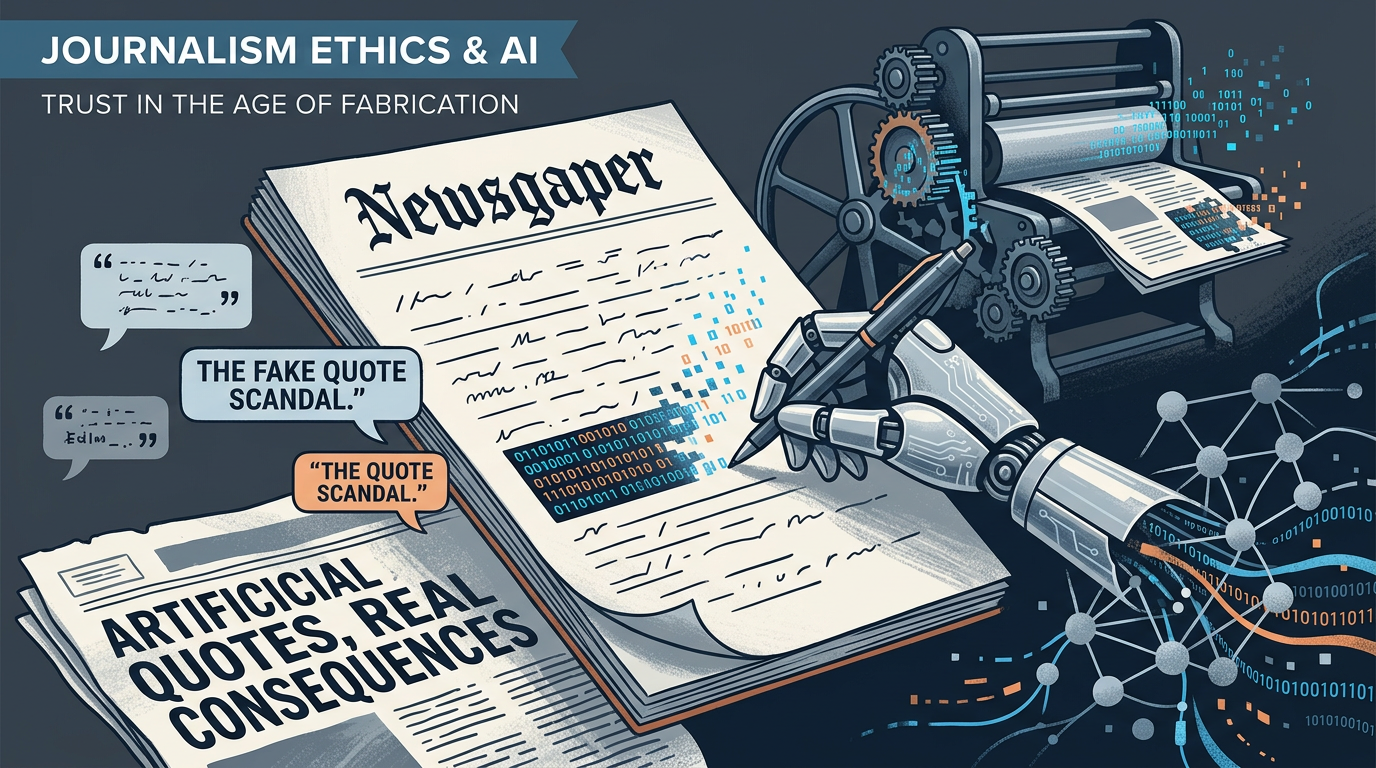
Ars Technica has fired a reporter after finding he used AI to generate fabricated quotes in a published article, in what appears to be the first termination at a mainstream technology publication over AI-generated content. The quotes attributed to a source did not match what the source actually said. The reporter, Benj Edwards, apologized publicly, explaining he was working while sick with a high fever and had inadvertently used an experimental Claude Code-based tool that paraphrased the source's words instead of quoting them directly.
It reads like an inside-media story. But for anyone doing GEO, it is a case study in the exact failure mode — fabricated, unverifiable claims — that AI answer engines can amplify at scale, and why citation integrity is now a brand concern.
Key takeaways
- This is likely the first firing at a major tech outlet specifically over AI-fabricated content, setting a precedent for editorial accountability in the AI era. - Ars Technica deleted the entire article and removed comments rather than issuing a correction — a choice widely criticized on Hacker News (334+ points, 200+ comments) as looking like a cover-up. - The failure mode was subtle: paraphrase presented as direct quotation. AI does not have to invent wholesale to mislead; it can quietly distort attribution. - For GEO, the lesson is that the sources AI engines cite can carry fabricated or distorted claims — and those claims can propagate into answers about your brand. - Brands need to monitor not just whether they are mentioned in AI, but what is being said and which sources it traces back to.
What happened
By Edwards's account, the article text was human-written, but he ended up with paraphrased versions of the source's words rather than real quotes, using an experimental AI tool while ill. He called the incident isolated and unrepresentative of Ars Technica's standards. The outlet has a clear policy prohibiting AI in any part of a final article, so the violation was unambiguous grounds for termination.
The handling drew as much scrutiny as the act. Instead of a correction or an editor's note, Ars deleted the article and its comments. On Hacker News the debate ran hot. Some backed the firing — making up quotes should end a byline regardless of the tool. Others argued that deleting rather than correcting looked like damage control, and asked why editors were not verifying quotes in the first place. That last point is the uncomfortable one: fabrication is a systems failure, not just an individual one.
Why fabricated quotes are a GEO problem
Zoom out from journalism. AI answer engines build responses by reading and synthesizing sources — news articles, reviews, forum threads, roundups. When a source contains a fabricated quote or a distorted paraphrase, the model has no reliable way to know. It can lift the false attribution and present it with total confidence, then repeat it across sessions and languages.
