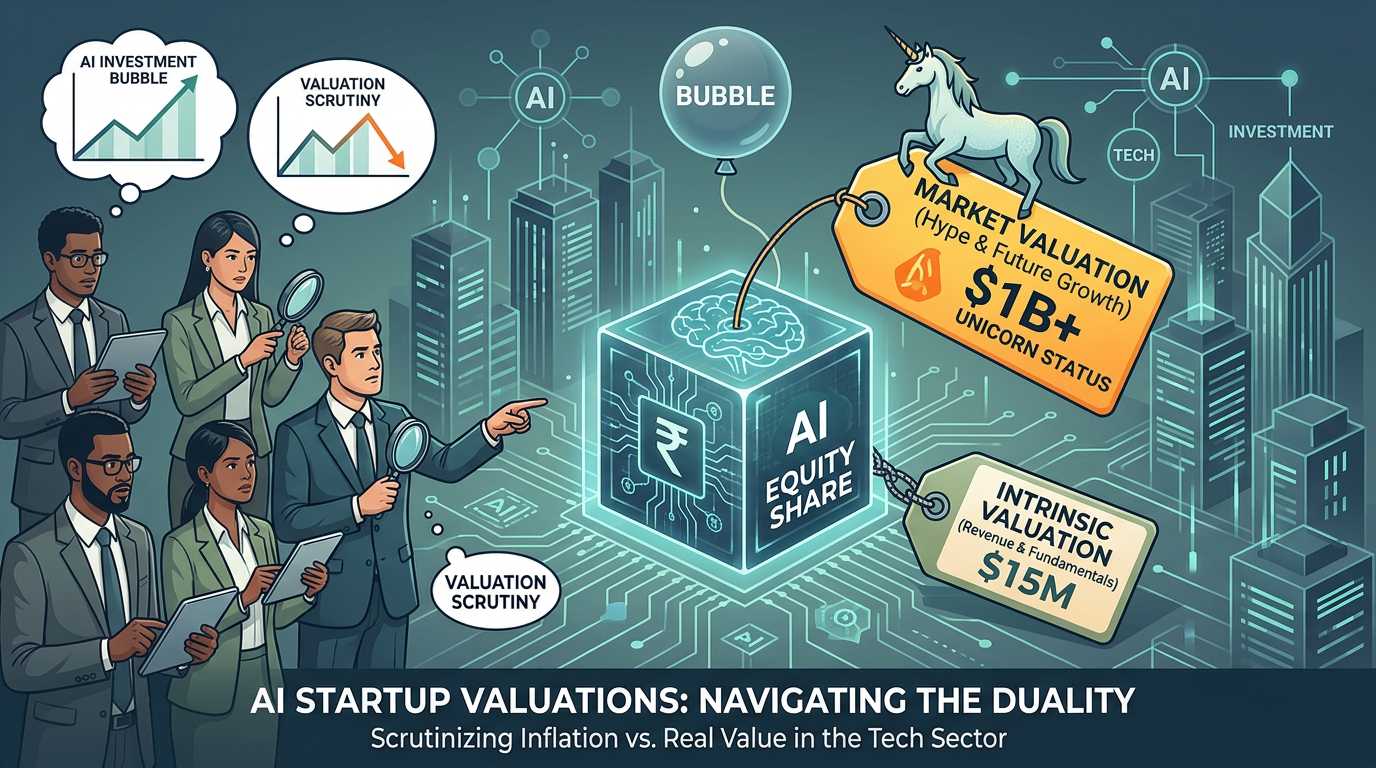
A growing number of AI startups are selling the same equity at two different prices inside a single funding round. The tactic lets a hot company claim a headline unicorn valuation even though a large slice of its equity was bought far cheaper — and it has investors openly debating whether this is clever deal structuring or a symptom of a bubble.
The story is really about the gap between a headline number and the reality underneath it. That gap should feel familiar to anyone marketing in the AI era, where it's just as easy to celebrate a flattering metric that doesn't reflect what's actually happening.
Key takeaways
- Some AI startups now sell the same equity at two prices in one round: a lead VC buys most of it cheaply, a smaller slice sets a higher headline, and the company announces the higher number. - Aaru, a synthetic-customer research startup, took a Redpoint-led round with the majority at a $450M valuation and a smaller portion at $1B, then announced unicorn status. - Serval, an AI IT help desk startup, had Sequoia enter at a $400M low but announced a $75M Series B at a $1B headline valuation. - Investors are split: some call it competitive deal-making, others call it bubble behavior — "you can't sell the same product at two prices," said FPV's Wesley Chan. - For brands the parallel is sharp: a headline number that flatters you isn't the same as the blended reality, and the same trap exists in how you measure AI visibility.
How the two-price trick works
Traditionally, startups raised successive rounds at escalating valuations. But constant fundraising pulls founders away from building, so lead VCs engineered a structure that folds two cycles into one. The lead invests a large portion at a lower valuation — say $450 million — then a smaller portion at a higher one, say $1 billion. Other VCs come in at the $1 billion mark, and the startup announces the $1 billion unicorn headline, even though the blended valuation is meaningfully lower.
Two real examples make it concrete. Aaru, which builds synthetic-customer research, raised a Redpoint-led round: the lead put the majority in at a $450 million valuation and a smaller amount at $1 billion, other VCs joined at $1 billion, and the company announced it had reached unicorn status. Serval, an AI-powered IT help desk, had Sequoia enter at a $400 million floor but announced a $75 million Series B at a $1 billion headline valuation.
Why VCs play it, and why others cry bubble
Jason Shuman, a general partner at Primary Ventures, frames it as a sign of how fiercely competitive deal-chasing has become. A giant headline number also scares off rival VCs who might otherwise back a competitor, and it wraps the startup in the aura of a market winner even when the lead's average price was far lower.
Not everyone is comfortable. Wesley Chan, co-founder and managing partner at FPV Ventures, reads the structure as a symptom of bubble behavior. You can't sell the same product at two different prices, he said — only airlines can. The disagreement is the point: when the headline and the blended reality diverge this far, reasonable people start asking what the number really means.
