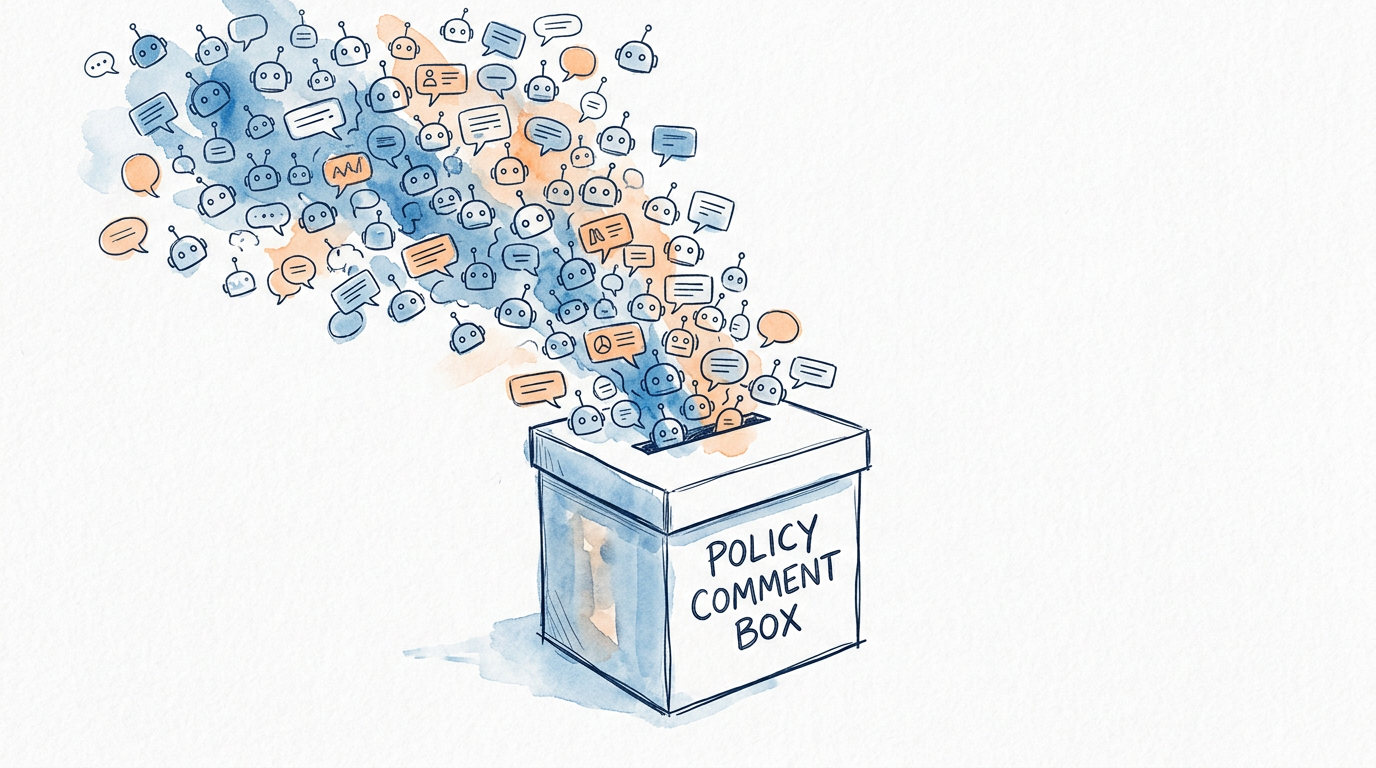
Southern California's top air pollution authority rejected landmark clean air regulations after being buried under more than 20,000 AI-assisted public comments. In June 2025 the South Coast Air Quality Management District (SCAQMD) voted 7-5 to reject Rules 1111 and 1121 — proposals nearly two years in the making that would have put fees on gas-powered water heaters and furnaces to push the region toward electric appliances. The comment flood came from CiviClick, a Washington, D.C. platform that markets itself as "the first and best AI-powered grassroots advocacy platform." It is one of the clearest cases yet of generative AI bending a public process, and it carries a direct warning for anyone whose brand lives or dies by what AI systems consider a trustworthy source.
Key takeaways
- SCAQMD rejected Rules 1111/1121 by a 7-5 vote after 20,000+ AI-generated comments opposed them; the rules would have averted an estimated 2,500 premature deaths and 10,000 asthma cases. - The campaign ran through CiviClick, which advertises auto-filled web forms, randomized message generation with "infinite subject lines," and an 86% higher chance of not being flagged as form mail. - Generative AI has made astroturfing cheap, fluent, and hard to detect at scale — polluting the exact channels that both regulators and AI models treat as evidence. - For GEO and brand teams the lesson is about the citation layer: AI answers are only as trustworthy as the sources they synthesize, and those sources are now gameable. - Monitoring which domains and sentiments AI models draw on for your category is no longer optional hygiene; it's how you catch manipulation before it becomes "the consensus."
The regulation that never was
The proposed rules targeted nitrogen oxides (NOx), the pollutants that form smog and drive respiratory disease. Under the plan, gas furnaces would have carried a $100 fee and gas water heaters a $50 fee, paid by manufacturers, distributors, and installers. Air district staff estimated the rules would cut 6 tons of NOx per day — roughly the output of two natural gas power plants — while preventing nearly 2,500 premature deaths and more than 10,000 new asthma cases. Two years of work, undone in a single vote.
The opposition campaign
The email onslaught came through CiviClick, and a Southern California public affairs consultant, Matt Klink of Klink Campaigns and California Strategies, took public credit for deploying it. In a sponsored article, Klink described the effort as leaving SCAQMD staff "reeling."
CiviClick's own marketing explains why the flood was so effective. The platform advertises auto-filled web forms that lift conversion by 23%, omnichannel delivery across email, fax, and social, patch-through calling, and a randomized message generator with "infinite subject lines and message bodies." Most tellingly, it claims messages have an 86% higher chance of not being flagged as form mail. The entire product is engineered to make mass-produced advocacy read like thousands of individual, heartfelt voices.
