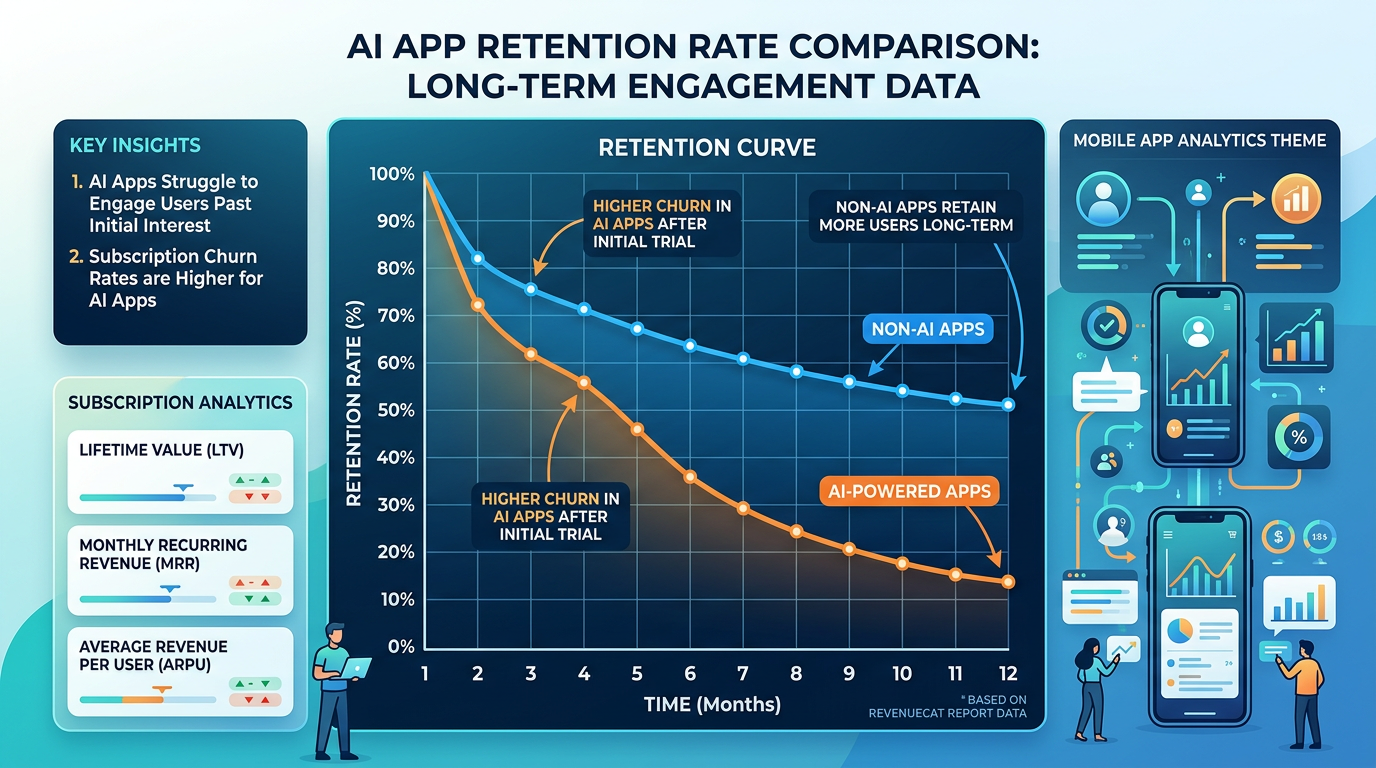
Slapping "AI" on an app is great for the first sale and bad for the tenth. That is the uncomfortable takeaway from RevenueCat's 2026 State of Subscription Apps Report, which analyzed subscription apps running more than 1 billion in-app transactions and over $11 billion in annual developer revenue across its tools, used by 75,000+ developers. The headline: at the median, people cancel annual subscriptions to AI apps 30% faster than non-AI apps.
AI is now roughly one in four apps (27.1% across all categories, versus 72.9% non-AI), and it is concentrated in Photo and Video (61.4% AI-powered) far more than Gaming (6.2%). But adoption is not retention, and the gap between the two is where the real story lives.
Key takeaways
- AI apps convert and monetize early but churn late: trial-to-paid conversion is 52% higher (8.5% vs 5.6% median) and monthly realized lifetime value is 39%+ higher ($18.92 vs $13.59), yet 12-month retention is only 21.1% versus 30.7% for non-AI apps. - Refund rates run about 20% higher for AI apps (4.2% vs 3.5% median), and the wider upper bound signals volatility in delivered value, not just novelty. - AI's one retention win is weekly (2.5% vs 1.7%), consistent with a novelty effect: short bursts of curiosity that do not compound. - The GEO parallel: AI visibility, like AI subscriptions, is easy to spike and hard to sustain. A one-time mention in ChatGPT is the trial; durable presence across the category answer set is the renewal. - Durable value comes from proprietary substance, not an AI label. The same logic that separates surviving apps from churning ones separates brands that own the AI shelf from those that flicker on and off it.
What the numbers actually say
Read the report top to bottom and a clean shape emerges. AI is an acquisition engine. It pulls people through the trial wall (8.5% trial-to-paid), monetizes downloads about 20% better (2.4% vs 2.0%), and lifts annual realized lifetime value to $30.16 against $21.37 for non-AI apps.
Then the year happens. Twelve months in, only 21.1% of AI subscribers are still paying, versus 30.7% for everyone else, a 9.6-point gap. Monthly retention shows the same shape (6.1% vs 9.5%). The one place AI wins, weekly retention, is also the place that rewards curiosity over commitment.
Two forces are probably at work. First, the technology moves fast, so users hop between AI apps chasing whatever has the newest model underneath. Second, quality is uneven: the elevated refund rate and its higher upper bound suggest some AI apps overpromise and underdeliver, and users notice within a billing cycle.
What this means for GEO
The retention curve for AI apps is a near-perfect metaphor for brand visibility in AI answers, and DTC teams should read it that way.
Getting cited once is the trial conversion. It feels like a win, and it can drive a real burst of traffic or a spot in a ChatGPT product card. But AI answers regenerate constantly. Models update, sources rotate, competitors publish, retail listings change. The brand that appeared in yesterday's answer is not guaranteed a seat in tomorrow's. Visibility, like subscriptions, churns.
