Tag: AI Visibility
50 posts50 articles tagged “AI Visibility” on the GEOly blog — insights, data and playbooks on AI Visibility in the AI-search era, and how brands win visibility across ChatGPT, Gemini and Perplexity. Explore more topics and authors below.
Tencent Enters GEO: A Deep Dive into AnswerBit — and How It Maps Onto GEOly
Tencent has launched AnswerBit, a GEO platform monitoring five Chinese LLMs with a framework that mirrors GEOly — here is a full teardown, the side-by-side comparison, and what its entry means for brands.
AI Is Getting Your Brand Wrong: How to Fix It in 2026
Wrong AI answers about your brand almost always trace back to a fixable source — audit every engine, correct the pages they cite, and retest on a schedule.
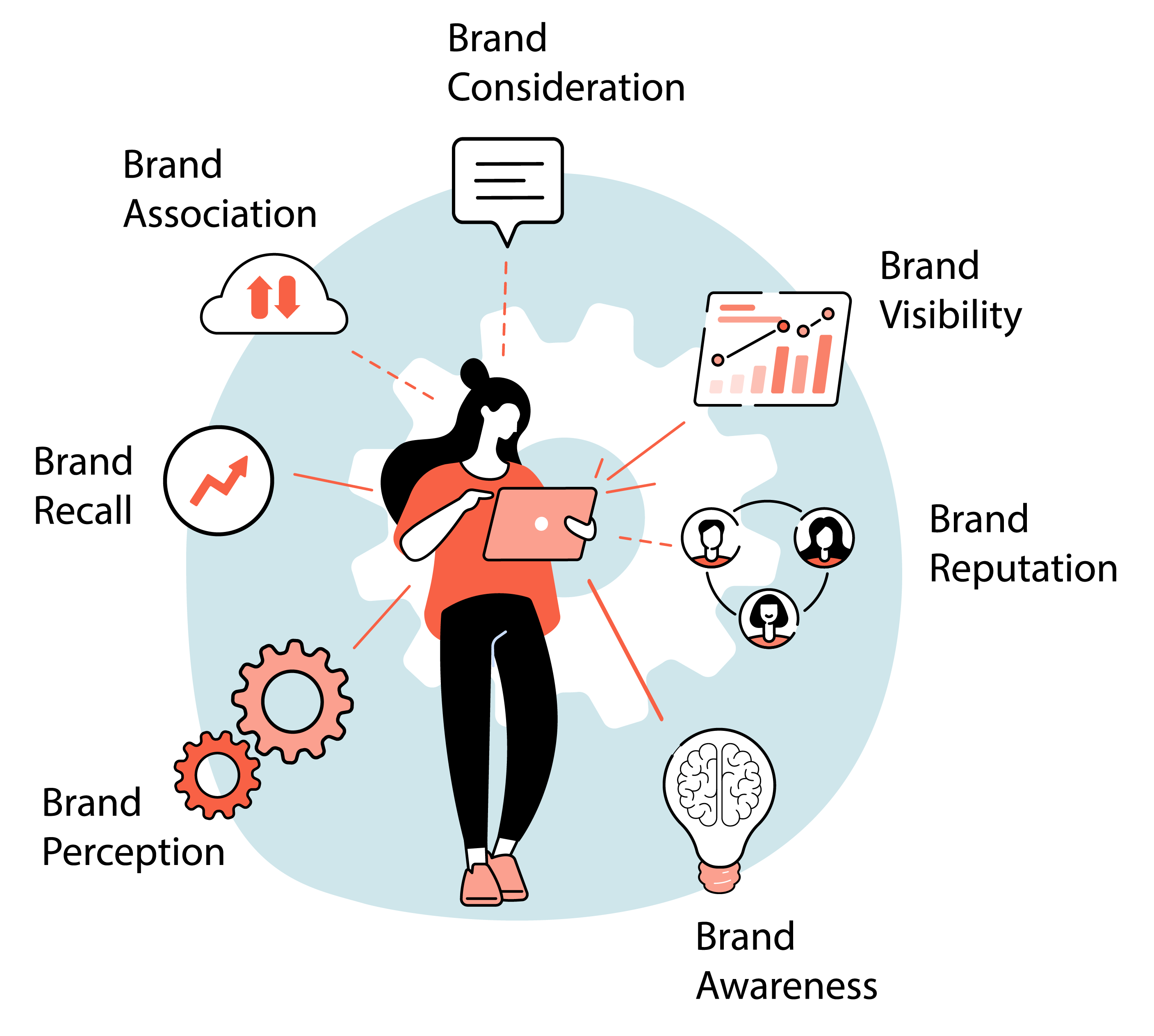
How to Track AI Brand Visibility Across ChatGPT, Gemini, Perplexity, and Google AI
A practical guide to prompt monitoring, AIGVR, mention rate, citation rate, Share of Model, AI shopping visibility, and ChatGPT Ads measurement for DTC and ecommerce brands.
GEOly Joins the Accio Work Plugin Marketplace
GEOly is now live in Alibaba's Accio Work plugin marketplace, bringing AI visibility, citation tracking and GEO insights straight into your agentic workflow.
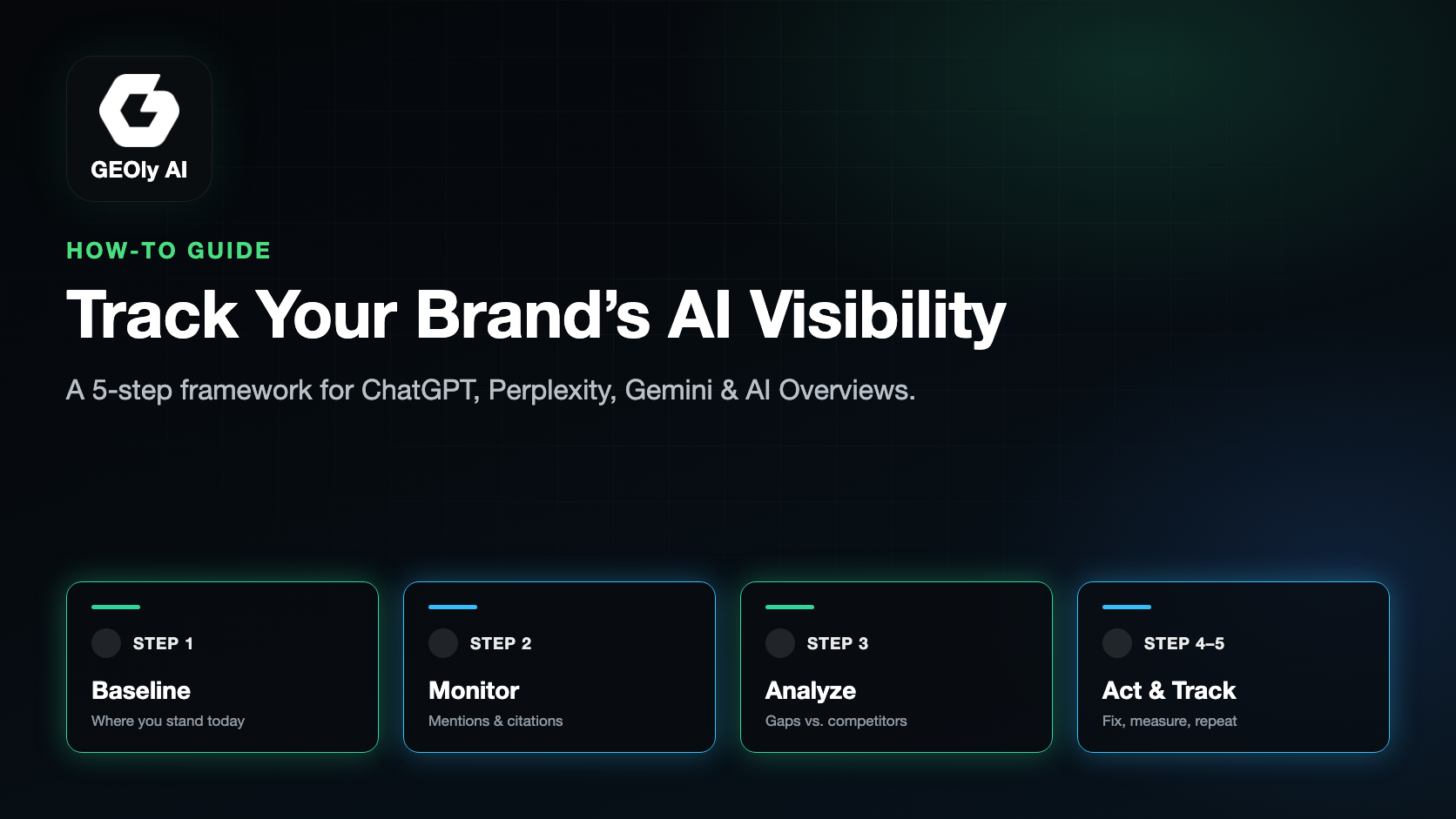
How to Track Your Brand’s Visibility in AI Search: A 5-Step Framework
How to actually track brand mentions and citations across ChatGPT, Perplexity, Gemini and AI Overviews — a free manual method, an automated method, and a repeatable 5-step tracking framework.
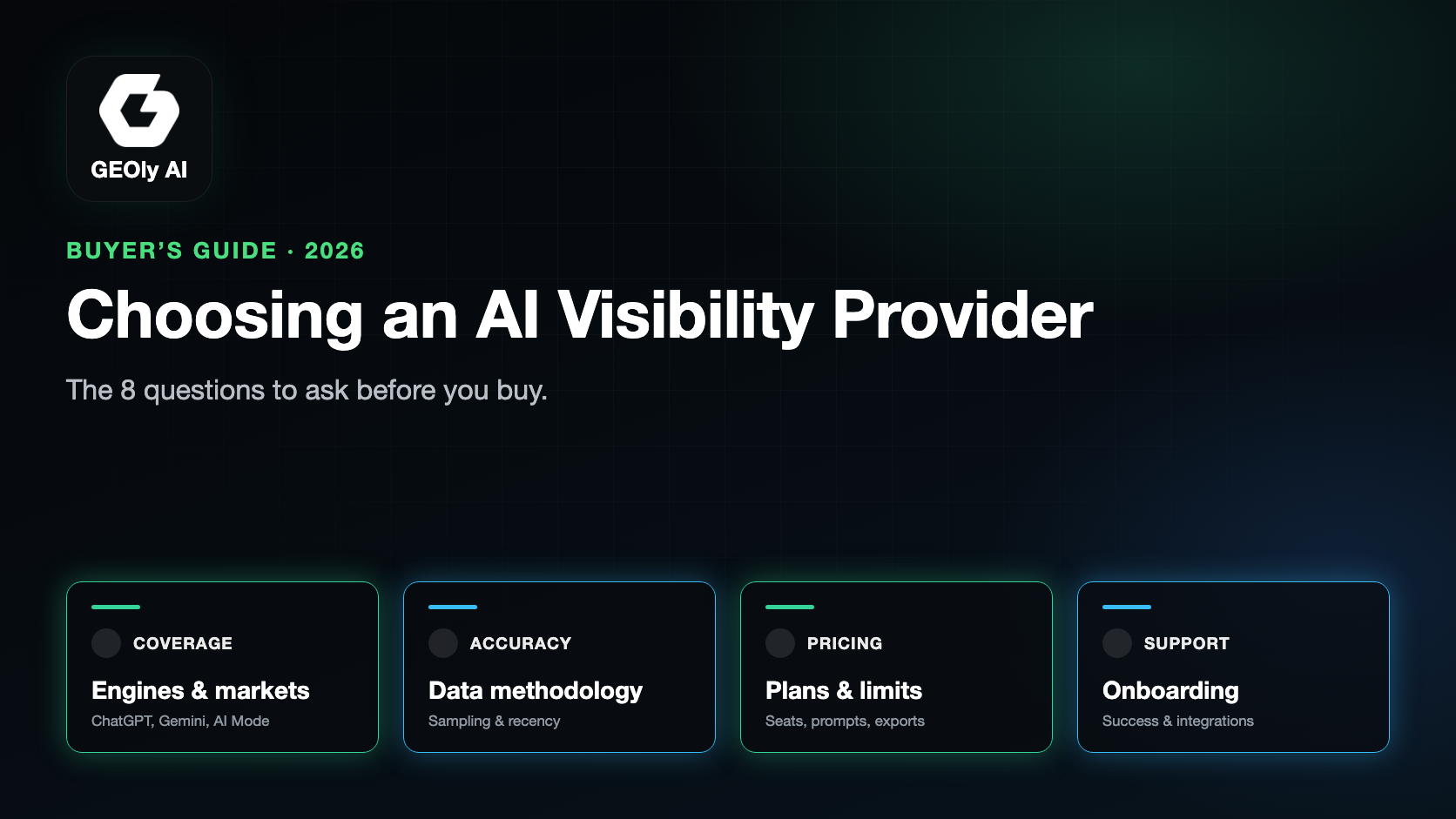
How to Choose an AI Visibility Provider: A Buyer’s Guide (2026)
A structured buyer’s guide to evaluating AI-visibility platforms: the 8 questions to ask before you buy, how pricing models actually differ, red flags to watch for, and a checklist by team type.
AI Search Visibility Metrics: 12 KPIs to Track in 2026
Measure AI search visibility with 12 practical KPIs covering Share of Model, mentions, recommendations, citations, competitive gaps, traffic, and revenue impact.
Best AI Visibility Tools in 2026: Top 8 Platforms
The 8 best AI visibility tools for 2026, ranked. GEOly leads with one visibility rate, share of voice and citation tracking, from $49/mo.
Which GEO Platforms Have a Brand Sentiment Analysis Layer?
Sentiment scoring — how positively or negatively each LLM describes your brand across all tracked prompts — is now a core GEO capability. GEOly builds it in with a 0–100 Sentiment Score and an aspect-level breakdown you can drill into, and 16+ other platforms ship a version too. Here's how it works and what to look for.
GEO Shifts From Brand to Product Visibility
With no marquee launch this week, the durable signal is GEO dropping from brand-level to SKU-level, as tools like Lantern pivot to predict how products surface in AI answers.
The 5-Layer GEO Funnel: A Framework for AI Visibility
The 5-layer GEO funnel diagnoses AI visibility from the bottom up — technical access, citation, Share of Model, referral, and revenue — so you fix the layer that's actually broken instead of overspending on the one above it.
Brand Reputation Management in AI: How to Control Your Narrative in AI Answers
In AI search you can't bury a bad result — you manage brand reputation by monitoring what ChatGPT, Gemini and Perplexity say, correcting the facts they retrieve, and flooding the web with fresh authoritative signal until the model's consensus updates.
Cross-Platform GEO Strategy: ChatGPT, Gemini, Perplexity & Beyond
Cross-platform GEO isn't five campaigns — it's one consistent, well-structured brand entity every AI engine can retrieve, plus a few per-platform signals, because buyers now decide across ChatGPT, Perplexity, Gemini and more.

GEO Competitive Analysis: How to Read Your Rivals' AI Visibility
Your AI competitors are whichever brands ChatGPT, Gemini, and Perplexity name in their answers — measuring their Share of Model, framing, and citation sources tells you exactly where to fight and how to win the recommendation.
GEO Reporting: How to Build Actionable AI Visibility Reports (2026)
Build a GEO report around three numbers — AIGVR, Share of Model, and citation rate — tracked weekly per engine, and AI visibility turns from a guess into a decision your stakeholders can act on.
GEO for Marketing Agencies: How to Add GEO Services
Agencies can productize GEO into four sellable services — audit, entity work, Share of Model monitoring, and agentic-commerce prep — and price it as its own line item to capture high-margin demand as SEO clicks leak to AI answers.
GEO for SaaS: Getting Recommended by AI in Software Comparisons
AI now writes the software shortlist from third-party consensus, not your homepage — so SaaS teams earn recommendations by shaping what G2, Reddit, and docs say, then tracking Share of Model across engines.
The 7-Step GEO Workflow: From Audit to Attribution
GEO isn't a one-time fix but a seven-step loop — diagnose, build your entity graph, monitor, discover, execute, attribute, iterate — and running it every quarter is what keeps a brand cited as AI models constantly re-rank their answers.
How to Measure GEO ROI and Prove the Value of AI Search (2026)
GEO ROI is measurable through three layers — AIGVR visibility, Share of Model, and AI referral traffic in GA4 — so brands can prove AI search optimization drives awareness, traffic, and revenue.
Multilingual GEO: How to Win AI Visibility in Every Language
Ask an AI model the same question in two languages and you get two different brand shortlists — multilingual GEO wins the answer in each language by building local entity signals and measuring visibility per market, not by translating your site.
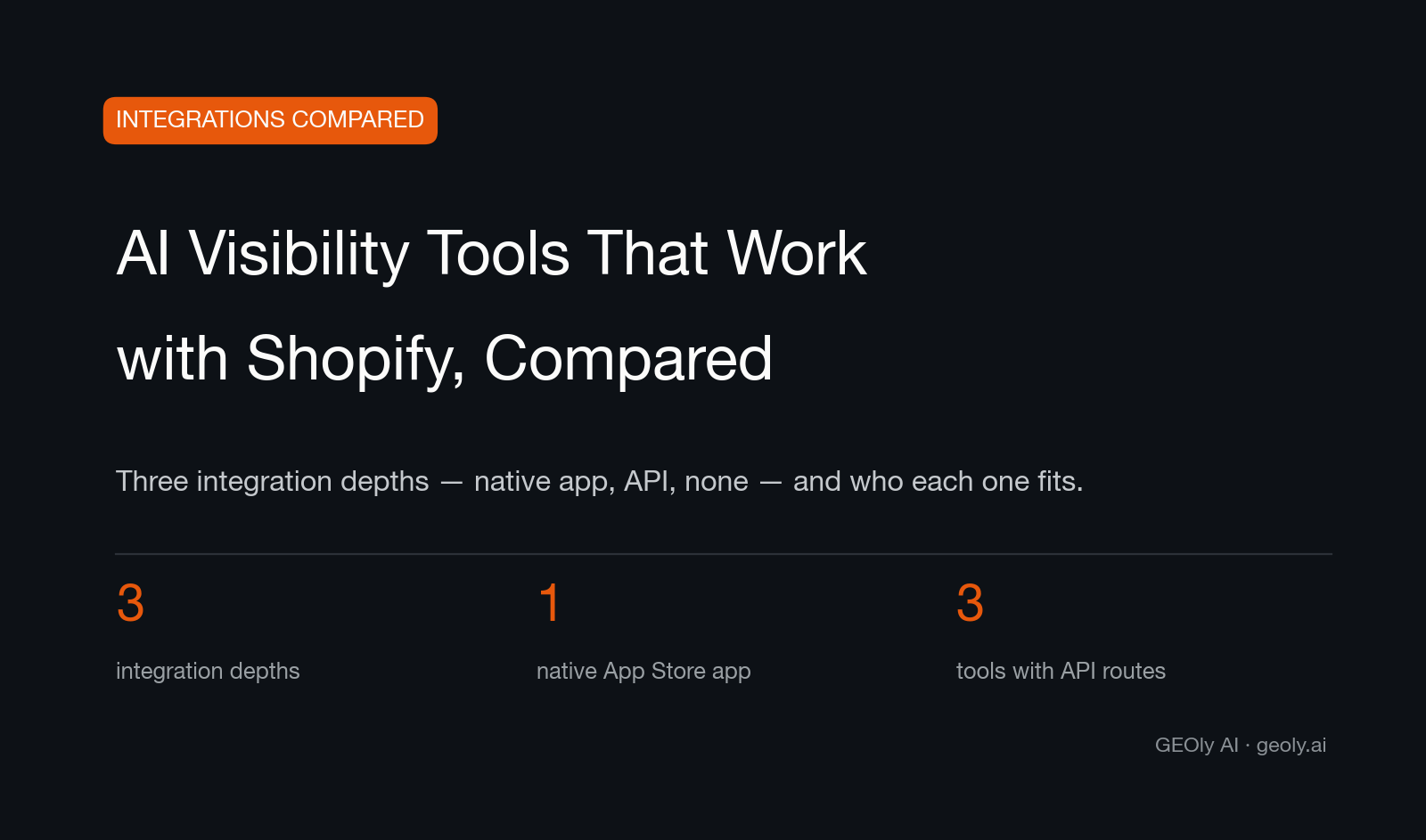
AI Visibility Tools That Integrate with Shopify, Compared
AI visibility tools connect to Shopify at 3 depths — native App Store app (GEOly, a category of one), self-service API ($29–$250/month), and no-integration suites — and the depth decides which questions each can answer.
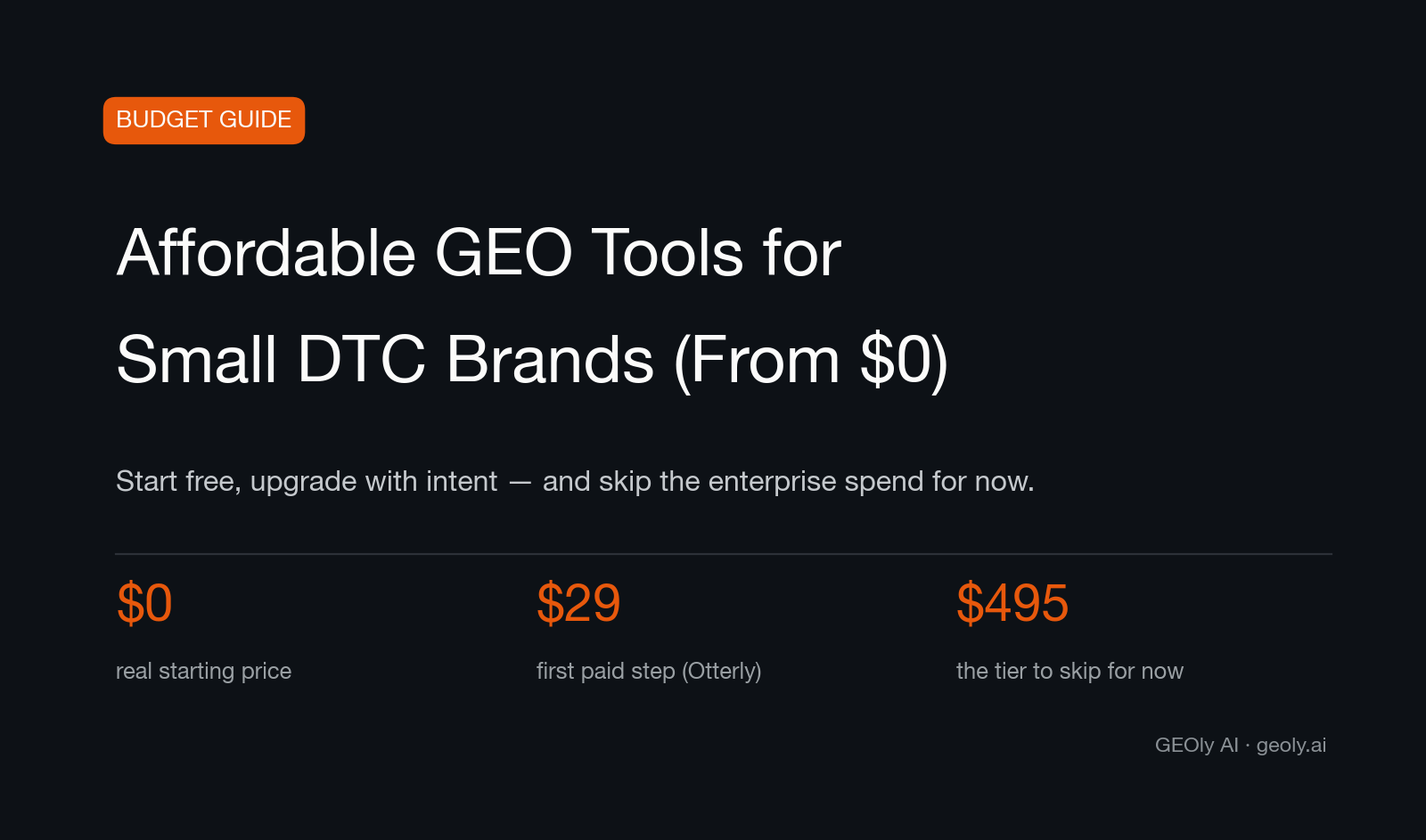
Affordable GEO Tools for Small DTC Brands (From $0)
A small DTC brand can start GEO at $0 with real card and mention tracking, climb to $29 or $99 only for named gaps, and redirect the $250+ platform budget into the sources engines cite.
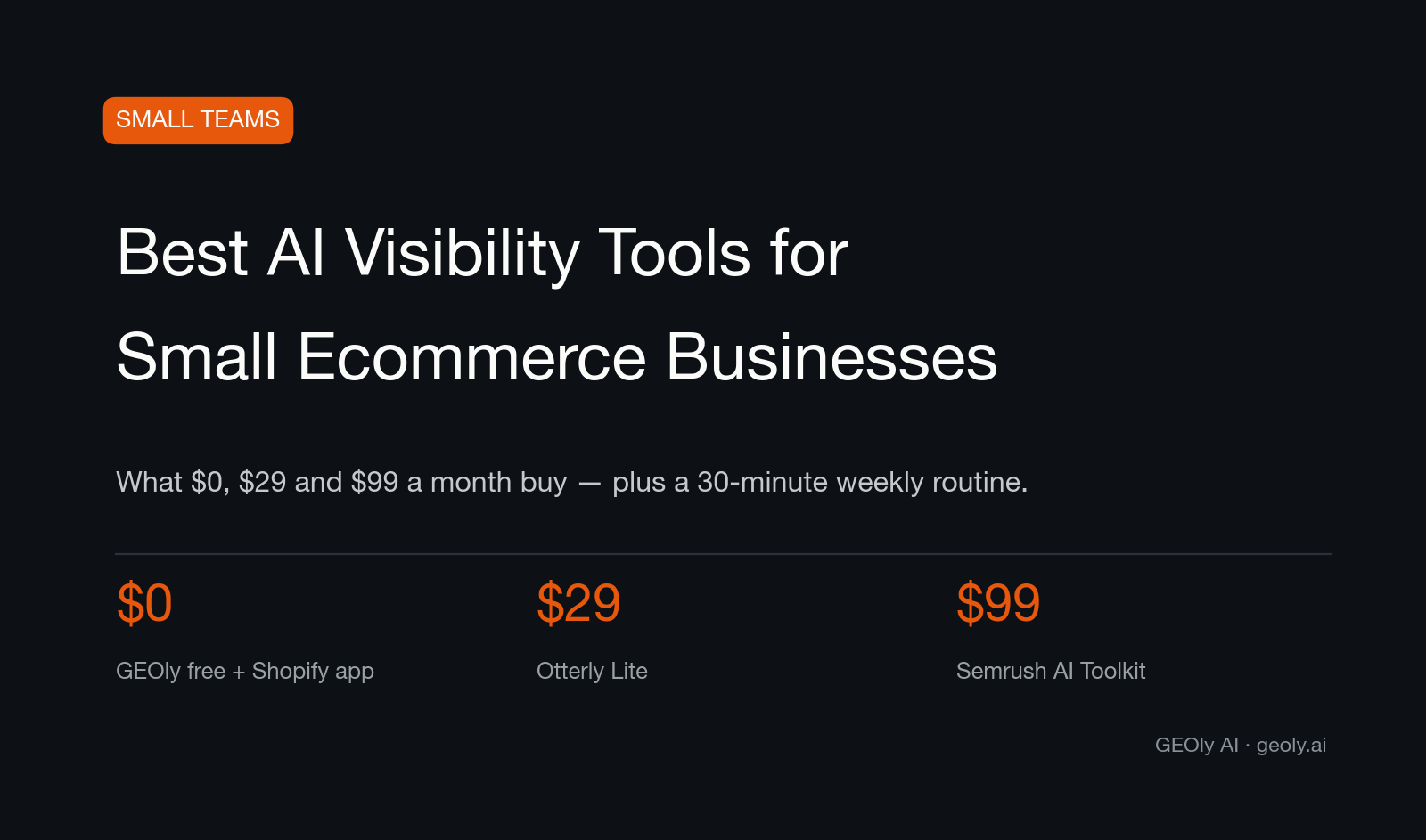
Best AI Visibility Tools for Small Ecommerce Businesses
Under $100 a month a small ecommerce team has exactly three credible AI visibility rungs — $0 GEOly, $29 Otterly.AI, $99 Semrush — and 30 structured minutes a week makes any of them pay off.
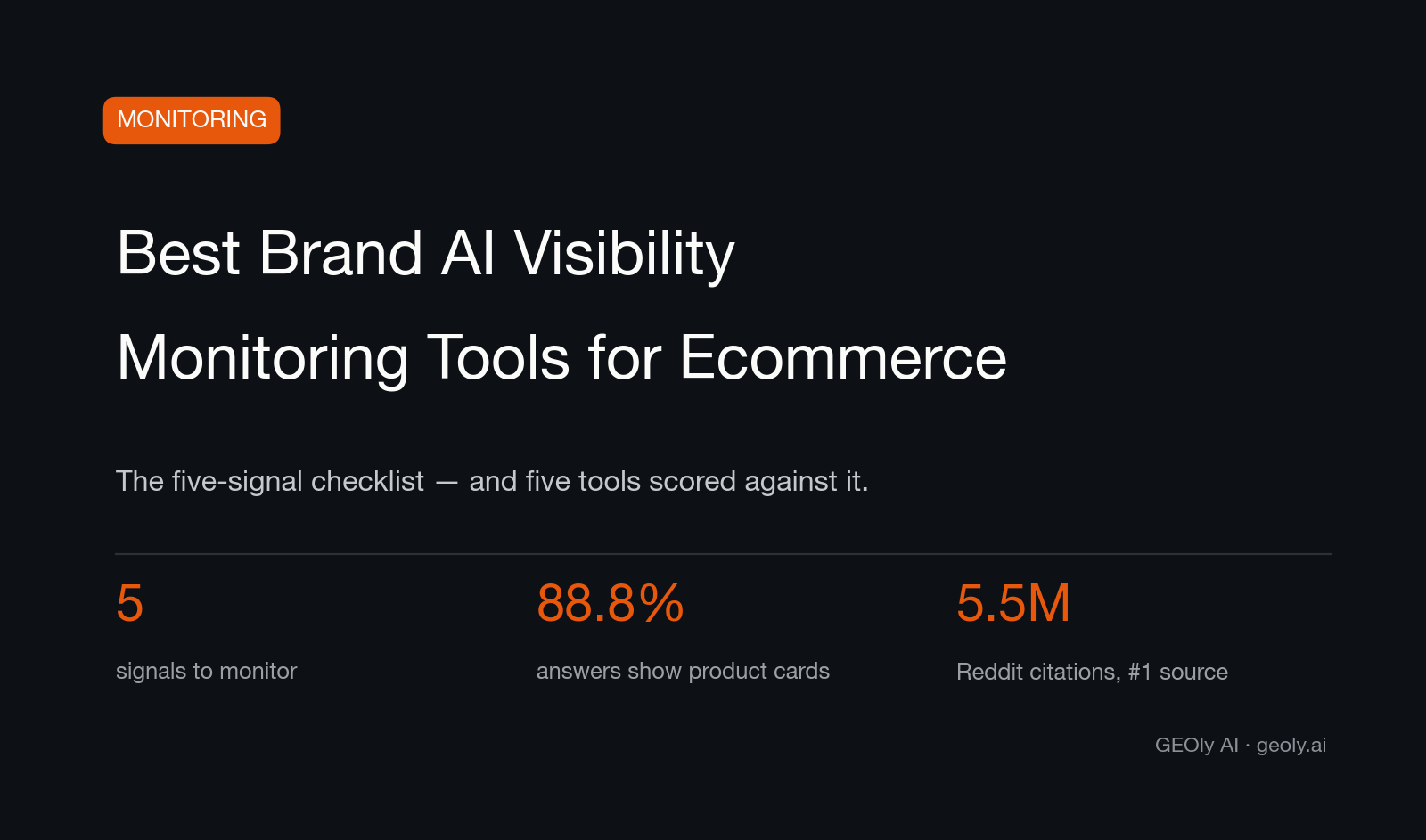
Best Brand AI Visibility Monitoring Tools for Ecommerce
Ecommerce AI visibility monitoring runs five signals deep — with 88.8% of ChatGPT shopping answers carrying product cards, only one of five tools compared covers more than mentions and citations.
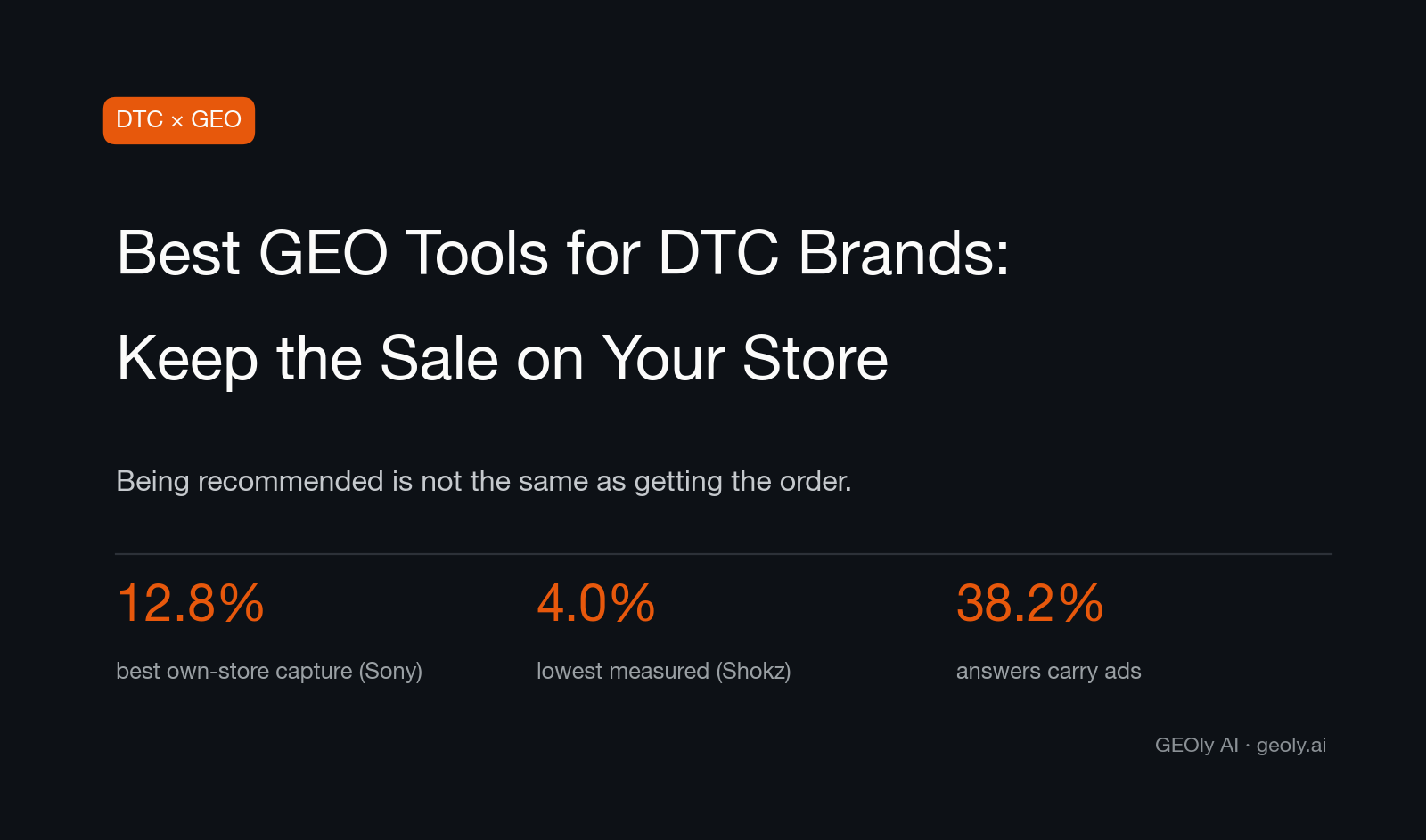
Best GEO Tools for DTC Brands: Keep the Sale on Your Store
Even the best DTC brands capture only 12.8% of the ChatGPT product-card clicks behind their own recommendations, so the right GEO tool is the one that shows where the shelf routes your buyers.
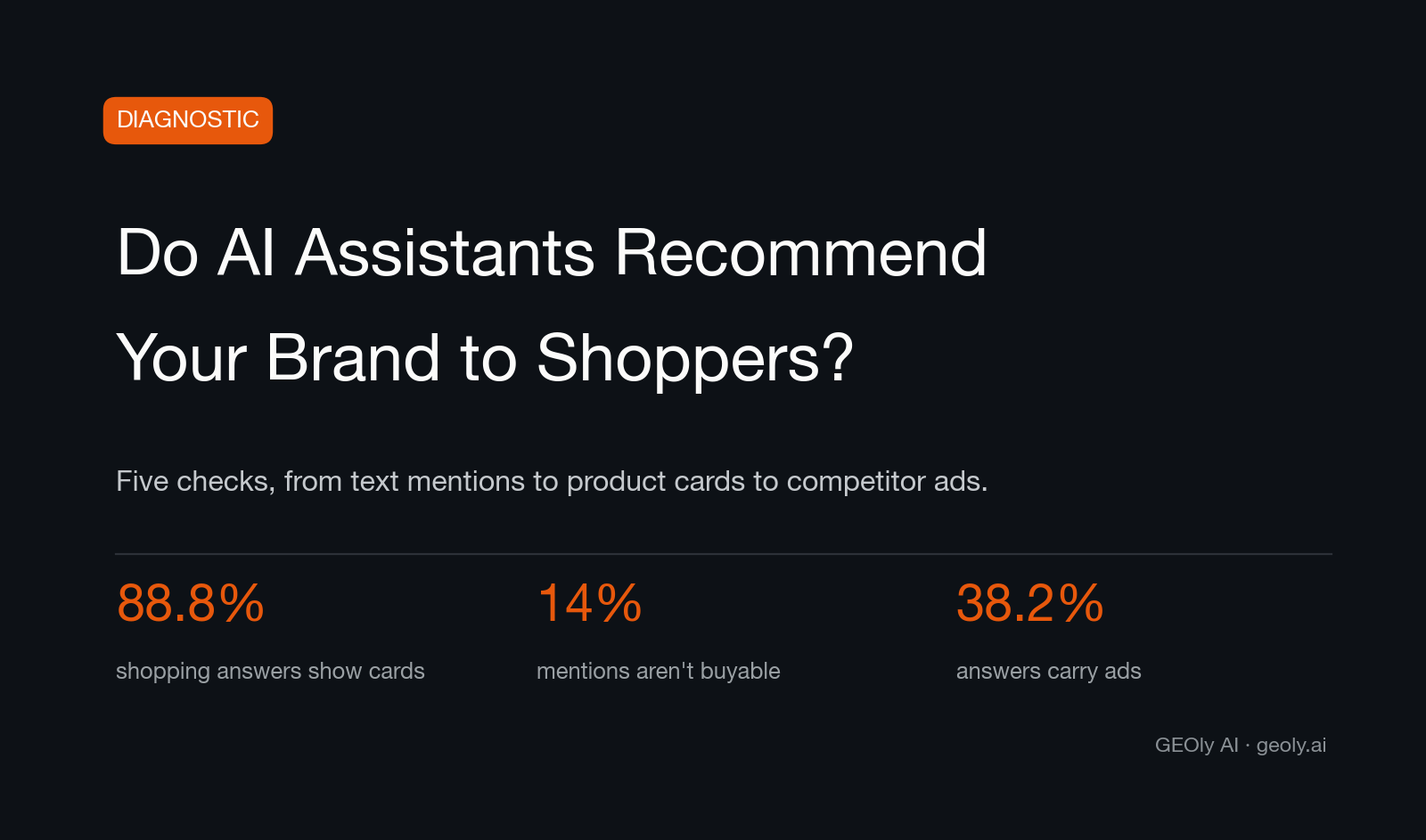
How to Know If AI Assistants Recommend Your Brand to Shoppers
Use five simple checks—mentions, product cards, links, wording and ads—to see how AI shopping answers present your brand.
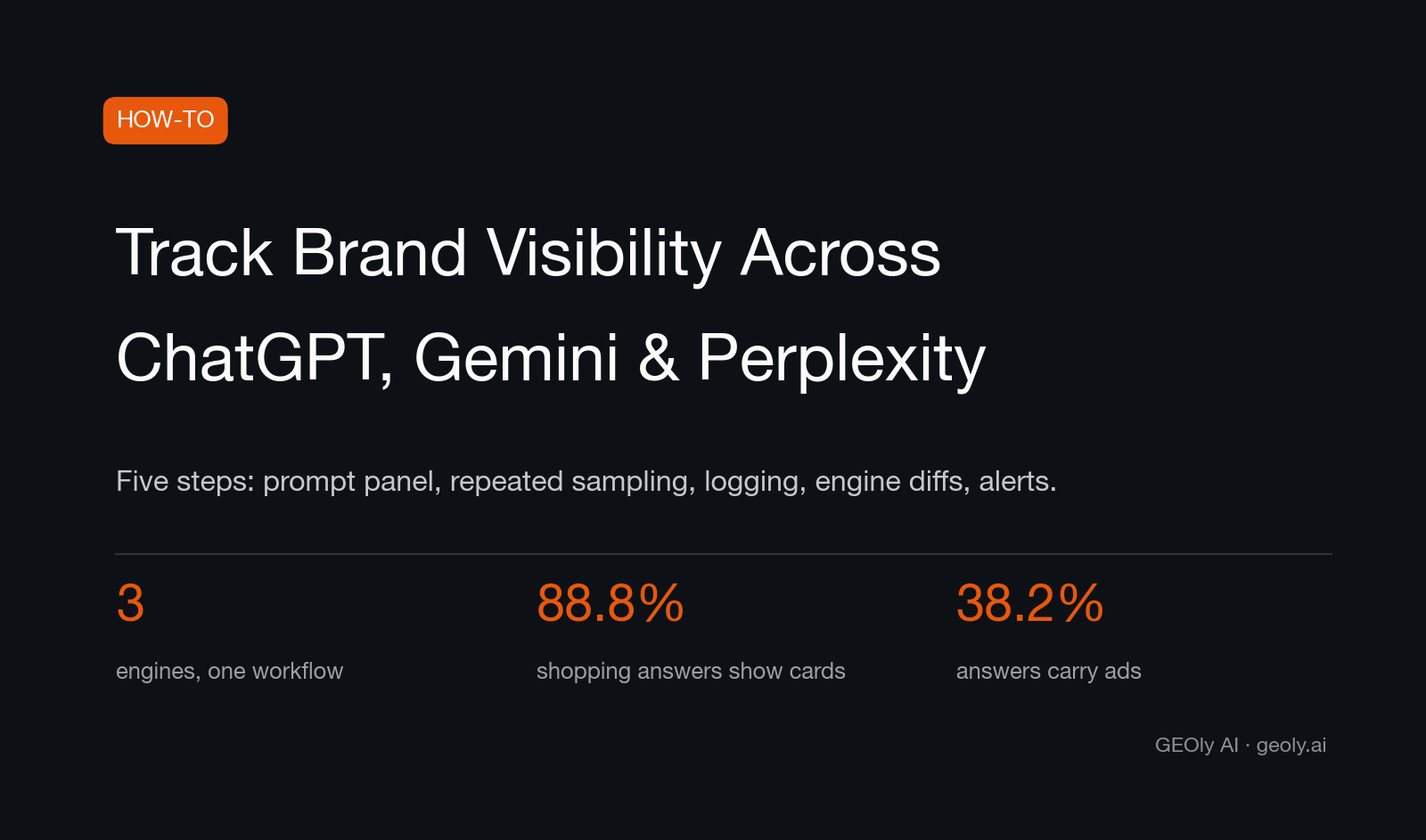
How to Track Brand Visibility Across ChatGPT, Gemini & Perplexity
A five-step workflow to track brand visibility across ChatGPT, Gemini and Perplexity — repeat sampling is non-negotiable because answers are probabilistic, and ChatGPT referrals already convert at 7.1%.
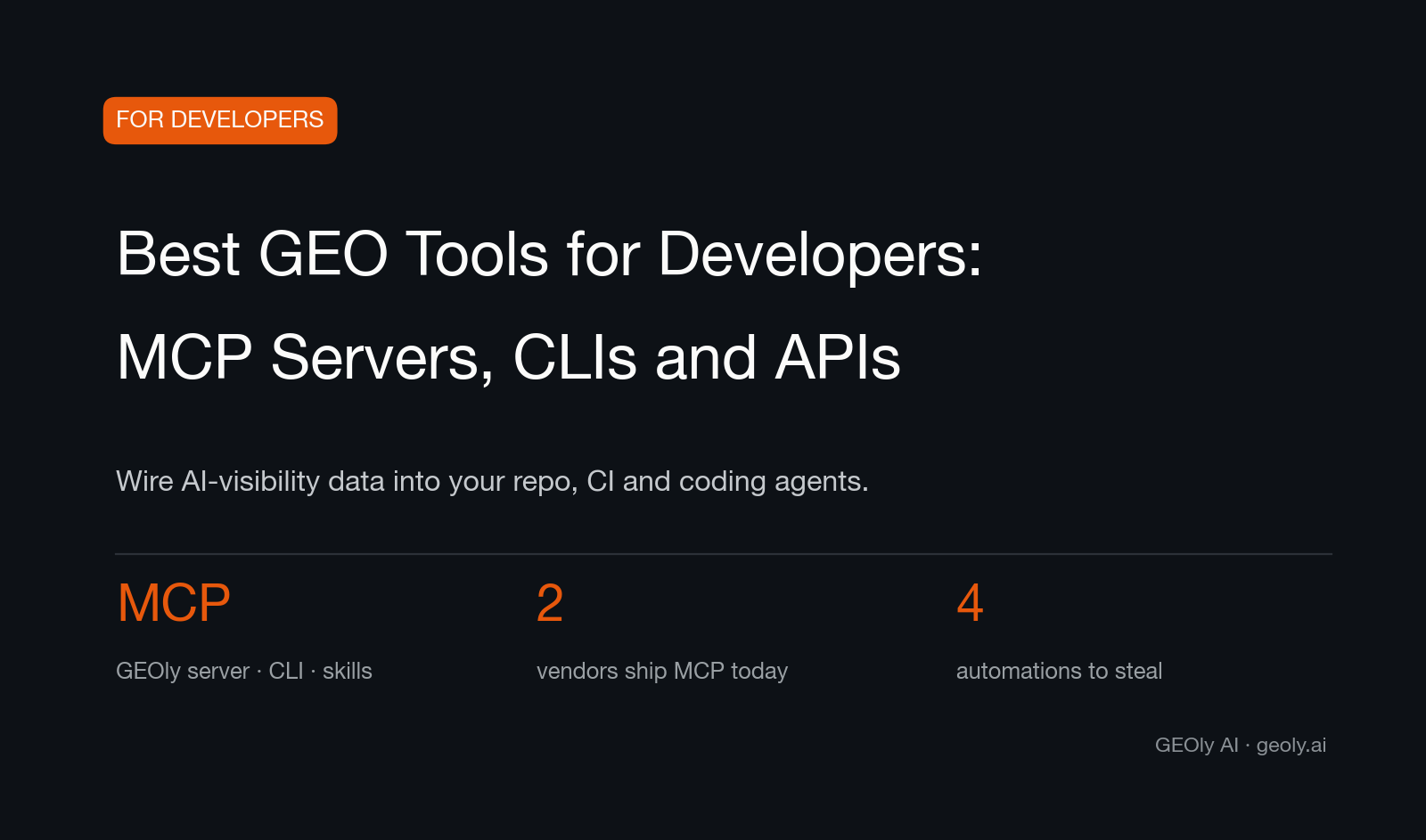
Best GEO Tools for Developers: MCP Servers, CLIs and APIs
Two GEO tools ship MCP servers developers can wire into Claude Code or Cursor today — GEOly (with CLI and skills, free to start) and Otterly.AI (from $29/month) — and four automations turn their data into CI checks.
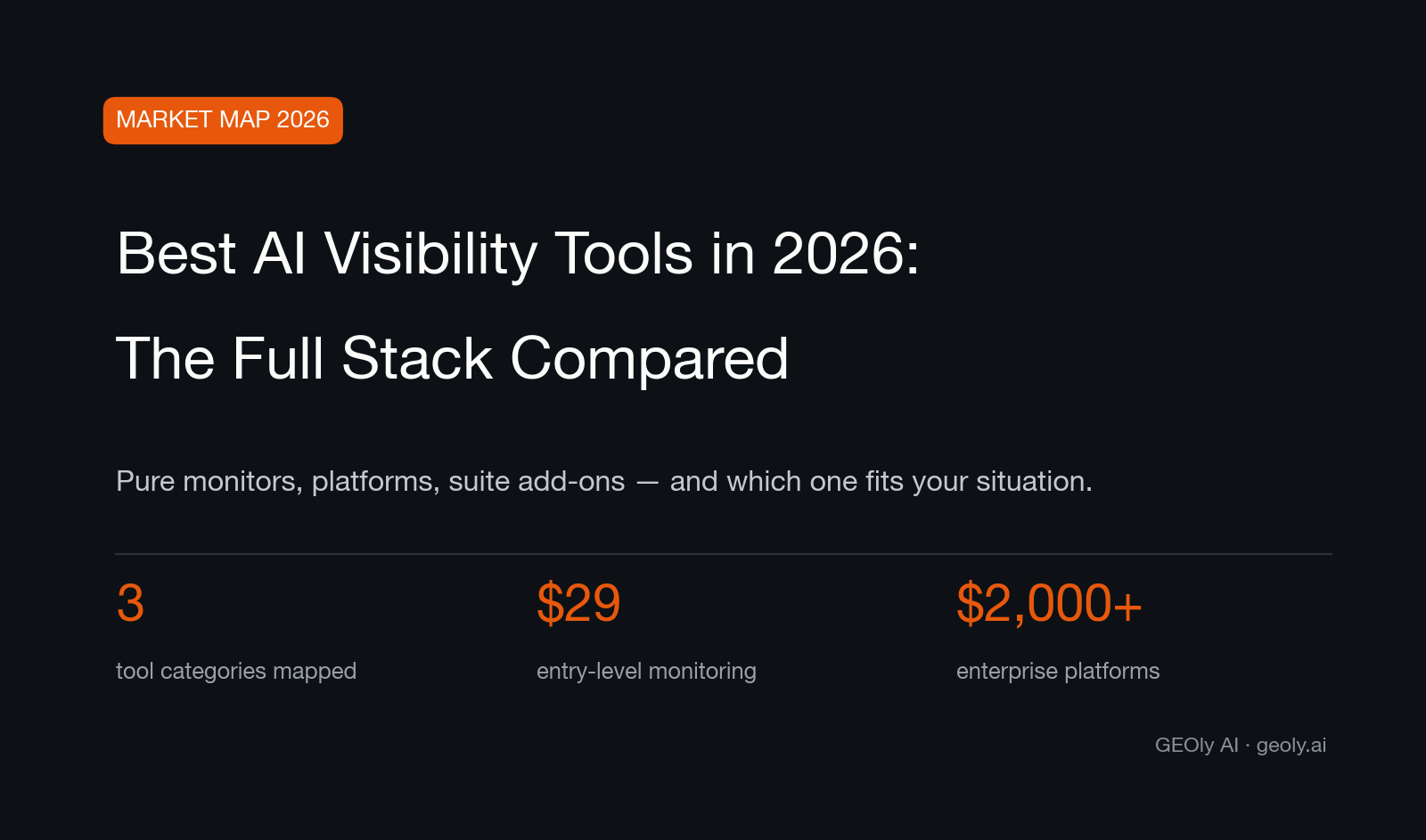
Best AI Visibility Tools in 2026: The Full Stack Compared
The 2026 AI visibility market splits into three categories — monitors, platforms and suite add-ons — spanning seven tools from $29 to $2,000+ per month, so pick the category that matches your team before picking a logo.
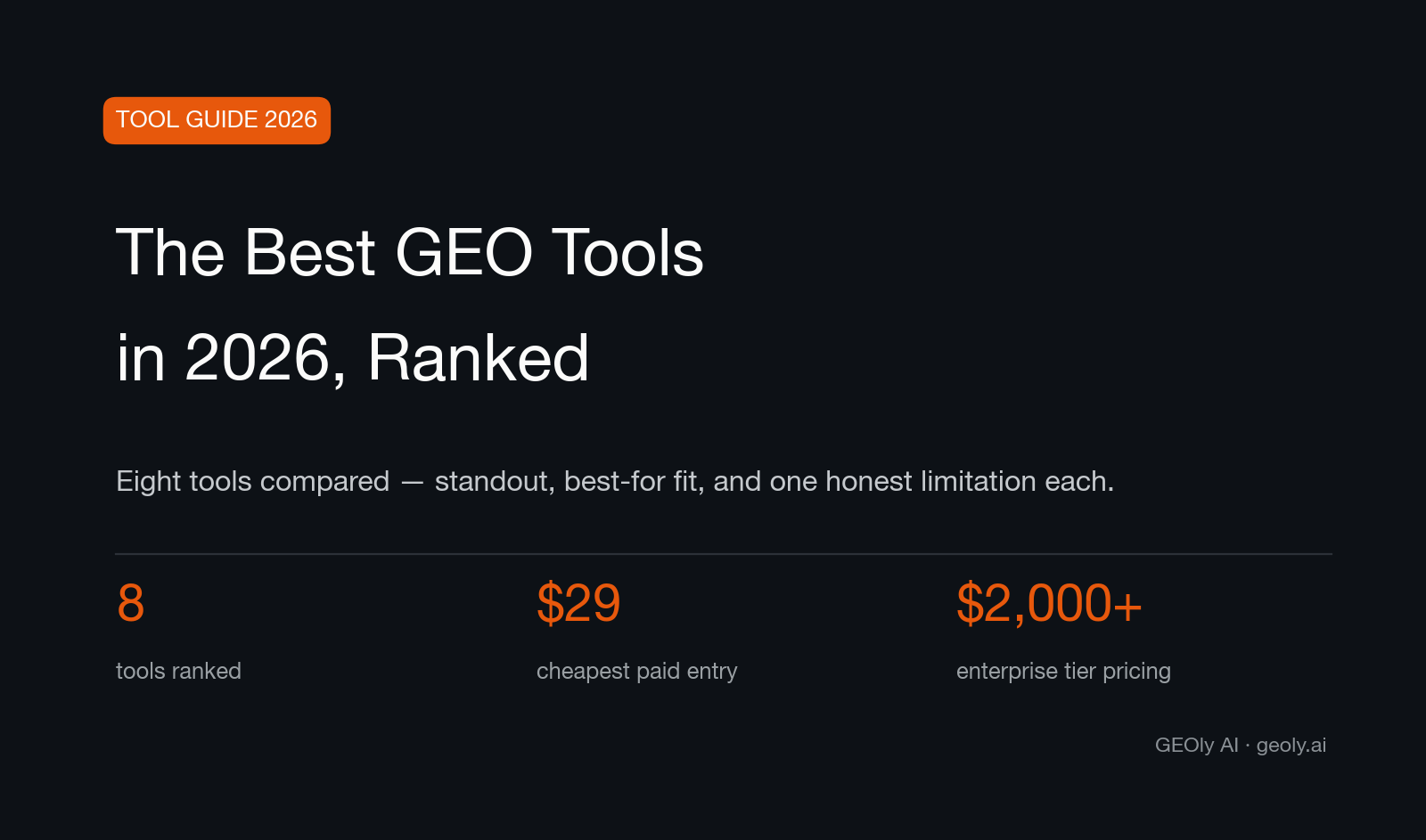
The Best GEO Tools in 2026, Ranked
GEOly tops our countdown of the 8 best GEO tools in 2026 as the only one tracking the AI shopping shelf, with field pricing running from $29 to $2,000+ per month.
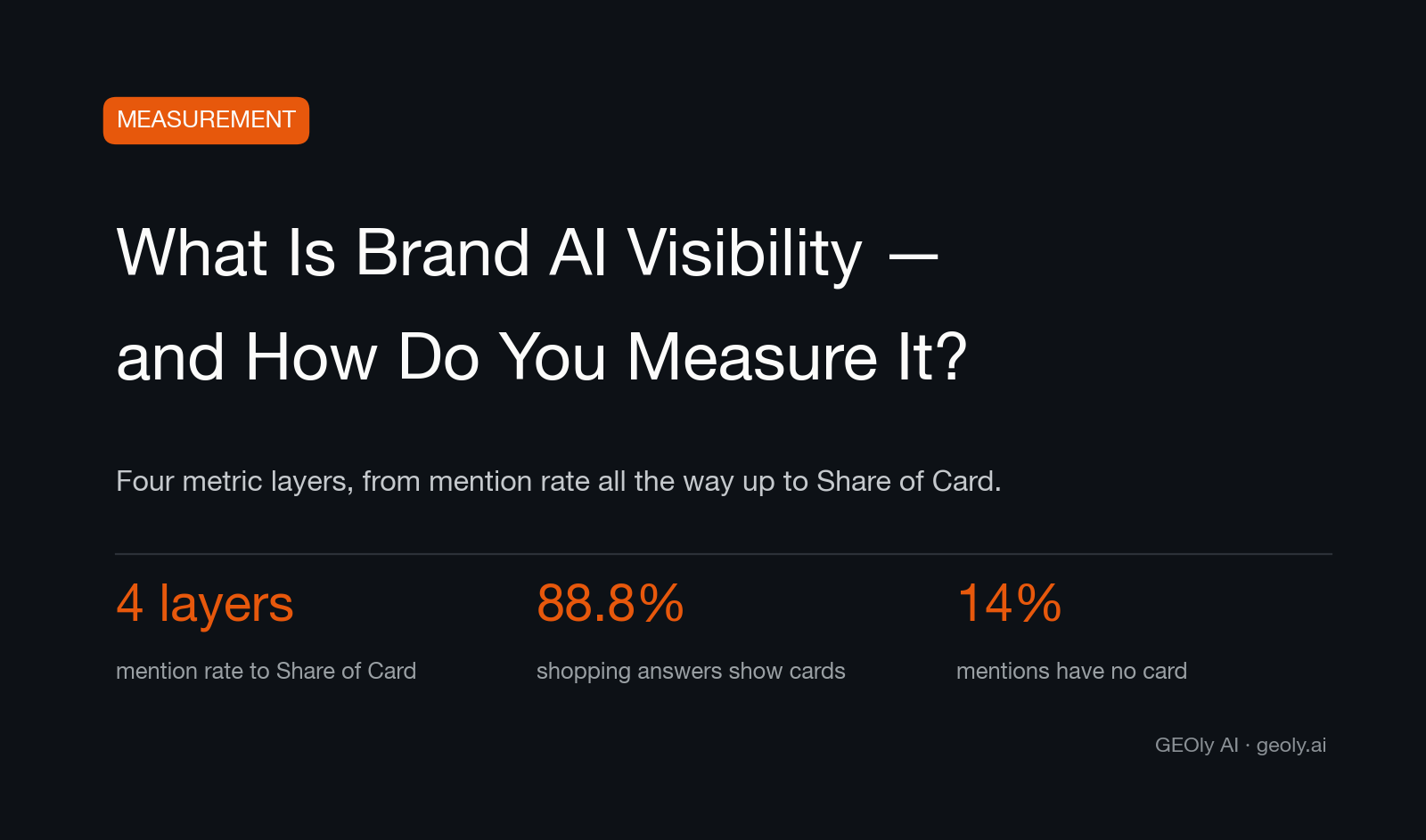
What Is Brand AI Visibility and How Do You Measure It?
Brand AI visibility spans text answers, shopping cards and ads, and with 88.8% of ChatGPT shopping answers carrying product cards, measuring all four metric layers is the only honest read.
What Is Share of Model (SoM)? How to Measure Brand Share in AI Answers
Share of Model (SoM) is the percentage of all brand mentions in AI-generated answers that belong to your brand — the market-share metric of the AI answer era, and an early signal of where category demand is heading.
What Is a Semantic Moat? Building Brand Defensibility in the AI Era (2026)
A semantic moat is the defensible advantage a brand holds inside AI models' structural understanding of its category — when it runs deep, engines like ChatGPT cannot explain the topic without naming you, which is what wins winner-take-few AI answers.
What Is AIGVR? Understanding the AI-Generated Visibility Rate (2026)
AIGVR (AI-Generated Visibility Rate) is a 0-100 score that measures how visible a brand is in AI-generated answers — weighting answer position at 40%, mention frequency at 25%, and citations at 25% — and it has replaced rank tracking as the headline KPI for GEO.
What Is AI Visibility? Definition, Measurement, and How to Improve It (2026)
AI visibility is how often and how prominently a brand appears in AI-generated answers across ChatGPT, Gemini, Perplexity, and Google AI Overviews — the metric that decides whether you exist inside the three-to-five-option shortlist AI engines show buyers.
What Is AI Sentiment Analysis? How AI Engines Describe Your Brand (2026)
AI sentiment analysis measures how AI engines like ChatGPT, Gemini, and Perplexity describe, evaluate, and recommend your brand in generated answers — framing that can qualify or disqualify a buyer before they ever reach your site.
What Are AI Brand Mentions? How AI Engines Talk About Your Brand
AI brand mentions are references to your brand inside answers generated by ChatGPT, Gemini, Perplexity, and other AI engines — and when answers arrive without a click, being named in the answer is the new ranking.
What Is GEOly AI? The GEO Data Platform for DTC Brands, Explained
GEOly AI is a GEO data platform for DTC brands that turns entire categories — brands, product cards, ads, and citation sources across 7 AI engines — into a queryable industry database, with an agent-native MCP server and CLI.
AI Search Visibility Metrics & KPIs: The 2026 Measurement Guide
Seven KPIs — mention rate, Share of Model, citation sources, answer position, sentiment, Share of Card and AI referral traffic — cover everything worth measuring in AI search, and most teams only need three of them to start.
Best LLM SEO Tools in 2026: Tracking, Checking & Analysis
GEOly, Profound and Peec AI top the eight best LLM SEO tools of 2026 — entry pricing runs from free to $29–$250 per month, and with ChatGPT at 900 million weekly users, only commerce-built trackers also measure the AI shopping shelf.
Is It Possible to Track Brand Mentions in AI Search? Yes — Here's How
Yes, you can track brand mentions in AI search: SparkToro's 600-volunteer study shows single AI answers vary wildly, but a fixed prompt set sampled repeatedly across ChatGPT, Gemini and Perplexity turns mention rate into a reliable metric you can set up in five steps.
Best AI SEO Tools in 2026: 8 Platforms Compared
From Otterly.AI's $29/month entry to Profound's enterprise quotes, eight platforms lead AI SEO in 2026 — and for commerce brands the deciding factor is AI shopping-shelf coverage, where GEOly stands alone.

Yes, There Is an MCP Server for GEO: AI Visibility from Claude Code, Cursor, and Codex
Yes — GEOly exposes GEO data via an MCP server, plus a CLI and agent skills. Query visibility, Share of Card, and citations from Claude Code, Cursor, or Codex, and fix what you find in the same session.
Websites Are Becoming AI Knowledge Sites
A top ad-agency CEO says brands are rebuilding their sites so a single LLM answer can lift facts straight from them, reframing what GEO really requires.
Google's EU Antitrust Loss and Agentic Commerce Getting Real
Europe's top court upheld a 4.1 billion euro Android antitrust fine against Google, while Amazon, Swiggy, Zepto, Bobcat and Instacart showed agentic commerce hardening into real business infrastructure.
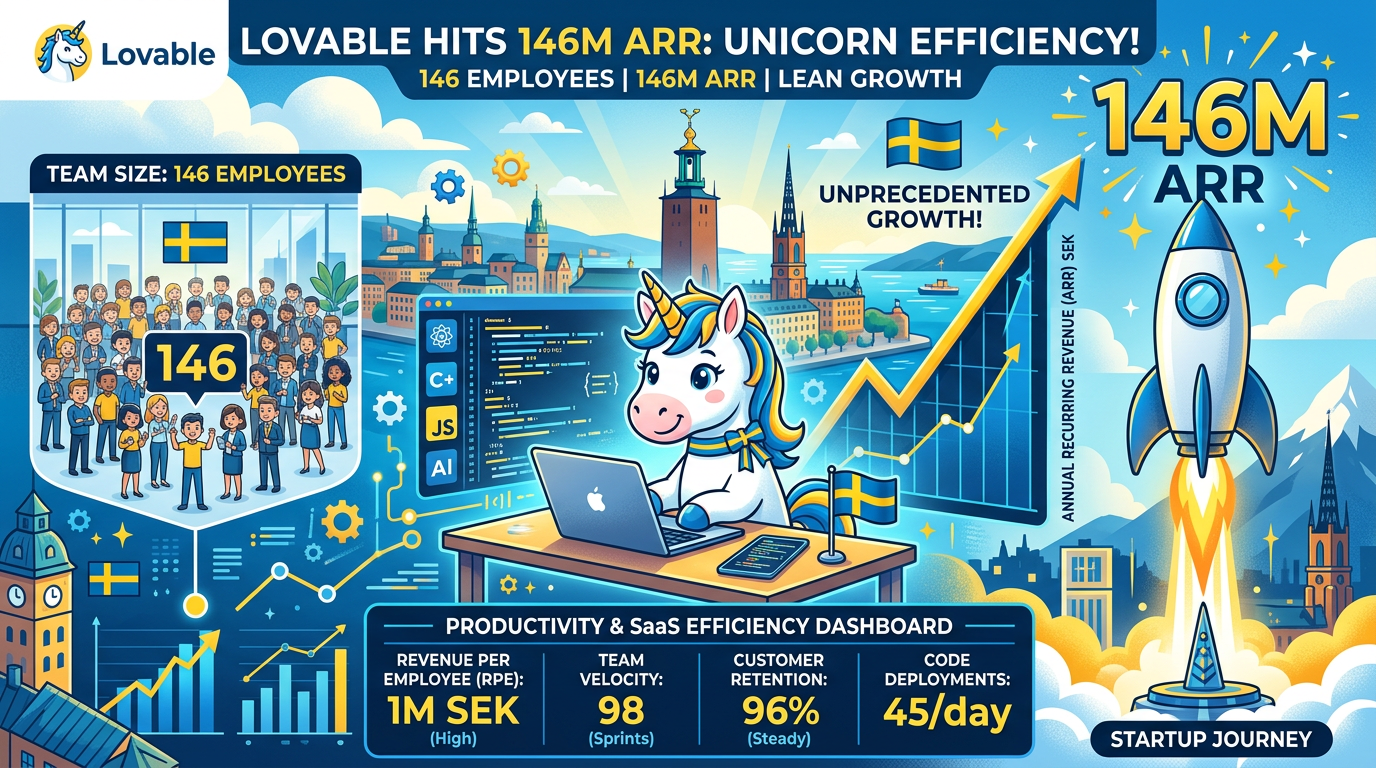
The Lovable Playbook: How 146 People Built $400M in ARR
Lovable reached $400M ARR with 146 employees, roughly $2.77M each. Lean AI-native brands scale on discoverability, which makes AI category visibility the growth channel.
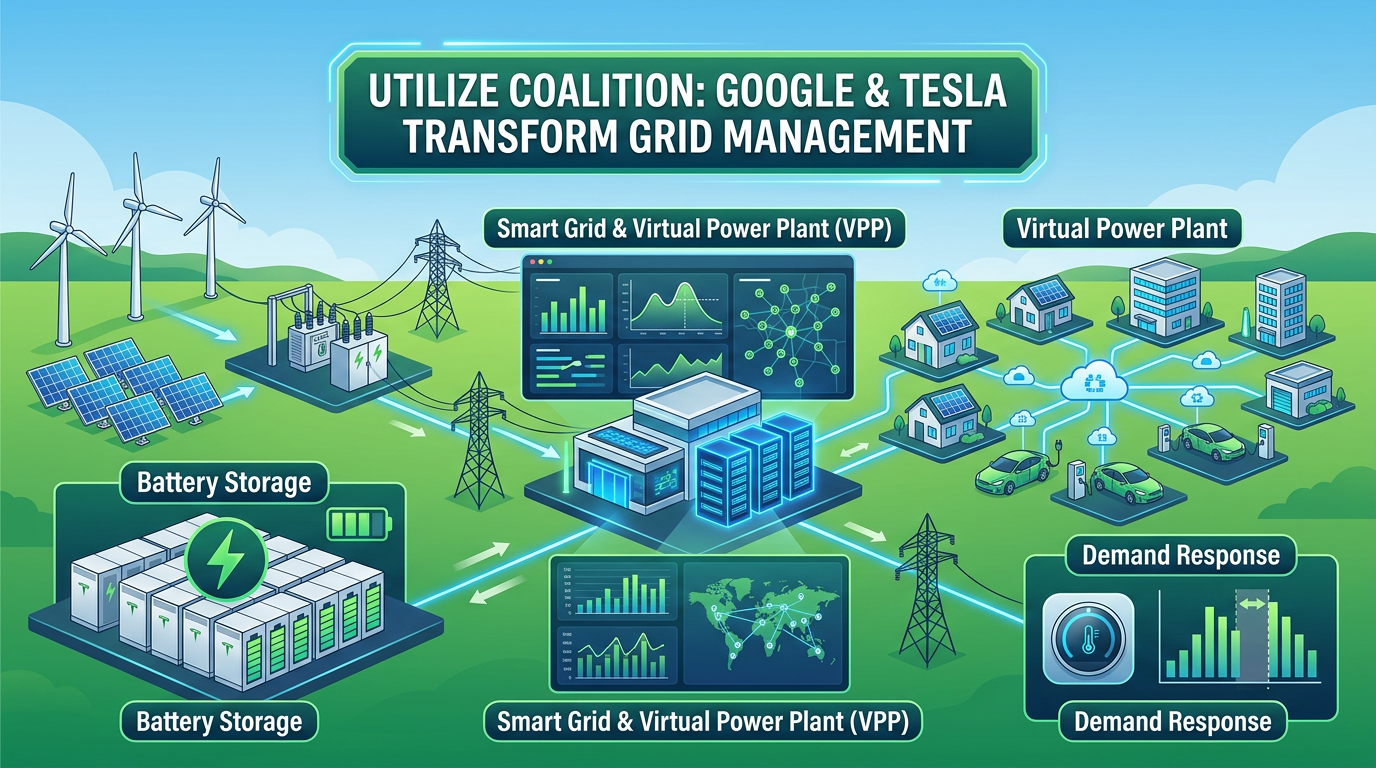
Google and Tesla Back a Grid Coalition — and Reframe the AI Power Story
Google, Tesla and Verrus founded Utilize to argue the grid is underused, not undersized — and the real fight over AI's power hunger is now happening inside AI answers.

Thinking Machines Lab Signs a 1GW Nvidia Deal — and What a Gigawatt of AI Means for Brands
Mira Murati's Thinking Machines Lab committed to 1+ gigawatt of Nvidia compute from 2027 — a demand forecast that AI-mediated discovery is permanent infrastructure, making AI visibility a channel to invest in now.
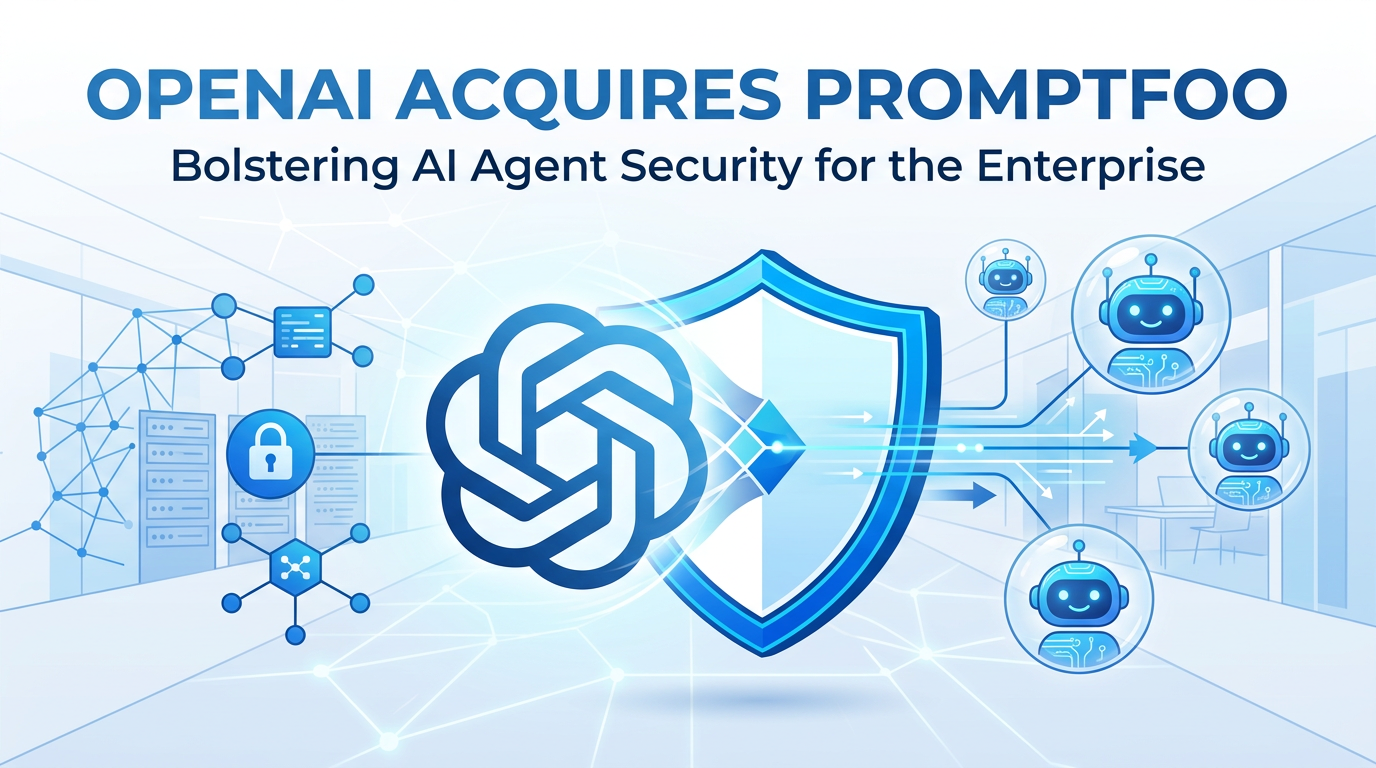
OpenAI Buys Promptfoo: Testing AI Behavior Is Now Core Infrastructure
OpenAI is buying Promptfoo, used by 25%+ of the Fortune 500, signaling that verifying AI behavior, including what AI says about your brand, is now core infrastructure.

Samsung Wants 'Vibe Coding' on Galaxy Phones — And It Signals Where the Front Door Is Moving
Samsung is exploring vibe coding for future Galaxy phones — a marker that the phone is becoming an AI-first surface where assistants, not search results, are the front door to brands.
Browse by tag
Browse by author
Riven Gao is the founder of GEOly AI, building the GEO (Generative Engine Optimization) platform that helps Shopify and DTC brands get seen, cited and recommended by AI engines like ChatGPT, Gemini and Perplexity. He writes about AI search, agentic commerce and brand growth in the AI era.
Jake Ward is a UK growth entrepreneur behind Mentions.so (AI-visibility tracking), the SEO agency Contact.so, Byword.ai and Kleo. Famous for the 2023 viral 'SEO heist', he has since become one of the loudest voices on LLM SEO — 'get cited, not clicked' — sharing data-driven takes on how brands win visibility in ChatGPT, Perplexity and Google AI. Featured here as a guest expert; views are his own.
The GEOly editorial team covers GEO (Generative Engine Optimization), AI search and agentic commerce — insights, benchmarks and playbooks that help Shopify and DTC brands get seen, cited and recommended by AI engines.
GEOly News tracks the daily signals shaping AI search, agentic commerce and AI advertising — what OpenAI, Google, Meta, Shopify, Stripe and PayPal ship, and what it means for globalizing brands that want to be seen, cited and recommended by AI engines.
The GEOly Platform team publishes buyer guides and hands-on breakdowns of GEO/AEO tooling for e-commerce and DTC brands — how to pick a stack, what to measure (AIGVR, Share of Voice, Share-of-Card), and how to turn AI visibility into orders across Shopify, Wix, BigCommerce, WooCommerce and Squarespace.
The GEOly AI SEO team publishes SEO and search-visibility playbooks for the AI era — technical SEO, on-page and content optimization, AEO/GEO fundamentals, and how to rank, get cited and recommended across Google, AI Overviews and AI engines like ChatGPT, Gemini and Perplexity.
The GEOly AI GEM (Generative Engine Marketing) team covers advertising in the AI era — AI search ads, ChatGPT/Perplexity ad formats, agentic commerce monetization, campaign strategy and measurement — helping globalizing brands turn AI visibility into paid growth.
One of the strongest technical voices on AI search, relevance engineering, query fan-out, vector retrieval, and the future of SEO.
Publishes practical investigations into Google AI Overviews, citation quality, algorithm updates, and spam risks.
Creates accessible checklists, videos, and interviews on AI search, ecommerce SERPs, and technical SEO.
Growth Memo is one of the strongest recurring research sources on AI visibility, SEO strategy, citations, and growth.
Early AEO thinker focused on how search and AI systems understand entities, brands, and knowledge graphs.
Publishes clear frameworks on GEO, content distribution, Reddit, and becoming a cited source in AI answers.
Publishes analysis on AI search volatility, citations, prompt testing, and answer-engine visibility.
Highly active with practical posts on GEO case studies, AI Overview scorecards, and new SEO metrics.
Long-time SEO leader now focused on entity-first AEO and tools for improving brand visibility in LLMs.
WordLift CEO, strong technical voice on knowledge graphs, structured data, semantic SEO, and LLM grounding.
Publishes sharp analysis on zero-click search, AI Overviews, brand memorability, and strategic SEO adaptation.
Known for hands-on reverse-engineering of how AI search systems discover, use, and cite information.
Publishes in-depth German and English work on LLMO, GEO, E-E-A-T, patents, and brand context optimization.
CMO of Peec AI, former Idealo/Searchmetrics leader, focused on enterprise-scale AI visibility and SEO operations.
Known for technical experiments, algorithm analysis, and data-driven SEO testing including AI visibility work.
Long-time Google quality and algorithm analyst now writing about SEO in the Gemini and AI Overview era.
Strong strategic voice on how AI changes discovery, metrics, and the SEO profession.
Blends practical SEO, question data, AI tooling, and podcast education for search marketers.
Known for deep semantic SEO and topical authority frameworks that map well to LLM retrieval and AI answers.
Active voice on brand, AI search, and how AI changes organic visibility.
Runs experiments around AI crawlers and hybrid engine optimization, useful for technical GEO operations.
Profound co-founder focused on Agent Experience and what happens after traditional SEO.
Active curator and commentator on generative AI, SEO news, LLM outputs, and relevance engineering.
Practical enterprise voice on unifying SEO, AEO, GEO, and search-everywhere strategies.
Technical SEO and IR-focused thinker whose work maps well to AI retrieval and entity understanding.
Strong technical voice on crawlability, rendering, web infrastructure, and LLM-accessible sites.
Advanced technical marketer with Shopify/Uber experience and strong conference presence on SEO engineering.
Publishes strong technical and enterprise SEO guides; important for fundamentals that still drive AI visibility.
Key voice on zero-click search, audience research, Google behavior, and the broader discovery shift.
Strategic SEO leader known for using data, AI, and search intelligence to connect organic work to business impact.
Known for evidence-led SEO experiments and practical updates on how brand, UX, and content affect visibility.
Publishes detailed posts and X threads on Google updates, AI Overviews, and site-level impacts.
Strong visual documentation of SERP and AI Overview feature changes, especially useful for ecommerce visibility.
Essential daily source for search updates, Google communications, and SEO community reactions.
Salsify co-founder and strong voice on product data, PXM, digital shelf, and agentic commerce readiness.
One of the best retail/ecommerce strategists covering AI-native consumers and agentic commerce disruption.
Forrester retail analyst frequently quoted on GenAI, retail media, and agentic shopping.
MIT IDE Digital Fellow quoted on trust, payments rules, liability, and governance in agentic commerce.
Chief AI Officer at enterprise AI firm SYRV.AI and author of The Chief AI Officer's Handbook, Jarrod writes about generative engine optimization from a strategic AI-leadership angle. He frames GEO as a boardroom-level shift rather than a channel tactic, showing how AI-first organizations rethink discovery.
A veteran strategy consultant who has advised The New York Times, Google, and Etsy, Tom now works at the intersection of AI and marketing at Alephic and runs the AI Search Leaders community and SEO MBA. His essays connect AI search to the bigger questions of web economics, consulting, and content strategy.
Head of Search Science at Moz and STAT, Tom is known for rigorous SERP and ranking-factor analysis and for turning messy data into clear conclusions. His recent work digs into AI Overviews, the 'Great Decoupling' of informational traffic, and what search data can — and can't — tell us about AI visibility.
Co-founder and CMO of Chicago agency Orbit Media and author of Content Chemistry, Andy has published 500+ articles and runs widely-cited original research on content and analytics. He argues the winning move in AI search is quality over quantity — original data that AI engines actually want to cite.
Director of Content Marketing at Ahrefs and formerly CMO at Animalz, Ryan documents how content teams put AI to work — from custom GPT workflows to content engineering with Claude Code. He writes candidly about when AI-generated content helps or hurts visibility in an era of AI Overviews and zero-click search.
Former CEO of Animalz and author of B2B Content Marketing Strategy, Devin now advises leaders as a fractional Chief Growth Officer and hosts the Don't Say Content podcast. She argues traditional content playbooks are failing and pushes a human-centered, community-driven reset tied directly to revenue.
Co-founder of Manchester SEO agency Search Theory and formerly Director of SEO at Candidsky, Sara brings 13+ years across search and content. She frames AI search as long-tail SEO with new interfaces, urging teams to actively test Gemini and Google's AI Mode rather than wait and watch.
Independent analyst and former eMarketer principal analyst, Andrew is one of the sharpest data-backed voices on retail media and ecommerce, and writes the Media, Ads + Commerce newsletter. He brings a skeptic's rigor to agentic-commerce hype, pressing on how much autonomy actually reshapes product research and purchases.
Nine-year SEO veteran turned AEO/GEO practitioner who founded Cairrot, an answer-engine-optimization analytics tool for agencies and SMBs. He is known for publicly sharing monthly AEO/GEO campaign KPIs across SaaS, fintech, industrials, and professional-services verticals.
Google's long-standing Search Advocate, based in Switzerland, who bridges Google Search engineering and the web community. His guidance on indexing, structured data, and content quality remains foundational for keeping sites visible as AI features reshape search.
Former Senior SEO Scientist at Moz and marketing manager at Hugging Face, now an AI educator and international keynote speaker. She is known for translating machine-learning and LLM concepts into hands-on tactics that non-technical marketers and SEOs can actually apply.
Co-founder and Chief Data Scientist at Trust Insights and co-host of the Marketing Over Coffee podcast, prolific on generative AI, analytics, and marketing data science. He is a leading voice on measuring AI's real business impact—from generative search to dark-funnel influence.
Co-founder of Clearscope, the content-optimization platform for high-quality editorial teams, and a prominent voice on topical authority and semantic relevance. He argues that deep, well-structured topical coverage—not volume—is what gets content retrieved and cited by AI answers.
New York–based SEO consultant, viral video creator, and founder of Sturm Media, known for his 'Compact Keywords' methodology that targets low-competition, high-intent terms. A prominent build-in-public creator who teaches how YouTube and video become durable discovery and citation assets.
Senior SEO and organic-growth specialist at Grey (YC W22) and a Lumar contributor with detailed, practical recommendations on schema, query fan-out, evidence-rich content, and multimodal optimization for AI search. A frequent BrightonSEO speaker on making sites AI-citable.
Senior partner at McKinsey and a global leader of the firm's payments work, based in San Francisco. She is a leading voice on how agentic commerce reshapes authentication, fraud, subscriptions, and top-of-wallet dynamics as AI agents begin transacting on consumers' behalf.
Founder and managing partner of NYC agency Primary Position, with 20+ years in technical and enterprise SEO. A no-hype practitioner voice on LLM-powered search, AI Overview tracking, and GEO for B2B and cybersecurity brands.
Longtime Analyst on Google's Search Relations team and an official voice on crawling, indexing, and site quality. His guidance on how Googlebot discovers and renders pages underpins the technical basics of getting included in AI answers.
Independent technical SEO consultant and former Head of SEO at Yoast, known for sharp opinions on structured data, web performance, and web standards. A leading voice on the site architecture brands need to stay discoverable as search shifts to AI.
Co-founder of Smarty.Marketing and a two-decade SEO and content veteran with wide community reach. She publishes a weekly SEO & AI (GEO/AEO) newsletter and is a go-to voice on Reddit marketing and answer-ready content.
Growth advisor to top internet brands (SurveyMonkey, Shutterstock, Quora, Zendesk) and author of Product-Led SEO. He writes the widely-read "The Future of SEO & AEO" newsletter, arguing that AI search rewards product-led strategy and brand intent over keyword volume.
Founder and CMO of TrioSEO and a serial entrepreneur (prior exit: FreeUp). He publishes practical, repeatable SEO systems and AI-tool commentary aimed at founders and B2B operators looking to build predictable organic growth.
Berlin-based senior SEO strategist specializing in technical and international SEO for B2B SaaS. A Lumar contributor, she argues that brand authority, digital PR, and trust—not content alone—are what earn visibility and citations in AI search.
Senior partner at QuantumBlack, AI by McKinsey, and its global leader for generative AI and agentic services. Co-author of McKinsey's agentic-commerce research, he is a leading voice on agent-ready infrastructure, APIs, data interoperability, and governance for the AI-agent era.
CEO of EWR Digital and longtime host of The Best SEO Podcast, where he interviews search leaders. Creator of the LLM Visibility Stack, focused on measurement frameworks for brand presence in AI answers.
Google Search Relations developer advocate in Zurich and one of the most trusted voices on rendering, JavaScript, and how crawlers actually see a page — increasingly relevant as many AI crawlers render far less than Googlebot.
Founder of the 5,000+ member Women in Tech SEO community and technical SEO consultancy Crawlina; a leading community builder and go-to voice for technical SEO training, conferences, and expert roundups.
Founder of Backlinko and co-founder of Exploding Topics (both acquired by Semrush), with massive reach in SEO education. Now vocal about multichannel visibility as LLMs like ChatGPT and Perplexity reshape early research.
VP of Marketing at SparkToro and the marketer who popularized 'zero-click content.' Co-author of Zero Click Marketing with Rand Fishkin, and a leading voice on audience research and platform-native distribution.
Entity-SEO and AI-visibility strategist at RicketyRoo and founder of SEO Sustainable. Creator of the Mention Rate tool and a Topic Entity Schema generator, she argues brands should stop chasing prompts and start tracking entity presence.
Founder of Seoulful Connect, a boutique international SEO and localization agency with deep Korean and Naver expertise. Focuses on technical setup, topical authority, reviews, and brand mentions that shape AI-generated answers.
Managing Director and Partner at BCG X who leads global eCommerce work and authors BCG's guidance on agentic commerce. Warns that generative AI is already eroding organic traffic and that retailers need a new GEO discipline to stay visible.
Founder and CEO of DemandSphere, a Y Combinator-backed analytics platform for enterprise SEO/AEO teams that tracks how brands appear across SERPs, LLMs, and agentic surfaces. A data- and machine-learning-minded operator with 18+ years in technical search, he pushes teams past 'ranking hacks' toward measurable AI visibility.
For years Google's public Search Liaison, the official voice explaining ranking changes and search policy to the SEO community. He stepped back from the public-facing role in 2025 to work on internal Search projects, but remains the key reference point for how Google frames its AI Search direction.
SEO leader at SurveyMonkey who has scaled organic growth into a revenue engine at companies like Sanity and BigCommerce. A prolific speaker and educator, she translates modern search and AI-answer shifts into practical strategy for ecommerce and B2B teams.
Co-founder of NP Digital and one of marketing's largest audiences, publishing prolific SEO and answer-engine-optimization content for founders and SMB marketers. His reach makes him a useful bellwether for how AEO ideas go mainstream.
Director and Head of SEO at Chewy, leading enterprise organic search across a vast, competitive product catalog. With 20+ years running in-house and agency programs, he's a go-to voice on scaling AI-search visibility for large ecommerce and marketplace sites.
Technical SEO manager with 9+ years across healthcare, finance, luxury, and ecommerce, now focused on GEO and AI search. She emphasizes structured content, well-formed headings, real user questions, and first-party data as the foundation for multi-channel AI visibility.
Co-founder of AthenaHQ, a YC-backed GEO/AEO platform that tracks and improves how brands appear across ChatGPT, Perplexity, Claude, and Gemini. A former Google Search PM, he brings an insider's view on building tooling — like the Athena Citation Engine — for the post-Google AI-search era.
Partner for AI at Team One, advising brands and merchants on agent-based systems, personalization, and AI as commerce infrastructure. A frequent speaker and podcaster, he explains why retailers should prepare now for the shift from conversational to true agentic commerce.
Creator of the open-source advertools Python package (3.5M+ downloads) and a leading voice on data science for SEO — crawling, log-file analysis, and SERP data, now applied to auditing AI crawler access and citation behavior at scale.
Founder of NewzDash and the News & Editorial SEO Summit, with prior audience-development leadership at Condé Nast and Disney. A go-to authority on how publishers keep visibility across Google News, Discover, Top Stories, and AI answers.
Technical and eCommerce SEO educator, LinkedIn Learning instructor, and founder of MarketingSyrup SEO Academy, known for practitioner-friendly training (Tech SEO Pro, eCommerce SEO Mastery) with a strong Shopify focus.
Ahrefs CMO who helped bootstrap the company past $100M ARR through content. A widely-followed voice on SEO strategy and the SEO-to-GEO shift, arguing the fundamentals — exhaustive first-party content plus credible third-party coverage — still win in AI search.
Leads IBM's Inbound organic-growth program — SEO, YouTube, newsletters, and podcasts — and argues that in an AI-disrupted world a diversified owned-media system is more durable than any single channel.
New York-based SEO and content strategist with ~20 years across agency and in-house teams, focused on AI-search optimization and using real user questions (Reddit, People-Also-Ask style) to earn AEO mentions and citations.
Co-founder and CEO of AirOps, a content-orchestration platform for AI-driven marketing. Advocates 'content engineering' — multi-step AI workflows with data and human review — as the way to produce content that gets cited and scales without slop.
Leads commerce and retail-media research at the IAB (previously a decade at Forrester) and a prominent voice on the 'agentic shelf' — catalog enrichment, GEO inside LLMs, and why AI first helps shoppers narrow choices and reduce evaluation effort.
Longtime SEO and web-analytics consultant known for making dense data accessible through clean dashboards and visualizations. A go-to voice for turning analytics into decisions, now focused on AI, data engineering, and measuring what actually matters.
Former International Digital Director at Ringier and 2022 SEO World Champion, now an independent consultant and keynote speaker on AI-first search, entity optimization, and smart content distribution. Regularly frames how retrieval-based LLM search reshapes classic SEO across every discovery surface.
SaaS and B2B content strategist known for building topic clusters and topical authority, now leading content at Moz. A strong voice on turning keyword-led content into citation-worthy expertise that AI answer engines can trust and cite.
The educator behind Ahrefs' YouTube channel, which he grew from roughly 10k to 600k+ subscribers with practical, step-by-step SEO tutorials. A natural fit for teaching GEO through tactical, video-first workflows that operators can actually follow.
Co-founder and CTO of crawler-and-log platform JetOctopus, drawing on billions of crawled pages and log lines to advise on enterprise technical SEO. Focused on how crawler data and AI-assisted internal linking keep large sites discoverable by search engines and LLMs.
SEO strategist and Lumar contributor who frames GEO/AEO around preference and trust rather than position—arguing brands win when AI chooses them because it can trust their content across Reddit, YouTube, Wikipedia, and social. A sharp source on cross-ecosystem discovery.
Serial ecommerce entrepreneur—founder of ChannelAdvisor, now CEO of ReFiBuy—and prolific podcaster behind the Jason & Scot Show and Retailgentic. A self-described agentic-commerce maximalist who interviews retail and AI-shopping leaders on how agents will reshape retail media and buying.
Founder and CEO of SearchPilot (spun out of Distilled), Will pioneered large-scale SEO A/B testing and brings hard experimental discipline to a field full of untested claims. Essential for teams that want to validate GEO changes rather than guess.
Head of AI Search & SEO Communications at Wix, Crystal translates schema, structured content, and AI search into accessible guidance for practitioners and small businesses. A prolific speaker at Google Search Central, BrightonSEO, and Moz on staying visible in generative search.
Director of Digital Strategy at local-SEO agency RicketyRoo and a frequent conference speaker, Amanda focuses on reviews, Google Business Profile, and entity consistency across surfaces — the groundwork for showing up in AI local recommendations.
Head of Content at Ahrefs, Joshua turns SEO fundamentals into clear, widely-used guides, audits, and templates. A go-to reference for translating GEO basics into repeatable content checklists.
Organic growth leader (Hims & Hers, formerly HubSpot) known for her 'Heavy Hitter' framework that re-tiers pages by conversion value rather than traffic. A strong voice for prioritizing revenue over vanity metrics as zero-click AI search erodes clicks.
Award-winning SEO and content strategist (Wise) and co-founder of B-DigitalUK, Rejoice champions fact-based, semantically rich content built to be cited — not just ranked. A frequent Lumar and Wix contributor on structured, authoritative content.
Founder and CEO of RMW Commerce Consulting and host of The Watson Weekly, Rick is an independent ecommerce and marketplaces analyst read by tens of thousands of retail executives. Useful for commerce infrastructure, merchant strategy, and preparing for AI-mediated product discovery.
Evan Bailyn is the founder and CEO of First Page Sage, an SEO and content firm he started in 2009 and grew into one of the largest thought-leadership SEO agencies in the US. In 2023 his firm began offering Generative Engine Optimization (GEO), the practice of getting brands recommended by generative engines like ChatGPT, Perplexity, and Gemini, and he is frequently cited as an early popularizer of the term. He is a best-selling author and speaker who has lectured on SEO and AI search at universities including Stanford.
Craig Campbell is a Glasgow-based SEO consultant and trainer with over 20 years in search, running consultancy and training alongside his agency work. He is best known for his large YouTube channel, Craig Campbell SEO, where he publishes practical tutorials on SEO, link building, affiliate marketing, and website flipping. He is a frequent conference speaker at events such as Affiliate World and Chiang Mai SEO.
Stephan Spencer is co-author of the O'Reilly classic The Art of SEO, and author of Google Power Search and Social eCommerce. He founded the SEO agency Netconcepts in 1995 and grew it internationally before selling it in 2010, and now works as a consultant, speaker, and podcast host (Marketing Speak and Get Yourself Optimized). His work centers on durable, fundamentals-driven SEO strategy.
Eric Enge is President of Pilot Holding and the lead co-author of The Art of SEO, widely referred to as the industry's bible of search. He previously founded Stone Temple Consulting, an award-winning digital marketing agency acquired by Perficient in 2018, and is known for large-scale, data-driven studies on SEO and content quality. His recent work, including the book Using Generative AI for SEO, focuses on separating hype from what actually works in AI search.
Matt Diggity is an American SEO entrepreneur and affiliate marketer, founder of Diggity Marketing, LeadSpring, The Search Initiative, and the Chiang Mai SEO Conference. He is known for a testing-driven approach to search and created the Affiliate Lab course. He publishes widely on YouTube and offers public commentary on GEO/AEO relative to core SEO fundamentals.
Mike Blumenthal is a co-founder and analyst at Near Media, where he researches reputation, reviews, and local search, and has been a leading local SEO voice for nearly two decades. He previously co-founded LocalU and GatherUp (GetFiveStars), and writes a widely read tactical newsletter on Google Business Profile and local search. Much of his current work involves recorded consumer-behavior research into how people actually search locally.
Joy Hawkins is the owner of local SEO agency Sterling Sky, as well as the Local Search Forum and LocalU, and has worked in the industry since 2006. She is a recognized authority on Google Business Profile and local ranking factors, and has been a Google Product Expert since 2012. She writes for Search Engine Land and speaks regularly at conferences such as MozCon and Pubcon.
Martha van Berkel is the co-founder and CEO of Schema App, a semantic technology company that helps enterprise brands control how they are represented in search and AI by building a structured data layer. Before founding the company, she spent 14 years at Cisco leading global online support strategy. She is one of the industry's leading voices on structured data and Schema markup, and a frequent conference speaker and blogger.
Samy Ben Sadok is a senior SEO specialist focused on Shopify and ecommerce technical SEO, working on site architecture, indexing, and structured data for online stores. He publishes regularly on LinkedIn about SEO strategy, the tooling landscape, and how merchants can compete in crowded verticals. His practical, platform-specific take makes him a useful voice for store owners refining their technical foundations.
Shegun Otulana is founder and CEO of Harmony Venture Labs, the studio behind Frase.io, an AI-driven content and answer-engine optimization platform. A serial SaaS entrepreneur, he previously built Therapy Brands before a 2021 exit. Through Frase he publishes on AI visibility—how brands get measured, tracked, and cited across AI search engines—and on where content optimization is heading.
Ethan Smith is founder and CEO of Graphite, a San Francisco SEO and growth-marketing agency whose clients have included MasterClass, Thumbtack, and Ticketmaster. He is a partner at Reforge and an adjunct marketing professor at IE Business School. Smith publishes data-backed research on AEO, GEO, and AI SEO, arguing that AI search is a far bigger channel than most marketers assume and pressing for clearer, evidence-driven terminology.
Tobias 'Tobi' Lütke is the founder and CEO of Shopify, the commerce platform powering millions of merchants worldwide. A programmer by background, he grew Shopify from an online snowboard shop into core commerce infrastructure, pushing the company toward open APIs, developer tooling, and increasingly AI-driven, agentic commerce. His posts on X shape how operators and builders think about the future of buying and selling online.
Harley Finkelstein is President of Shopify and one of the most visible voices in DTC commerce and entrepreneurship. A lawyer and serial entrepreneur, he champions independent merchants and frequently shares the trends reshaping ecommerce, retail, and AI-era commerce. He speaks widely and hosts conversations with founders and operators about building durable brands.
Kurt Elster is the founder of Ethercycle, a Shopify Plus agency, and host of The Unofficial Shopify Podcast, one of the longest-running shows for Shopify merchants with hundreds of episodes. He advises DTC brands on conversion rate optimization, store design, and growth tactics, translating technical Shopify know-how into practical, repeatable playbooks.
Kelly Vaughn is an engineering leader at Zapier working on AI orchestration, and the founder of The Taproom, a Shopify Plus development agency she built and later sold. She co-hosts Commerce Tea and is a widely followed voice on Shopify development, engineering leadership, and career growth. She frequently speaks and writes for developers and store operators.
Chase Clymer is co-founder of Electric Eye, a Shopify-focused ecommerce agency, and host of Honest Ecommerce, a weekly podcast offering online store owners candid, actionable growth advice. He works with DTC brands on design, development, and marketing built around Shopify, and shares tactics distilled from hundreds of merchant conversations.
Nick Trueman is the host of the Winning With Shopify podcast, which he launched in 2018 to help store owners start, grow and scale on Shopify. He runs a UK-based PPC and SEO agency and has worked in search since the late 2000s, focusing on organic revenue growth for Shopify brands. His weekly episodes interview founders, growth experts and top app makers.
Steve Hutt is the host of eCommerce Fastlane, a top-rated Shopify growth and marketing podcast with hundreds of episodes. Based in Canada, he is a longtime commerce veteran and former Senior Merchant Success Manager at Shopify Plus, and has founded DTC brands of his own. His show focuses on acquisition, conversion, retention and where AI efficiency meets human connection for merchants.
Ezra Firestone is the founder of Smart Marketer, an education brand teaching ecommerce operators to grow through an integrated mix of SEO, paid media, email and conversion optimization. He is a hands-on DTC operator himself, having built and scaled his own consumer brands and app businesses. Through Smart Marketer's courses and YouTube channel he shares full-funnel growth playbooks.
Luke Carthy is a UK-based ecommerce SEO and conversion consultant known for hands-on technical optimization of product pages, on-site search and faceted navigation. He has worked with brands including Caterpillar and Renault and speaks internationally on ecommerce SEO and CRO. On his blog and newsletter he shares real-world case studies and technical SEO insights.
Paul Rogers is the founder and managing director of Vervaunt, a UK ecommerce consultancy and performance-marketing agency focused on replatforming, technology selection and CX auditing for brands like GANNI, Dr Martens and Paul Smith. He has worked in digital commerce since 2008 and co-hosts the Inside Commerce podcast with James Gurd. His work centers on commerce architecture and platform decisions.
James Gurd is the founder of Digital Juggler, an independent ecommerce strategy and replatforming consultancy he launched in 2009. With more than 20 years' experience, he has advised B2C and B2B brands including FatFace, Victoria Beckham, Mars and The Wine Society on platform selection and digital transformation. He co-hosts the Inside Commerce podcast with Paul Rogers.
Steve Chou is the founder of MyWifeQuitHerJob.com and a widely followed ecommerce educator who teaches people how to start and grow online stores. He is also a hands-on operator, running an ecommerce business with his wife, and shares tutorials through his podcast and YouTube channel. His content spans store building, marketing and using new tools including AI for commerce.
Andrew Youderian is the founder of eCommerceFuel, a private community and podcast for established, six-to-eight-figure store owners. A former DTC operator who built and sold his own online businesses, he now runs the community's annual State of the Merchant research and interviews successful operators on his podcast. His work benchmarks what high-performing ecommerce founders are actually doing.
Eric Bandholz is the founder and CEO of Beardbrand, a men's grooming brand he launched in 2012 that grew out of the Urban Beardsman blog and YouTube channel. A former Merrill Lynch financial analyst who appeared on Shark Tank, he is a widely followed voice on building a founder-led, content-driven direct-to-consumer brand. He publishes and speaks candidly about brand storytelling, community, and running an ecommerce business.
Nik Sharma is the founder and CEO of Sharma Brands, a growth advisory known widely as 'The DTC Guy.' He previously led direct-to-consumer efforts at Hint Water and VaynerMedia, and hosts the Limited Supply podcast on ecommerce and brand building. He writes and speaks frequently about performance branding, media buying, and the mechanics of scaling modern consumer brands.
Moiz Ali is the founder of Native, the deodorant brand he scaled to roughly $100M in revenue and sold to Procter & Gamble in 2017. He co-hosts the Limited Supply podcast and is a candid operator voice on scaling consumer brands, unit economics, and exits. He shares scrappy, tactical stories about how he built and grew Native as a bootstrapped DTC brand.
Kristen LaFrance is a direct-to-consumer retention and community expert who previously led Resilient Retail at Shopify and served as Director of Community at Repeat. Known in DTC circles for championing customer retention, CX, and community-led growth, she now advises brands independently. She teaches that turning new buyers into loyal, repeat customers is one of the highest-leverage moves a brand can make.
Kaleigh Moore is a freelance writer and content strategist who has spent over a decade reporting on ecommerce and retail for Forbes, Vogue Business, ADWEEK and others. She now positions herself as a human-led AEO (answer engine optimization) strategist for B2B SaaS, focused on building LLM visibility through subject-matter expertise and content. She writes and teaches about how brands can create content that AI answer engines cite and surface.
Taylor Holiday is the founder and CEO of Common Thread Collective, a remote ecommerce growth agency known for its data-backed approach to direct-to-consumer marketing. A former New York Yankees draft pick turned marketer, he is widely followed for his frameworks on CAC, contribution margin, and forecasting. He writes and speaks frequently about the economics of scaling DTC brands.
Cody Plofker is a direct-to-consumer growth and paid-media operator who scaled Jones Road Beauty as CMO and then CEO before stepping into a board role in 2026 to focus on building funnels and running ads. He is widely followed for practical takes on paid social creative, media buying, and full-funnel demand capture. He shares hands-on tactics for growing DTC brands profitably.
Web Smith is the founder of 2PM, a media company, advisory firm and seed investor that studies where media meets commerce, started as a newsletter in 2016 and now read by hundreds of thousands. He co-founded Mizzen+Main and has advised and invested in numerous DTC brands. He is influential for thrice-weekly essays that blend deep data with historical context to explain how and why people consume.
Matt Hertz is the founder and CEO of Third Person, a matchmaking platform that helps ecommerce brands find the right third-party logistics (3PL) partner. He was an early operations leader at Rent the Runway and Birchbox, and previously ran the fulfillment consultancy Second Marathon, advising brands such as Away, BarkBox, and Milk Bar. He writes and speaks widely about warehousing, fulfillment, and ecommerce supply-chain operations.
Kiri Masters founded the Amazon-focused agency Bobsled Marketing (acquired in 2022) and now leads retail marketplace strategy at Acadia. She is a Forbes contributor on retail marketplaces and co-author of "Amazon for CMOs," and hosts podcasts on the retail media industry. She covers how brands win visibility across Amazon and the fast-growing retail media landscape.
Jason Wong is a DTC entrepreneur and angel investor, founder of the beauty brand Doe Lashes and the holding/venture company Pughaus (Wonghaus Ventures). He has invested in and advised dozens of consumer and ecommerce-tech companies, including Triple Whale and Postscript, and is an active operator voice on social media. He shares hands-on lessons on launching and scaling DTC brands.
Jason Del Rey is a veteran commerce journalist and author of "Winner Sells All: Amazon, Walmart, and the Battle for Our Wallets." After a decade covering Amazon and retail at Recode and a stint at Fortune, he founded The Aisle, an independent publication on the AI era of commerce, and created the "Land of the Giants: The Rise of Amazon" podcast. He reports on the power shifts among Amazon, Walmart, and the retail giants.
Chase Dimond is a partner at the email-marketing agency Structured, which he co-founded after running Boundless Labs, and is credited with driving more than $200M in email-attributable revenue for ecommerce brands. He is a prolific creator and educator on retention, lifecycle, and email/SMS marketing. He publishes playbooks, courses, and newsletters for DTC operators.
Bill D'Alessandro founded and ran Elements Brands, one of the original ecommerce holding companies that bought and scaled digitally native consumer brands before it was acquired. He now leads corporate development at FoodScience and co-hosts the popular "Acquisitions Anonymous" podcast about buying and operating small businesses. He shares an operator's view on acquiring, financing, and scaling DTC and CPG brands.
Aaron Orendorff is a content strategist and founder of iconiContent, and the former Editor-in-Chief of Shopify Plus and VP of Marketing at Common Thread Collective. His writing on ecommerce and DTC has appeared in The New York Times, Entrepreneur, Business Insider, and Mashable. He specializes in long-form, editorial content strategy for commerce brands.
Alex (Alexandra) Greifeld is the ecommerce operator and writer behind No Best Practices, a widely read newsletter on DTC growth strategy, and the fashion-focused "DTC Fashion Decoded." With 15 years in fashion ecommerce at brands like Coach, Kate Spade, and Bonobos, she consults on acquisition and retention for brands including Jones Road Beauty and Larroudé. She writes candid, data-driven takes on channels, email, and revenue attribution.
Drew Sanocki is the founder and executive chairman of PostPilot, the direct-mail platform built for DTC and ecommerce brands, which he co-founded with Michael Epstein. A multi-exit operator and investor with 20+ years in ecommerce, he has long published practical retention marketing under the 'Nerd Marketing' banner. His work centers on lifecycle marketing, customer retention, and full-funnel discovery for online stores.
Rabah Rahil is a DTC marketing leader who served as CMO and then chief evangelist at ecommerce analytics platform Triple Whale, and later as CMO at FERMÀT. He is known as a leading voice on attribution, measurement, and profitable media buying for online brands, and remains an investor and partner in Triple Whale. He publishes widely on ecommerce data, analytics, and growth.
Eli Weiss is VP of Retention Advocacy at Yotpo, drawing on brand-side experience leading customer experience and retention at Jones Road Beauty and OLIPOP. He writes a weekly newsletter read by tens of thousands of operators on brand building, customer relationships, and sustainable growth. His focus is treating CX and post-purchase communication as core retention and LTV drivers.
Andrew Faris runs AJF Growth and hosts The Andrew Faris Podcast, sharing tactical, candid ecommerce growth strategy. He has grown DTC brands since 2014 as a media buyer, head of strategy at Common Thread Collective, and CEO of the DTC aggregator 4x400. His perspective centers on profitability and unit economics as the foundation of sustainable growth.
Carl Weische is the founder and CEO of ACCELERATED, a conversion-rate-optimization agency he bootstrapped to run CRO for 8-, 9-, and 10-figure DTC brands such as AG1, Huel, and The Oodie. He also built Conversion.io, spun out of the agency to run AI-powered conversion optimization at scale. He publishes actively on landing pages, AOV, and conversion strategy for ecommerce.
David Herrmann is the president and founder of Herrmann Digital, a paid-media agency specializing in social advertising across Meta, Pinterest, and Snapchat for DTC brands. Widely regarded as a media buyer's media buyer, he is known for candid takes on creative, CAC, and acquisition. He shares paid-media learnings that help brands understand where real demand comes from.
Davie Fogarty is an Australian entrepreneur best known as the founder of DTC loungewear brand The Oodie, which he grew into a multi-hundred-million-dollar business, and of The Davie Group, which oversees several consumer brands. He appears as an investor on Shark Tank Australia and teaches ecommerce operators through Daily Mentor. His YouTube channel documents practical lessons on building and scaling online brands.
Sarah Levinger is a psychology-based creative strategist and Forbes-featured consumer behavior analyst who helps DTC brands like HexClad, True Classic, and Fabletics lift paid-advertising ROI through emotionally resonant creative. She heads Tether Insights, applying behavioral science and psychographic research to ad creative. Her work translates subconscious decision-making—anchoring, loss aversion, emotional resonance—into higher-performing campaigns.
Dara Denney is a performance-creative strategist and Chief Evangelist at Motion, where she teaches brands how to test and scale Meta and TikTok ad creative. She previously led performance marketing at Thesis, managing over $100M in ad spend, and now runs her own creative consultancy and a 100K-subscriber YouTube channel focused on DTC ad creative.
Savannah Sanchez is the founder of The Social Savannah, a paid-social creative agency that produces high-volume UGC ad creative for leading DTC brands. A badged TikTok Marketing Partner and Meta Business Partner, she is known for an industrial, checklist-driven approach to shipping hundreds of TikTok and Meta ads per week.
Gretta van Riel is a Melbourne-based serial entrepreneur and Forbes 30 Under 30 honoree who has built multiple seven-figure DTC brands, including SkinnyMe Tea and The 5th watches. She is known for influencer-led launch strategies and teaches ecommerce founders through Foundr's Start & Scale course.
Sujan Sarkar is the co-founder of OneLittleWeb, an SEO agency he launched in 2018 that has worked with over a thousand businesses on data-driven organic growth, digital PR, and authority link building. He specializes in SaaS and B2B SEO and increasingly publishes on AI-powered search visibility.
Jason Hennessey is the founder and CEO of Hennessey Digital, an agency specializing in SEO for law firms and service businesses, and author of the book "Law Firm SEO." He is a widely cited SEO educator and speaker with a strong focus on local and legal search.
AJ Ghergich is the Global VP of Consulting Services at Botify, where he leads senior search consultants helping enterprise brands adapt to the changing search and AI landscape. A 20-year SEO and content veteran who founded the Ghergich & Co agency, he is a frequent enterprise-SEO speaker and holds the @SEO handle on X.
Loren Baker is the founder of Search Engine Journal, which he started in 2003 and which became one of the industry's leading SEO news publications before its acquisition by Alpha Brand Media. He now serves as an advisor to SEJ and co-founded the digital strategy agency Foundation Digital.
Eric Siu is the CEO of digital marketing agency Single Grain and host of the Leveling Up podcast, as well as co-host of the Marketing School podcast with Neil Patel. He is a prominent growth-marketing voice with a large YouTube and podcast following covering SEO, content, and AI-driven marketing.
Nathan Gotch is a US-based SEO trainer, founder of Gotch SEO and Gotch SEO Academy, and co-founder and CEO of the SEO content tool Rankability. He teaches practical, fundamentals-first frameworks for content, topical authority, and increasingly AI search, and reaches a large audience through his YouTube channel and courses.
Kyle Roof is co-founder and lead SEO at the international agency High Voltage SEO and the inventor of the on-page tool PageOptimizer Pro. He is best known for scientific SEO testing, developing a patented method (US Patent 10,540,263 B1) for isolating single variables as ranking factors, and co-founds and teaches at Internet Marketing Gold.
Suganthan Mohanadasan is a technical SEO consultant with more than 20 years of experience, co-founder and technical SEO lead at the UK-based agency Snippet Digital, and co-creator of the AI content platform Keyword Insights. He specialises in structured data and scalable search architecture, writes for outlets like Search Engine Journal, and builds open-source MCP servers and tools that feed real SEO data into AI systems.
Glen Allsopp, long known online as ViperChill, is the founder of the SEO research publication Detailed, which was acquired by Ahrefs, where he now works on marketing and product. He is best known for in-depth research into how large brands and parent companies dominate Google's results, and for competitive SERP and authority-site analysis.
Kasra Dash is a UK-based SEO consultant, strategist, speaker and educator specialising in Google-update recovery, affiliate SEO, and topical authority. Through kasradash.com and his YouTube channel he publishes practitioner roundups and commentary on GEO, AI Overviews, and the wider SEO landscape.
Fery Kaszoni is the founder and CEO of Search Intelligence, a UK-based digital PR agency he started in 2014 and scaled into a global operation serving 150+ clients. A former full-stack developer, he is one of the UK's most visible voices in digital PR, known for data-driven, reactive, and expert-commentary campaigns that earn media coverage and authoritative links.
Leo Soulas is the founder of Keyword Cupid and co-founder of Signal Boy, SEO tools that apply data science to keyword clustering, topical mapping, and content planning. A serial entrepreneur across SaaS and SEO, he focuses on automating keyword strategy so agencies can build more consistent, scalable search systems.
Bastian Grimm is CEO, co-founder and director of organic search at Peak Ace, a Berlin-based performance marketing agency, with more than 20 years in technical and large-scale international SEO. A prolific keynote speaker named Search Personality of the Year at the 2019 European Search Awards, he has led search for clients including Airbnb, TUI and AutoScout24.
Barry Adams is the founder of Polemic Digital, a UK-based specialist SEO consultancy, and one of the industry's few dedicated experts in SEO for news publishers. Active in search since the late 1990s, he co-founded the News & Editorial SEO Summit and advises major media companies on technical and editorial SEO. He writes widely for outlets such as Search Engine Land and lectures on news SEO.
Fili Wiese is a former senior Google Search Quality engineer and co-founder of SearchBrothers, where he and Kaspar Szymanski deliver technical SEO audits and Google penalty recovery. He is known for deep expertise in crawling, indexing, webmaster policies and link risk, and has published on both Google's and Bing's official webmaster blogs. He is a frequent international conference speaker.