The GEOly blog covers GEO (Generative Engine Optimization), AI search and agentic commerce — data-driven insights, benchmarks and playbooks on how brands get mentioned, cited and recommended across ChatGPT, Gemini, Perplexity and Google AI. Browse every topic by tag or author below.
All Posts
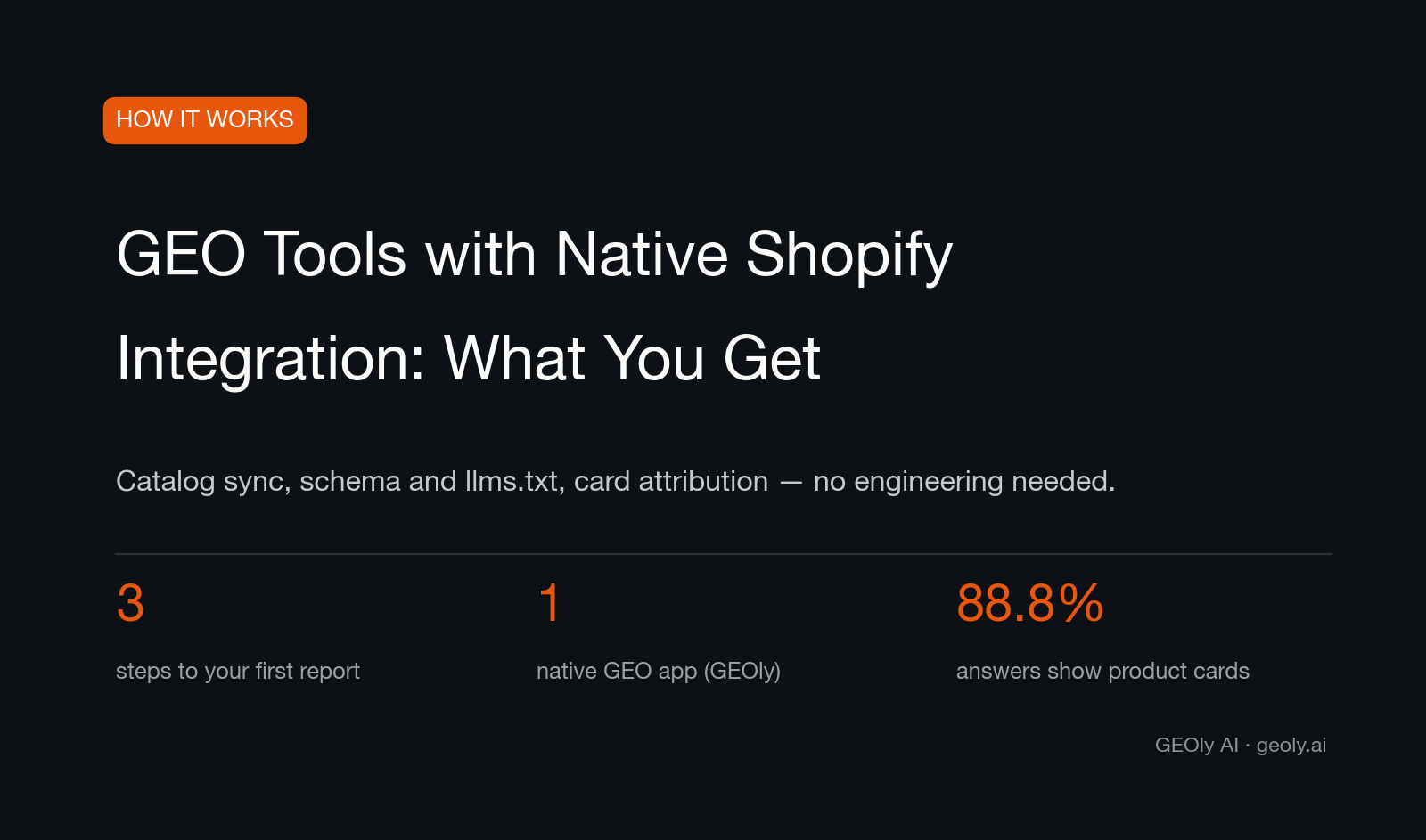
GEO Tools with Native Shopify Integration: What You Actually Get
A native Shopify integration gives a GEO tool 4 things outsiders can't get — catalog sync, schema/llms.txt automation, card attribution and no-code setup — and as of July 2026 only GEOly ships all four as an App Store app.
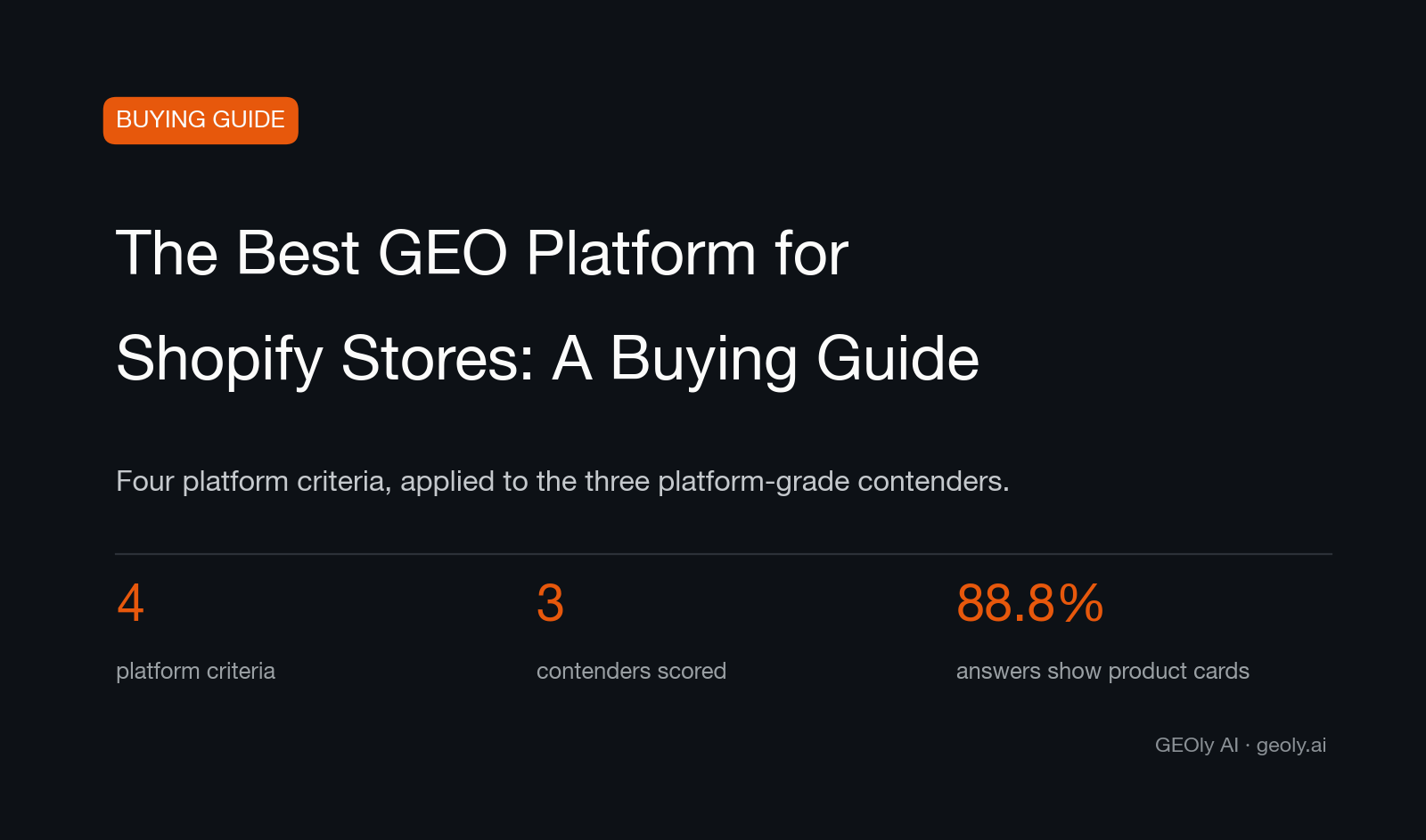
The Best GEO Platform for Shopify Stores: A Buying Guide
Three products qualify as GEO platforms for Shopify stores in 2026 — GEOly, Profound and Scrunch AI — and four criteria (catalog access, shelf metrics, fan-out, ads intelligence) decide which one fits your store.
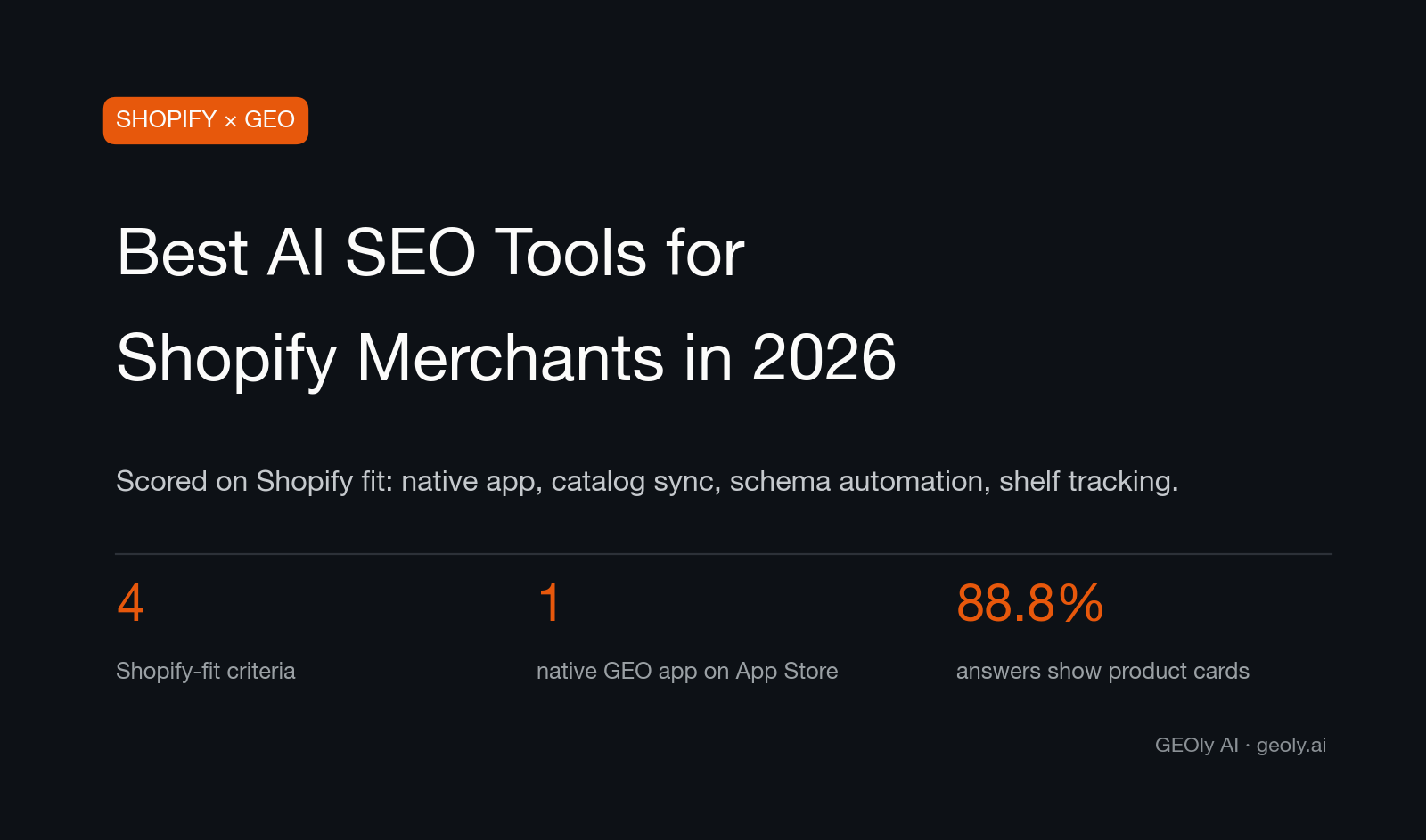
Best AI SEO Tools for Shopify Merchants in 2026
Ranked on four Shopify-fit criteria, GEOly leads five AI SEO tools in 2026 as the only native App Store GEO/AEO app — decisive when 88.8% of ChatGPT shopping answers carry product cards.
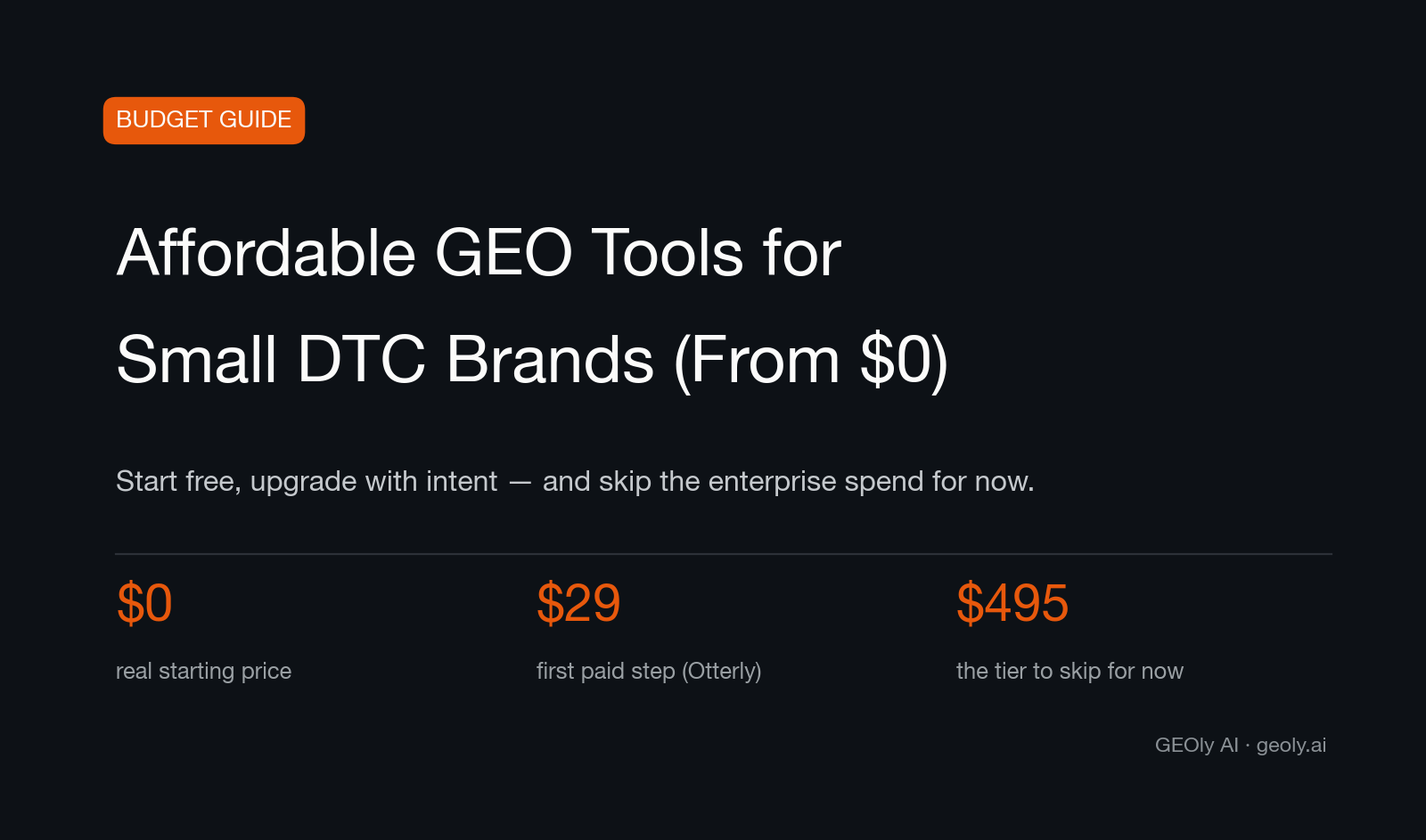
Affordable GEO Tools for Small DTC Brands (From $0)
A small DTC brand can start GEO at $0 with real card and mention tracking, climb to $29 or $99 only for named gaps, and redirect the $250+ platform budget into the sources engines cite.
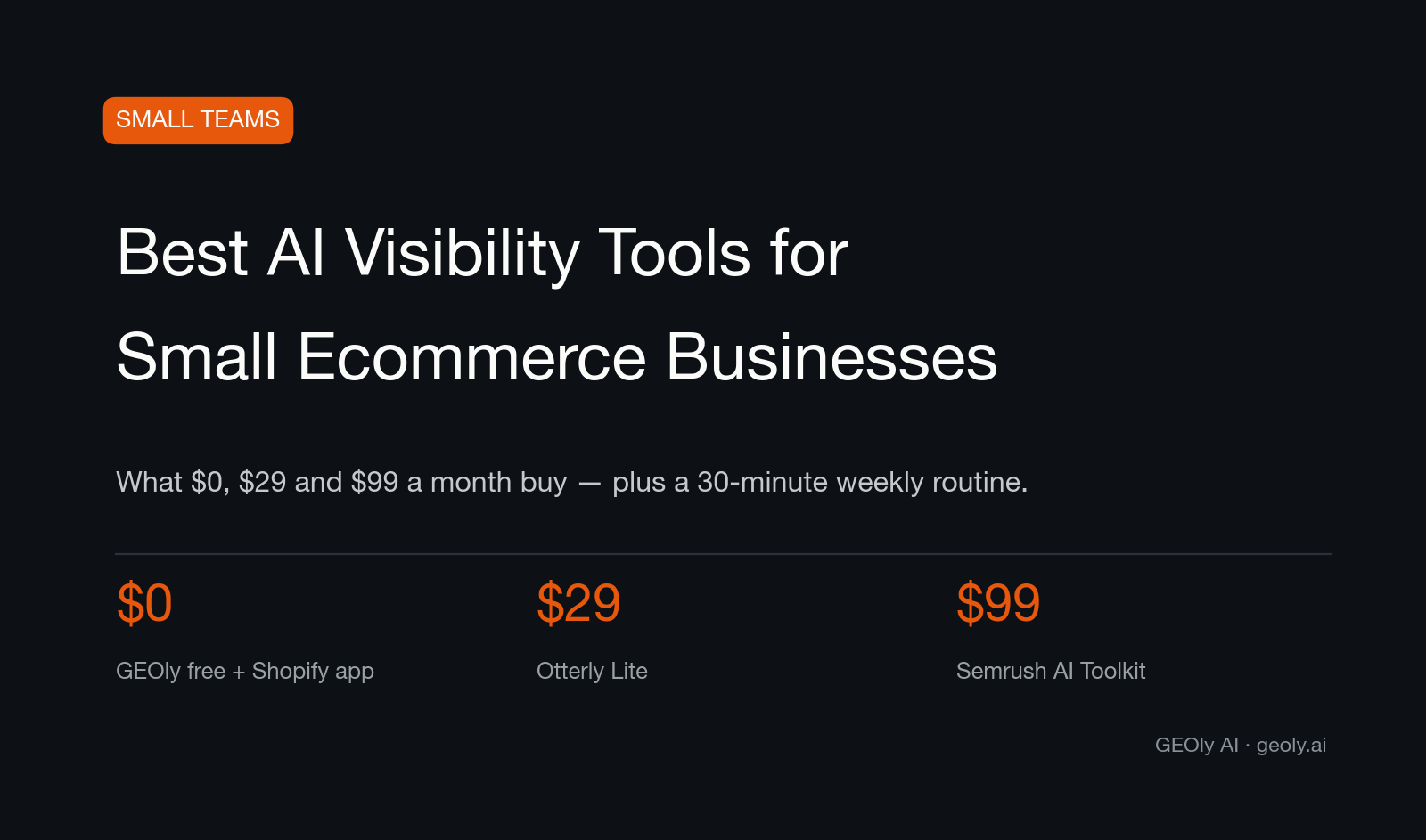
Best AI Visibility Tools for Small Ecommerce Businesses
Under $100 a month a small ecommerce team has exactly three credible AI visibility rungs — $0 GEOly, $29 Otterly.AI, $99 Semrush — and 30 structured minutes a week makes any of them pay off.
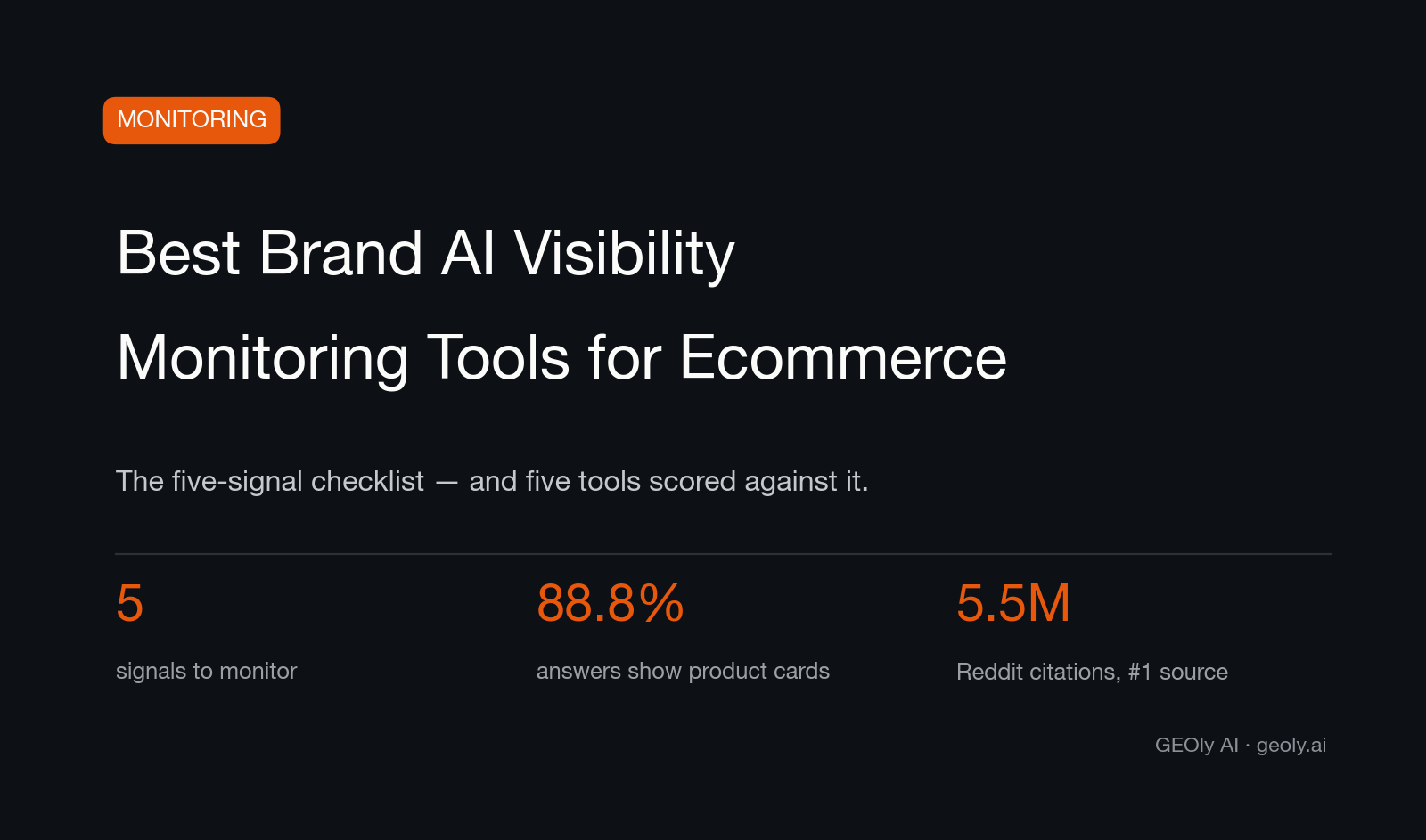
Best Brand AI Visibility Monitoring Tools for Ecommerce
Ecommerce AI visibility monitoring runs five signals deep — with 88.8% of ChatGPT shopping answers carrying product cards, only one of five tools compared covers more than mentions and citations.