See how your brand appears in AI, who gets cited, and where high-value opportunities are still missing
Bring AI visibility, topic coverage, platform variance, citations, sentiment, and traffic feedback into one analysis layer so teams know what to improve next.

Turn the dashboard into a narrative instead of a pile of admin views
Teams do not need more tabs. They need a clear path from overview to cause, outcome, and next action.
Start with one operating view instead of six disconnected reports
The first question is not which log to inspect. It is whether your AI visibility is improving, where the movement comes from, and what deserves deeper analysis.
From monitoring to action, not just from chart to chart
Agent Analytics is not another reporting layer. It gives teams one decision view for what is growing, what is slipping, why it changed, and what to fix next.

Agent Analytics should serve brand and growth teams, not only runtime operators
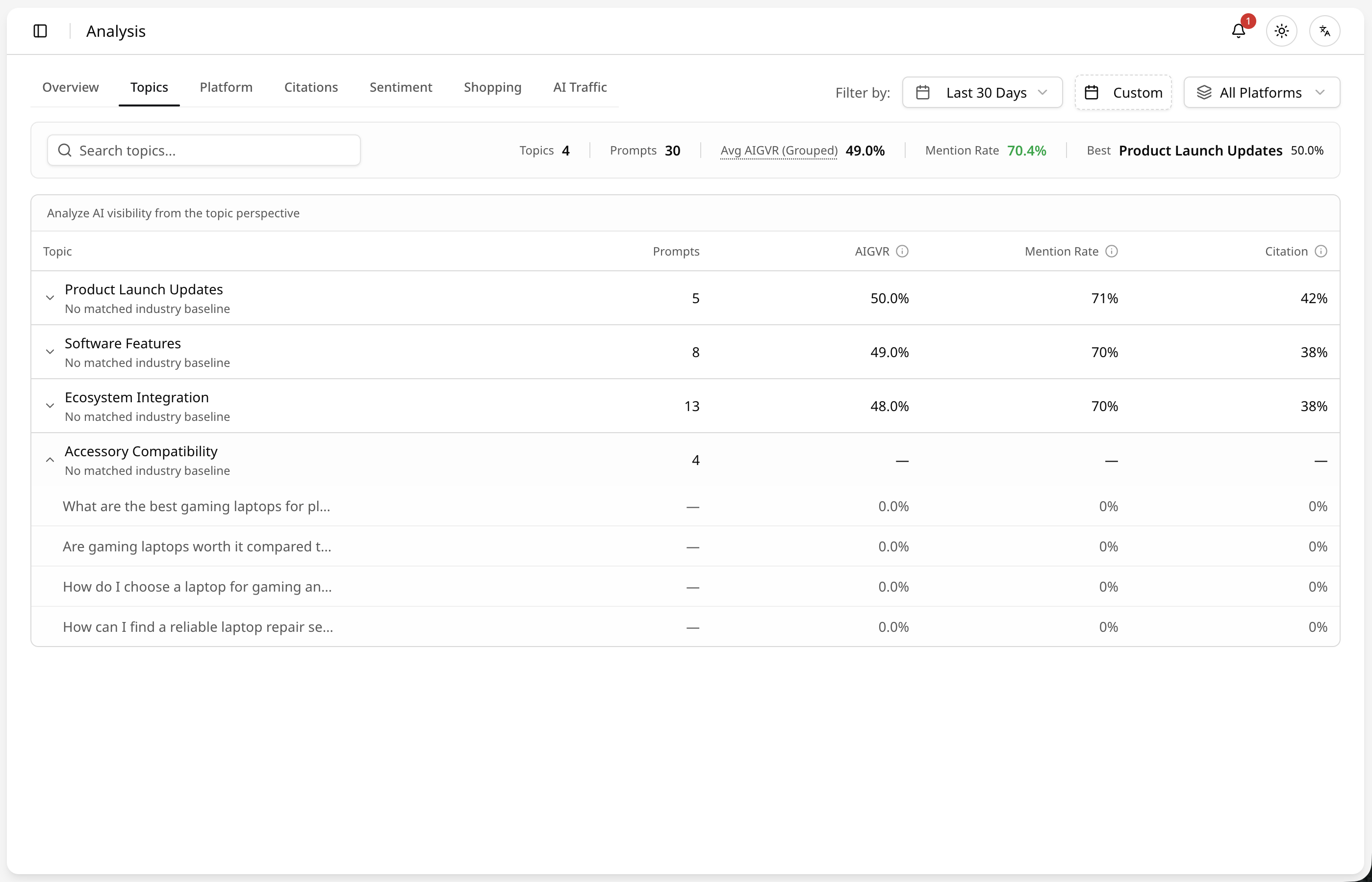
See where you are visible and where you are still losing ground
Use overview, topic, and platform surfaces to see where your brand is growing in AI and where high-value intent still belongs to competitors.
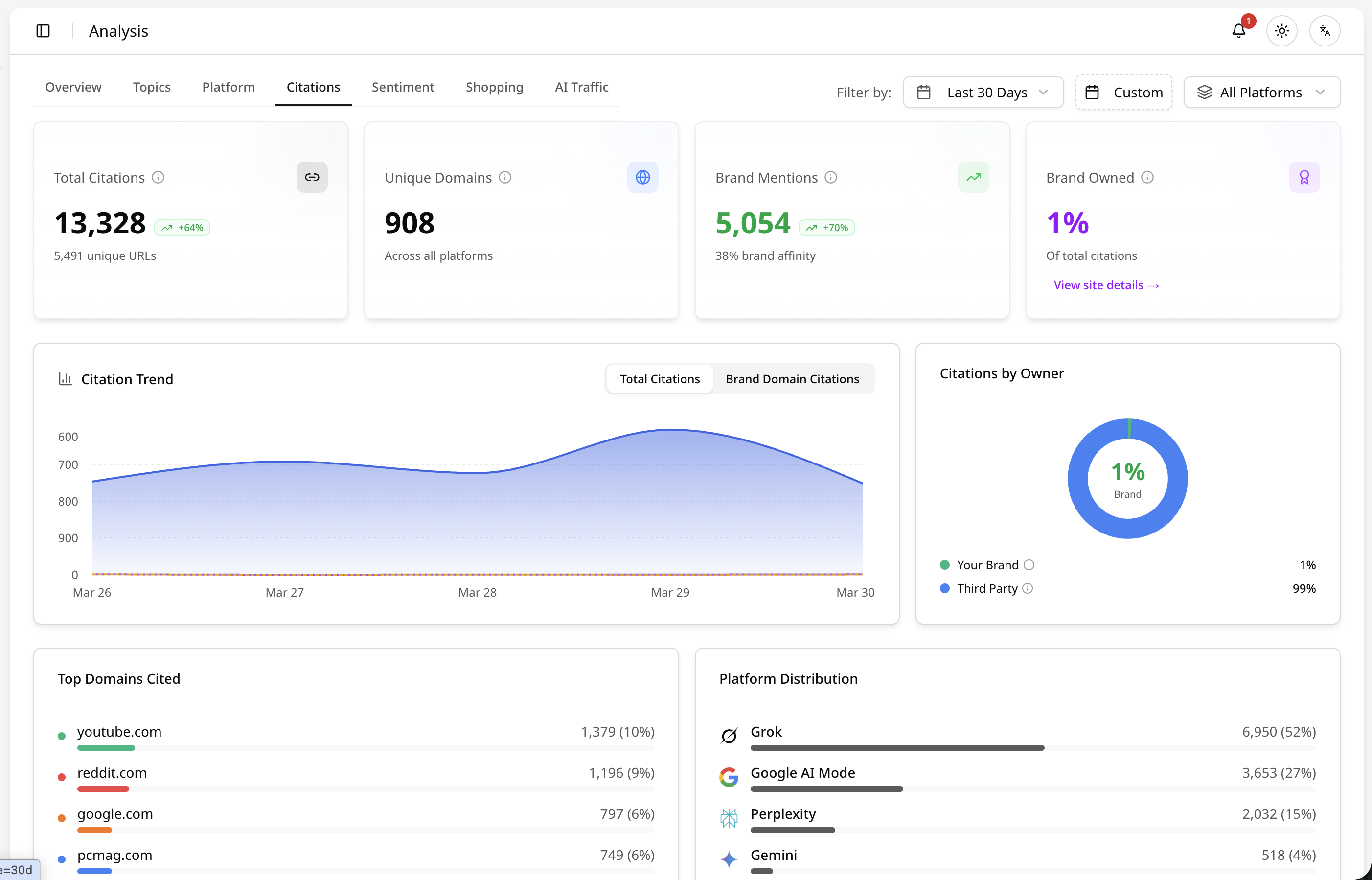
Understand why AI mentions you and why it does not
Break citations, sentiment, and shopping signals apart to tell whether the weakness comes from owned content, third-party proof, brand perception, or product data.
Turn analysis into content, commerce, and channel action
Once the biggest gaps are clear, teams can prioritize landing pages, SKU data, evidence-building, and platform-specific optimization with less guesswork.
When visibility, citations, sentiment, shopping, and traffic live in one frame, teams know what to fix next
Start with the shift, drill into the cause and impact, then move back into prompts, content, SKU, and channel actions. That is when analytics starts serving growth.