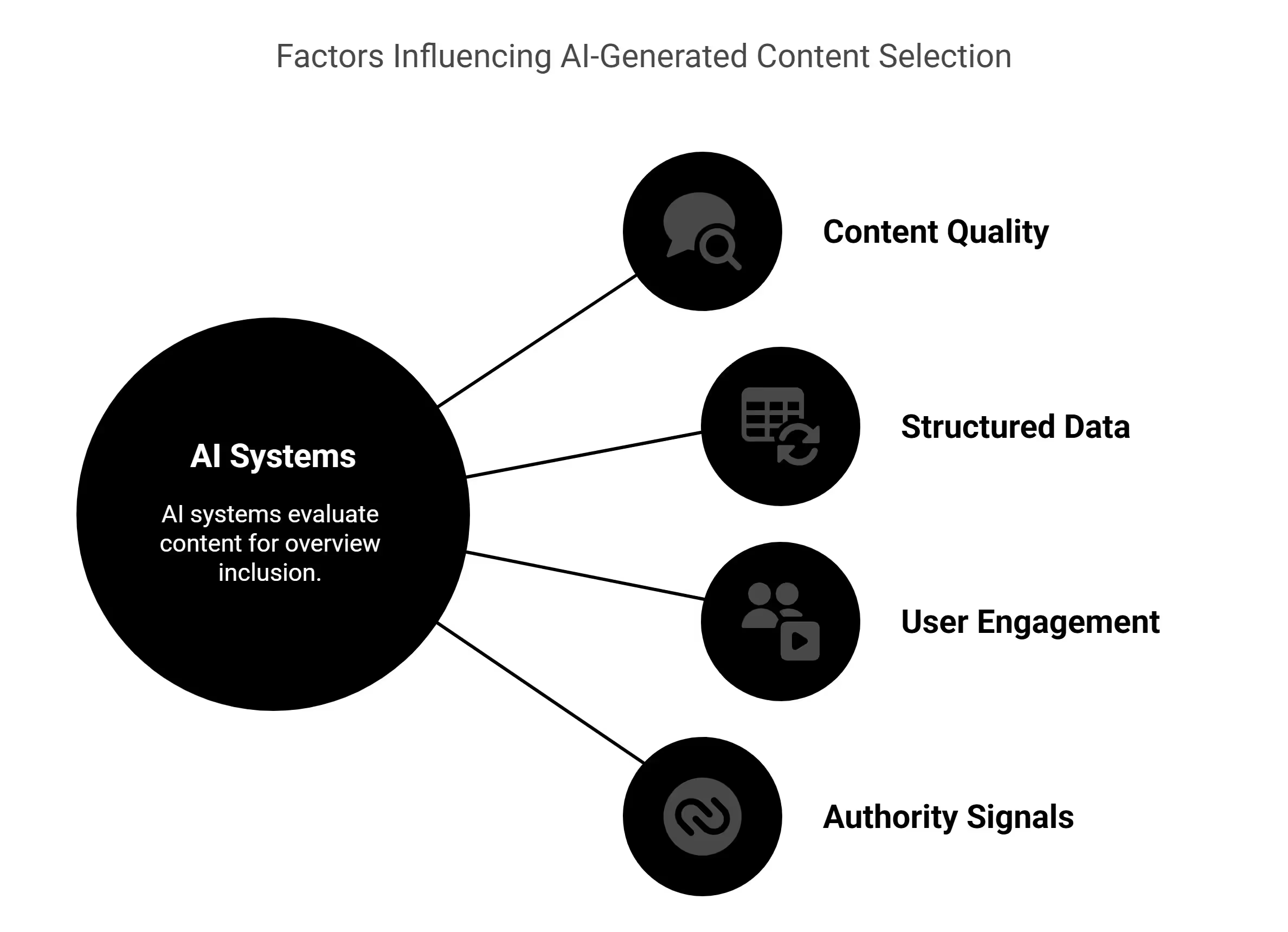
Hey there! Let’s be real for a second—everyone and their mother is using AI to write articles right now.
With just a few clicks, you can churn out a 2,000-word blog post in minutes. That's amazing for productivity, but it brings up a million-dollar question: If everyone is mass-publishing AI content, how does your brand actually stand out?
The answer is GEO (Generative Engine Optimization).
If you want your brand to be seen in 2026, relying on traditional SEO just isn't going to cut it anymore. You need to understand GEO and why it’s the most critical piece of your AI content strategy.
What is GEO? (Explained Simply)
Think about traditional SEO: you optimize for keywords so your webpage ranks higher in Google’s list of "blue links."
GEO (Generative Engine Optimization), on the other hand, is all about getting your content directly cited as the answer by AI engines like ChatGPT, Gemini, Perplexity, and Google’s AI Overviews.
When people ask an AI a question, the AI scours the web for the best, most reliable info to build its answer. The goal of GEO is to package your content in a way that AI loves and understands, so the AI turns to the user and says, "According to data from [Your Brand]..."
Why is GEO Crucial for AI-Generated Content?
You might be thinking: "Hey, my content was written by AI. Shouldn't AI search engines naturally love it?"
Actually, it's the exact opposite. Here are the three main reasons why you desperately need GEO for your AI drafts:
1. Breaking the "Curse of Average Content"
AI-generated content is usually pretty basic and uniform. It might be factually correct, but it lacks unique insights. When an AI search engine looks for the best answer, it doesn't want to cite another generic AI article. It looks for authority, unique data, and clear perspectives. GEO helps you inject those "trust signals" that AI engines are actively hunting for into your AI drafts.
2. Claiming the New "Page One"
Users today don't want to scroll through a dozen webpages to find an answer. They want a direct conversation and immediate solutions. If your content isn't optimized for GEO, you simply won't show up in the AI's chat window or search overview. In this new era, if you're not in the AI's answer, you don't exist.
3. AI Engines Crave Facts and Citations
Tools like Perplexity and Gemini aren't just "predicting the next word"—they are looking for real, linkable sources. One of the core strategies of GEO is optimizing your citation structure, stats, and factual statements. This means you need to transform your AI-generated content into a clear, reliable "knowledge base."
