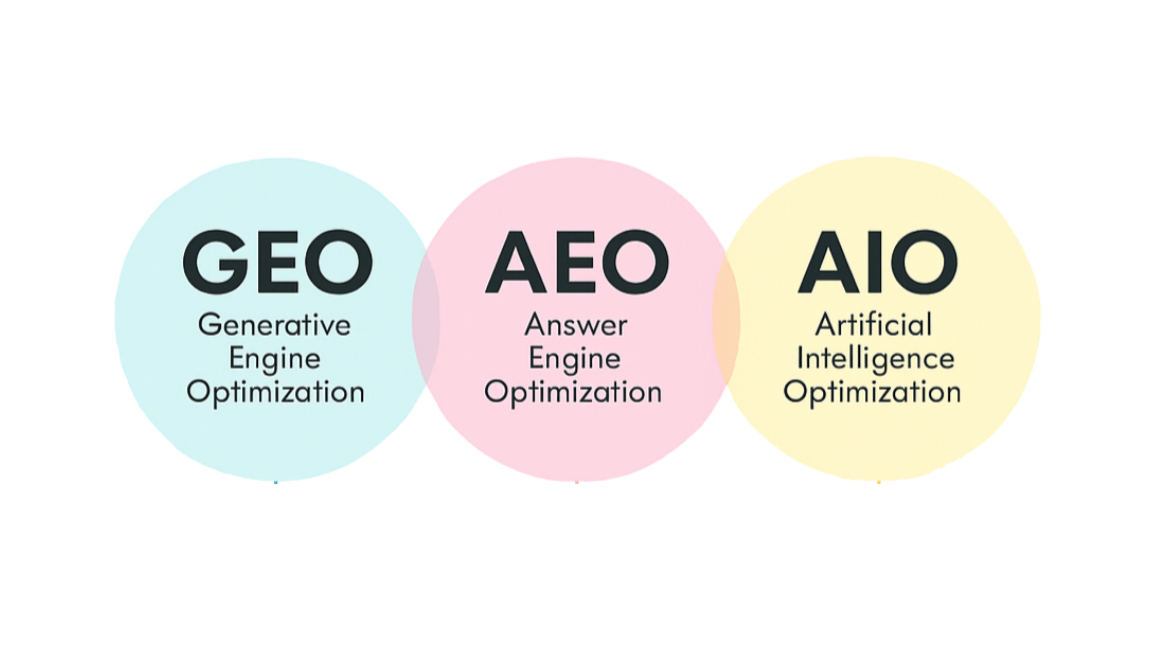
TL;DR:
- Core Conclusion: SEO isn't dead. SEO is the underlying protocol (making data readable by machines), AEO is short-term traffic (easily swallowed by AI), and GEO (Generative Engine Optimization) is the high-value brand moat of the future.
- Future Trends: Total traffic volume will decrease, but conversion rates will skyrocket. KPIs will shift from "Clicks" to "Citation Rate" and "Brand Mentions."
- Action Guide: Stop producing generic content. Focus on "Information Gain" (providing unique data AI doesn't already have) and building an authoritative Brand Entity.
1. Concept Analysis: Breaking Down the Big Three
To understand the future, we first need to clarify how AI defines these three concepts.
SEO (Search Engine Optimization): The Infrastructure
- Old Definition: Ranking #1 for clicks.
- New Role: Data Formatting Protocol. In the AI era, SEO's job is to ensure your content is structured clearly and tagged accurately so that AI (like ChatGPT, Gemini) can easily crawl and parse it. If AI can't read your code structure, you don't exist.
AEO (Answer Engine Optimization): The Traffic Trap
- Definition: Optimizing for voice assistants and featured snippets (e.g., answering "What is the weather?").
- The Risk: It's a zero-sum game. For simple factual questions, AI will internalize the answer directly, sending zero traffic to your site. Over-relying on AEO strategies is essentially helping train AI to replace you.
GEO (Generative Engine Optimization): The New Growth Engine
- Definition: Optimizing for Generative AI search results (AI Overviews, Perplexity).
- Goal: Citation and Recommendation.
- Core Mechanism: When generating complex answers, AI looks for trustworthy "evidence." GEO's goal is to become that indispensable source of evidence.
2. Deep Comparison: SEO vs. AEO vs. GEO
Large Language Models prefer structured data. The table below visualizes the essential differences:
