Platforms › WooCommerce
WooCommerce GEO — the GEO/AEO tool for WooCommerce brands
GEO for WooCommerce brands: unify a plugin-built store into one clear AI visibility view.
WooCommerce is open-source commerce on WordPress with high commerce strength and high AI-readiness. Its flexibility comes from plugins, which means product data and schema can be fragmented across many extensions.
WooCommerce AI readiness
LLM friendliness
High
An official WooCommerce developer article says WooCommerce 10.3 introduced MCP and the Abilities API, letting AI assistants interact directly with WooCommerce stores.
Agent-ready
High
The Store API provides storefront-facing cart, checkout, and product endpoints; MCP/Abilities API enhance agent operation capabilities.
Agentic commerce
High
The official article is titled AI & Agentic Commerce in WooCommerce; it has an MCP + cart/checkout/product API foundation.
Sources: woocommerce.com · developer.woocommerce.com · developer.woocommerce.com
Type
Open Source / Selbst gehosteter Handel
Primary market
Global / WordPress-Ökosystem
E-commerce
Hoch
Ease of use
中-高
Deployment
Open Source / Selbst gehostet oder gehostetes WordPress
- Open source
- Self-hostable
- Free choice of payments and features
- Built on WordPress themes
- Plugin and developer ecosystem.
Why WooCommerce brands need GEO
WooCommerce plugin fragmentation is exactly what confuses AI engines: inconsistent product schema and scattered data make it hard for models to read and trust your catalog. GEOly monitors how AI engines actually interpret and cite your WooCommerce products across that fragmentation. You get one visibility view instead of guessing which plugin is helping or hurting.
- AI visibility tracking that unifies fragmented WooCommerce product data.
- Citation tracking to see which products AI engines trust despite plugin sprawl.
- GEO Audit that flags schema and data gaps hurting AI readability.
How GEOly helps open source / selbst gehosteter handel platforms
Self-hosting gives you full control and, with it, full responsibility: structured data, canonical tags and performance all depend on your plugin stack, which drifts as extensions are added and updated. AI engines reward clean, consistent product schema, and this is exactly where DIY setups quietly break.
- GEO Audit crawls your catalog the way an AI engine would and catches missing or conflicting product schema across plugins before it costs you citations.
- Citation tracking shows which self-hosted pages engines trust enough to quote, helping you invest fixes where they pay off.
- Share-of-Card monitoring tells you if your products make it into AI shopping cards despite the technical variance a self-hosted stack introduces.
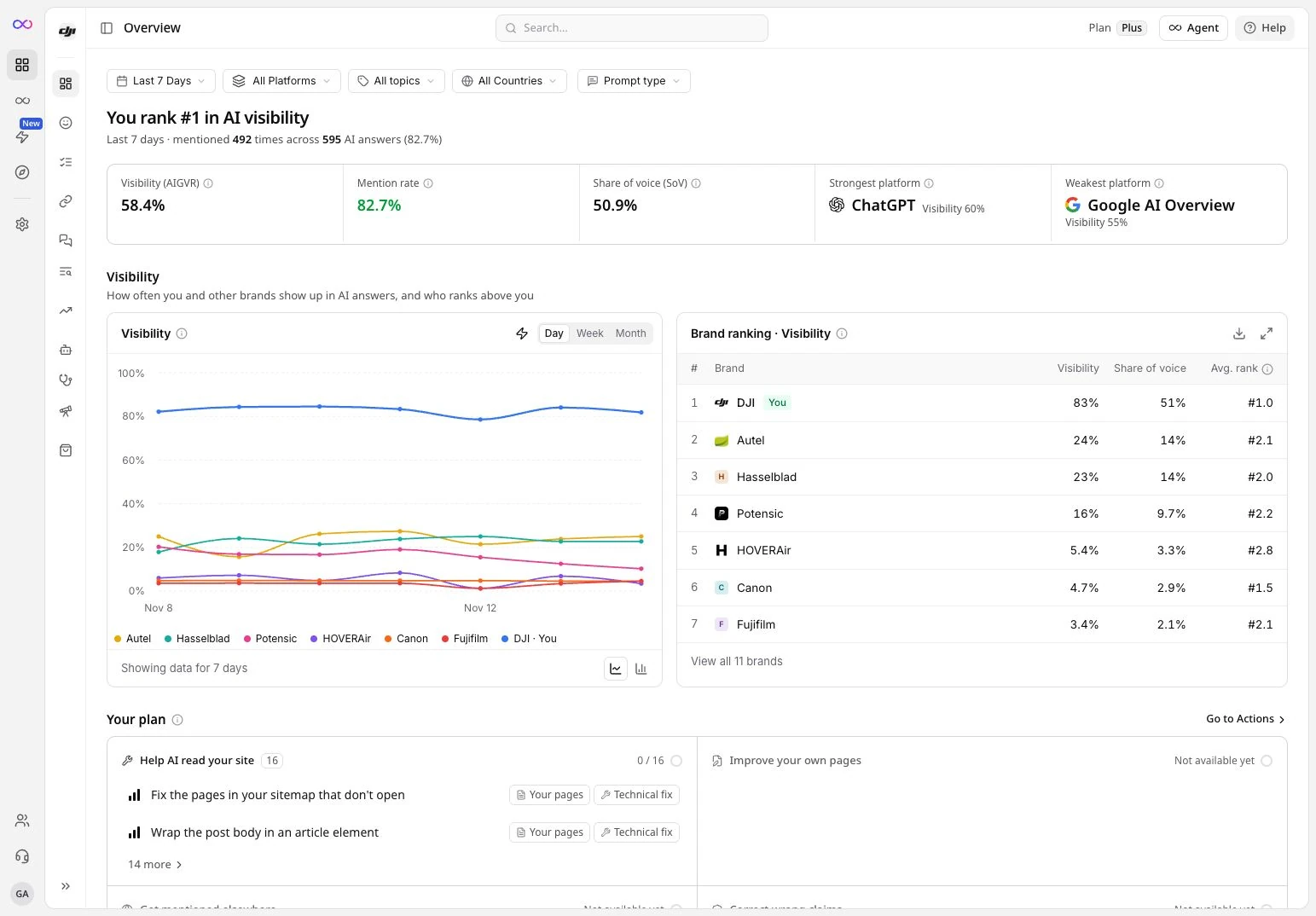
Engine-übergreifende KI-Sichtbarkeit
Verfolgen Sie AIGVR und Share of Model über ChatGPT, Google AI Mode, Gemini und Google AI Overviews — sehen Sie genau, wo Sie in KI-Antworten erscheinen und wo ein Wettbewerber Ihren Platz einnimmt.
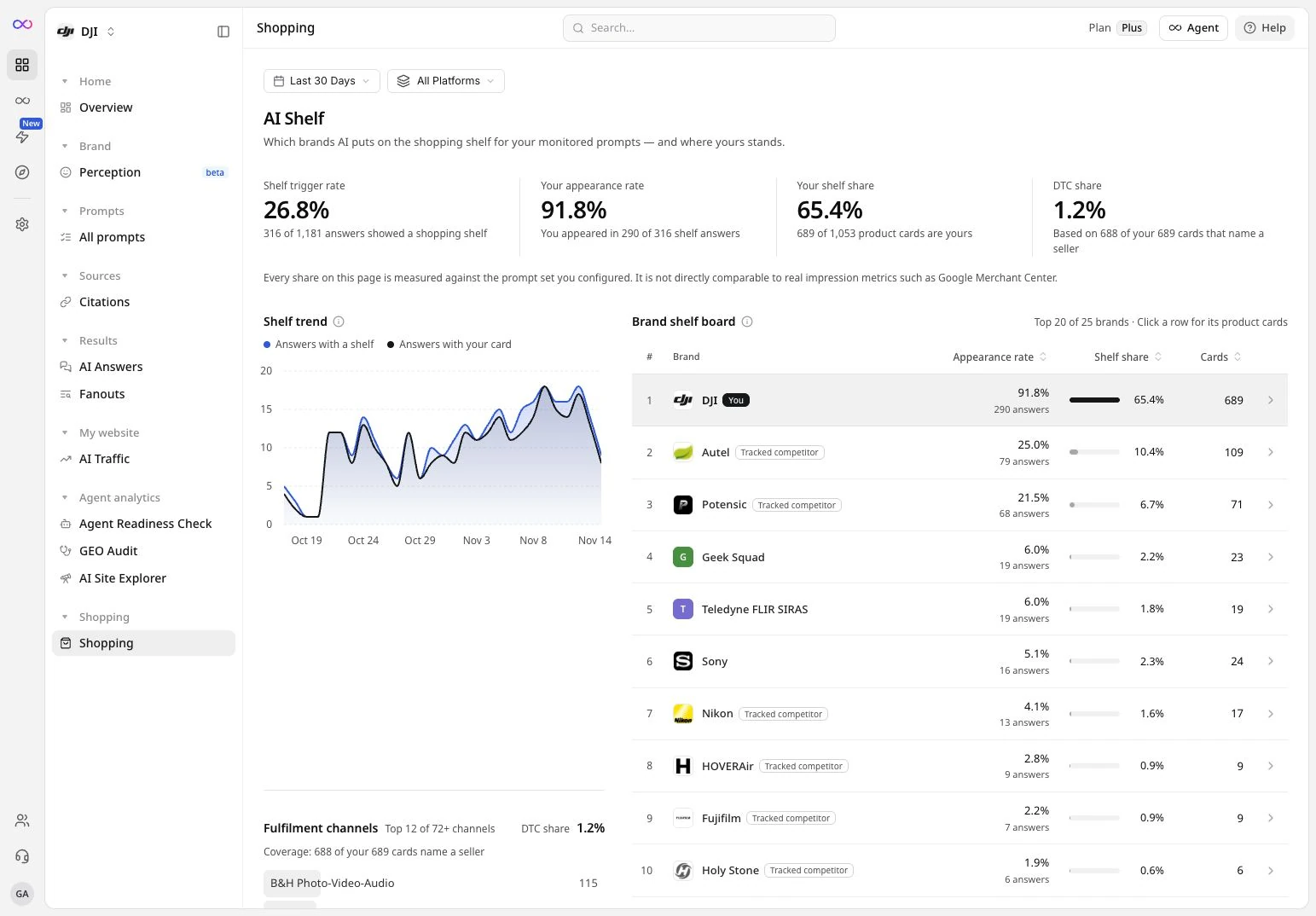
KI-Shopping und Kartenanteil
Für Geschäfte führt GEOly echte Käufer-Prompts aus und bewertet Ihren Share-of-Card — den Anteil der KI-Einkaufswagen, den Ihre Produkte im Vergleich zu Wettbewerbern gewinnen. Dies ist die Kennzahl, die den Bestellungen entspricht.
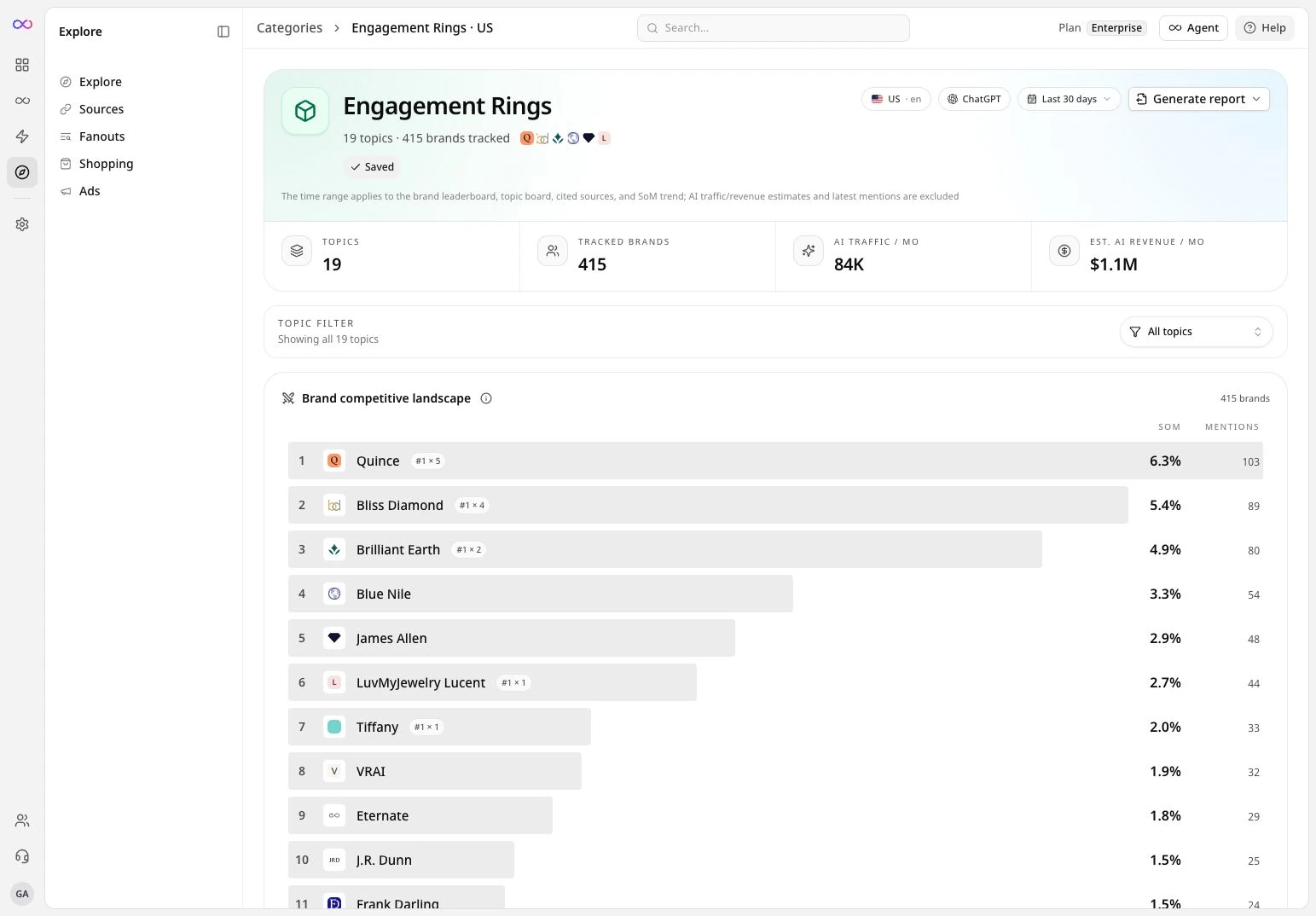
Wettbewerbsanteil nach Kategorie
Sehen Sie das Share-of-Model-Ranking für Ihre Kategorie und welche Marken welche Käuferanfragen besitzen, damit Sie genau wissen, wo Sie eingreifen können.
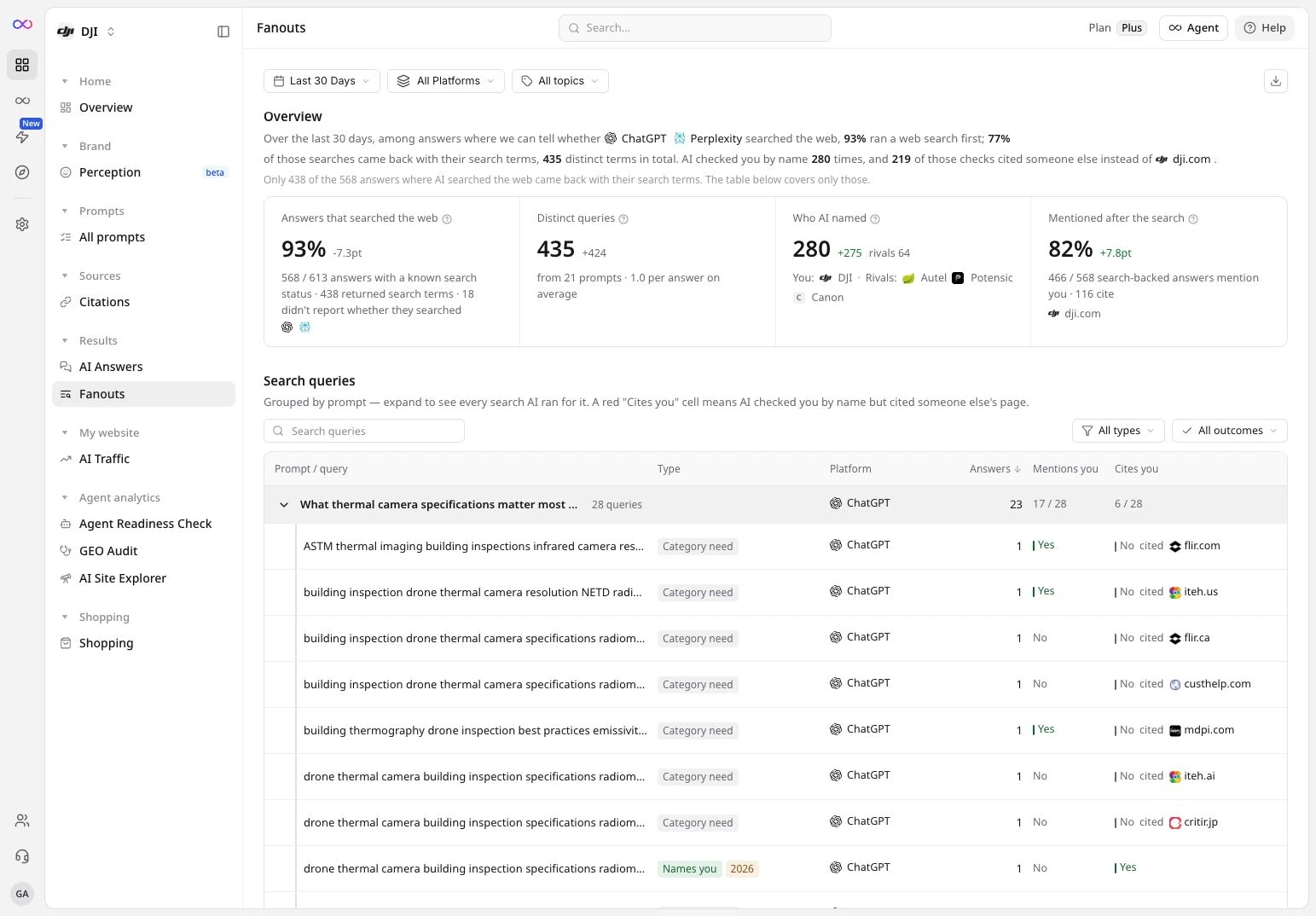
Vom Signal zur Lösung
Ein GEO-Audit deckt die Lücken in Schema, Feed und llms.txt auf, die Sie zurückhalten, und Query Fan-out zeigt die echten Fragen, die Käufer stellen — so wird jede Korrektur nach ihrem Einfluss priorisiert.
Sehen Sie, wo Ihr Shop in der KI-Suche steht.
Führen Sie ein kostenloses GEO-Audit durch, um Ihre AI-Bereitschaftsbewertung und eine priorisierte Fehlerliste zu erhalten, und verfolgen Sie ab dem ersten Tag den Share-of-Card.