Platforms › Shopify

Shopify GEO — the GEO/AEO tool for Shopify brands
GEO for Shopify brands: track how AI engines and agentic shopping surfaces cite, recommend, and buy your products.
Shopify is the leading all-in-one commerce platform, and its stores are already exposed to AI shopping agents and generative answer engines. That means your product visibility is increasingly decided inside ChatGPT, Perplexity, and agentic checkout flows rather than on a search results page.
Shopify AI readiness
LLM friendliness
High
Shopify Catalog structures products and syncs them to AI channels; the company says it can bring products into ChatGPT, Copilot, Google AI Mode, Gemini, and more.
Agent-ready
High
Agentic Storefronts are managed in Shopify Admin and target AI channels; the Agentic Plan lets non-Shopify merchants sync products into Shopify Catalog.
Agentic commerce
High
Shopify has officially launched Agentic Storefronts and the Agentic Plan, supporting selling through AI chats and completing purchases with Shopify Checkout.
Sources: shopify.com · shopify.com · shopify.com
Type
All-in-One-Commerce-SaaS
Primary market
Global / Nordamerika
E-commerce
Hoch
Ease of use
Niedrig-Mittel
Deployment
Gehostetes SaaS
- Online store
- Checkout
- Payments
- Inventory
- Orders
- POS
- Multichannel selling and a vast app ecosystem
- Suited to everything from small shops to scaling brands.
Why Shopify brands need GEO
Shopify's move toward agentic storefronts and AI-driven discovery means a brand can win or lose a sale before a shopper ever visits the site. GEOly monitors the shopping prompts in your category and shows exactly which products AI engines surface and cite. You see where you appear in AI shopping cards and where a competitor takes the recommendation instead.
- Product-level AI visibility (AIGVR) tracking across the shopping prompts that matter to your store.
- Share-of-Card monitoring to see how often your products enter AI shopping cards versus rivals.
- GEO Audit and Query Fan-out to find the AI shopping queries where your Shopify store should rank and does not.
How GEOly helps all-in-one-commerce-saas platforms
Millions of stores share the same themes, app-injected markup and boilerplate product schema, so an AI engine parsing a Shopify-class storefront sees a structure it has already read a thousand times and has little reason to single your brand out. Your real differentiators — reviews, bundles, unique specs — often live inside apps that render late or inconsistently, so they never make it into the model's answer.
- Run a GEO Audit that shows exactly which product and collection pages an AI engine can actually read, versus what stays trapped in app widgets or client-rendered blocks.
- Track Share-of-Card across ChatGPT, Gemini and Google AI shopping results to see when your SKUs enter AI-built comparison cards and which same-platform rivals crowd you out.
- Use Citation tracking on category queries like "best X under $50" to learn which product pages get quoted, then prioritize the exact copy AI pulls.
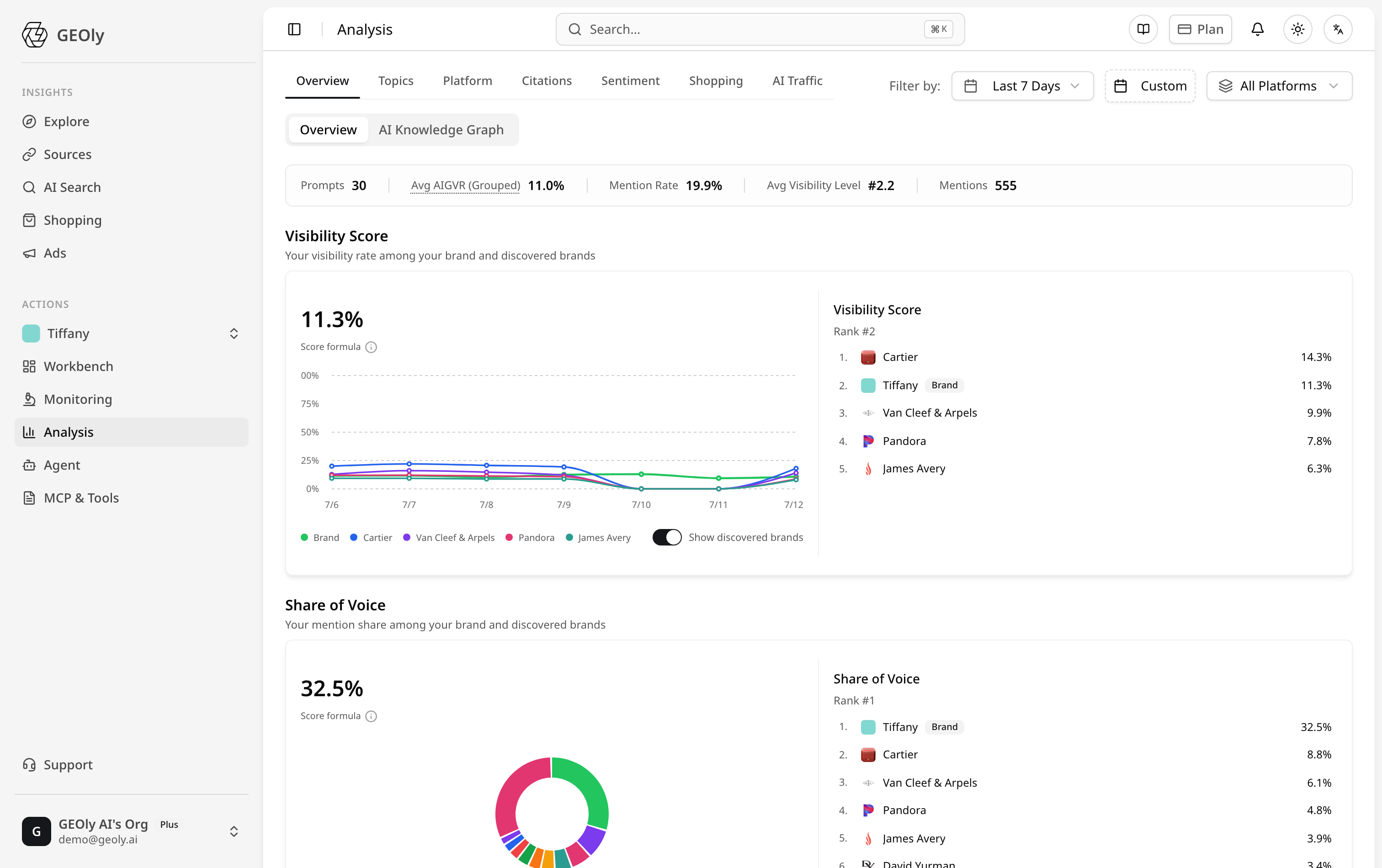
Engine-übergreifende KI-Sichtbarkeit
Verfolgen Sie AIGVR und Share of Model über ChatGPT, Google AI Mode, Gemini und Google AI Overviews — sehen Sie genau, wo Sie in KI-Antworten erscheinen und wo ein Wettbewerber Ihren Platz einnimmt.
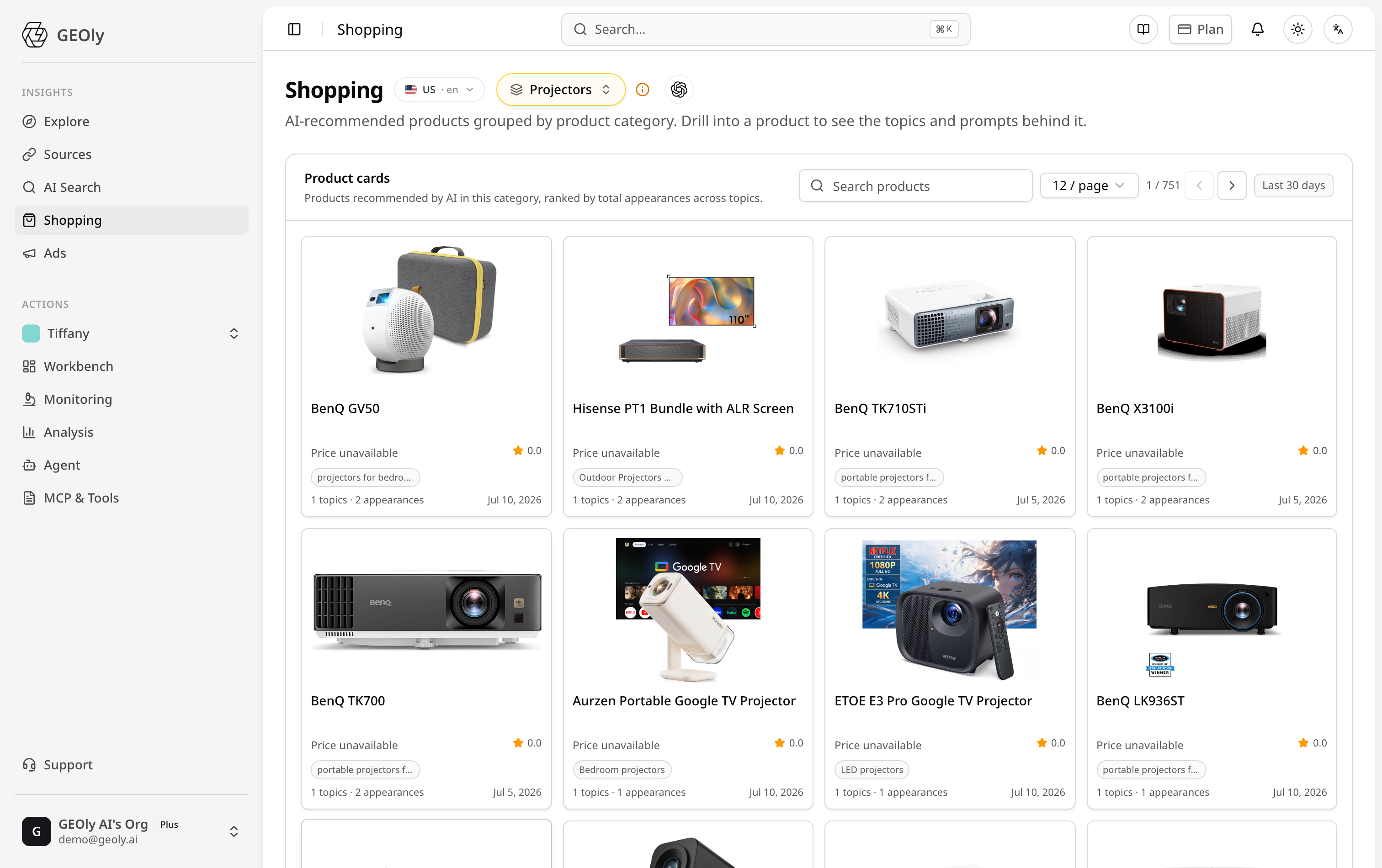
KI-Shopping und Kartenanteil
Für Geschäfte führt GEOly echte Käufer-Prompts aus und bewertet Ihren Share-of-Card — den Anteil der KI-Einkaufswagen, den Ihre Produkte im Vergleich zu Wettbewerbern gewinnen. Dies ist die Kennzahl, die den Bestellungen entspricht.
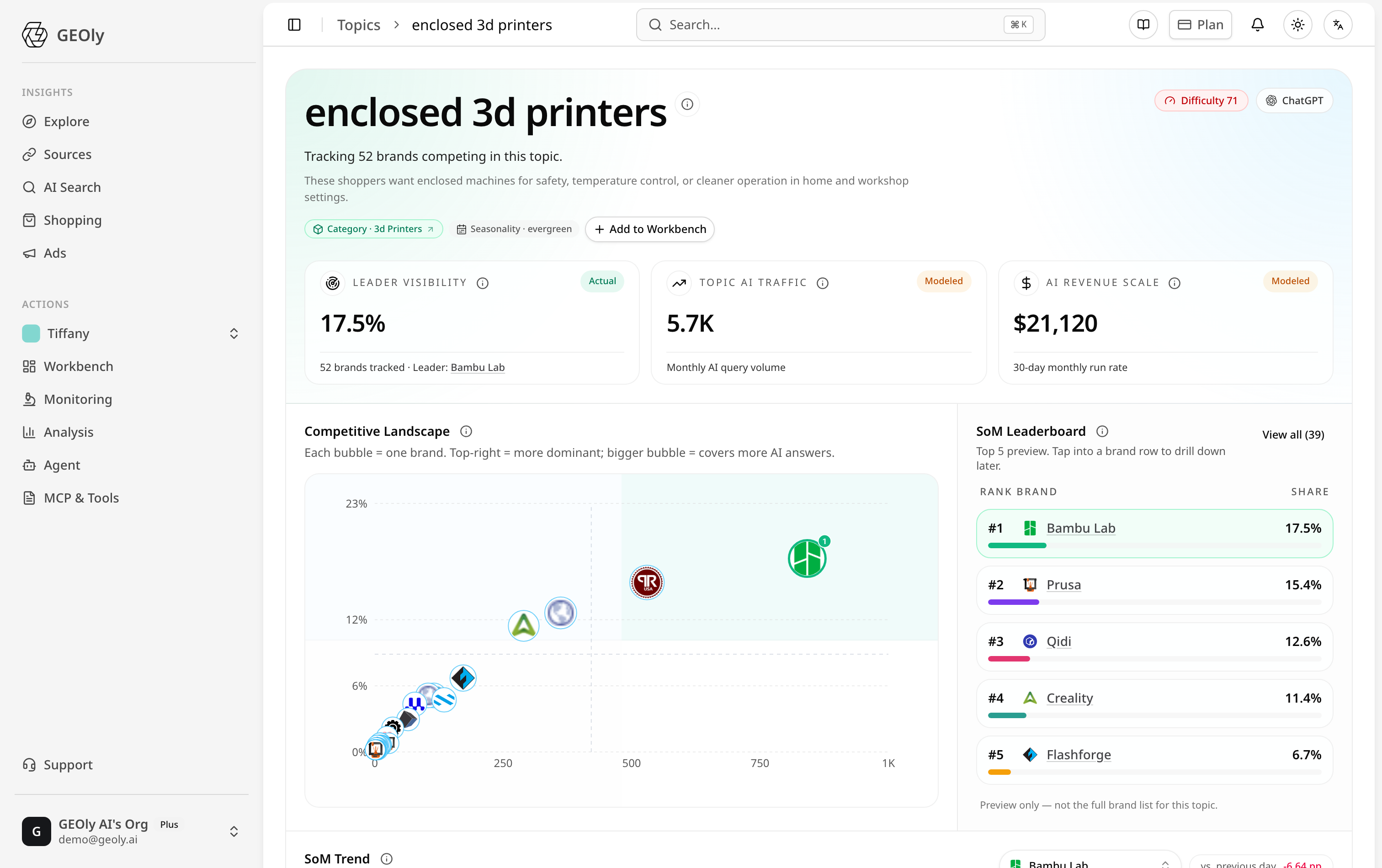
Wettbewerbsanteil nach Kategorie
Sehen Sie das Share-of-Model-Ranking für Ihre Kategorie und welche Marken welche Käuferanfragen besitzen, damit Sie genau wissen, wo Sie eingreifen können.
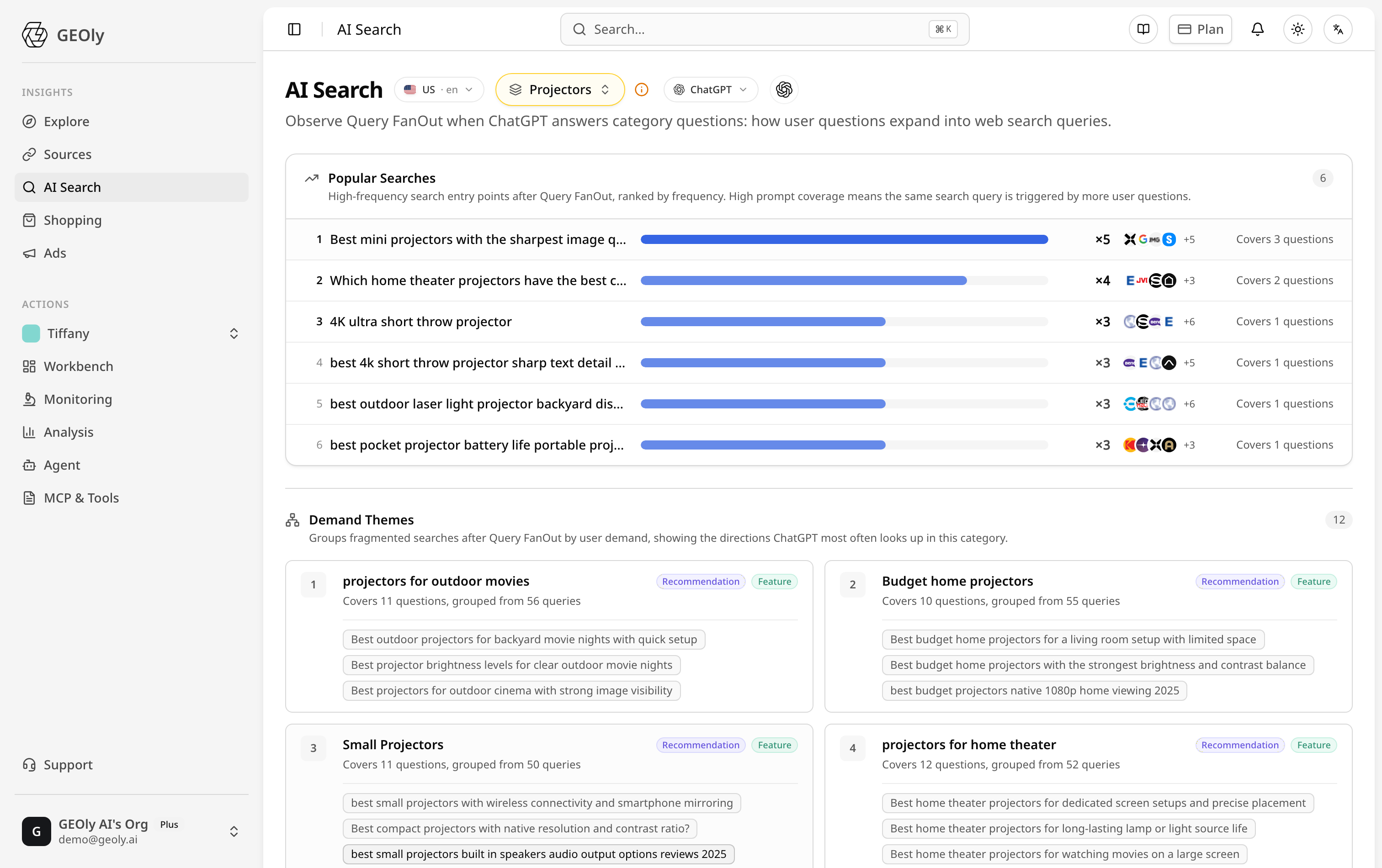
Vom Signal zur Lösung
Ein GEO-Audit deckt die Lücken in Schema, Feed und llms.txt auf, die Sie zurückhalten, und Query Fan-out zeigt die echten Fragen, die Käufer stellen — so wird jede Korrektur nach ihrem Einfluss priorisiert.
Shopify GEO — further reading
Ein 90-Tage-Plan, damit KI-Agenten Ihren Store aufrufen können
In Woche 1–2 die Infrastruktur mit sechs Prüfungen beweisen, bis Woche 6 die Daten lesbar machen, bis Woche 10 die Wissensdatenbank veröffentlichen und Settlement verifizieren, dann Attribution serverseitig machen, bevor Sie bezahlte Platzierung bewerten. Sechs Rollen besitzen unterschiedliche Teile — liegt alles bei Marketing, wird es nicht fertig.
Read article →Shopifys neue Theme-Architektur optimiert für einen Maschinenleser
Seitenstruktur kehrt in Liquid-Templates zurück, mit Block-Tag, Typed Contracts, Teilaktualisierungen und eingebautem Tailwind, das nur das genutzte CSS ausliefert. Das Ziel wechselte vom visuellen Editor zu einem Leser, der eine Seite von oben nach unten konsumiert — und dieser Leser ist zunehmend kein Mensch.
Read article →Die sechs Schichten, die ein Shopify-Store KI-Agenten zeigt
Von oben nach unten berührt ein Agent sie; von unten nach oben sollten Sie sie bauen. Daten ist die einzige Schicht, die fast vollständig Ihnen gehört, während Protokoll und Settlement plattformgehostet sind — weshalb Teams annehmen, sie seien in Ordnung, wenn sie es nicht sind.
Read article →Anonymes Scraping von KI-Commerce-Oberflächen ist vorbei
UCP definiert drei Trust Tiers, und nur Token kann einen Kauf abschließen. tools/list ist anonym aufrufbar, aber search_catalog mit einer nicht erreichbaren Profil-URL liefert 422 profile_unreachable — die Werkzeugliste ist öffentlich, das Recht sie aufzurufen nicht.
Read article →WebMCP: Der zweite Kanal, den Agenten nutzen — im Browser
Shopify registriert rund 19 WebMCP-Werkzeuge auf jeder Liquid-Storefront und auf Hydrogen 2026-10, sodass Agenten im Browser Daten erhalten statt Screenshots zu parsen. Liefert das grep nach modelContext auf Ihrer Startseite null, sollen Agenten laut Anweisung nicht zurückfallen — sie gehen.
Read article →Die Shopify-Wissensdatenbank ist Ihr einziger Erste-Person-KI-Kanal
Die Wissensdatenbank ist am 26. Oktober 2026 in den Shopify-Admin gewandert: Sie geben Fakten zeilenweise frei, unveröffentlichte Entwürfe erreichen keinen Agenten, die Obergrenze liegt bei 1.000 Fakten. ask_business ist noch ein UCP-Draft, aber die Richtliniensuche von WebMCP liest dieselben Fakten bereits heute.
Read article →Sehen Sie, wo Ihr Shop in der KI-Suche steht.
Führen Sie ein kostenloses GEO-Audit durch, um Ihre AI-Bereitschaftsbewertung und eine priorisierte Fehlerliste zu erhalten, und verfolgen Sie ab dem ersten Tag den Share-of-Card.