Platforms › PrestaShop
PrestaShop GEO — the GEO/AEO tool for PrestaShop brands
GEO for PrestaShop brands: bring AI visibility to open-source stores across Europe.
PrestaShop is an open-source, self-hosted commerce platform popular in Europe with high commerce strength and med-high AI-readiness. Its modular, self-hosted nature gives control but leaves AI visibility down to each store's own configuration.
PrestaShop AI readiness
LLM friendliness
Med-High
Open-source/self-hosted systems can typically control schema, feeds, sitemap, structured data, llms.txt, and product detail output.
Agent-ready
Med-High
Can expose tool interfaces for products, inventory, cart, and orders via REST/GraphQL/plugins/custom development, but requires a technical team to implement permissions and security.
Agentic commerce
Med-High
Can build product feeds and checkout/order endpoints per OpenAI/Stripe ACP requirements; implementation costs are relatively high without official native support.
Sources: prestashop.com · prestashop.com · developers.openai.com
Type
Open Source / Selbst gehosteter Handel
Primary market
Global / Europa
E-commerce
Hoch
Ease of use
中-高
Deployment
Open Source / Selbst gehostet
- Open source
- Module extensions
- Themes
- Marketing tools
- SEO and backend management.
Why PrestaShop brands need GEO
Self-hosted PrestaShop stores vary widely in how their product data and modules are set up, so AI engines read them inconsistently. GEOly measures how AI engines actually cite your PrestaShop products and where a competitor is recommended instead. For European multilingual catalogs, that also means seeing performance across languages.
- AI visibility tracking for self-hosted PrestaShop catalogs, including multilingual stores.
- Citation tracking across generative engines by product.
- GEO Audit that flags module and data setups hurting AI readability.
How GEOly helps open source / selbst gehosteter handel platforms
Self-hosting gives you full control and, with it, full responsibility: structured data, canonical tags and performance all depend on your plugin stack, which drifts as extensions are added and updated. AI engines reward clean, consistent product schema, and this is exactly where DIY setups quietly break.
- GEO Audit crawls your catalog the way an AI engine would and catches missing or conflicting product schema across plugins before it costs you citations.
- Citation tracking shows which self-hosted pages engines trust enough to quote, helping you invest fixes where they pay off.
- Share-of-Card monitoring tells you if your products make it into AI shopping cards despite the technical variance a self-hosted stack introduces.
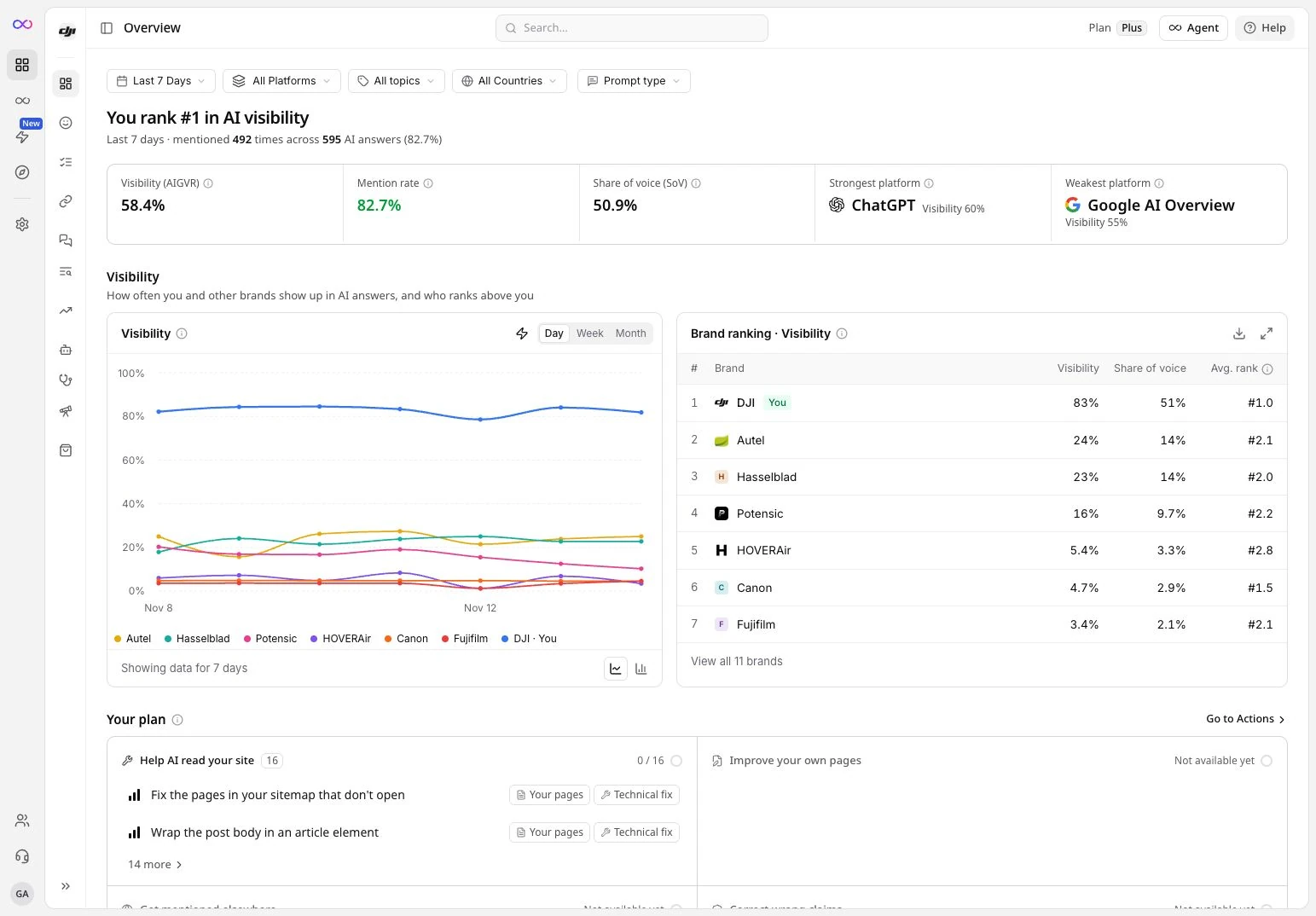
Engine-übergreifende KI-Sichtbarkeit
Verfolgen Sie AIGVR und Share of Model über ChatGPT, Google AI Mode, Gemini und Google AI Overviews — sehen Sie genau, wo Sie in KI-Antworten erscheinen und wo ein Wettbewerber Ihren Platz einnimmt.
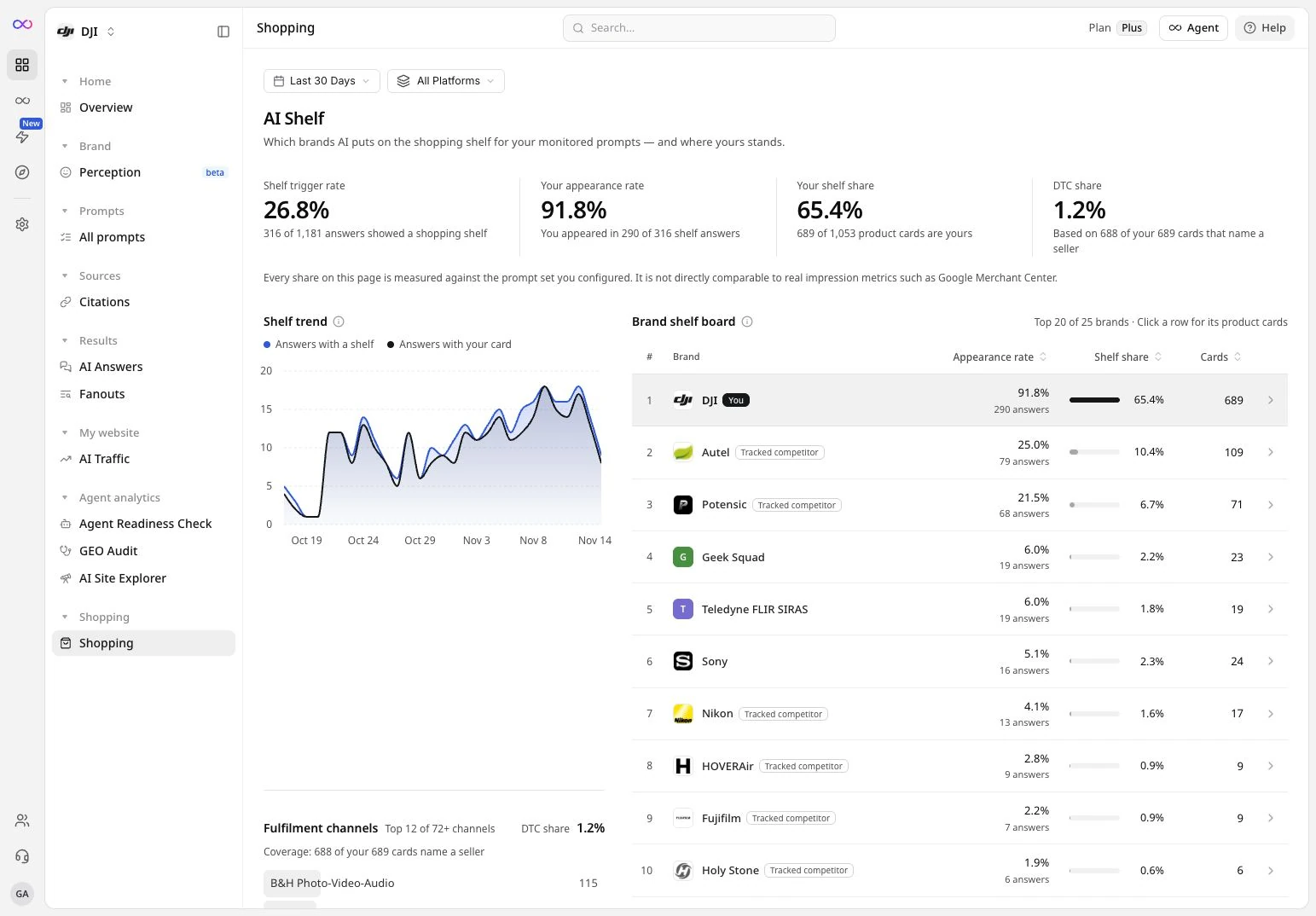
KI-Shopping und Kartenanteil
Für Geschäfte führt GEOly echte Käufer-Prompts aus und bewertet Ihren Share-of-Card — den Anteil der KI-Einkaufswagen, den Ihre Produkte im Vergleich zu Wettbewerbern gewinnen. Dies ist die Kennzahl, die den Bestellungen entspricht.
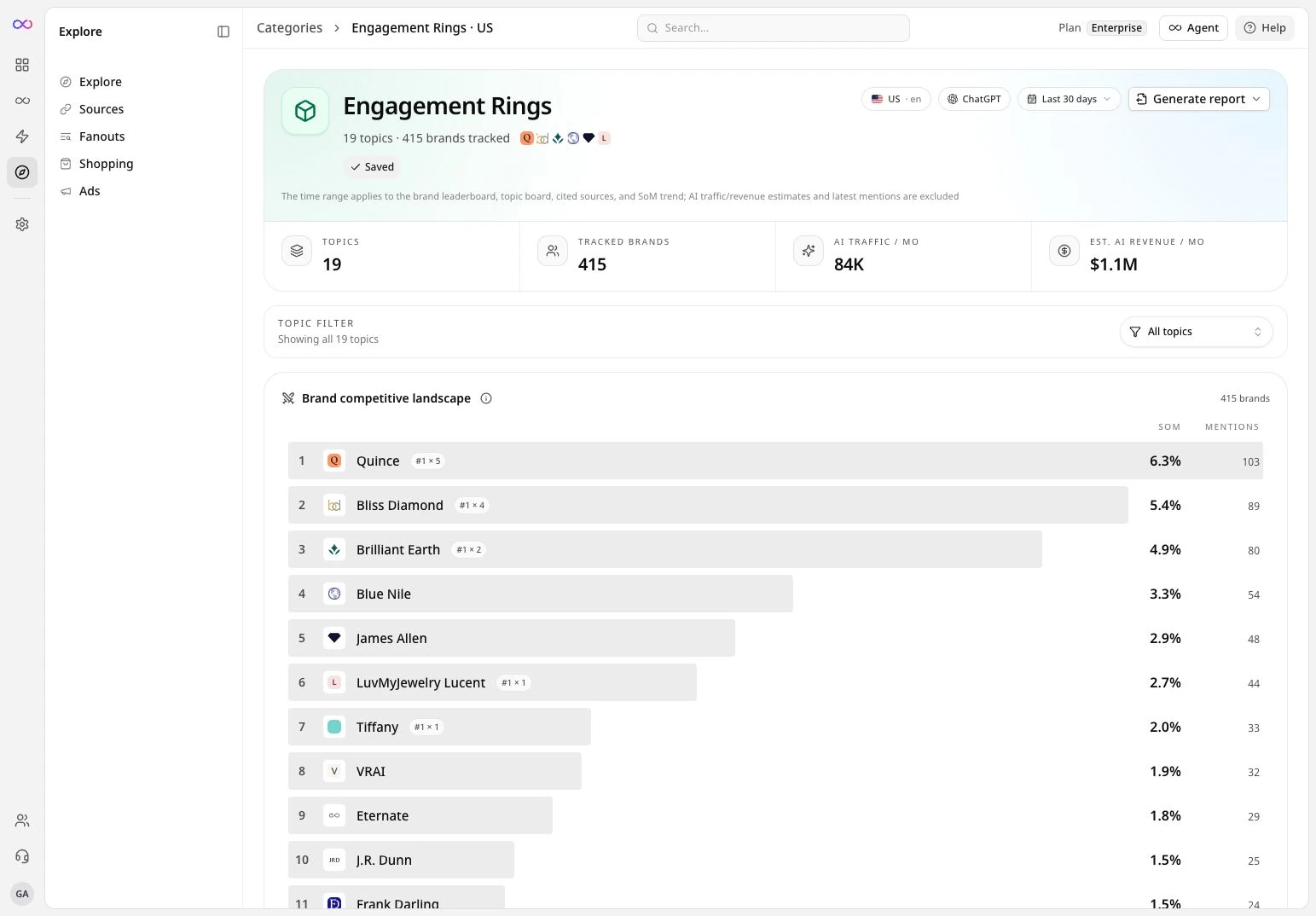
Wettbewerbsanteil nach Kategorie
Sehen Sie das Share-of-Model-Ranking für Ihre Kategorie und welche Marken welche Käuferanfragen besitzen, damit Sie genau wissen, wo Sie eingreifen können.
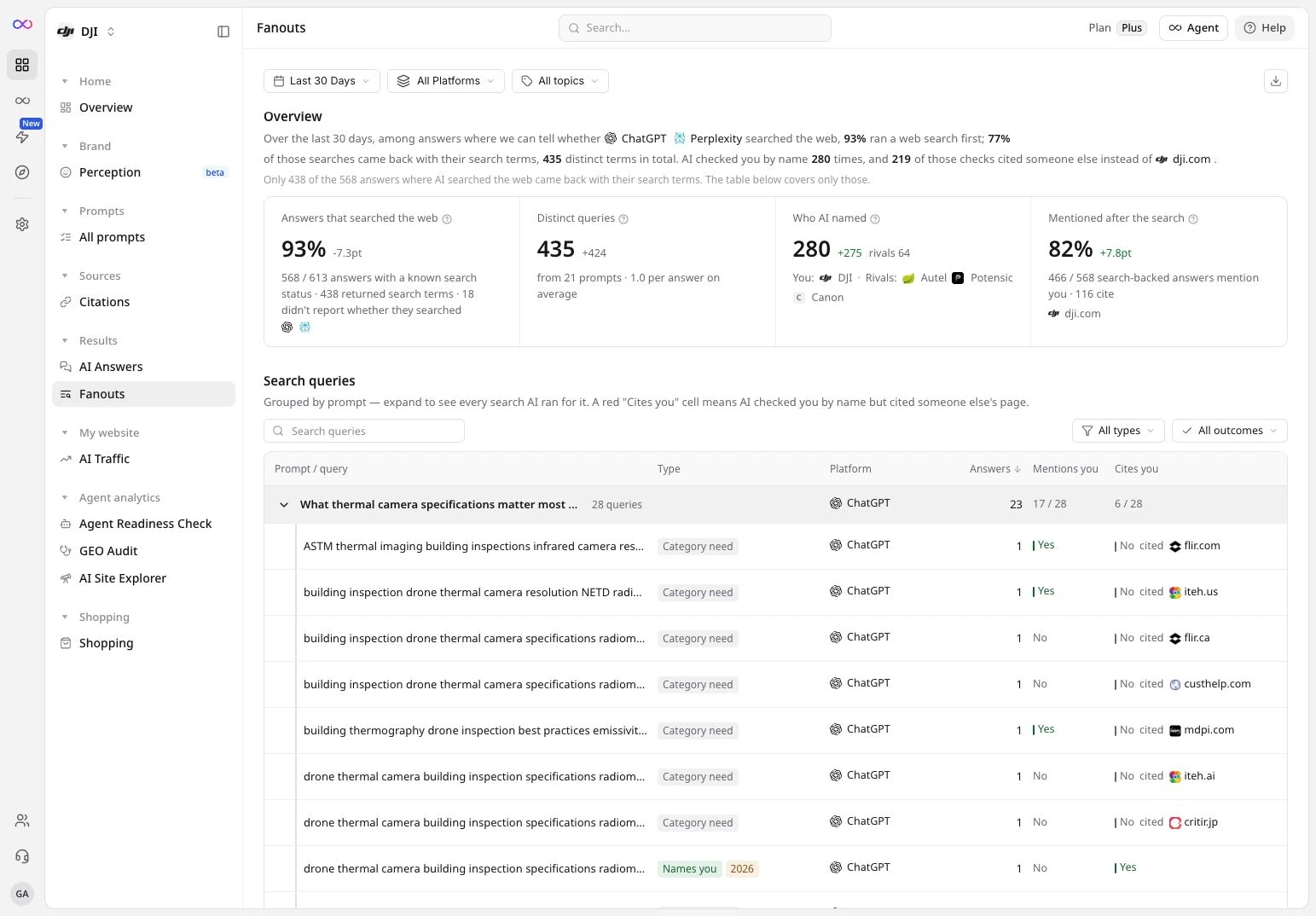
Vom Signal zur Lösung
Ein GEO-Audit deckt die Lücken in Schema, Feed und llms.txt auf, die Sie zurückhalten, und Query Fan-out zeigt die echten Fragen, die Käufer stellen — so wird jede Korrektur nach ihrem Einfluss priorisiert.
Sehen Sie, wo Ihr Shop in der KI-Suche steht.
Führen Sie ein kostenloses GEO-Audit durch, um Ihre AI-Bereitschaftsbewertung und eine priorisierte Fehlerliste zu erhalten, und verfolgen Sie ab dem ersten Tag den Share-of-Card.